Jul 10, 2020 | Advocacy, Non-legal submissions
The ICJ and the World Organization against Torture (OMCT) today highlighted a range of human rights violations, including of freedom of association and assembly, in India’s repression of peaceful protests and the impact of COVID-19 measures in the country.
The joint statement “OMCT and ICJ welcome the Report of the Special Rapporteur on the rights to freedom of peaceful assembly and association and echo his concerns over the intensity and seriousness of the threats to the enjoyment of these rights, including the impact of current Covid-19 pandemic on the already fragile civic space.
We are particularly alarmed over the increasingly violent repression of dissent in India and the arbitrary detention and harassment of activists and human rights defenders by the state in relation to their participation in peaceful protests against the Citizenship Amendment Act 2019 (CAA), the National Population Register and the National Register of Citizens.
The repression of anti-CAA protests has been brutal, with the police reportedly using excessive force against demonstrators, including firing indiscriminately into crowds, using teargas and water cannons, beating bystanders and detaining and torturing protesters, including children. At least 31 persons were killed during these protests and scores were injured. No impartial and transparent investigations into the violence have been conducted to this day.
Reportedly fabricated charges of sedition, murder, and terrorism under repressive anti-terror and national security laws – such as the Unlawful Activities (Prevention) Act and the National Security Act – have been filed against activists and human rights defenders participating in the protests. Those arrested and detained include Gulfisha Fatima, Natasha Narwal, Devangana Kalita, Khalid Saifi, Meeran Haider, Shifa ur Rehman, Isharat Jahan, Dr. Kafeel Khan, Sharjeel Imam, Akhil Gogoi and Asif Iqbal. They are still in prison despite repeated calls for their release by national and international human rights groups and the United Nations.
Severe restrictions on freedom of peaceful assembly and association have been imposed in the framework of the Covid-19 emergency. These include blanket shutdown of internet services and the imposition in several areas of Section 144 of the Criminal Procedure Code, a colonial law banning public protests and gathering of more than five people. While appreciating India’s efforts to prevent the spread of Covid-19, we remind the government that restrictions must meet the requirements of legality, necessity and proportionality and shall not be abused to muffle dissent.
We call on the Government of India to take urgent steps to ensure that its people enjoy the rights to express dissent and to participate in peaceful protests without fear of being arrested, brutally beaten, tortured or killed. The right to life and from the prohibition of torture and other ill treatment as well as the rights to freedom of expression, association and assembly are protected under international law including the International Covenant on Civil and Political Rights to which India is a party.
We further call for a thorough, prompt, transparent and impartial investigation into allegations of unlawful use of force by police, and for the immediate release of all unjustly detained activists and HRDs.”
Jul 10, 2020 | Advocacy, News, Non-legal submissions
Today, the ICJ submitted a report to the UN Human Rights Council Working Group on the Universal Periodic Review (UPR) ahead of the review of Nepal’s human rights record in January-February 2021.
In the submission, the ICJ, Advocacy Forum – Nepal (AF), Terai Human Rights Defenders Alliance (THRD Alliance) & University of Passau, provided information and analysis to assist the Working Group to make recommendations to the Government of Nepal to take measures to prevent acts of torture and ill-treatment; to implement a human rights compliant legal framework for accountability and remedy and reparation for victims; and institute other measures to comply with its international obligations, including ratification of international human rights instruments.
In light of the concerns set out above, the ICJ, AF and THRD Alliance call upon the UPR Working Group and the Human Rights Council to recommend the following to Government of Nepal:
- Ensure that the law criminalizing torture is consistent with international law, through the passage of an anti-torture law, and/or through amendment to the current Penal Code, including that the:
-
- Definition of torture in national law is in line with the CAT and other international treaty provisions;
- Statutory limitation or prescription periods for the filing of complaints or cases of torture or other ill- treatment be removed;
- Penalties for torture are commensurate to the gravity of the offence;
- Definition of reparation encompasses restitution, compensation, rehabilitation (including medical and psychological care, as well as legal and social services), and guarantees of non-repetition;
- Independent mechanisms for the regular monitoring of places of detention are established, or existing mechanisms adequately supported.
- Ensure that all allegations of torture are registered, investigated and prosecuted by an independent and impartial investigative body;
- Ensure that all detainees have access to legal representation;
- Collect and publicize data on allegations of torture and ill-treatment, including prosecutions and any measures, including disciplinary measures, taken against perpetrators;
- Establish an independent police service commission or equivalent body to ensure fair and transparent appointment, promotion, transfer of police officers and to oversee disciplinary complaints against the police;
- Establish a consistent system of documentation in each police station and at any detention facilities, in particular, concerning the entry into and release of detainees from custody, as well as the procedure during interrogations;
- Systematize human rights education and training in police training programmes, including medico-legal training (based on Istanbul Protocol);
- Ensure that victims are adequately involved in criminal proceedings, in accordance with international standards developed for this purpose;
- Ratify OPCAT and establish a national preventative mechanism that complies with its requirements; become a party to other core human rights treaties to which Nepal is not yet a party;
- Accept the requests to visit Nepal from UN special procedures, including the Working Group on Enforced and Involuntary Disappearances, the Special Rapporteur on Torture, Special Rapporteur on extrajudicial, summary or arbitrary executions and the Special Rapporteur on the promotion of truth, justice, reparation and guarantees of non-recurrence.
Download
Nepal-UPR-Submission-2020-ENG (PDF)
Contact
Frederick Rawski, ICJ Asia and Pacific Regional Director, e: frederick.rawski(a)icj.org
Jul 10, 2020 | Advocacy, News, Non-legal submissions
Today, the ICJ submitted a report to the UN Human Rights Council Working Group on the Universal Periodic Review (UPR) ahead of the review of Myanmar’s human rights record in January-February 2021.
The ICJ stressed the lack of accountability and redress for victims – and the resulting continued culture of impunity – for widespread gross human rights violations constituting crimes under international law in Myanmar, particularly those involving members of Myanmar’s Defence Services.
Certain provisions under the 2008 Myanmar Constitution as well as national laws such as the 1959 Defence Services Act and 1995 Myanmar Police Force Maintenance of Discipline Law shield security forces from public criminal prosecutions in civilian courts. Closed court martial proceedings also deny victims and their families the right to truth about human rights violations.
The Myanmar National Human Rights Commission (MNHRC), Myanmar’s national human rights institution with the mandate to investigate allegations of human rights violations, has not initiated any substantive or credible investigation into allegations of widespread and systematic human rights violations perpetrated in recent years by soldiers against persons from ethnic minorities, despite being recorded in detail in the reports of the UN Independent International Fact-Finding Mission on Myanmar and the UN Special Rapporteur on the situation of human rights in Myanmar.
Rather than strengthen the role of civilian courts and the MNHRC, Myanmar has set up ad hoc commissions of inquiry to investigate such incidents. However, these inquiries have a recommendatory mandate and an unclear relationship with the judiciary. The full report of the findings of these commissions are generally not publicly disclosed. Against this backdrop, Myanmar has ceased cooperation with the UN Special Rapporteur for Myanmar and rejected other UN and international accountability mandates.
In light of this, the ICJ recommended the following actions, among others:
- For the MNHRC to investigate all allegations of gross human rights violations, especially including crimes under international law;
- For the Parliament to repeal or amend the 1959 Defence Services Act to bring it in line with international human rights law and standards and ensure that gross human rights violations and serious international humanitarian law violations perpetrated by soldiers can only be prosecuted in civilian courts;
- For the Union Government to publish the full report of the findings of ad hoc commissions of inquiry, such as that of the Independent Commission of Enquiry;
- For the Union Government to issue an open invitation to and cooperate with the Special Rapporteur on the situation of human rights in Myanmar, the Office of the High Commissioner for Human Rights as well as the UN Independent Investigative Mechanism on Myanmar; and
- For the Union Government to cooperate with the International Criminal Court.
The ICJ also called for Myanmar to become a party to key human rights treaties, such as the International Covenant on Civil and Political Rights, that the State committed – yet failed – to accede to in its previous UPR cycle.
Download
Myanmar-UPR-Submission-2020-ENG (PDF)
Contact
Jenny Domino, ICJ Associate Legal Adviser, e: jenny.domino@icj.org
Kingsley Abbott, Coordinator of the ICJ’s Global Accountability Initiative, e: kingsley.abbott(a)icj.org
Jul 9, 2020
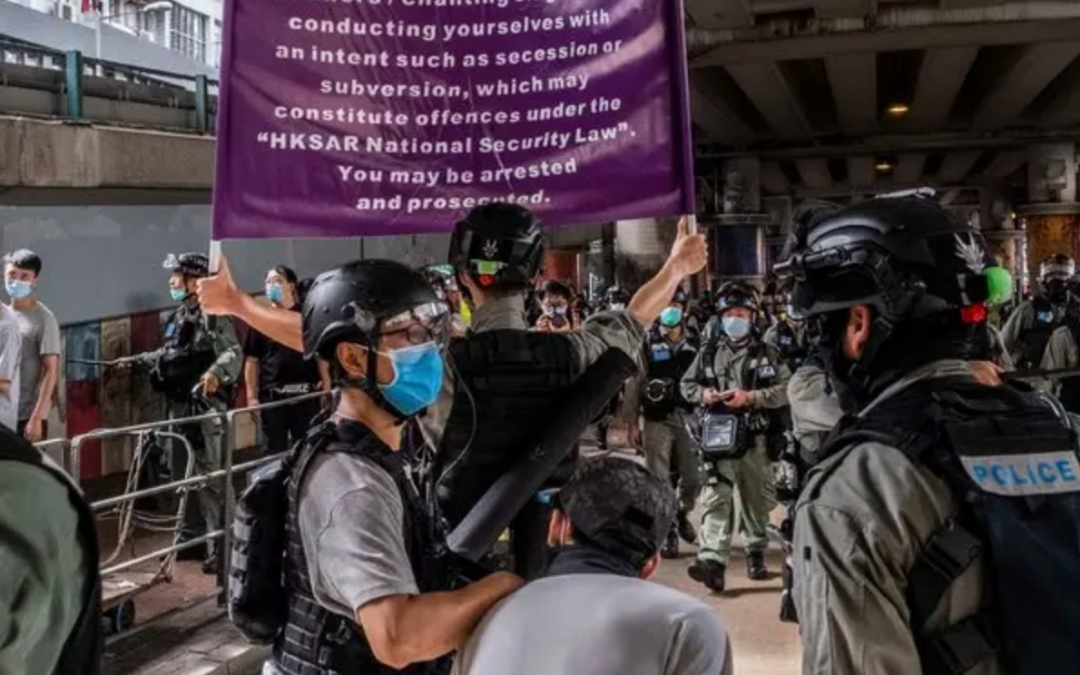
Today, the ICJ called on Chinese legislators to repeal the new National Security Law for Hong Kong Special Administrative Region (SAR) and in the interim for the authorities to suspend the implementation of provisions that are incompatible with the rule of law and the State’s international legal obligations.
In an 11-point Q and A format briefing paper, the ICJ assesses a number of procedural and substantive concerns with the Law and its enactment, including its implication for the exercise of freedom of expression and other human rights, as well as the independence of the judiciary in Hong Kong SAR.
The Law was passed by the Standing Committee of the Thirteenth National People’s Congress (NPC) on 30 June 2020.
“The law’s creation of new security bodies with expansive powers, subject to little or no accountability or oversight, is a recipe for disaster. Given the recent history of police abuse in Hong Kong, we know that these provisions will be used to target human rights defenders and other activists, particularly those involved in the democracy protests,” said Frederick Rawski, ICJ Asia-Pacific Director.
“Arrests have already taken place in the few days since the law has come into effect. Without a right of appeal to an independent judicial body, and a near total lack of transparency, the threat of prosecutions under the law’s criminal provisions poses an existential threat to the rule of law.”
The briefing paper highlights the numerous ways in which it falls short of international law and standards, and raises concerns about its impacts on the protection of human rights and the rule of law in Hong Kong.
The ICJ stressed that the Law falls afoul of the UN Basic Principles on the Independence of the Judiciary and the Beijing Statement of Principles on the Independence of the Judiciary in the LAWASIA Region 1997. In addition, enforcement of the law would undermine the right to a fair trial by a competent, independent and impartial tribunal, guaranteed under Article 14 of the ICCPR. It is also inconsistent with the 1985 Sino-British Joint Declaration which stated that “the Hong Kong Special Administrative Region will be vested with executive, legislative and independent judicial power, including that of final adjudication.”
The ICJ is particularly concerned about the creation of a new national security body and a new police division with overly broad investigative and surveillance powers, but weak accountability mechanisms.
The briefing paper on the Law of the People’s Republic of China on Safeguarding National Security in the Hong Kong Special Administrative Region asks and answers the following questions:
Q 1. What is the historical context of Hong Kong’s special administrative status?
Q 2. What is the background to the national security legislation in the HKSAR?
Q 3. What are China’s human rights obligations in relation to the national security legislation?
Q 4. How is the new National Security Law structured?
Q 5. What are the key concerns regarding the procedural deficiencies in the law?
Q 6. What are the crimes and penalties under the new law and what are the key concerns?
Q 7. Is the right to a fair trial by an independent judiciary safeguarded in the law?
Q 8. What is the mandate of newly established security agencies?
Q 9. How does the law threaten to undermine freedom of expression in the HKSAR and abroad?
Q 10. What kind of powers do the police have under the new law?
Q 11. What does the International Commission of Jurists recommend?
Contact
Frederick Rawski, ICJ Asia and Pacific Regional Director, e: frederick.rawski(a)icj.org
Boram Jang, ICJ Legal Adviser, Asia & the Pacific Programme, e: boram.jang(a)icj.org
Download
Hong-Kong-National-Security-Law-Briefing-Paper-ENG-2020 (PDF)
See also
Jul 9, 2020 | News
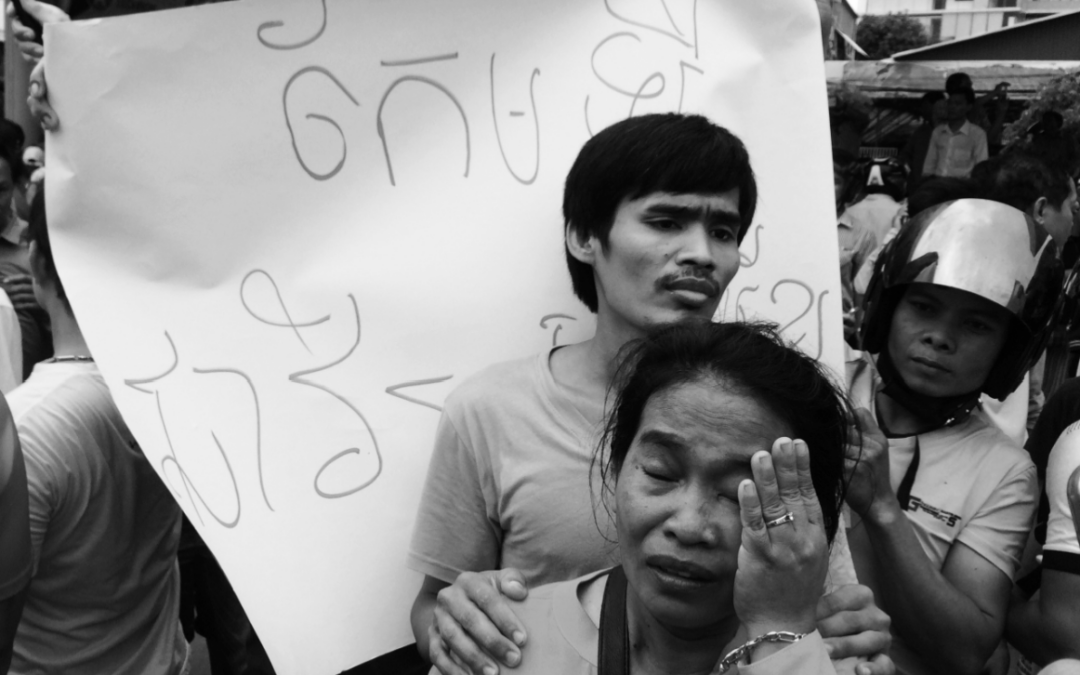
Today, in advance of the fourth anniversary of the killing of prominent political commentator and human rights defender Kem Ley, the ICJ and 29 other organizations called on Cambodian authorities to create an independent Commission of Inquiry to conduct an effective and impartial investigation that is long overdue into Kem Ley’s death.
The organizations further urged Cambodian authorities to cease intimidation and harassment of persons peacefully commemorating his passing.
On 10 July 2016, Kem Ley was shot and killed at a petrol station in central Phnom Penh. Without conducting a prompt, thorough, and independent investigation, and following a half-day trial which was widely criticized for failure to meet international fair trial standards, in March 2017, Oeuth Ang was found guilty of the murder of Kem Ley and sentenced to life imprisonment.
Since 2016, many international and domestic human rights organizations have consistently called on the Cambodian government to set up an independent Commission of Inquiry to conduct a prompt, impartial, and effective investigation into this killing, with emphasis on examining the potential criminal responsibility of persons other than the direct perpetrator, in line with international standards set out in the International Covenant on Civil and Political Rights (ICCPR).
The UN Principles on the Effective Prevention and Investigation of Extralegal, Arbitrary and Summary Executions as well as the revised Minnesota Protocol on the Investigation of Potentially Unlawful Death reinforce the duty of governments to investigate unlawful deaths and to establish an independent commission of inquiry when states, like Cambodia, lack effective procedures to conduct such an investigation in accordance with international standards.
The Cambodian government, has to date, failed to take any steps towards the establishment of such an independent and impartial investigative body. Given the government’s unwillingness to conduct an independent investigation into Kem Ley’s killing, and civil society’s highly warranted lack of trust and confidence in Cambodia’s justice system which lacks the requisite levels of independence to adjudicate cases involving public officials, this body should be established under the auspices of the United Nations and composed of independent experts.
Following the killing of Kem Ley, the Cambodian authorities have continually monitored, harassed, and ultimately disrupted and prohibited planned anniversary memorials of his death. These actions constitute arbitrary restrictions on the rights to freedom of expression and peaceful assembly. The organizations condemned such attempts to stifle free speech and reiterated their call to the Cambodian government to stop such harassment.
The joint statement is available here.
Contact
Frederick Rawski, ICJ Asia and Pacific Regional Director, frederick.rawski(a)icj.org
See also
ICJ, ‘Cambodia: three years and still no effective investigation into Dr. Kem Ley’s killing’, 9 July 2019
ICJ, ‘Cambodia: Commission of Inquiry into killing of Kem Ley should be established without further delay’, 9 July 2018
ICJ, ‘Cambodia: request to create a commission of inquiry into the killing of Kem Ley’, 7 July 2017
ICJ, ‘Cambodia: Kem Ley’s killing demands immediate credible and impartial investigation’, 13 July 2016