Jun 26, 2020 | News
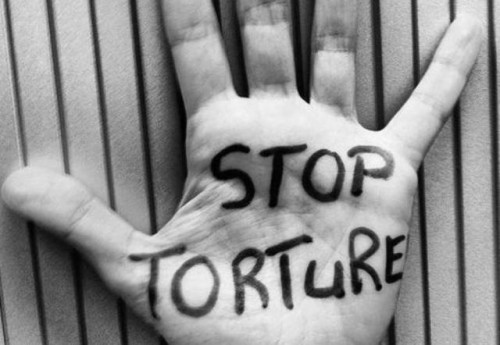
On the occasion of the International Day in Support of Victims of Torture, the ICJ, Advocacy Forum (AF) and Terai Human Rights Defenders Alliance (THRD Alliance) voiced concerns about the near total failure by authorities to investigate and prosecute acts of torture in Nepal.
Nearly two years after provisions in the new Penal Code that criminalized torture came into effect, not a single torture prosecution appears to have been brought. There have also been very few instances in which victims have received an effective remedy and reparation for their ill-treatment. Nepal has failed to meet its obligations in this regard under article 2(3) of the International Covenant of Civil and Political Rights and article 14 of the Convention Against Torture.
“Nepal has an obligation under international law to hold perpetrators accountable for acts of torture and cruel, inhuman or degrading treatment. This includes obligations as a party to the Convention Against Torture and the international Covenant on Civil and Political Rights,” said Frederick Rawski, ICJ Asia-Pacific Director. “It is disturbing to see that two years after the rightfully celebrated Penal Code provisions criminalizing torture have come into effect, the government has yet to successfully prosecute any acts of torture, which by all accounts continue to occur on a frequent basis.”
The Advocacy Forum and THRD Alliance both published reports today that document instances of torture and other ill-treatment against detainees over the past year. Some 20 percent of the more than 1000 detainees interviewed reported some form of unlawful ill-treatment during confinement.
“Although in some locations there appears to be some improvement in the treatment of detainees, torture and ill-treatment remains far too prevalent,” said Om Prakash Sen Thakuri, Advocacy Forum Executive Director. “Police still continue to rely on “confessions”, typically obtained by ill-treatment or coercion during interrogation, as opposed to conducting proper investigations. Our police institutions need serious reform to ensure that investigative practices conform to international law and standards.”
In a separate report analyzing the obstacles faced by victims in seeking justice for torture and ill-treatment, the THRD Alliance documented the complex challenges faced by torture survivors seeking accountability in the formal justice system. These obstacles included a frequently refusal by police to file a First Information Report on allegations of ill-treatment, statutes of limitation preventing cases from being prosecuted, and a lack of independence of police investigations in the rare cases when they do move forward.
“Despite repeated public commitments by justice sector and human rights institutions, such as the National Human Rights Commission and the Office of the Attorney General, torture survivors still struggle to have their voices heard or have their cases addressed,” said Mohan Karna, Executive Director of the THRD Alliance. “We urge the authorities at both the federal and provincial levels to take action to address the concerns of victims and to institute policies – such as establishing robust detention monitoring and internal accountability mechanisms – that will deter future acts of torture and ill-treatment.”
On the occasion of the International Day in Support of Victims of Torture, the three organizations urged the Government of Nepal to:
- Carry out prompt, thorough, impartial and effective investigations into all allegations of torture and ill-treatment, and to bring prosecutions where warranted under the criminal provisions of the Penal Code.
- Institute structural reform within the police including the establishment of a separate and independent mechanism to investigate allegations of torture and ill-treatment involving police personnel.
- Ensure public availability statistics on the investigation, prosecution and other action taken in response to allegations of torture and ill-treatment.
- Amend the Penal Code and other relevant provisions of law to eliminate the statute of limitations in torture cases, and to ensure that the definition of torture is in line with international law.
- Establish an independent preventative mechanism for monitoring of detention centers.
- Become party to the Optional Protocol of the Convention on Torture
Background
International Day in Support of Victims of Torture is marked worldwide on 26 June every year. Under the International Covenant on Civil and Political Rights (ICCPR) and Convention against Torture and Other Cruel, Inhuman or Degrading Treatment or Punishment (CAT), to which by Nepal is a party, the authorities to investigate, prosecute, punish and provide effective remedies and reparation for the crimes of torture and other acts of ill-treatment.
The Penal Code criminalizing torture came into force in August 2018. While it was welcome as positive step, the provisions fall short of international standards in a number of respects, including failure to recognize the continuous nature of the crime of enforced disappearance or its status as a crime against humanity; an unacceptably brief six-month limitation period to file complaints; and penalties incommensurate with the gravity of the crimes.
Download
Nepali (PDF)
English (PDF)
Contact
Frederick Rawski, ICJ Asia-Pacific Director, e: frederick.rawski@icj.org, t: +66 644781121
Om Prakash Shen Thakuri, AF, Executive Director, e: opsenthakuri@gmail.com, t: +977 9841275732
Mohan Karna, THRD Alliance, Executive Director, e: karnamohan90@gmail.com, t: +977 9841449139
Jun 20, 2020 | News
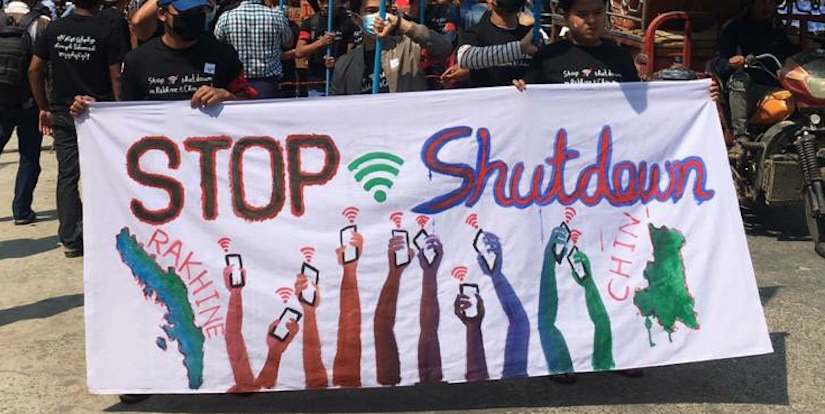
As the general internet shutdown in Rakhine and Chin states reaches one year, the ICJ repeated its call for the Myanmar Government to end mobile internet restrictions and temporarily halt hostilities with the Arakan Army.
The ICJ also called for an amendment of Section 77 of the Telecommunications Act, pursuant to which the government can order telecommunications providers to suspend internet services.
“The internet shutdown in Rakhine and Chin states stifles freedom of expression, prevents information-sharing, and exacerbates the plight of affected communities by impeding humanitarian and health access during a global pandemic,” said Frederick Rawski, ICJ Asia-Pacific Director. “Such a drastic measure is disproportionate and unnecessary. The government should focus on fighting COVID-19, instead of waging a battle against its own population.
The shutdown was first imposed on 21 June 2019 by the Ministry of Transport and Communications (MOTC), purportedly to facilitate government objectives in the armed conflict with the Arakan Army.
Section 77 of the Telecommunications Law authorizes the the MOTC to “direct the licensee to suspend a Telecommunications Service, to intercept, not to operate any specific form of communication, to obtain necessary information and communications, and to temporarily control the Telecommunications Service and Telecommunications Equipments” in the event of an “emergency situation” for the “public interest.” However, the law does not define the scope of an “emergency situation.” The ICJ previously described Section 77 to be vague, and warned of abuse by authorities in the absence of independent judicial oversight by civilian courts.
In April, as Myanmar encountered its initial cases of COVID-19, the ICJ highlighted how arbitrary and unnecessary online media restrictions not only violate a person’s right to freedom of expression and information, but also deny access by affected communities to essential health information. Access to health information is a component of the right to health protected under the International Covenant on Economic, Social and Cultural Rights (ICESCR), to which Myanmar is a party.
“The internet shutdown effectively deprives large swathes of the population in ethnic minority states of the benefits of government services, and information about its COVID-19 response,” said Frederick Rawski. “Such a blanket internet shutdown is not necessary for reasons of national security, and undermines the government’s own public health efforts.”
The ICJ recalled that the ICESCR requires States to observe the principle of non-discrimination in enacting measures to protect the right to health. The internet shutdown clearly has a disproportionately adverse impact on the human rights of members of ethnic minorities.
Despite appeals from UN officials, rights groups, ethnic armed organizations, and ambassadors to Myanmar, the Myanmar Government still refuses to hold a ceasefire throughout the country, including areas of Rakhine and Chin states where the Arakan Army operates. The conflict has resulted in deaths, many from unlawful killings, as well as serious physical and emotional injury, and mass displacement of persons.
Download
Myanmar-Internet-Shutdown-Press-Release-2020-BUR (PDF)
Contact
Frederick Rawski, ICJ Asia-Pacific Regional Director, e: Frederick.rawski(a)icj.org
Related work
Publication: Myanmar’s ongoing Internet shutdown and hostilities threaten right to health during COVID-19
Statement: Government must lift online restrictions in conflict-affected areas to ensure access to information during COVID-19 pandemic
Report: Curtailing the Right to Freedom of Expression and Information in Myanmar
Jun 16, 2020 | News
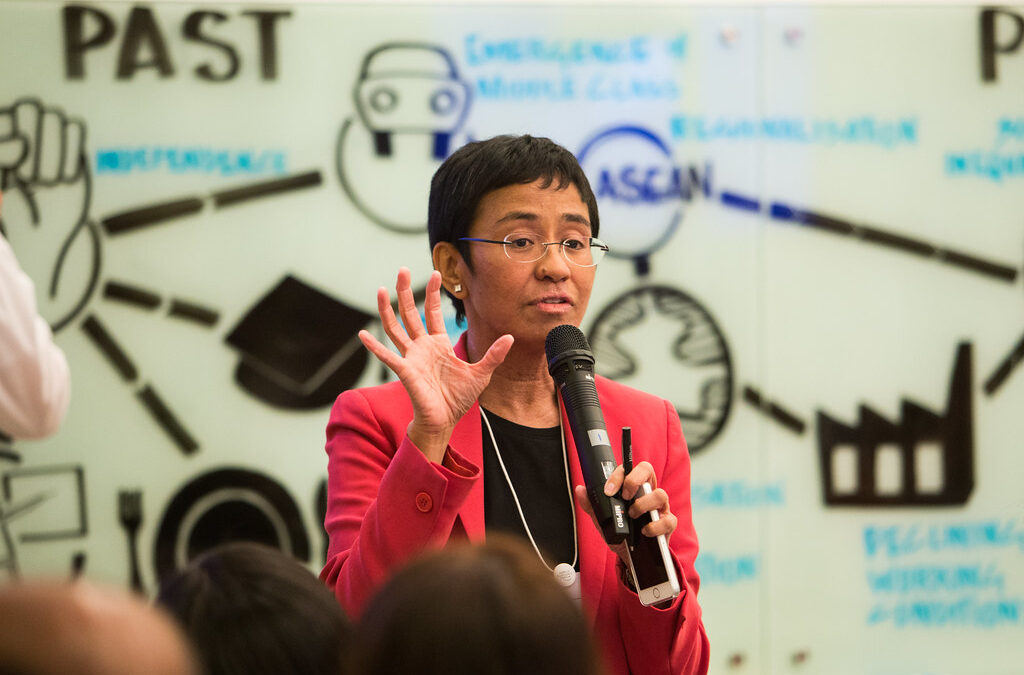
Today, the ICJ condemned the prosecution and conviction of journalists Maria Ressa and Reynaldo Santos, Jr. after the Manila Regional Trial Court found them guilty of cyber-libel for an article published on the news website Rappler. The ICJ called for the judgment to be reversed on appeal.
The ICJ also called on the Philippines to reform its laws to remove the possibility of criminal sanction for defamation and libel offenses, in line with its international legal obligations. The ICJ recalled that imprisonment for such offenses is never permissible.
“The guilty verdict is a new low for the Duterte administration, and adds to an atmosphere of intimidation that creates a chilling effect on online expression, especially for journalists seeking to hold the government to account,” said Frederick Rawski, ICJ Asia-Pacific Director.
“The conviction is not only a miscarriage of justice in this particular case; it also sets a terrible precedent for the use of criminal defamation laws to prosecute speech online in the Philippines and elsewhere in the region.”
Ressa and Santos were convicted pursuant to Section 4(c)(4) of the 2012 Cybercrime Prevention Act (CPA), and sentenced to imprisonment of up to six years and a fine of PhP 200,000 (approx. USD 4,000). Ressa is the executive editor of Rappler while Santos was the author of the article. Ressa’s conviction comes after years of legal harassment, forming part of a pattern of attacks upon the press by the Duterte government and placing the Philippines in violation of the right to freedom of expression under the International Covenant on Civil and Political Rights (ICCPR), to which the Philippines is a party.
The charges involved an article first published in May 2012 on the Rappler website, months before the CPA was enacted in September 2012. The article reported on businessman Wilfredo Keng’s alleged involvement in “human trafficking and drug smuggling.” Keng initiated the criminal proceedings against Ressa and Santos in October 2017, five years after the article was published.
However, the trial court considered the article to have been “republished” on 19 February 2014 when Rappler updated the article on its website to fix a typographical error. Further, since the CPA does not expressly mention the prescriptive period, the trial court held that Republic Act No. 3326 applies, which provides a 12-year prescriptive period for offenses punished under a ‘special law’ such as the CPA. In contrast, ordinary libel under the Revised Penal Code carries a one-year prescriptive period.
“Regardless of the merits of the case, criminal sanction involving imprisonment must never be imposed for defamation,” said Rawski.
“On top of this general consideration, the judgment even sets a dangerous precedent by expanding the prescriptive period and ‘publication’ requirement for the crime of libel, contradicting well-established protections against ex post facto laws and that any ambiguity in penal laws must be resolved in favor of the accused.”
The right to freedom of expression under Article 19 of the ICCPR extends to political discourse, commentary on public affairs and journalism. The UN Human Rights Committee, the supervisory body for the ICCPR, has called on States to abolish existing criminal defamation laws and reserve defamation for civil liability. The Committee concluded in 2012 that the Philippines’ criminalization of defamation, including under the CPA, breaches its obligations under the ICCPR. Article 15 of the ICCPR also prohibits the prosecution of persons for acts that were not considered a crime at the time of commission.
The Committee and the UN Human Rights Council have affirmed that these safeguards apply online as well as offline, as Article 19 protects expression regardless of frontiers and through any media of one’s choice. The UN Special Rapporteur on freedom of expression has consistently called for decriminalization of defamation as a criminal offence, which is inherently harsh and encourages self-censorship.
Contact
Emerlynne Gil, Senior International Legal Adviser, +662 619 8477 (ext. 206), emerlynne.gil(a)icj.org
Download
Philippines-Maria-Ressa-Press-Release-2020-ENG (PDF)
Related work
Report: Curtailing Free Expression, Opinion and Information Online in Southeast Asia
Philippines: order to major media outlet to stop airing violates freedom of expression and access to information
Jun 5, 2020 | News
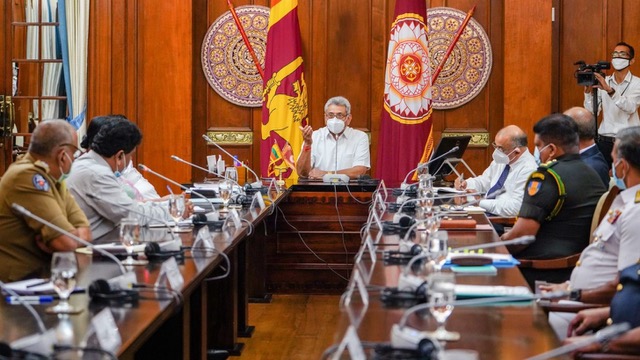
The ICJ today condemned the proclamation by the Sri Lankan president to establish a Presidential Task Force dominated by the security forces and called for the proclamation to be rescinded.
On June 2, 2020, Sri Lankan President Gotabaya Rajapaksa issued an extraordinary gazette establishing a 13-member “Presidential Task Force to build a Secure Country, Disciplined, Virtuous and Lawful Society.” The Task Force is composed entirely of military, intelligence and police officials. It is to be headed by Defence Secretary, Retired Major General Kamal Gunaratne.
“This Presidential Task Force constitutes another act of over-reach by a government seeking to take advantage of the COVID-19 pandemic to further expand its powers,” said Frederick Rawski, ICJ’s Regional Director for Asia and the Pacific. “Its mandate is overbroad, and it empowers its military and police membership – including alleged war criminals – at a time when strong, independent, civilian-led policy-making is what is needed.”
The Task Force is given a sweeping mandate which includes:
- “taking necessary immediate steps to curb the illegal activities of social groups which are violating the law”
- “taking measures for prevention of the drug menace…”
- “taking legal action against persons responsible for illegal and antisocial activities conducted in Sri Lanka while locating in other countries”
- “investigating and preventing any illegal and antisocial activities in and around prisons.”
The task force also has the power to “conduct investigations and to issue directions as may be necessary in connection with the functions entrusted to it.” This includes issuing instructions to government officials to comply with its directives or be reported to the President.
The ICJ raised concerns that the task force has not been established on proper legal foundations. It is apparently pursuant to the broad, but ill-defined presidential powers under Article 33 of the Constitution.
The ICJ said that the task force could effectively usurp the powers and functions normally reserved for civilian authorities, under rule of law principles and as established by the Constitution and relevant enabling legislations.
Article 42 (1) of the Constitution provides that the “Cabinet of Ministers shall be charged with the direction and control of the Government.” Law enforcement and public officials under the direction of the relevant Minister have been designated under existing laws to specifically address drug-related offences and any other illegal and/ or criminal activity that seemingly fall within the mandate of this Task Force. The independence of public officials will be compromised if they are compelled to report to a military-dominated body. The Gazette provides no detail on how this reporting process would operate, or the legal consequences of refusing to act as instructed.
“Few doubt that this task force will be used as another tool to suppress speech and target critics of the Sri Lankan government. It is disturbing that such a potentially consequential body has been formed pursuant to broad presidential powers, with no reference to judicial or parliamentary oversight,” said Rawski. “Vague and overbroad language such as ‘anti-social activities’ could effectively criminalize expression protected under international law. Such provisions are inconsistent with the rule of law and contravene the principle of legality.”
The task force’s military and police membership follows a pattern of recent military appointments to civil administrative positions by the incumbent President. The military personnel appointed include officials credibly accused of war crimes. Chairman Major General Kamal Gunaratne was the commander of the 53rd division and Major General Shavendra Silva was the commander of the 58th Division of the Sri Lankan Army. Both units were identified by multiple UN investigatory bodies as having been involved in the commission of serious crimes and human rights violations during the last stages of Sri Lanka’s decades-long armed conflict which ended in 2009.
The ICJ called upon President Gotabaya Rajapaksa to rescind the extraordinary gazette establishing the Presidential Task Force. The role of the military in public life must be strictly circumscribed and matters pertaining to civil administrcation should be executed by elected and public officials in respect of the rule of law and principles of democratic governance.
Contact
Frederick Rawski, ICJ’s Asia Pacific Regional Director, t: +66 2 619 84 77; e: frederick.rawski(a)icj.org
May 28, 2020
The Indian Government has fallen short of its obligations to guarantee the right to water during the COVID-19 pandemic, the ICJ said in a briefing paper released today.
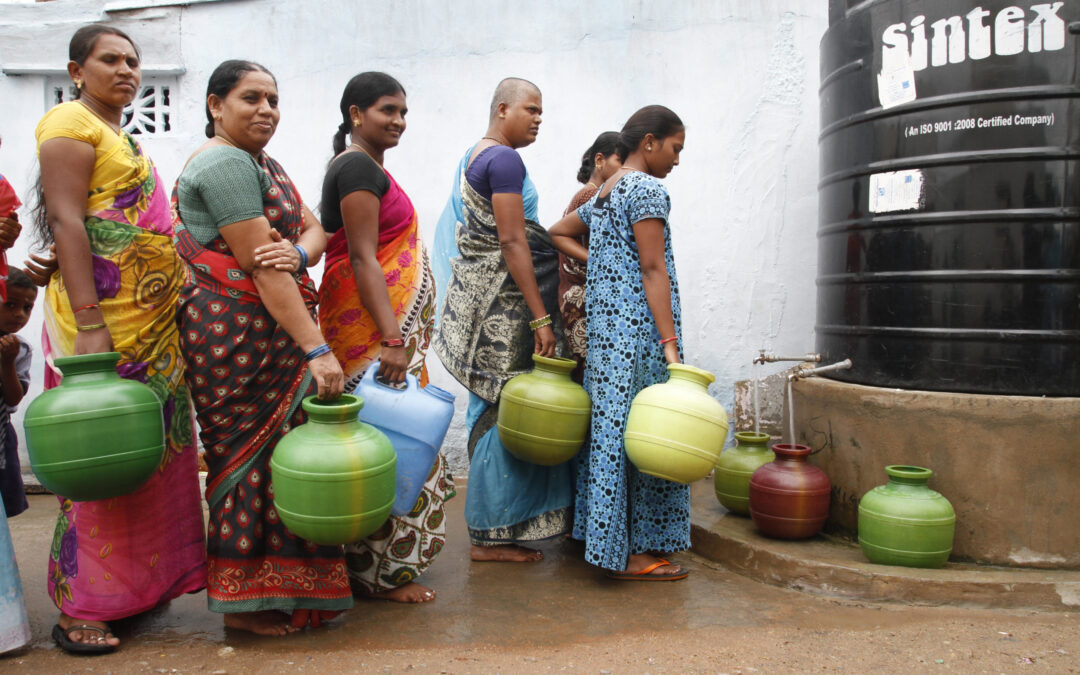
There is the need for frequent hand washing to protect from, and prevent the spread of, COVID-19. However, for many people, particularly those living in poverty, water of adequate quality and quantity is either unavailable, inaccessible or only intermittently available. This increases the risk of transmission of COVID-19. Indian authorities’ failure to meet their obligations to address this situation results in violation of the rights to water and sanitation, life and health. It also presents a significant public health risk.
In a briefing paper, the ICJ answers the following questions in the context of some of the human rights concerns that have arisen as a consequence of lack of access to adequate water during the COVID-19 pandemic:
- What are the principal concerns regarding the right to water in India?
- What are India’s legal obligations to guarantee the right to water?
- What issues must the Indian authorities address to meet its obligation to guarantee the right to water during COVID-19?
- What does the International Commission of Jurists recommend?
The ICJ calls upon Indian authorities to undertake the following:
- Immediate and Emergency Water Provision:
- Urgently enact and implement enforceable policies and strategies on the provision of emergency water in all water-scarce areas for all people during the COVID-19 pandemic. Such access should be provided regardless of legal tenure, notification status of an informal settlement or any other factor or circumstance. In particular, this must include:
- Provision and cleaning of public hand-washing facilities, soap, other cleaning materials and hand sanitizer on a continuous basis during the COVID-19 pandemic;
- Clear instructions for state governments on the permissible means of providing water and a minimum quantity and quality of water to be provided per household;
- A waiver of water charges for all persons below a specified income level during the COVID-19 pandemic; and
- A cessation of all water disconnections during the COVID-19 pandemic.
- Legal Enforcement:
- Finalize the enactment of enforceable national legislation on access to water which is compliant with India’s obligations in terms of the right to water;
- In the absence of such a law, clarify the legally binding nature of advisories, policies, orders and guidelines issued in relation to access to water in general and access to emergency water during the COVID-19 pandemic in particular; and
- Create and ensure effective operation of water supply helpline for effective and prompt redress of grievances and responses to emergency water needs.
- Monitoring and Information Circulation
:
- Establish independent monitoring mechanisms, with effective participation by community members and civil society organizations, state human rights institutions, and other members as maybe deemed relevant by the Government; and
- Provide regular, accurate, evidence-based information on the spread of COVID-19 to the general public (including via public television and radio) on hygiene measures that are effective in curbing the spread of COVID-19.
Earlier, the ICJ has published briefing papers on the Right to Food and Right to Housing in India, on 27 April and 7 May respectively, urging India to take immediate steps to guard against the “hunger crisis” and “housing crisis”. The ICJ has also highlighted the human rights violations faced by stranded internal migrant workers in India
Infographic
Download the Right to Water Infographic here.
Contact
Download
India-Right-to-Water-COVID-19-Briefing-Paper-2020-ENG (PDF)