Mar 20, 2020 | News
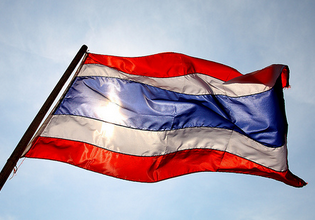
Today, the ICJ submitted recommendations on strengthening Thailand’s Anti-Strategic Litigation against Public Participation (SLAPP) law to the Ministry of Justice.
The Ministry of Justice is tasked to conduct a “study on the guidelines for development of laws, regulations or measures to prevent SLAPP,” in accordance with Thailand’s First National Action Plan on Business and Human Rights (2019 – 2022) (NAP).
Articles 161/1 and 165/2, which are intended to implement the NAP, entered into force on 20 February 2019 and 21 March 2019. They were introduced to end SLAPP lawsuits or similar forms of harassment through the legal process against any individuals, including human rights defenders. NAP also refers to the power of a public prosecutor under Article 21 of the Public Prosecution Organ and Public Prosecutors Act as another measure to prevent SLAPP lawsuits.
The use of SLAPPs and similar procedures frequently undermine human rights, including freedoms of expression, association and assembly and the right to political participation. These are protected under Thailand’s Constitution and international human rights obligations.
In the letter, the ICJ expressed its concern that these laws were inadequate to prevent harassment through the legal process and SLAPP. The ICJ therefore called for the adoption of a comprehensive stand-alone law, or the amendment of the Civil Procedure Code and the Criminal Procedure Code, to protect human rights defenders and others from harassment through the legal process.
Background
In an effort to give effect to the UN Guiding Principles on Business and Human Rights (UNGPs), on 29 October 2019, Thailand’s Cabinet approved and adopted the First National Action Plan on Business and Human Rights, making Thailand the first country in Asia to adopt the stand-alone NAP.
The NAP sets out plans to be followed by public and private stakeholders to ensure that businesses – from small and medium-sized enterprises to multinational corporations – respect human rights, and that the government fulfils its duty to ensure remedy and reparation in cases of business-related human rights violations.
The Thai government has identified in the NAP its four key priority issues: (1) labour; (2) land, environment and natural resources; (3) human rights defenders; and (4) cross border investment and multi-national enterprises.
NAP has set out several action points aimed at protecting human rights defenders, including:
- to study the guidelines for development of laws, regulations or measures to prevent SLAPP;
- to push for the review, amendment and repeal of relevant laws, mechanisms and protocols to facilitate protection of human rights defenders, for example with respect to witness protection laws;
- to determine or review policies, protocols, procedures and mechanisms to protect human rights defenders, including women human rights defenders, and ensure their safe conditions of work, and to provide trainings for law enforcement agencies to ensure in practice these protection measures;
- to provide trainings for law enforcement officers to widen their knowledge and understanding in enforcing laws on the protection of human rights, for example with respect to the organization of assemblies, and free expression pertaining to human rights, and preventing dishonest lawsuits that attack human rights defenders;
- to provide trainings and enhance capacity of lawyers;
- to urge businesses to ensure that human rights defenders will not be sued merely calling for rights of individuals to be protected;
- to promote the use of reconciliation mechanisms at all levels of the justice system; and
- to increase access to justice of human rights defenders.
However, NAP’s effectiveness is yet to be assessed because it does not have the status of a law, and is merely a resolution by the executive branch of the Thai government. The NAP was adopted in the form of a Cabinet Resolution, which is considered a “by-law” in accordance with section 3 of the Act on Establishment of Administrative Courts and Administrative Court Procedure B.E. 2542 (1999).
Download the letter to the Ministry of Justice in English and Thai.
Further reading
Thailand: ICJ and HRLA express concern about inadequate protections for human rights defenders in draft National Action Plan on Business and Human Rights
Thailand’s First National Action Plan on Business and Human Rights (2019 – 2022)

Mar 12, 2020 | News
On 11 March 2020, the ICJ co-hosted a panel discussion and an exhibition entitled “Committed to Memory: The Disappeared and Those They Left Behind.”
The event was held to mark the 16th anniversary of the enforced disappearance of a prominent lawyer and human rights defender Somchai Neelapaijit and other individuals who were subject to apparent enforced disappearance and whose fates remain unknown.
The event was held at Bangkok Art and Cultural Centre (BACC). More than 100 participants attended the event.
Opening remarks were delivered by Jenni Lundmark, Programme Officer, Delegation of the European Union to Thailand, and Associate Professor Dr. Gothom Arya, Adviser of the Institute of Human Rights and Peace Studies at Mahidol University.
Jenni Lundmark highlighted the European Union’s commitment to address torture and enforced disappearance and urged the Thai Parliament to pass pending anti-torture and enforced disappearance legislation without undue delay. Associate Professor Dr. Gothom called on the public to preserve the memory of the Thai persons who were victims enforced disappeared as well as many others whose disappearance were not recorded. He also encouraged the establishment of a network of victims of enforced disappearances to strengthen their advocates’ ability.
The event also featured photos and personal belongings of victims or potential victims of enforced disappearance, including: Somchai Neelapaijit, Thanong Po-Arn, Porlajee “Billy” Rakchongcharoen, Kamol Laosophaphan, Jahwa Jalo, Surachai Danwattananusorn, Siam Theerawut and Den Khamlae. For some of these cases, there has been a failure of authorities to conduct a prompt, effective, impartial and independent investigation into their cases. During the event, family members of the victims described stories from photos and personal belongings of the “disappeared” that were exhibited.
The panel discussion focused on progress of the investigations into enforced disappearances and evaluated the progress in developing legislation in Thailand to address this critical issue. The speakers included Angkhana Neelapaijit, wife of Somchai Neelapaijit; Thipwimon Sirinupong, lawyer who is representing Porlajee “Billy” Rakchongcharoen’s family; and Sanhawan Srisod, ICJ’s legal adviser.
During the discussion, speakers expressed concern at the recurrent delays in the amendment and enactment of the law against torture and enforced disappearance which will be critical for ensuring accountability and justice for victims of enforced disappearance. They also regretted that the latest Draft Act, after several rounds of revisions and public hearings, still had not addressed many of the principal shortcomings which the ICJ and other stakeholders and experts have indicated need necessarily be amended in order to bring the law into line with Thailand’s international human rights obligations.
The key concerns include the incomplete definitions of the crimes of enforced disappearance, the absence of provisions concerning the continuous nature of the crime of enforced disappearance and statute of limitations for torture and enforced disappearance crimes, and the inadequacy of provisions concerning safeguards against enforced disappearances.
Background
Somchai was stopped at a Bangkok roadside on 12 March 2004 and pulled from his car by a group of men. He has not been seen since.
At the time, Somchai was defending clients from Thailand’s restive southern provinces who were accused of attacking a military base as part of the ongoing insurgency in the region. Somchai had alleged police tortured the Muslim suspects.
Since 19 July 2005, DSI has spent more than 14 years and eight months investigating the enforced disappearance of Somchai Neelapaijit. However, there is little information in the public domain regarding its progress.
From 1980 to May 2019, the UN Working Group on Enforced or Involuntary Disappearances has recorded and transmitted 90 cases of alleged enforced disappearance to Thailand. Currently, 79 cases remain outstanding.
Further reading
Ten Years Without Truth: Somchai Neelapaijit and Enforced Disappearances in Thailand
Thailand: continuing delay in the enactment of the draft law on torture and enforced disappearance undermines access to justice and accountability

Mar 12, 2020
An opinion piece by Ruth Panjaitan, ICJ National Legal Adviser in Indonesia.
Late last year, the Indonesian parliament was about to vote on a new Penal Code to replace the existing Kitab Undang-Undang Hukum Pidana (KUHP), the culmination of decades of efforts to revise the country’s penal laws. The draft of the new Penal Code, however, was met with massive protests and vigorous public opposition that it prompted President Joko Widodo to appeal to lawmakers to postpone its passage.
The proposed Penal Code is now back in the hands of lawmakers who are promising more consultations with the public, including on its most contested and problematic provisions. The Parliament and the Ministry of Law and Human Rights jointly agreed to include the Penal Code as one of 50 priority draft laws in the national program legislative (prolegnas). It is thus expected that the Penal Code will be finalized this year.
There are a number of provisions in the draft law that, if implemented, would not comply with Indonesia’s international law obligations and would carry adverse human rights consequences for numerous people in the country. These provisions relate to such areas as the right to privacy, freedom of speech, and freedom of association.
In many ways, the law would pose particularly dire consequences for women’s human rights in Indonesia. Article 433 on adultery is one such provision that the ICJ and many human rights organizations and advocates have called on lawmakers to remove this from the draft.
The existing Penal Code already problematically criminalizes adultery, defining it as sexual intercourse between a married man or woman when the sexual partner is not his/her spouse. But under the proposed draft law, the definition of adultery has been expanded to include sexual acts between an unmarried woman and an unmarried man. Furthermore, the penalty has been increased so that a person found guilty thereof may be imprisoned for up to two years. The prosecution of Article 433 may only be commenced upon the complaint of the spouse, parents, or children of the alleged offenders.
The criminalization of adultery is not compliant with international law and standards, including the right to privacy and non-discrimination and equal protection of law. In this connection, various international human rights instruments, including the Committee on the Elimination of All Forms of Discrimination Against Women (CEDAW Committee) and the UN Working Group on Discrimination against women in law and practice, have consistently called for the repeal of laws criminalizing adultery. This is because the enforcement of adultery laws leads to discrimination and violence against women, as well as an infringement on the right to privacy.
Harmful gender stereotypes and rigid constructions of femininity lay at the core of this disparity. Women are expected to be sexually modest. A woman’s modesty is inextricably linked to her partner’s masculinity and her family’s honor. Hence, if a woman shows or is perceived to be sexually immodest, then her male partner would be viewed as weak and vulnerable. The woman would also be accused of bringing dishonor to her family. These harmful gender stereotypes are still very much present in Indonesia. In fact, in 2012, the CEDAW Committee expressed concern in its Concluding Observations on Indonesia’s periodic reports that there is the “persistence of adverse cultural norms, practices, traditions, patriarchal attitudes regarding roles, responsibilities and identities of women and men in the family and in society.”
There has been continuous trend throughout the world of countries reforming and abolishing often archaic laws criminalizing adultery. In 2018, India made the move of abolishing its colonial-era adultery law. The Philippines is now currently revising its Penal Code and one of the key considerations in the discussions is the abolition of the provisions on adultery. Indonesia now has the opportunity to step up and assert itself as a progressive leader in Asia in eliminating discrimination against women by removing the provision criminalizing adultery in its draft Penal Code.
To download in Bahasa Indonesia , click here.
This article was first published in Tempo, available at: https://kolom.tempo.co/read/1318052/dekriminalisasi-pasal-perzinaan
Mar 11, 2020 | Advocacy, Non-legal submissions
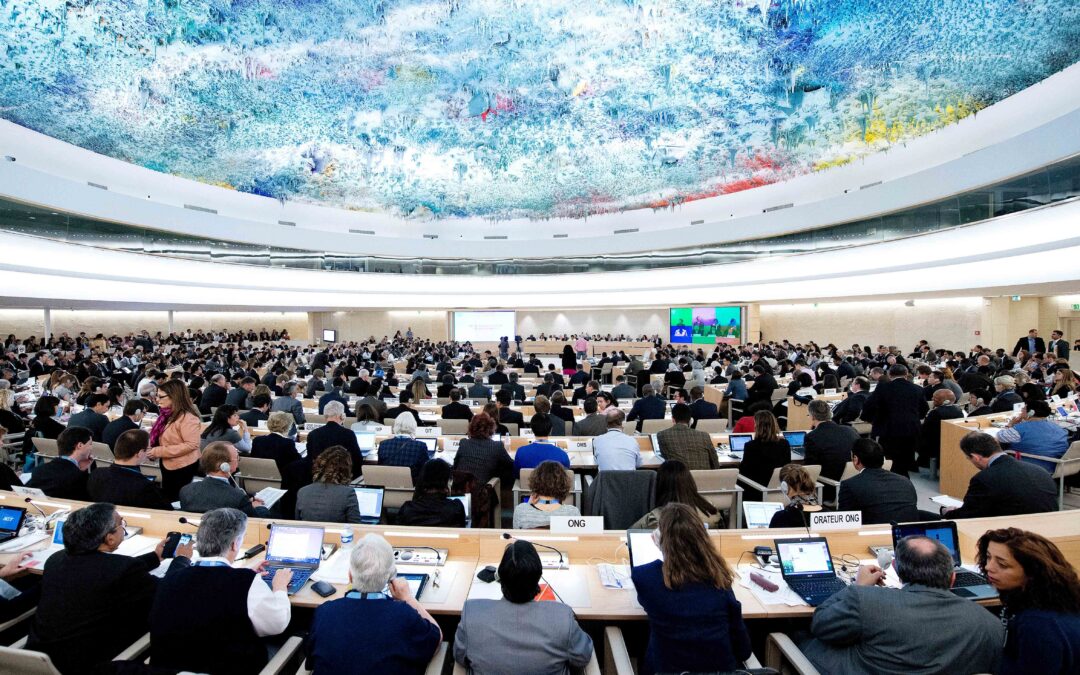
ICJ has joined other NGOs in urging India, Pakistan and the Human Rights Council, to take action to address the grave situation for human rights in Jammu & Kashmir.
The joint statement read as follows:
“Our organizations express grave concern over the human rights situation in Jammu & Kashmir, where the authorities imposed severe restrictions after a decision to revoke constitutional autonomy on 5 August 2019, including one of the world’s longest internet shutdowns, which the Indian Supreme Court has said violates the right to freedom of expression.
Hundreds were arbitrarily arrested, and there are some serious allegations of beatings and abusive treatment in custody, including alleged cases of torture. Three former chief ministers, other leading politicians, as well as separatist leaders and their alleged supporters, remain in detention under the Public Safety Act (PSA) and other abusive laws, many without charge and in undisclosed locations outside of Jammu & Kashmir. This violates fair trial safeguards of the criminal justice system and undermines accountability, transparency, and respect for human rights. Journalists and human rights defenders have been threatened for criticizing the clampdown. These violations, as those committed over the past decades, are met with chronic impunity.
We urge the government of India to ensure independent observers including all human rights defenders and foreign journalists are allowed proper access to carry out their work freely and without fear, release everyone detained without charge, and remove restrictions on the rights to freedom of expression and freedom of movement, including where they have been denied the right to leave the country by being placed on the ‘Exit Control List’.
We also call on the governments of India and Pakistan to grant unconditional access to OHCHR and other human rights mechanisms to Kashmir.
We further urge the Council to establish an independent international investigation mechanism into past and ongoing crimes under international law and human rights violations by all parties in Kashmir, as recommended by the UN High Commissioner for Human Rights.
Thank you.
- Amnesty International
- Asian Forum for Human Rights and Development (FORUM-ASIA)
- CIVICUS – World Alliance for Citizen Participation
- Human Rights Watch
- International Commission of Jurists
- International Federation for Human Rights Leagues (FIDH)
- International Service for Human Rights
- World Organisation Against Torture (OMCT)”
Mar 10, 2020 | Advocacy, Non-legal submissions
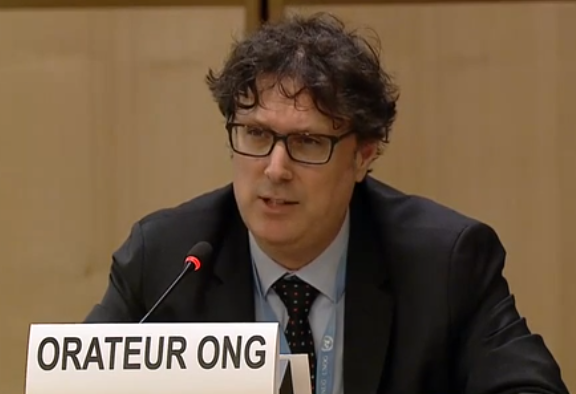
The ICJ and other NGOs today highlighted the discriminatory character of India’s Citizenship Amendment Act, and called for accountability for violence and excessive use of force in relation to protests against it, today at the Human Rights Council in Geneva.
The joint statement, delivered in a general debate, read as follows:
“India’s Citizenship (Amendment) Act, 2019 (CAA) arbitrarily excludes certain groups at risk of persecution, such as Muslims, from accessing an expedited path to citizenship, based on their religious affiliation.
The CAA is inconsistent with rule of law principles and international law, including the right to equality before the law and the right to non-discrimination, protected under human rights treaties such as the International Covenant on Civil and Political Rights and the International Convention on the Elimination of All Forms of Racial Discrimination, to which India is a party.
The implementation of the National Register of Citizens (NRC) in Assam risks making 1.9 million persons stateless. A nationwide NRC will put more people at risk.
Our organizations urge the Indian government to amend the CAA to ensure that any path to citizenship provides for equal protection for persecuted persons, and does not discriminate on grounds such as religion or national origin.
We also urge India to develop a comprehensive refugee law that addresses the plight of persecuted minorities in a non-discriminatory manner, and to accede to the 1951 Refugee Convention and its 1967 Protocol.
We further call on India to respect the right to peaceful assembly, and to ensure accountability for those alleged to have instigated violence or used excessive force in relation to the nationwide protests against the CAA.”
The statement was delivered by ICJ on behalf also of Asian Forum for Human Rights and Development (FORUM-ASIA), CIVICUS – World Alliance for Citizen Participation, Human Rights Watch, International Service for Human Rights (ISHR), Minority Rights Group International, and World Organization against Torture (OMCT).
The statement can be downloaded in PDF format here: ICJ statement GD item 4 India (10-03-2020)