Sep 8, 2017 | Новости
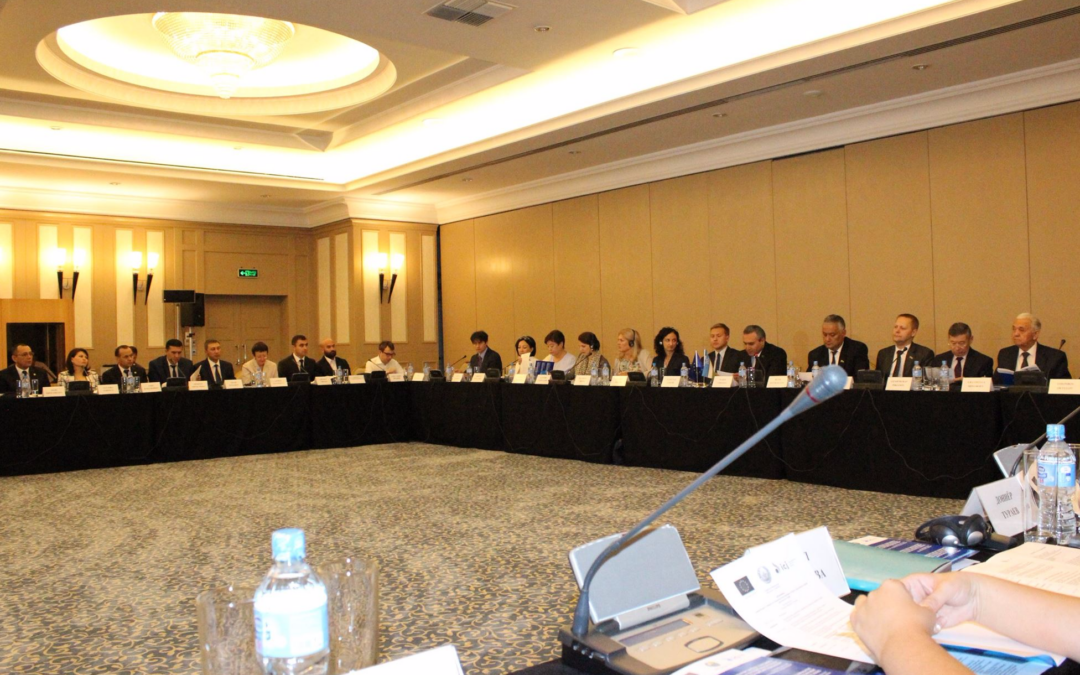
Сегодня, 8 сентября, Международная комиссия юристов (МКЮ) и Высший судейский совет Республики Узбекистан (ВСС) проводят совместный Международный семинар на тему «Сравнительные подходы к отбору, назначению и оценке деятельности судей».
Семинар проходит при поддержке Европейского Союза (ЕС) в рамках проекта «Обучение и обмен в сфере международного права в целях совершенствования национальных систем правосудия в Центральной Азии». В мероприятии принимает участие Управление ООН по наркотикам и преступности.
Пресс-релиз о событии можно загрузить:
На английском, русском или узбекском языках.
Aug 31, 2017
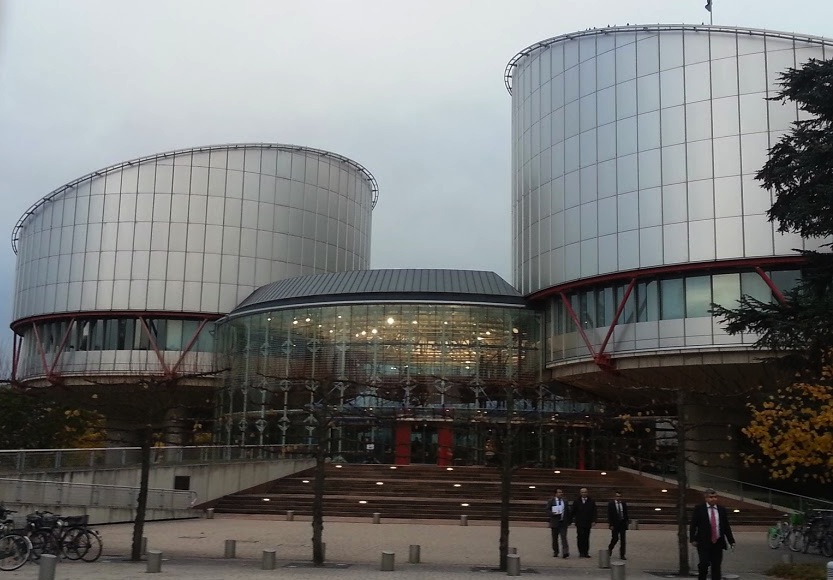
Today, the ICJ intervened in the case Anatoliy Oleksiyovych Denisov v Ukraine, Application no. 76639/11.
In its submission, the ICJ provided the Court with an analysis in relation to:
(a) The role of court presidents in the self-governance of the courts and in maintaining judicial independence;
(b) International standards in relation to security of tenure of judges and court presidents;
(c) The importance of procedural safeguards, including under Article 6.1 ECHR, in decisions affecting the career and tenure of court presidents; and
(d) In light of international standards and principles, the extent to which a disciplinary measure such as removal from the position of president of a court may interfere with the right to respect for private life as protected by Article 8 ECHR.
The ICJ argued that court presidents, in many European jurisdictions, play an important role in the self-governance and impartiality of the judiciary.
Upholding the independence of the judiciary requires, inter alia, that court presidents should, in the discharge of these functions, enjoy independence from the executive, as well as from other powerful interests.
The intervener will argue that the nature of court presidents’ role has consequences for the application of Convention rights to measures affecting their judicial career, including removal from the role of court president, even in cases where they retain judicial office.
Ukraine-Denisov v Ukraine -Advocacy-legal submission-2017-ENG (full text in PDF)
Aug 17, 2017 | Editorial, Noticias
Un editorial de opinion de Karolina Babicka, Asesora legal, Programa Europa CIJ
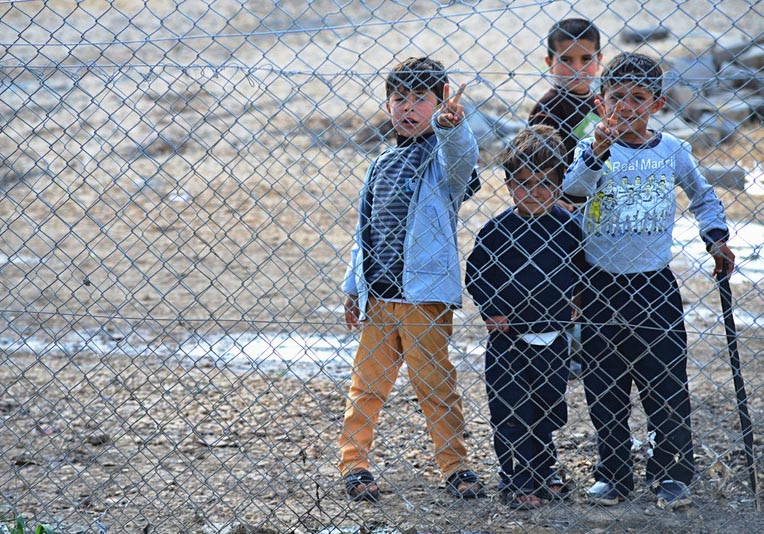
En este momento, muchos niños en España se encuentran retenidos en centros de detención inmigrantes para adultos, a riesgo de ser expulsados a sus países de origen.
Otros niños migrantes están viviendo en las calles de Madrid y de otras ciudades españolas, algunos de ellos enfermos, y a otros no se les permite solicitar asilo.
Esto es así porque estos niños no son españoles y las autoridades españolas no les consideran menores de edad sino adultos.
En el marco de nuestras actividades de capacitación y creación de alianzas con abogados y organizaciones de la sociedad civil para mejorar la defensa de los derechos de los niños migrantes en algunos países europeos, nuestra entidad colaboradora en España, Fundación Raíces, ha denunciado la difícil situación de la infancia migrante en España.
En 7 casos de niños migrantes en situación de elevada vulnerabilidad, Fundación Raíces y otras organizaciones españolas han solicitado al Comité de las Naciones Unidas de los Derechos de los Niños medidas provisionales, es decir, un mandato urgente a las Autoridades españolas, con el objetivo de evitar que estos niños sufran un daño irreparable.
En Estados que, como España, forman parte del Protocolo Facultativo de la Convención de Derechos del Niño relativo a un Procedimiento de Comunicaciones, el Comité de Derechos del Niño tiene la capacidad para examinar comunicaciones individuales hechas por o referidas a un niño o un grupo de niños en las que se reclaman vulneraciones de sus derechos contenidos en la Convención.
A la espera de una decisión sobre el fondo, el Comité puede solicitar al Estado parte la implementación de medidas provisionales con el objetivo de evitar un posible daño irreparable a la víctima o víctimas de las supuestas violaciones.
Uno de los 7 casos mencionados se refiere a A.D., un menor de 17 años procedente de Malí que llegó a España en marzo de 2017.
Fue internado en el Centro de Internamiento para Extranjeros de Madrid, siendo considerado adulto por las Autoridades españolas, las cuales ignoraron la documentación original y oficial que A.M. recibió posteriormente de su país de origen.
El Comité de la ONU reaccionó rápidamente a las peticiones de estas organisationes y durante los últimos meses ha solicitado al gobierno de España la implementación de medidas provisionales en los 7 casos presentados.
Según el Derecho Internacional, el respeto a las medidas provisionales es fundamental para la protección de los Derechos Humanos. La legislación y jurisprudencia internacionales afirman que el no cumplimiento de tales medidas provisionales por parte de un Estado parte constituye una violación de sus obligaciones legales internacionales.
La naturaleza obligatoria de las medidas provisionales ha sido corroborada por el Comité de Naciones Unidas de los Derechos Humanos en su Observación General Nº 33 sobre un Procedimiento de Comunicaciones Individuales.
Sin embargo, el gobierno español ha ignorado estas peticiones del Comité y no ha llevado a cabo las medidas provisionales solicitadas. El gobierno de España ha violado por tanto una obligación legal internacional a la que se había comprometido de manera voluntaria; poniendo así en riesgo el bienestar y la vida de muchos niños en situaciones de elevada vulnerabilidad.
La Convención de las Naciones Unidas de los Derechos de los Niños obliga a los Estados a considerar el interés superior del menor por encima de cualquier otra cuestión. En cambio, las autoridades españolas afirman que en estos casos los individuos no son niños sino adultos.
Por si existiese algún tipo de duda, el derecho internacional afirma que los Estados deben dotar al individuo del beneficio de la duda y tratarle como un niño o una niña, hasta que efectivamente pueda probarse lo contrario.
Por su parte, el Tribunal Supremo de España ya ha expresado su preocupación por el procedimiento de determinación de la edad llevado a cabo por las Autoridades españolas en más de 10 sentencias, al igual que el Defensor del Pueblo español y el Alto Comisionado de las Naciones Unidas para los Derechos Humanos.
Recientemente, 6 organizaciones de la sociedad civil española (Amnistía Internacional, Fundación Raíces, el Consejo General de la Abogacía Española, el Servicio Jesuita a Migrantes, Noves Víes y Save the Children) han solicitando al gobierno español que cumpla de manera inmediata con las medidas provisionales solicitadas por el Comité del Niño en cada uno de los 7 casos.
La CIJ está formando a abogados de 7 países de la UE, incluida España, para la presentación de casos ante los mecanismos internacionales de protección de los Derechos Humanos, como el Comité de la ONU de los Derechos de los Niños, cuando no existe un remedio efectivo a nivel interno.
El respeto a las obligaciones internacionales y la protección de los derechos de los niños deberían constituir prioridades para cualquier Estado parte de la Convención de Derechos del Niño.
El gobierno español debe hacer lo propio e implementar inmediatamente las medidas provisionales solicitadas por el Comité de los Derechos del Niño.
Foto: Plan International
Aug 7, 2017
An Opinion Editorial by Karolína Babická, Legal Adviser, ICJ Europe Programme.
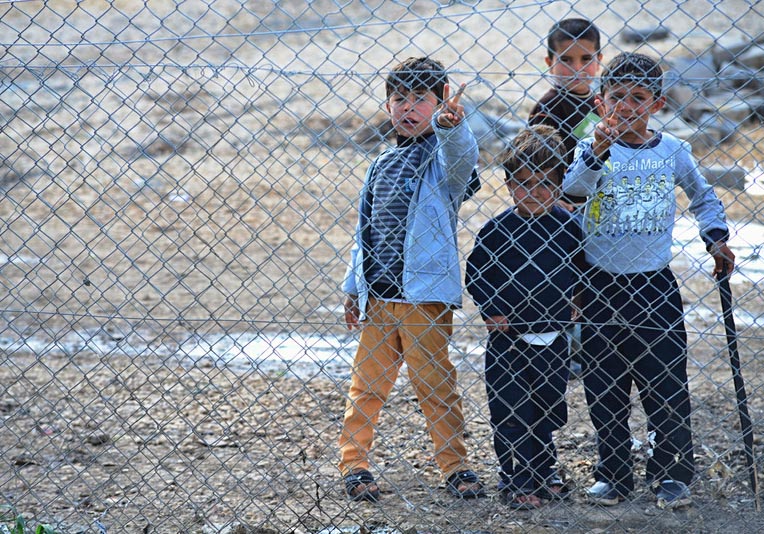
At this very moment, some children in Spain are being held in adult immigration detention centres, pending return to their home countries.
Other migrant children are living on the streets in Madrid and other Spanish cities, suffering from serious illnesses, or are prevented from applying for asylum.
This is happening because they are not Spanish nationals and the authorities have not recognized them as children, but consider them to be adults.
During our capacity and coalition building activities with lawyers and civil society organizations to better defend migrant children’s rights in various European countries, our Spanish partner, Fundación Raíces, raised attention to the dire situation of migrant children in Spain.
In seven cases concerning migrant children in vulnerable circumstances, Fundación Raíces and other Spanish lawyers requested the United Nations Committee on the Rights of the Child to issue interim measures, i.e. orders to the Spanish authorities, with a view to avoiding irreversible harm to these children.
In States that, like Spain, are parties to the Optional Protocol to the Convention on the Rights of the Child on a Communications Procedure, the Committee on the Rights of the Child is empowered to examine individual communications by or on behalf of a child or group of children claiming that there has been a violation of their rights under the Convention.
Pending its determination on the merits, the Committee may request the State party to take interim measures as may be necessary to avoid possible irreversible damage to the victim or victims of the alleged violations.
In one of the seven cases mentioned above, A.D. is a 17-year-old child from Mali that arrived in Spain in March 2017. He was transferred to the immigration detention centre for adults in Madrid as he was considered adult by the public prosecutor, while ignoring the official and original documents A.D. has from his country of origin.
The UN Committee reacted swiftly to the lawyers’ demands and during the past 7 months requested the Spanish government in those seven cases to take interim measures.
Under international law, respect for interim measures is essential for the protection of human rights.
Existing international law and jurisprudence affirm that any State party’s non-compliance with a request for interim measures constitutes a breach of its legal obligations under international law.
The binding nature of interim measures has been reaffirmed by the Human Rights Committee in its General Comment 33 on the individual complaints procedure.
However, the Spanish government has ignored these requests and failed to comply with any of the requested interim measures.
The Spanish government is thus in violation of international obligation it has voluntarily undertaken; more significantly, the lives and well being of dozens of highly vulnerable children are at risk.
The UN Convention on the Rights of the Child obliges States to consider the best interests of the child as a primary consideration above any other.
However, the Spanish authorities claim that the individuals in these cases are not children but adults.
Yet, in the event of any remaining uncertainty, international law affirms that States must accord the individual the benefit of the doubt and treat him or her as a child, until effectively proven otherwise.
Moreover, the Spanish Supreme Court has already expressed concern about the age-assessment procedure used by the Spanish authorities, in more than 10 judgments, as did the Spanish Ombudsman and the United Nations High Commissioner for Human Rights.
Recently, six civil society organizations in Spain (Amnesty International, Fundación Raíces, the General Council of Spanish Lawyers, the Jesuit Mission for Migrants, Noves Vies and Save the Children) have called on the Spanish Government to immediately implement the Committee’s request for interim measures in each case.
The ICJ is training lawyers in seven EU countries, including Spain, and supporting them in bringing their cases to international human rights mechanisms, such as the UN Committee on the Rights of the Child, when no effective remedy is available domestically.
The Spanish government is failing these children and is failing to respect its international law obligations.
Respecting one’s international obligations and ensuring that no harm is caused to children in violation of their rights should be high priorities for any States that are parties to the UN Convention on the Rights of the Child.
The Spanish Government should live up to its obligations, and implement immediately the Committee on the Rights of the Child’s request for interim measures in these cases.
Photo credit: Plan International
Jul 28, 2017 | Multimedia items, News, Video clips
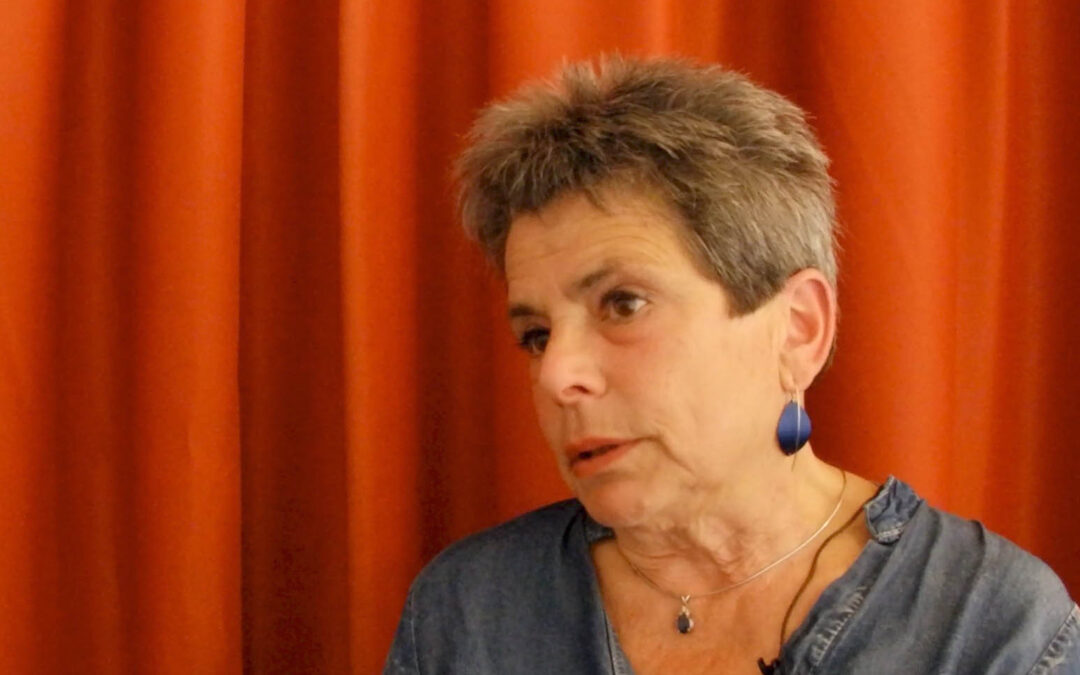
The ICJ continues its series of profiles of its women Commissioners with an interview with Prof. Jenny E. Goldschmidt, who is currently serving her third term as an ICJ Commissioner.
She was first elected to the Commission in 2003 and re-elected in 2008 and 2013.
She is a Member of the Advisory Board of Nederlands Juristen Comité voor de Mensenrechten (NJCM), and NJCM Public Interest Litigation Group. The NJCM is the ICJ’s National Section in the Netherlands.
In this wide-ranging interview, Jenny describes how she started out her career as a lawyer by studying Constitutional law; how her interests began to focus on the haves and the have nots and from there her interest in human rights developed.
She explains how she has always combined academic research and teaching with practical work, particularly during her years as the President of the Equal Treatment Commission in the Netherlands. She also stresses the importance of working in an inter-disciplinarian manner.
For example, she explained that after academics had developed concepts of direct discrimination, indirect discrimination, and systemic discrimination, these concepts were taken on board by lawyers and have been incorporated into case law.
She gave the example of how the European Court of Human Rights and the European Court of Justice are now incorporating this type of stereotyping into their equality concept.
She emphasized human rights law must protect women and that this protection must be embodied in law.
She considered that it is vital to take cases to the Treaty Bodies and courts everywhere to establish severe measures against discrimination and domestic violence.
But human rights lawyers also need sociologists to help find the arguments that convince people and how we can influence their behavior.
“Sometimes soft law and mediation can be effective and you need other disciplines to show in which cases which instruments are most effective,” she said.
She explained that because women are not a homogenous group and because of migration and all the divisions in society, inter-sectionality has become one of the crucial challenges for women’s rights.
She believes in combining a focus on the general problems which all women face as well as taking into account that some women are even less equal than others – that women who belong to minorities, that women who are disabled, that girls are more vulnerable than the majority of women.
“I think one of the things that the disability convention tries to do by giving a specific provision for women and girls rights is that it forces the authorities, the Treaty Bodies, the national and international institutions to be aware of the fact that we are talking about women and disabled people and that we have to take two perspectives at the same time into account,” she added.
When asked what advice she would give a woman who wants to pursue a career in human rights she said: “Don’t give up! And don’t think it will be easy. Human rights world still is a man’s world.”
Jenny Goldsmith is currently Emeritus Professor of Human Rights Law, and was from 2007-2014 Director of the Netherland Institute of Human Rights at the University of Utrecht.
From 1994-2003 she was President of the Equal Treatment Commission of the Netherlands.
She is on the board of Disability Studies in the Netherlands and involved in several NGOs of disability rights, democracy, and human rights.
Watch the interview:
The series of profiles introducing the work of ICJ Commissioners and Honorary Members on women’s rights was launched on 25 November 2016 to coincide with the International Day to Eliminate Violence against Women and the first day of the 16 Days of Activism Against Gender-Based Violence Campaign.