Jan 10, 2017 | Новости, Статьи
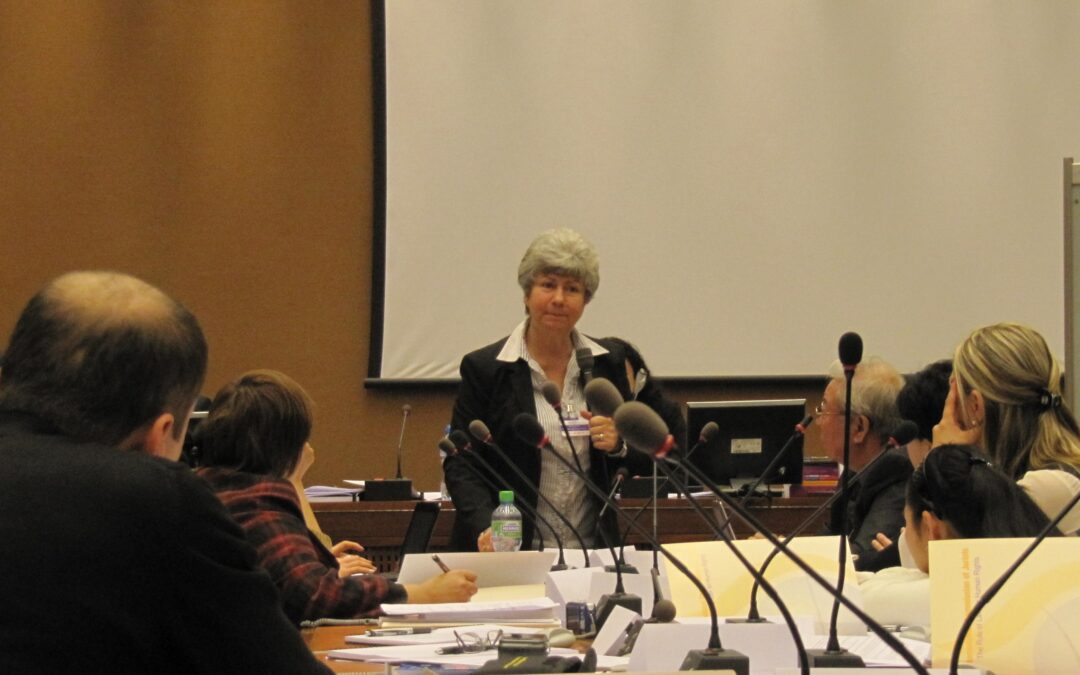
Целью программы является повышение знаний по международному праву в области прав человека юристов, практикующих в сфере уголовного правосудия, и их обучение применению этих знаний в своей практике в национальных судах, а также обеспечение эффективного использования международных механизмов защиты прав человека.
ходе обучающей программы будут рассмотрены основные принципы международного права в области прав человека, а также международные стандарты в области прав человека и судебной практики, касающейся права на справедливое судебное разбирательство; права на свободу; защиту от пыток и жестокого обращения и других прав, имеющих значение для уголовного правосудия.
Программа предоставит информацию о том, как представлять дела в международные органы по правам человека, с особым акцентом на Комитет по правам человека ООН и Комитет против пыток ООН.
Central Asia-Geneva Application Form-Training modules-2017-RUS (русская заявка на участие, docx)
Central Asia-Geneva Application Form-Training modules-2017-RUS (русская заявка на участие, PDF)
Jan 10, 2017
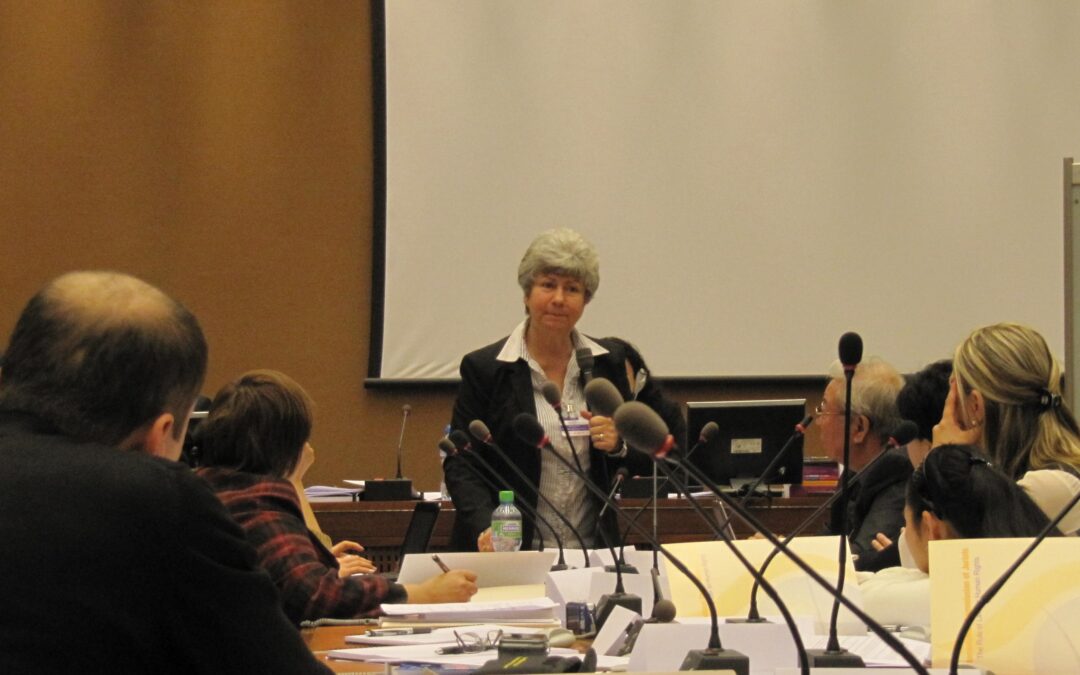
The objective of the programme is to enhance knowledge of international human rights law of lawyers practicing in the area of criminal justice, and to equip them to apply this knowledge in their practice in national courts and to make effective use of international human rights mechanisms.
The training programme will address core principles of international human rights law as well as international human rights standards and jurisprudence on the right to fair trial; the right to liberty; protection against torture and ill-treatment and other rights of particular relevance to criminal justice.
It will provide guidance on how to bring proceedings before international human rights mechanisms, with a particular focus on the UN Human Rights Committee and the UN Committee Against Torture.
Central Asia-Geneva training application-Training modules-2017-ENG (full text in English, PDF)
Central Asia-Geneva Application Form-Training modules-2017-RUS (Application form in Russian)
Central Asia-Geneva Application Form-Training modules-2017-RUS (Application form in Russian, PDF)
Jan 6, 2017
The ICJ has published another translation of its Practitioner’s Guide N°1 International Principles on the Independence and Accountability of Judges, Lawyers and Prosecutors.
The Guide outlines the roles to be played by a strong legal profession, an independent judiciary and an impartial and objective prosecuting authority.
Part one of this guide provides an analysis of the law and concrete examples drawn from international practice. Part two includes relevant global and regional standards on the topic.
References to international decisions, reports, texts of treaties and other international standards allow the Guide to be used as a reference book by legal practitioners and policy makers in Uzbekistan.
Uzbekistan-PGN°1-Publications-Practitioners’ Guide Series-2017-UZB (full text in PDF)
Dec 6, 2016 | Advocacy, News, Non-legal submissions
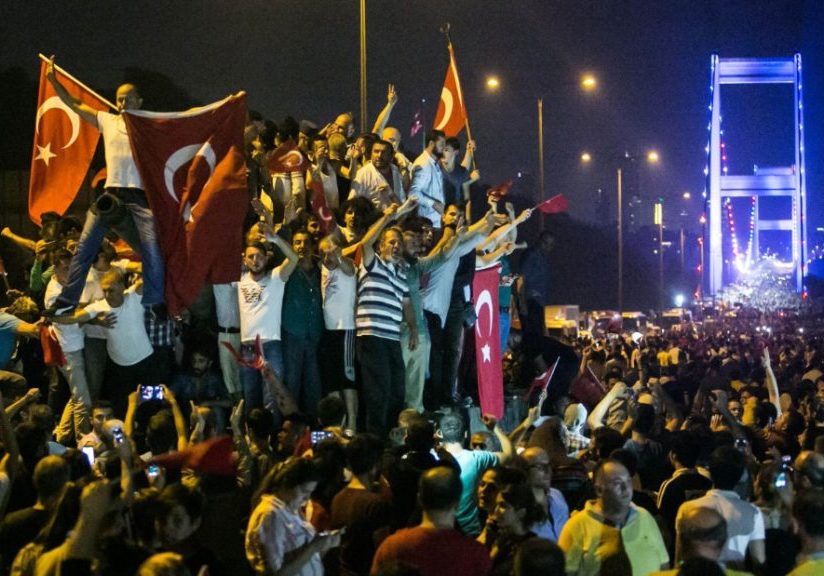
Nearly five months after the failed coup attempt in Turkey, the country remains locked in an acute rule of law crisis. The government must take urgent steps to restore the rule of law, the ICJ said today.
Mass arrests, many of them arbitrary, and credible allegations of the torture and other ill-treatment of detainees, mean that access to legal advice, to a fair trial and to effective judicial remedies are crucial. However, the unprecedented summary and arbitrary purge of the judiciary following the coup, and arrests of judges, prosecutors and lawyers, have significantly weakened the justice system and its capacity to protect against and effectively remedy violations of human rights. The vulnerability of detainees to violations of their human rights has been compounded by unwarranted restrictions on access to lawyers and extended periods of pre-trial detention.
State of Emergency
The ICJ is concerned that the State of Emergency, which involves derogations from Turkey’s international human rights law obligations, has been renewed for a second period of 90 days, until mid-January. Sweeping emergency decrees continue to erode human rights, including rights of fair trial, the right to liberty, and freedoms of expression and association.
The ICJ recalls that in times of crisis, any measures derogating from human rights must be strictly necessary to meet a current threat to the life of the nation. This necessity must be continually re-assessed so that the derogating measures apply for the shortest time possible. Certain human rights, including the right to life, the prohibition of torture or ill-treatment, and the essential elements of arbitrary deprivation of liberty and to a fair trial and the right to an effective remedy can never be restricted even in a state of emergency. The ICJ is concerned that Turkey’s notifications of derogation purport to derogate in general terms from a number of these rights.
Measures taken under the State of Emergency should be rigorously and urgently reviewed to ascertain whether they are permissible under international law and whether they remain necessary and proportionate to any current threat to the life of the nation. Moreover, it must be ensured that non-derogable rights, including the prohibition on torture and other ill-treatment, and the right to a fair trial, are not limited by emergency measures. The ICJ urges the Turkish authorities to lift the State of Emergency and the derogations from its international human rights law obligations at the earliest opportunity.
Independence of the judiciary
The ICJ reiterates its grave concern at mass dismissals of judges and prosecutors, which have a devastating effect on the independence of the judiciary. More than 3,000 judges and prosecutors – approximately one fifth of the judiciary – have been arbitrarily dismissed under emergency decrees, without procedural safeguards and without the right to reasoned decisions.
Judges and prosecutors have been detained in very large numbers. In total, more than 2,000 have been detained, including two judges of the Constitutional Court, 109 members of the Court of Cassation, 41 Members of the Council of State and five members of the High Council for Judges and Prosecutors (HSYK).
Restructuring of the Court of Cassation and the Council of State, under legislation adopted in July, has required the reappointment of all judges of these courts. New judges have been appointed rapidly, through procedures that lack transparency, and in the context of strong executive influence over the appointment process in the HSYK.
The ICJ is also gravely concerned that the independent association of judges, YARSAV, has been shut down, and its President, Murat Arslan, has been arrested.
These measures have eroded the separation of powers in Turkey and have seriously undermined the independence of the judiciary at every level, compromising the courts’ ability to provide fair trials or an effective remedy for violations of human rights. The impact of this situation on the protection of human rights goes beyond what can be justified under the state of emergency. To meet its international human rights obligations, the Turkish government must as a matter of urgency take steps to restore the independence of the judges and of the governing bodies of the judiciary. Procedural safeguards that protect against arbitrariness in criminal, civil and administrative procedures, including in regard to the dismissal of judges, must be reinstated.
Independence of lawyers and access to legal advice
The ICJ is similarly concerned at measures that undermine the independence of the legal profession and the capacity of lawyers to protect human rights. More than 573 lawyers are reported to have been detained in connection with the failed coup since July, and more than 200 have been arrested, and their assets frozen.
Amongst those reported to be arrested are four Presidents of regional bar associations: Orhan Öngöz, President of the Trabzon Bar; Mehmet Cemal Acar, President of the Siirt Bar; İsmail Taştan, President of the Gumushane – Bayburt Regional Bar and Fevzi Kayacan, President of the Konya Bar. The ICJ considers that many of these detentions and arrests are likely to be arbitrary.
These developments have very serious consequences, not only for the rights of lawyers themselves, but also for the right to a fair trial of their clients and the effectiveness of judicial remedies for violations of human rights. They raise concerns that lawyers are being identified with their clients or their clients’ causes, contrary to the Principle 18 of the UN Basic Principles on the Role of Lawyers. The ICJ recalls that under the UN Basic Principles, governments must ensure that lawyers are able to perform all of their professional functions without intimidation, hindrance, harassment or improper interference.
Furthermore, the ICJ is concerned that hundreds of NGOs have been closed under emergency decrees, including a number of lawyers’ associations. Such closures have serious implications for rights of freedom of association and expression, and for the rule of law.
The ICJ calls on the Turkish government to take urgent steps to guarantee the independence of the legal profession, protect lawyers from arbitrary detention or arrest and provide procedural safeguards to ensure the right to fair trial of lawyers under criminal investigation.
Contact:
Roisin Pillay, ICJ Europe Director, at roisin.pillay(a)icj.org or +32 2 734 84 46
Massimo Frigo, ICJ Europe Legal Adviser, at massimo.frigo(a)icj.org or +41 22 979 38 05
Dec 2, 2016 | Agendas, Events, News
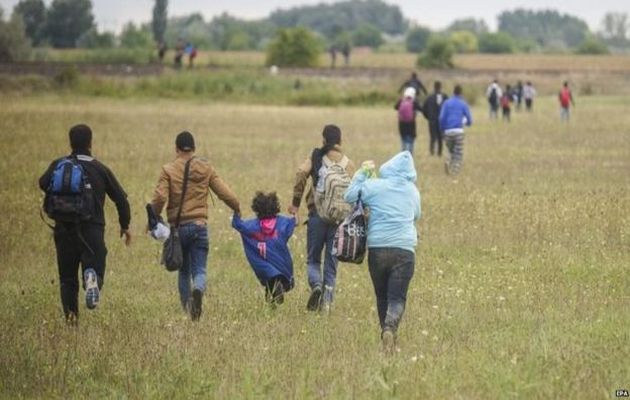
Today, the ICJ and Scuola Superiore Sant’Anna are holding a training for lawyers on the rights of migrant children and on accessing international human rights mechanisms in Pisa (Italy).
The training aims to support the strategic use of national and international mechanisms to foster migrant children’s access to justice. The training will take place over the course of two days from 2-3 December 2016.
The training will focus on accessing the international mechanisms in order to protect and promote the rights of migrant children, the child’s right to family life and the best interests of the child principle. A moot court exercise will be held on the second day of the training.
Trainers include experts from the ICJ and Scuola Superiore Sant’Anna, the Italian Court of Cassation and the University of Milan.
The training is based on draft training materials prepared by the ICJ (to be published in the second half of 2017) and the ICJ Practitioners Guide no. 6: Migration and International Human Rights Law.
It is organized as part of the FAIR project co-funded by the Rights, Equality and Citizenship Programme of the European Union and OSIFE.
Download the agenda in Italian here:
italy-rights-migrant-children-training-agenda-2016-ita




