Aug 15, 2016
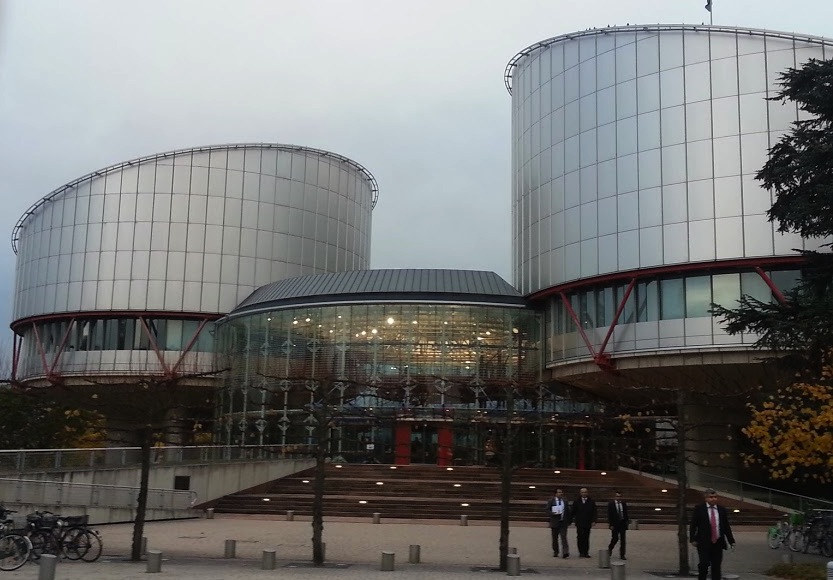
The ICJ and others intervened before the European Court of Human Rights in a case of five undocumented children of Afghan nationality subject to detention and/or closed reception measures in Greece.
The International Commission of Jurists (ICJ), the European Council on Refugees and Exiles (ECRE) and the AIRE Centre jointly intervened in the case of Sh.D and others v. Greece.
After his arrest by the police, Sh.D was placed in detention in a police station and then transferred to a reception centre for undocumented minors. The other four unaccompanied minors are currently living in the Idomeni camp at the border with the Former Yugoslav Republic of Macedonia.
In this case, the European Court of Human Rights is called to rule on whether their detention and reception conditions were lawful and/or constituted an inhuman or degrading treatment under the European Convention on Human Rights.
In their third party intervention, the three human rights organizations submitted the following arguments:
- The UN Convention on the Rights of the Child (CRC) must be implemented in all of the European Court of Human Rights (ECtHR) decisions that concern children. Since the principle of the best interests of the child must be upheld as a primary consideration in all actions concerning children, children must never be deprived of their liberty, under 5(1) ECHR, without a rigorous examination of the individual circumstances of the case, of necessity and proportionality, including a mandatory and prior assessment of less coercive measures.
- For children to have effective enjoyment of their rights under international law, in particular the ECHR, and EU law, including the right to liberty and security and the right to asylum, their needs, welfare and well-being must be individually assessed. The discharge of State obligations to ensure enjoyment of these rights is reliant on the appointment of a guardian with the necessary expertise and who has the specific duty to assist the child by enabling him or her to access rights under EU law.
- Since measures affecting the right to liberty and other Convention rights must be undertaken in accordance with national law, they must also, where Contracting Parties are EU Member States, be undertaken in accordance with EU law.
Greece-ICJ&others-AmicusBrief-ShD&others-ECtHR-legalsubmission-2016 (download the third party intervention)
Aug 1, 2016 | Адвокаси, Юридические заявления
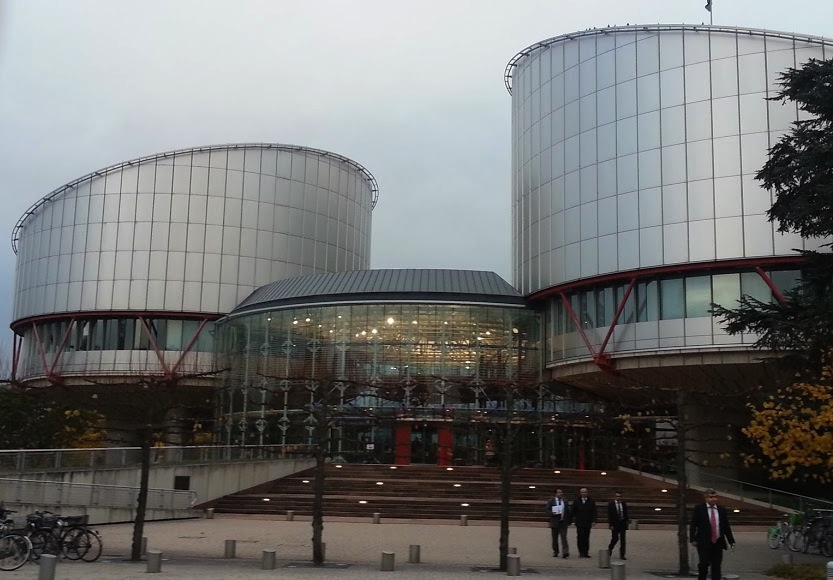
29 июля 2016 года МКЮ и другие группы представили стороннее вмешательство в совместные делаНиколай Алексеев и Движение за брачное равноправие против России, а такжеНиколай Алексеев и другие против России в Европейском суде по правам человека.
Случаи касаются отказов российских властей в регистрации ассоциаций, защищающих права гомосексуалистов.
В своих письменных материалах, представленных Европейскому суду по правам человека, МКЮ, Европейский центр по защите прав человека (ЕЦЗПЧ) и Европейский регион Международной ассоциации лесбиянок, геев, бисексуалов, трансгендеров и интерсексуалов (ILGA-Europe), были сосредоточены на законные ограничения права на свободу ассоциации для защиты морали, в частности, в отношении права на уважение частной жизни в соответствии со статьей 8 Европейской конвенции о защите прав человека.
В комментариях речь шла о прецедентном праве Европейского суда; авторитетное толкование других применимых источников международного права и сравнительного международного права.
RUSSIA-INTERVENTION ALEKSEYEV ECtHR-LEGALINTERVENTION-2016-ENG (Английский)
Aug 1, 2016
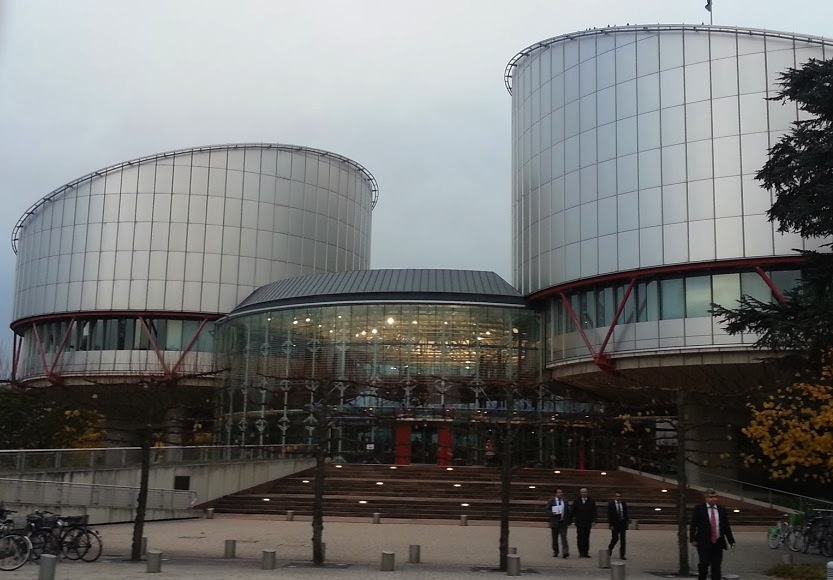
On 29 July 2016, the ICJ and other groups submitted a third-party intervention in the joint cases of Nikolay Alekseyev and Movement for Marriage Equality v. Russia and Nikolay Alekseyev and Others v. Russia before the European Court of Human Rights.
The cases concern the Russian authorities’ refusals to register associations defending the rights of homosexuals.
In their written submissions to the European Court of Human Rights, the ICJ, the European Human Rights Advocacy Centre (EHRAC) and the European Region of the International Lesbian, Gay, Bisexual Trans and Intersex Association (ILGA-Europe) focused on the extent of legitimate restrictions on the right to freedom of association for the protection of morals having regard, in particular, to the right to respect for private life under Article 8 of the European Convention on Human Rights.
The comments drew upon the European Court’s case-law; authoritative interpretation of other applicable sources of international law and comparative international law.
RUSSIA-INTERVENTION ALEKSEYEV ECtHR-LEGALINTERVENTION-2016-ENG
Jul 21, 2016 | News
The ICJ urges Turkish authorities to fully respect the rule of law and human rights under the recently declared state of emergency.
The ICJ is concerned that yesterday’s declaration of a state of emergency could further exacerbate the ongoing attack on institutions and professions that are guardians of the rule of law in Turkey, including the judiciary, the media and academia.
The ICJ reiterates its concern at the ongoing purge within the judiciary that led to the suspension of 2,745 judges and the arrest of hundreds.
Since then, Turkish authorities have summarily suspended, dismissed or arrested more than 50,000 academics, judges, including military judges, and public officials.
The ICJ is concerned that many of these measures are arbitrary and unlawful.
“Turkey needs to respect the tenets of the rule of law and human rights law during the state of emergency,” said Wilder Tayler, ICJ Secretary General.
“There are human rights that can never be restricted even in a state of emergency, notably the right to life, the prohibition of torture or ill-treatment, and the essential elements of arbitrary deprivation of liberty and to a fair trial,” he added.
“The current allegations of torture and ill-treatment of detainees and arbitrary arrests already point to serious violations of human rights. Widespread arrests and suspensions of judges, which began before the declaration of any state of emergency, threaten the right to a fair trial,” Tayler further said.
“The state of emergency must not be used as a means to subvert the rule of law and human rights.”
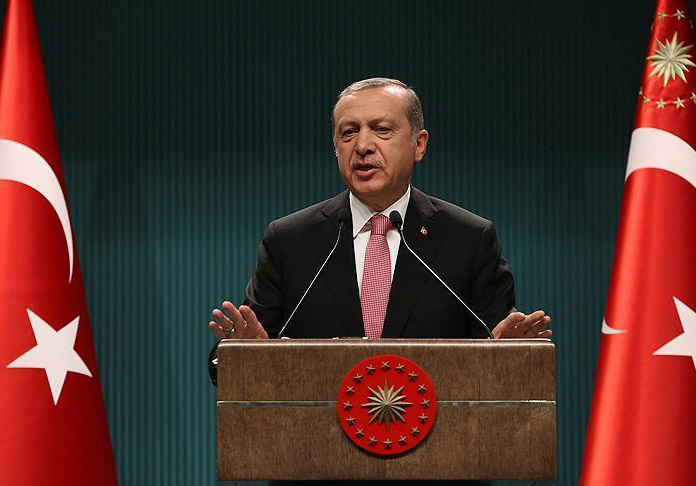
The ICJ remains concerned at President Erdoğan’s statements that he would allow for a reinstatement of the death penalty.
The ICJ firmly opposes the death penalty under any circumstances, and its reintroduction in Turkey which would also be incompatible with Turkey’s obligations under the European Convention on Human Rights and the Second Optional Protocol to the International Covenant on Civil and Political Rights.
Contact
Róisín Pillay, Director, ICJ Europe Programme, t: +32 476 974263 ; e: roisin.pillay(a)icj.org
Massimo Frigo, Legal Adviser, ICJ Europe Programme, t: +41 22 979 38 05 ; e: massimo.frigo(a)icj.org
Background information
The Council of Ministers, chaired by President Recep Tayyip Erdoğan, declared yesterday a three-month state of emergency throughout the whole territory of Turkey in accordance with article 120 of the Turkish Constitution.
The declaration must be ratified by the National Assembly. He has not yet announced what specific measures will be introduced.
Turkey is a party to many human rights treaties, including the European Convention on Human Rights and the International Covenant on Civil and Political Rights.
Under these treaties, the declaration of a state of emergency must remain within the strict boundaries of the law, in particular constitutional and international law.
Any measures derogating from them must be strictly necessary to meet a threat the life of the nation.
Certain human rights obligations cannot be derogated from even under a state of emergency. All rights must continue to be respected, although lawful derogating measures may restrict their scope of application.
Jul 18, 2016 | News
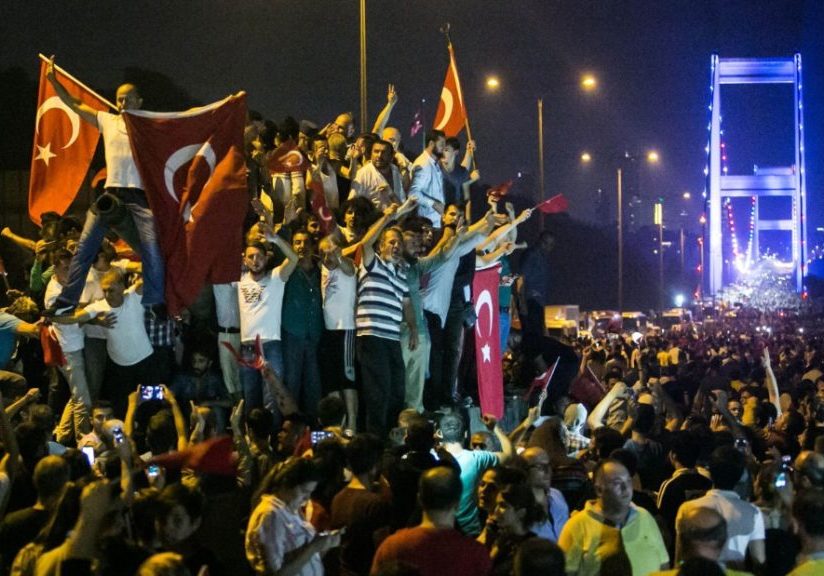
At a critical moment for Turkish democracy, the ICJ today urged the government to uphold the rule of law and respect Turkey’s obligations under international human rights law.
The ICJ condemns what appears to be a wholesale attack on the judiciary, implemented within hours of the failed coup attempt of 15 and 16 July.
“At such moments of crisis, it is crucial that the independence and security of tenure of judges is respected, so that public confidence can be maintained in the fairness of the justice system,” said Wilder Tayler, ICJ Secretary General.
“Purging the judiciary now endangers the deepest foundations of the separation of powers and the rule of law. An independent judiciary will be critical to ensure a functioning administration of justice for all people in Turkey as the country emerges from the crisis,” he added.
Reports indicate that on 16 July 2,745 judges were suspended by the High Council for Judges and Prosecutors (HSYK). Arrest warrants were issued for more than a hundred judges.
Two judges of the Constitutional Court, and ten members the HSYK itself, are reportedly among those detained. The ICJ fears that many of these detentions may be arbitrary.
Allegations that the judges concerned were linked to the attempted coup have not been supported by evidence, and it defies credulity that such a high number of judicial authorities could have been involved in the planning or execution of the military coup d’etat.
According to the ICJ, the measures are arbitrary, and contrary to fundamental rule of law principles.
In June, an ICJ report, Turkey: the judicial system in peril, analysed the increasing government control of the Turkish judiciary, including the HSYK, and arrests and dismissals judges, in violation of international standards.
“This weekend’s mass suspensions and arrests of judges represent a dramatic escalation of an attack on judicial independence that was already underway,” said Tayler.
“Disciplinary proceedings against judges should not proceed until it is clear that they will be heard by a body that is fully independent of the executive, and in accordance with the right to a fair hearing,” he added.
The ICJ is also deeply concerned at suggestions by the government that the death penalty may be introduced for those involved in the failed coup.
Re-introduction of the death penalty would violate Turkey’s obligations under Protocol 13 to the European Convention on Human Rights, and would amount to inhuman and degrading treatment in breach of Article 3 of the Convention.
The ICJ considers the death penalty to constitute in all circumstances a violation of the right to life and the prohibition on cruel, inhuman or degrading punishment.
Contact:
Róisín Pillay, Director, ICJ Europe Programme, t: +32 476 974263 ; e: roisin.pillay(a)icj.org
Additional information:
Under international standards on the independence of the judiciary, judges should be subject to suspension or removal only for reasons of incapacity or behaviour that renders them unfit to discharge their duties.
The ICJ recently published its Practitioners’ Guide N°13 on Judicial Accountability, a major study on international law and standards on the accountability of judges.
Further guidance on relevant international law and standards can be found in the ICJ Legal Commentary to the Geneva Declaration on Upholding the Rule of Law and the Role of Judges and Lawyers in Times of Crisis.




