Jul 7, 2016
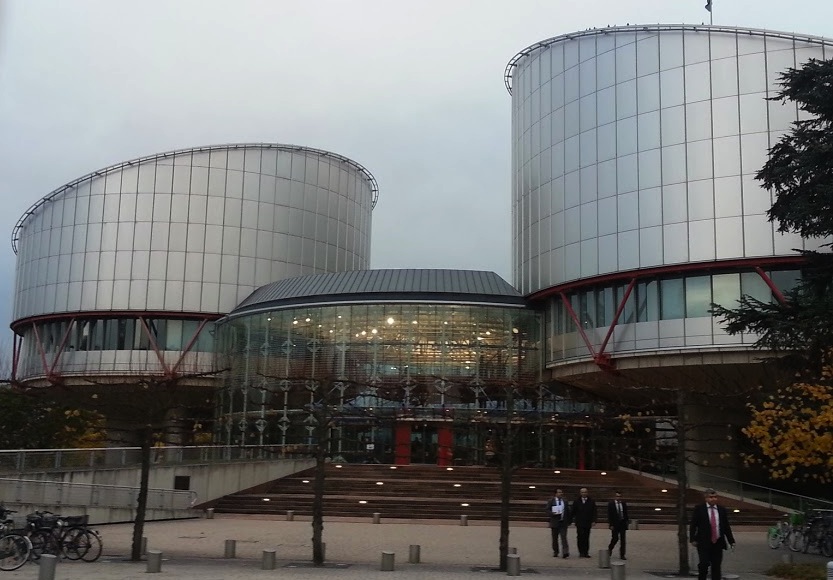
On 5 July 2016, the European Court of Human Rights, in its judgment in O.M. V. Hungary ruled that the immigration detention of an LGBT asylum-seeker had violated Article 5 of the European Convention of Human Rights, enshrining the right to liberty and security of person.
In particular, the Court found that the Hungarian authorities had failed to make an individualized assessment or take into account the applicant’s vulnerability within the detention facility because of his sexual orientation.
The ICJ, alongside the AIRE Centre, ILGA-Europe and ECRE had intervened in this case.
The Court’s judgment has, once again, recognized the fundamental right of asylum-seekers to protection – no matter their sexual orientation or gender identity.
Background
O.M. is an Iranian national who requested asylum in Hungary after travelling to Europe via Serbia.
On arriving in Hungary in early 2014 he was arrested and placed in a detention facility, where he was kept for 58 days.
He claimed asylum based on his homosexuality and the fact that were he to be returned to Iran he faced severe penalties because of his sexual orientation, including the death penalty.
During his time in detention, O.M. repeatedly asked the asylum authority to release him from the detention facility or transfer him to an open facility due to the harassment he faced because of prejudice against his sexual orientation.
His was eventually released on 22 August 2014 and in October 2014 he was recognized as a refugee.
The Court made a strong statement in favour of the rights of LGBT asylum seekers: “…when asylum seekers claim to be a part of a vulnerable group in the country which they had to leave, the authorities should exercise particular care in order to avoid situations which may reproduce the plight that forced these persons to flee in the first place. In the present case, the authorities failed to do so when they ordered the applicant’s detention without considering the extent to which vulnerable individuals –for instance, LGBT people like the applicant – were safe or unsafe in custody among other detained persons”.
Jun 24, 2016 | News
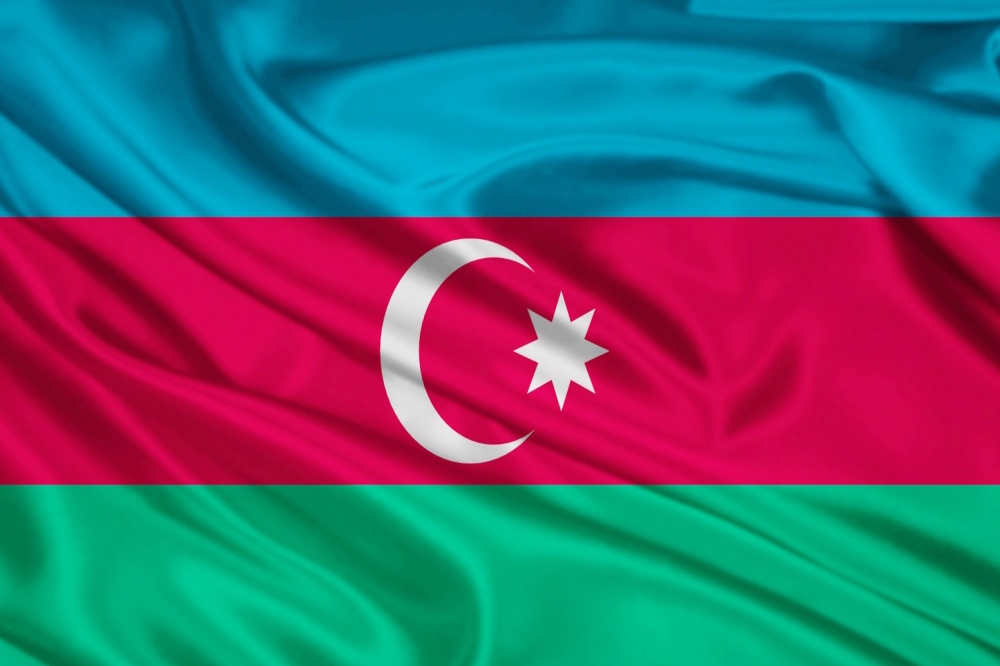
The ICJ conducted a research mission to Azerbaijan on 20-23 June, to assess the situation of lawyers in the country, in light of concerns about recent criminal and disciplinary proceedings against lawyers.
During the mission the ICJ met with lawyers and legal experts to discuss the governance of the legal profession, including questions of access to the profession, the need for sufficient numbers of qualified lawyers to provide effective access to justice, and the role of the bar association in protecting lawyers against harassment or interference in their work.
In the course of the mission the ICJ met with several lawyers against whom disciplinary proceedings had been initiated, or who had faced criminal or other sanctions. Many of these lawyers have been prominent in bringing human rights cases before the national and international courts.
On 23 June, ICJ representatives observed a hearing in the case of lawyer Alaif Ghasanov before the Baku Administrative Economic Court no.1, in which he is challenging his disbarment.
The ICJ will publish a report of the mission with recommendations to address harassment of lawyers and for reform of the governance of the legal profession.
Jun 23, 2016 | News
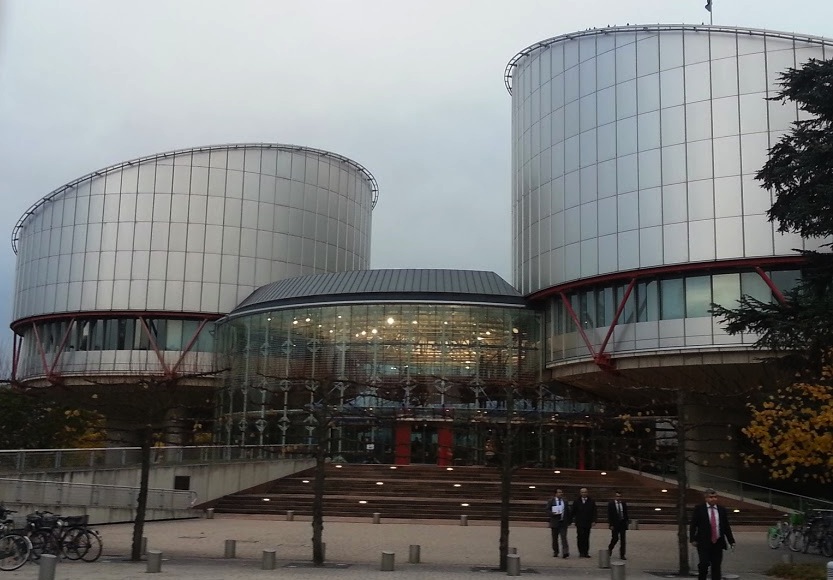
The ICJ welcomes today’s judgment of the European Court of Human Rights that the removal from office of Hungarian Supreme Court President András Baka violated the European Convention on Human Rights (ECHR).
The Court found that the pre-mature termination of his appointment deprived him of a fair process and was based on public statements he made that were critical of certain justice system reforms.
The ICJ intervened as third party in this case. The judgment is expected to be influential around the world in cases involving judicial independence and expression.
“Today’s judgment is a vindication for the security of tenure and freedom of expression of judges not only in Hungary, but around the world,” said Massimo Frigo, ICJ Europe Programme Legal Adviser.
“Judges should never be precluded from exercising their right and duty to speak out in protection of judicial independence,” he added.
In its ruling, the Grand Chamber of the European Court of Human Rights ruled that, by ending his prescribed term in office pre-maturely through a targeted legislative reform because of his public criticism, Hungary had violated his right to freedom of expression, under article 10 of the European Convention on Human Rights.
The Court held that expressing statements on the reform of the judiciary and other legislation was not only Judge Baka’s right, but also his duty.
The Court further ruled that former Supreme Court President András Baka had enjoyed a right to access courts to challenge his dismissal, and that his removal from office by a law that precluded such challenges violated article 6 of the ECHR on the right to a fair hearing.
In its judgment, the European Court cited a wide range of United Nations, European, Inter-American, and other international instruments and standards on judicial independence and freedom of expression.
The International Commission of Jurists anticipates that the Court’s ruling and reasons will have an important influence on cases concerning judicial independence and expression around the world.
Background:
Judge András Baka, former judge of the European Court of Human Rights from 1991 to 2008, had been appointed as President of the Supreme Court of Hungary on 22 June 2009.
His term in office, which was on his appointment guaranteed by law to continue until 22 June 2015, was prematurely terminated on 1 January 2012 following the entry into force of the Transitional Provisions of the new Hungarian Constitution.
This rule modified the eligibility requirements for the position of President of the Supreme Court, effectively excluding judge András Baka from the position.
Judge András Baka was also President of the National Council of Justice, and had publicly expressed criticism concerning various legal reforms brought on by the Hungarian Government that he considered to undermine the independence of the judiciary.
The judgment can be downloaded in PDF format.
Read also:
ICJ third party intervention
The ICJ also recently published a comprehensive analysis of relevant global standards in its Practitioners Guide No. 13 on judicial accountability.
An online compilation of global and regional standards on independence and accountability of judges, lawyers and prosecutors is also available here.
Contact
Massimo Frigo, Legal Adviser, ICJ Europe Programme, t: +41 22 979 38 05 ; e: massimo.frigo(a)icj.org

Jun 22, 2016 | Advocacy, Non-legal submissions
The ICJ today made an oral statement at the United Nations, on threats to the independence of lawyers in Azerbaijan.
In the statement to the Human Rights Council, the ICJ emphasised that lawyers in Azerbaijan face suspension or disbarment for statements clearly constituting protected freedom of expression. In some cases, they are subject to arrest, detention, unfair trial, and arbitrary imprisonment.
The lack of independence of the Bar Association is a serious concern. This body is increasingly initiating apparently groundless disciplinary proceedings, including leading to disbarment, against lawyers who defend the interests of clients in high profile or politically sensitive cases. Disciplinary penalties in such cases are routinely upheld by the judiciary, which does not appear to be fully independent.
This was highlighted in preliminary findings of the Working Group on Arbitrary Detention following its recent visit (Working Group on Arbitrary Detention Statement upon the conclusion of its visit to Azerbaijan (16-25 May 2016)). Representatives of the ICJ are currently visiting Azerbaijan to further assess the situation.
The cases of Khalid Bagirov, Alaif Ghasanov and Intigam Aliyev illustrate these concerns. While welcoming the release of Mr Aliyev, we remain concerned at the maintenance of his underlying conviction despite credible reports that the charges against him were politically motivated.
Lawyer Muzaffar Bakhishov is currently subject to disbarment proceedings for having criticized the lack of independence of the judicial system.
These disbarments have a chilling effect on the work of other lawyers. They undermine access to effective and independent legal assistance to protect human rights.
The ICJ urged the Council to closely monitor this worrying trend for the rule of law.
The statement may be downloaded in PDF format here: HRC32-OralStatement-Azerbaijan-2016-final-ENG
Jun 9, 2016 | Agendas, News
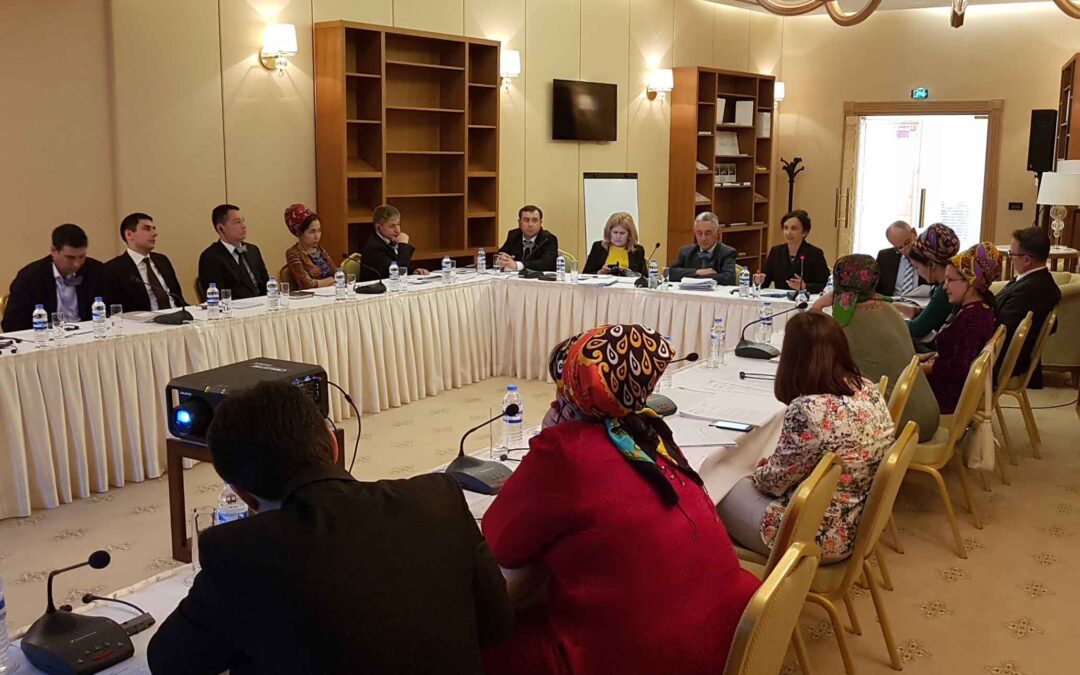
The ICJ today conducts a training seminar organized in Ashgabat on international human rights obligations and national courts.
The seminar will be attended by judges of the Supreme Court, representatives of the Prosecutor General’s office, the Ministry of Justice, lawyers as well as representatives of other institutions.
ICJ commissioners and staff members will participate event, including Justice Azhar Cachalia, Justice Radmila Dicic, Professor Andrew Clapham.
The seminar is organised in cooperation with the EU.
Contact
Róisín Pillay, Director, Europe Programme, roisin.pillay(a)icj.org
Temur Shakirov, Legal Adviser, Europe Programme, temur.shakirov(a)icj.org