Jun 25, 2015 | News
The ICJ today welcomed the decisions by the Kyrgyz Supreme Court declaring illegal the recent government searches of the homes and offices of lawyers, and seizures of their legal files.
In three related cases, the Court upheld the findings of the Osh regional court that the searches of the homes of lawyers Valerian Vakhitov and Khusanbay Saliyev and lawyers’ offices at the NGO “Bir-Duyno-Kyrgyzstan” by officers of the State National Security Committee were contrary to Kyrgyz law.
The Supreme Court also dismissed the attempts by the Prosecutor’s Office to initiate disciplinary action against judges of the Osh regional court as a result of their decision in these cases.
The decisions are an important affirmation of the rule of law in the Kyrgyz Republic, and will strengthen the independence of both the judiciary and the legal profession, the ICJ said.
“These decisions of the Supreme Court are crucial for securing the independence and strengthening of the legal profession under the newly established Association of Lawyers and for the ability of judges to issue independent decisions based on law and facts,” said Olga Zimareva, one of two ICJ observers who were present at the hearing.
“It is a demonstration of the judiciary’s willingness and capacity to effectively uphold the rule of law and safeguard the fundamental role of lawyers,” she added.
The International Covenant on Civil and Political Rights, which is binding on the Kyrgyz Republic, protects the right to a fair trial including lawyer-client confidentiality.
Furthermore, Principle 16 of the UN Basic Principles on the Role of Lawyers upholds the duty of States to ensure that lawyers can perform all of their professional functions without intimidation, hindrance, harassment or improper interference.
International standards require that judges should not be subjected to disciplinary action for discharging their judicial function, as was requested by the Prosecutor’s Office in this case.
Principle 2 of the UN Principles on the Independence of the Judiciary makes clear that: “[t]he judiciary shall decide matters before them impartially, on the basis of facts and in accordance with the law, without any restrictions, improper influences, inducements, pressures, threats or interferences, direct or indirect, from any quarter or for any reason”.
Background
On 25 March 2015, Umar Farooq, a United States national and journalist, was arrested by officers of the State National Security Committee (SNSC), who seized a number of items in his possession including the business cards of two lawyers, Valerian Vakhitov and Khusanbay Saliyev.
On 28 March, Umar Farooq was expelled from the Kyrgyz Republic on grounds of collection of information without accreditation.
The investigator sought a search warrant for the premises of the two lawyers on the grounds that they could contain documents “necessary for the investigation”. This was done despite a clear guarantee against such an interference under Article 29 of the Law On Advokatura and Lawyers’ Activity of the Kyrgyz Republic stating that “requisitioning, seizure, examination, inspection, copying documents, collection and use of information related to legal assistance in a particular criminal case are allowed only in the case involving a lawyer as a defendant …”.
Judges K.M. Matisakov and B.T. Satybaldiyev issued warrants to the State National Security Committee to search the NGO premises where the lawyers worked and to search the residence of Valerian Vakhitov and Khusanbay Saliyev, in separate proceedings on 26 and 27 March. Officers of searched the homes of lawyers and the office of the human rights organization Bir-Duyno-Kyrgyzstan” and seized certain case materials of the two lawyers.
In a statement issued on 31 March 2015, the ICJ deplored the unlawful actions against the lawyers and underscored that an independent legal profession is fundamental to ensuring the fair administration of justice and right to a fair trial for all persons who come before the courts.
The issuing of the warrants was successfully challenged by lawyers before the Osh Regional Court which issued its decision on 30 April 2015. Before the Supreme Court, the Prosecutor’s Office sought affirmation of the lawfulness of searchers of lawyer’s homes and work premises as well as recognition of the lawfulness of seizure of case materials, both guarantees clearly protected by national law in Kyrgyz Republic and international law and standards on the role of lawyers and the right to a fair trial.
The Prosecutor also sought disciplinary measures against the judges of the Regional Court who decided in favour of the protection of the professional guarantees of lawyers, ruling that the searches and seizures of documents were illegal.
Two ICJ observers attended the hearings at the Supreme Court: Olga Zimareva, a lawyer practicing in the Russian Federation and Almaz Osmanova, a lawyer in the Kyrgyz Republic and chair of the Central Asian League of Lawyers.
The Supreme Court issued its decisions finding the searches and seizures of documents illegal, on 24 June 2015. The reasons for the decisions have not yet been published.
The ICJ will publish its legal analysis of the proceedings and the judgment of the Supreme Court in due course.
Contact
Róisín Pillay, Director, Europe Programme, roisin.pillay(a)icj.org
Temur Shakirov, Legal Adviser, Europe Programme, temur.shakirov(a)icj.org
Kyrgyzstan-Supreme Court Vakhitov Saliyev-News-Press release-2015-RUS (full text in PDF, Russian)
Jun 18, 2015 | News
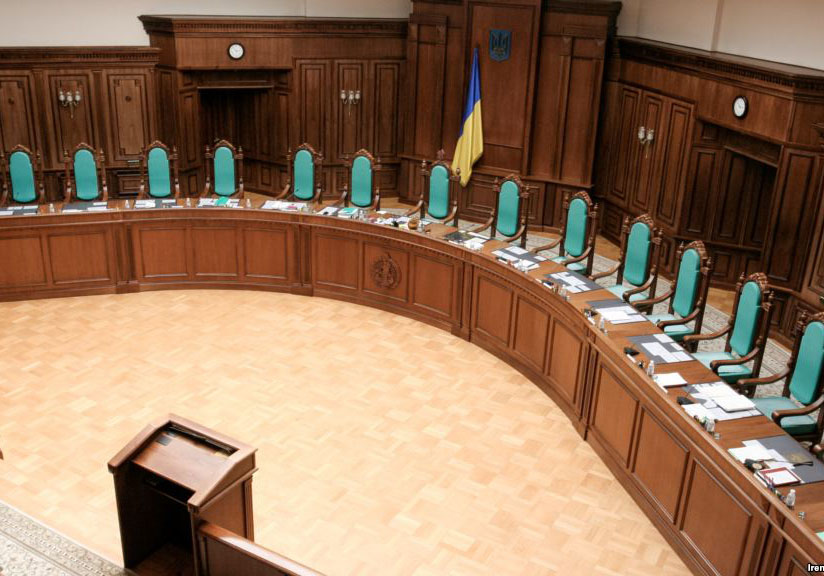
Today, the ICJ expressed concern at the attempt to initiate criminal proceedings against the President of the Constitutional Court of Ukraine, following interrogations of judges of the Constitutional Court and seizures of documents from the Court earlier this year.
On 16 June, the Chair of the Security Council of Ukraine, Valentin Nalivaychenko, is reported to have filed evidence alleging criminal offences by the President of the Constitutional Court of Ukraine, Jury Baulin.
The documents allege that he abused his office in violation of Article 364(2) of the Criminal Code of Ukraine, leading to the usurpation of power by the former President, Victor Yanukovich.
The allegations relate to a decision of the Constitutional Court of 30 September 2010, No 20-rp/2010, which overturned the adoption of the Constitution of 2004.
The initiation of the criminal proceedings is therefore based entirely on a ruling of the Constitutional Court on a question of constitutional law.
“It is inherent in the judicial function that courts issue rulings concerning matters on which public opinion may be divided. Prosecution of judges in relation to such decisions undermines judicial independence and erodes the rule of law,” said Wilder Tayler, ICJ Secretary General. “In all times but particularly in times of transition, such as at present in Ukraine, it is crucial that the executive refrain from any interference with the independence of the judiciary”.
The ICJ stressed that such attempts to initiate criminal proceedings against the President of the Constitutional Court are contrary to international law and standards on the independence of the judiciary, including the UN Basic Principles on the Independence of the Judiciary.
“Changes to the law or Constitution, must be sought and brought about through proper constitutional processes in the legislature and courts, not through prosecutions of judges. Criminal investigations and prosecutions against Constitutional Court judges must be discontinued and the government must ensure that the Court can operate without threats or interference,” Tayler added.
Following the change of government in early 2014, the ICJ expressed concern at the dismissals of judges of the Constitutional Court by the Verkhovna Rada (the Ukrainian Parliament) and called on the authorities to ensure the security of tenure of judges and non-interference with judicial independence.
Earlier this year, the Security Service of Ukraine interrogated sitting judges of the Constitutional Court in regard to the same case.
According to the State Security Service, at least 10 judges of the Constitutional Court have been interrogated. Moreover, the Security Service of Ukraine seized documents from the Constitutional Court in May 2015.
These investigations and prosecutions of Constitutional Court judges are taking place at a time when the Court is considering a number of highly significant cases, including the constitutionality of the Law “On cleansing of power”, the Law “On condemnation of the communist and national-socialist (nazi) regimes in Ukraine and prohibition of propaganda of their symbols” and the Law on an “All-Ukrainian referendum”.
The ICJ recalls that Article 1 of the UN Basic Principles on the Independence of the Judiciary clarifies that all governmental and other institutions must respect and observe the independence of the judiciary.
The principles further stipulate that [t]he judiciary shall decide matters before them impartially, on the basis of facts and in accordance with the law without restrictions or improper influences, inducements, pressures threats or interferences, direct or indirect, from any quarter or for any reason” (Article 2).
Recommendation No. R(94) 12 of the Committee of Ministers to Members States on the Independence, Efficiency and Role of Judges elaborates on this principle, stipulating that “judges should have unfettered freedom to decide cases impartially, in accordance with their conscience and their interpretation of the facts, and in pursuance of the prevailing rules of the law. Judges should not be obliged to report on the merits of their cases to anyone outside the judiciary”.
Contact:
Róisín Pillay, Director, Europe Programme, e: roisin.pillay(a)icj.org
Temur Shakirov, Legal Adviser, Europe Programme, e: temur.shakirov(a)icj.org
External link: Official information about the criminal procedure
Jun 16, 2015 | Новости, Статьи
17 июня МКЮ проведет наблюдение за процессом в Верховном Суде Кыргызской Республики по делу об обысках, произведенных сотрудниками правоохранительных органов в офисе и домах адвокатов Валериана Вахитова и Хусанбая Салиева.
В свете запрета на произвольное вмешательство в право на уважение частной жизни, переписки и жилища будет рассматриваться вопрос об адвокатской тайне и о выемке адвокатских досье.
Верховный Суд Кыргызской Республики рассмотрит жалобу прокуратуры на постановление Ошского областного суда от 30 апреля 2015 г.
Прокуратура также требует вынести частное определение в отношении судей Ошского областного суда, которые приняли решение в пользу защиты гарантий профессиональной адвокатской деятельности, признав обыски и выемку документов незаконными.
В состав миссии МКЮ по наблюдению за процессом входят: Ольга Зимарева, адвокат, практикующая в Российской Федерации, и Алмаз Османова, адвокат из Кыргызской Республики и председатель Лиги юристов Центральной Азии.
По результатам рассмотрения дела МКЮ опубликует свой обзор процесса и постановления Верховного Суда Кыргызской Республики в свете международного права в области прав человека и международных стандартов, касающихся независимости судебных органов и роли адвокатов.
Контакты:
Роушин Пиллей, директор Региональной программы МКЮ по Европе, roisin.pillay(a)icj.org
Тимур Шакиров, правовой советник Региональной программы МКЮ по Европе, temur.shakirov(a)icj.org
Kyrgyzstan-Trial observation-News-Web story-2015-RUS (полная история на русском, PDF)
Jun 16, 2015 | News
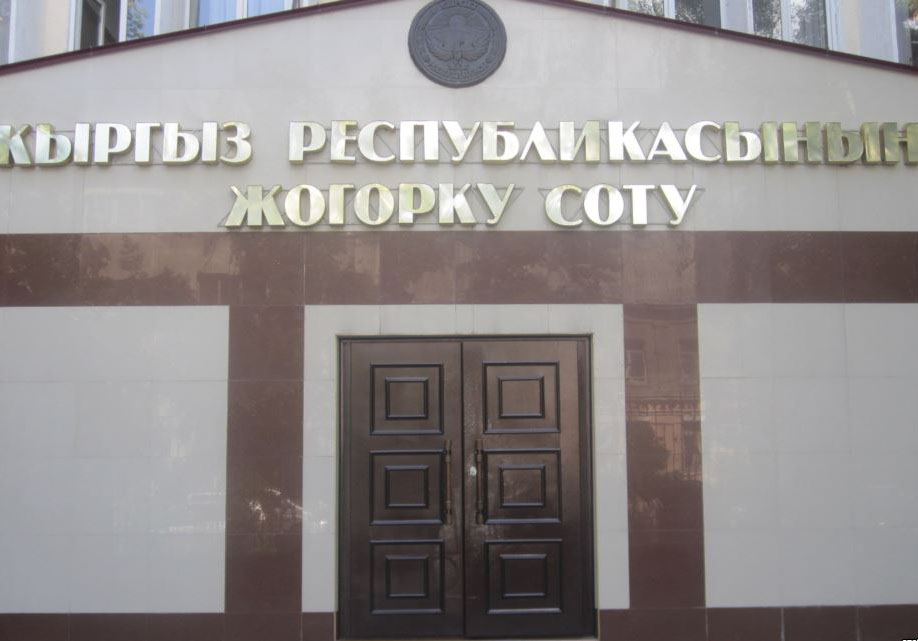
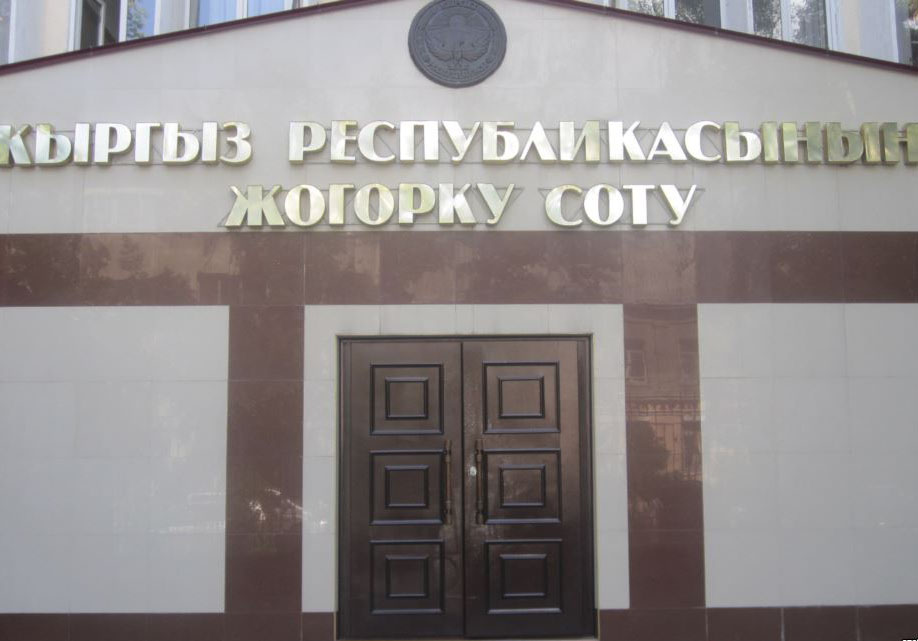
On 17 June, the ICJ will observe proceedings before the Supreme Court of the Kyrgyz Republic concerning searches of the workplace and homes of lawyers Valerian Vakhitov and Khusanbay Salieyv by law enforcement agents.
The case concerns confidentiality of lawyer-client communications and seizure of lawyers’ files, in light of the prohibition of arbitrary interference with privacy, correspondence, and home.
The Supreme Court of the Kyrgyz Republic is to consider the challenge of the Prosecutor’s Office to the decision of the Regional Osh Court of 30 April 2015.
The prosecutor also seeks disciplinary measures against the judges of the Regional Court who decided in favour of the protection of the professional guarantees of lawyers, ruling that the searches and seizures of documents were illegal.
The ICJ trial observation mission includes Olga Zimareva, a lawyer practicing in the Russian Federation and Almaz Osmanova, a lawyer in the Kyrgyz Republic and chair of the Central Asian League of Lawyers.
Following the conclusion of the case, the ICJ will publish its analysis of the proceedings and the judgment of the Supreme Court of the Kyrgyz Republic in light of international human rights law and international standards on the independence of the judiciary and the role of lawyers.
Contact:
Róisín Pillay, Director, Europe Programme, roisin.pillay(a)icj.org
Temur Shakirov, Legal Adviser, Europe Programme, temur.shakirov(a)icj.org
Kyrgyzstan-Trial observation-News-Web story-2015-RUS (full text in PDF, Russian)
Jun 16, 2015
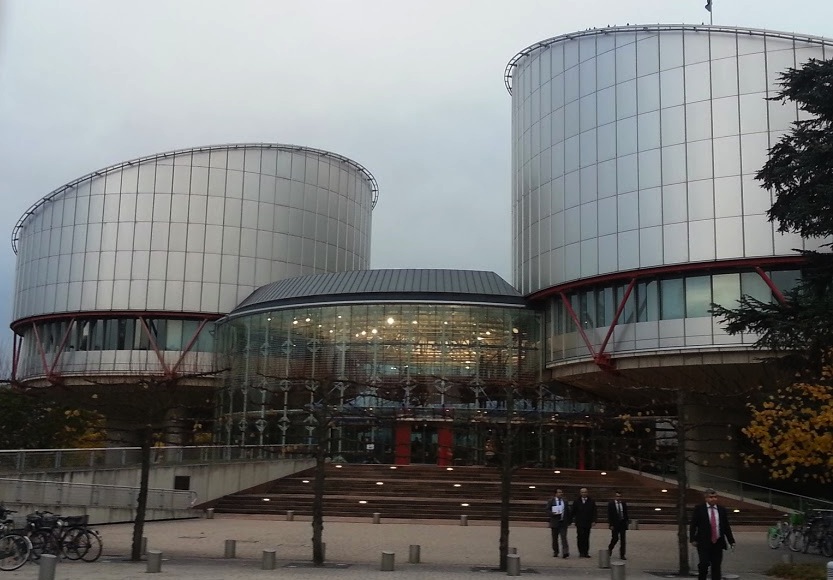
The ICJ presented a legal submission in the case Annagi Hajibeyli v. Azerbaijan and 28 other applications (Application no. 2204/11) to the European Court of Human Rights.
The submission concerns seizure of a lawyer’s documents of cases of his clients.
The submission focuses on international standards on the role of lawyers, including the obligation of non-interference with the work of lawyers and respect for lawyer-client confidentiality, as well as application of article 34 of the European Convention to the hindrance of the existence of the right to petition through interference with lawyers’ activities.
Azerbaijan-Hajibeyli v Azerbaijan final160615-Advocacy-legal submission-2015-ENG (full text in PDF)