
Kyrgyzstan: the ICJ welcomes new investigation into the case against human rights defender Azimzhan Askarov
The ICJ today welcomed the decision of Oktyabrskiy Court of Bishkek to reopen the investigation in the case against Azimzhan Askarov.

The ICJ today welcomed the decision of Oktyabrskiy Court of Bishkek to reopen the investigation in the case against Azimzhan Askarov.
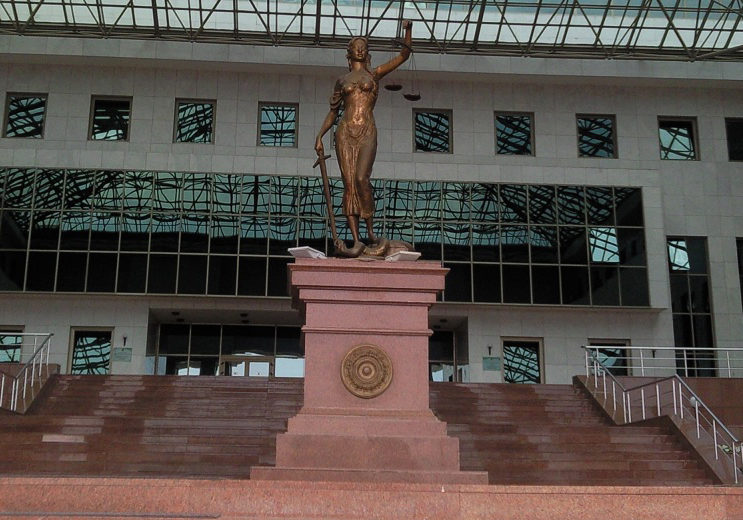
Сегодня МКЮ выразила обеспокоенность в связи с решением Верховного Суда РК от 26 марта, оставившим в силе определение о лишении адвоката Полины Жуковой лицензии по мнимым основаниям, которые не соответствуют международным стандартам, касающимся роли и независимости юристов.
Рассмотрев жалобу адвоката на определение о лишении адвокатской лицензии, Верховный Суд оставил обжалуемое решение в силе.
Международная комиссия юристов наблюдала за ходом соответствующего производства в Верховном Суде на протяжении последних пяти месяцев.
Первоначальный иск о лишении адвокатской лицензии был подан Министерством юстиции в отношении Полины Жуковой и ещё одного адвоката, Любови Агушевич, которая впоследствии была лишена лицензии по тем же основаниям (по обвинению в совершении дисциплинарного проступка в ходе рассмотрения уголовного дела судом присяжных), однако Верховный Суд отказал ей в рассмотрении жалобы в связи с пропуском установленного срока обжалования.
К так называемым «дисциплинарным проступкам» были отнесены высказывания адвокатов о невиновности их подзащитного, а также заявление ими ходатайств и отводов.
Данные действия были истолкованы как демонстрирующие «некорректное отношение» к суду, а также затягивающие судебный процесс, предположительно в нарушение положений Уголовно-процессуального кодекса. Также указывалось, что они могут «создать у присяжных предвзятое отношение к подсудимому».
В ходе судебных разбирательств по делу подзащитного в отношении адвокатам было вынесено два частных определения.
Основанием для порицаний й послужил тот факт, что адвокат «задала вопрос, ответ на который был ей известен»; ходатайствовала об отводе председательствующего судьи в присутствии присяжных; зачитывала содержание одного из листов уголовного дела; а также ходатайствовала о допросе свидетелей, явившихся в судебное заседание.
Судья, рассматривавший уголовное дело, истолковал все указанные действия как нарушение уголовно-процессуального законодательства, что впоследствии стало основанием для лишения адвокатов соответствующих лицензий.
Лишение адвокатской лицензии по подобным основаниям prima facie вызывает обеспокоенность в связи с ненадлежащим применением взысканий к представителям юридической профессии ввиду осуществления ими своих законных профессиональных обязанностей.
Представляется, что данное производство о лишении адвокатской лицензии противоречит Основным принципам ООН, касающимся роли юристов, которые предусматривают, что в обязанности юристов входит оказание клиентам помощи любыми доступными средствами (принцип 13), и устанавливают, что юристы должны иметь возможность выполнять свои профессиональные обязанности в обстановке, свободной от неоправданного вмешательства (принцип 16).
МКЮ произведёт всесторонний анализ производства по делу о лишении лицензии и соответствующего решения на предмет их соответствия международному праву и стандартам.
МКЮ представит данный анализ в виде доклада, который будет опубликован в ближайшие несколько месяцев.
МКЮ наблюдала за ходом трёх заседаний по делу в Верховном Суде РК с ноября 2013 г. по март 2014 г. На заседаниях присутствовали наблюдатели МКЮ: Кетил Лунд, комиссар МКЮ, бывший судья Верховного Суда Норвегии, Зульфикор Замонов, юрист из Таджикистана, и Алмаза Османова, адвокат из Кыргызстана, директор Лиги юристов Центральной Азии.
МКЮ пользуется случаем, чтобы поблагодарить Верховный Суд РК за содействие в организации наблюдения за данным процессом.
Контакты:
Роушин Пиллей, директор Региональной программы МКЮ по Европе, roisin.pillay(a)icj.org
Тимур Шакиров, правовой советник Региональной программы МКЮ по Европе, temur.shakirov(a)icj.org
Kazakhstan-Zhukova Disbarment-news-web story-2014-rus (полный текст, PDF)
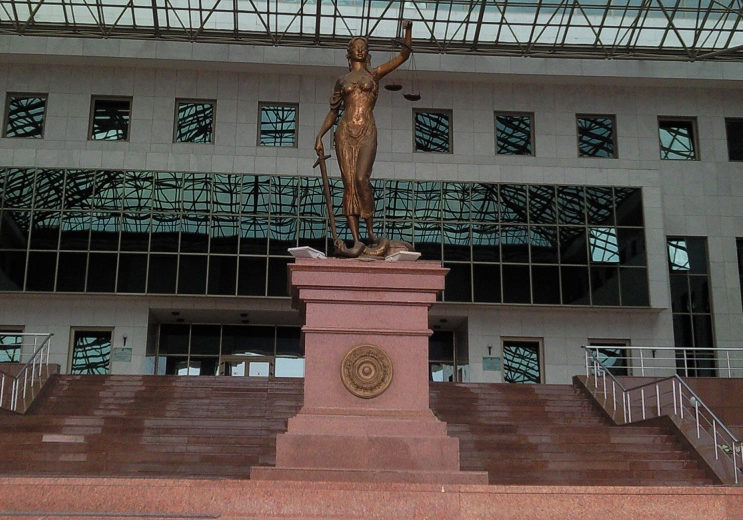
The ICJ today expressed concern at the decision of the Kazakhstan Supreme Court, on 26 March, to affirm the disbarment of lawyer Polina Zhukova on spurious grounds that run contrary to international standards on the role and independence of lawyers.

The ICJ today called on the Ukrainian authorities to discontinue criminal prosecutions and dismissals of Constitutional Court judges.
These measures, which came at a time of crisis in the country, were taken due to disagreement with a ruling made by the judges in 2010.
The measures interfere with the independence of the judiciary, and are inconsistent with the principle of separation of powers and respect for the rule of law.
Wilder Tayler, ICJ Secretary General underscored that “In times of crisis the stability and continuity of the judiciary is essential. Judges should not be subject to arbitrary removal, individually or collectively, by the executive, legislative or judicial branches”.
On 24 February 2014, the Verkhovna Rada, the Parliament of Ukraine, adopted a resolution according to which twelve of the eighteen judges of the Constitutional Court were to be dismissed by the institutions which appointed them.
Five of the judges were dismissed by the Rada itself. The Rada recommended that the Acting President and the Congress of Judges consider dismissing the other seven judges.
On 13 March, the Parliament appointed four new judges of the Constitutional Court.
The grounds for dismissals were breaching the oath of a judge.
Moreover, in accordance with the resolution, the Prosecutor General was assigned by the Parliament to initiate criminal proceedings against those judges who were “guilty of adopting the decision of the Constitutional Court of Ukraine of 30 September 2010 No 20-rp/2010”, which overturned the adoption of the Constitution of 2004.
The Parliament’s resolution against the justices of the Constitutional Court followed the Ukrainian political crisis, which reached its peak on 22 February 2014 after three months of protests and violent clashes, and resulted in a change of government.
“The ICJ is deeply concerned at the dismissal and criminal prosecution of Ukrainian Constitutional Court judges on grounds of their interpretation of the law in judicial decisions” said Wilder Tayler.
“These measures are inconsistent with respect for the independence of the judiciary and the rule of law. It is precisely at moments of transition or crisis, such as Ukraine is now experiencing, that upholding the rule of law and the separation of powers is most critical. Any disciplinary action against judges must respect the independence of the judiciary, be based on established standards of judicial conduct and be taken only following a fair procedure in which the rights of the judge concerned, including to a defence, are respected.”
The ICJ stressed that action taken against the judges of the Constitutional Court is inconsistent with the duties of all branches of the government of Ukraine to respect and protect the independence of the judiciary.
This duty, a fundamental pillar of the rule of law and a fundamental aspect of the principle of separation of powers of the three branches of government, is enshrined in both the European Convention on Human Rights and the International Covenant on Civil and Political Rights, international human rights treaties to which the State is a party.
Furthermore, Article 1 of the UN Basic Principles on the Independence of the Judiciary clarifies that all governmental and other institutions must respect and observe the independence of the judiciary.
This requires that judges have jurisdiction over issues of a judicial nature and that judicial decisions by courts must not be subject to revision (Principle 4).
Judges must have guaranteed tenure until a mandatory retirement age or the expiry of their term of office (Principle 12) and can be subject to suspension or removal only following fair procedures (Principle 17) and only for reasons of incapacity or behaviour that renders them unfit to discharge their duties (Principle 18).
The European Court of Human Rights found, in the recent case of Volkov v Ukraine, that dismissal of a judge of the Ukraine Supreme Court through a parliamentary procedure violated the right to a fair hearing under Article 6.1 of the European Convention on Human Rights, since there had been insufficient examination of the merits of the case, and it had not been heard by a tribunal established by law.
Contacts:
Róisin Pillay, Director, Europe Programme, t + 32 273 48 46, roisin.pillay(a)icj.org
Temur Shakirov, Legal Adviser, Europe Programme, t + 41 22 979 38 32, temur.shakirov(a)icj.org
Ukraine-dismissal and criminal prosecution of judges-news-2014 (Statement, PDF)

The ICJ has brought to the attention of the Universal Periodic Review (UPR) mechanism issues concerning due process and access to justice, as well as other key issues to be addressed in the review of Kazakhstan’s compliance with international human rights.
From 27 October to 7 November 2014, the Human Rights Council’s Working Group on the UPR will consider the situation of human rights in Kazakhstan. Ahead of the Working Group’s review, the ICJ has made a submission in which it has identified suggested recommendations concerning:
 Tunisia: Quash sham conviction and sentence of judges’ association President, Anas Hmedi
 The UN Human Rights Council makes significant but limited progress in addressing human rights around the world, as atrocities multiply in the Middle East and elsewhere
 ICJ hosts an African Regional Convening in Kenya on Transformative Equality Jurisprudence
 Russian Federation: Arbitrarily detained human rights lawyer Maria Bontsler must be released