Jan 18, 2024 | News
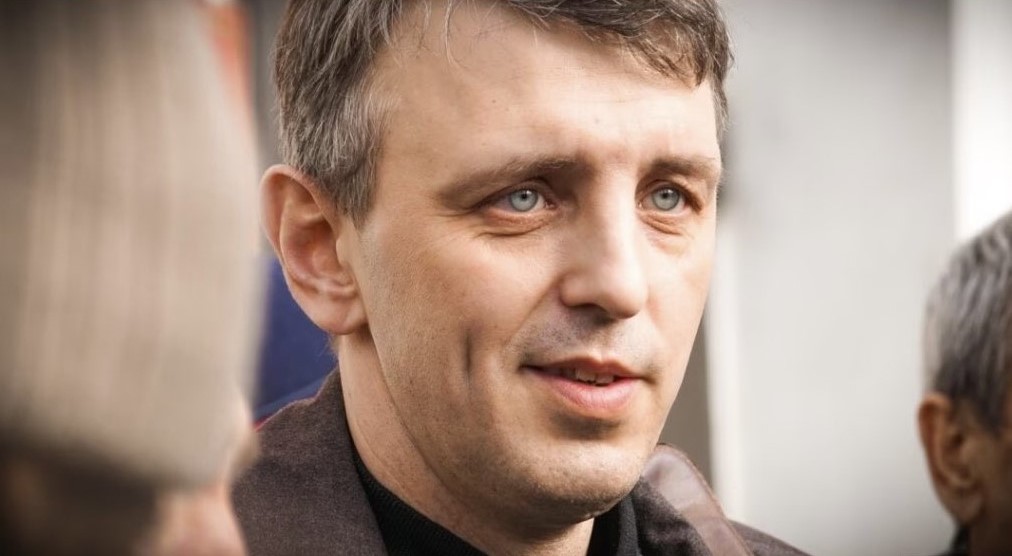
Lawyers for Lawyers, the International Observatory for Lawyers (OIAD), The Law Society of England and Wales (LSEW), the European Association of Lawyers for Democracy & Human Rights (ELDH), the Union of International Lawyers’ Institute for The Rule of Law (UIA-IROL), the International Bar Association’s Human Rights Institute (IBAHRI), and the International Commission of Jurists (ICJ) condemn the continued harassment against human rights lawyer Aleksey Ladin.
On 24 January 2024, the International Day of the Endangered Lawyer, human rights defender and lawyer Aleksey Ladin will face a disciplinary hearing by the Council of the Tyumen Regional Bar Association. The action was initiated by a motion issued by the Ministry of Justice of the Russian Federation. Mr. Ladin has been working since 2015 to provide legal aid to Ukrainians who are alleged to have been subject to criminal prosecution by Russia on politically motivated charges. Since 2017, he has been based in Russian-occupied Crimea, mostly representing Ukrainian and Crimean Tatar political prisoners.
This is the latest in series of instances of harassment and prosecution from the authorities against Mr. Ladin. On 13 October 2023, the Kyivskyi District Court of Simferopol sentenced him to 14 days of administrative detention for allegedly displaying prohibited symbols on his social media pages. The Facebook post in question, a photo of a drawing made by one of his clients, displayed elements of Ukrainian and Crimean Tatar national emblems with the slogan “We are not the terrorists and we are not the extremists.” The court found the “taraq tamga” (the emblem on the Crimean Tatars’ flag) in the picture to be a symbol of a known Crimean volunteer paramilitary unit, Noman Çelebicihan Crimean Tatar Volunteer Battalion. The drawing had no relation to the battalion. Mr. Ladin was prosecuted for the exercise of his right to freedom expression, protected under international and Russian law.
The upcoming disciplinary hearing is based on the sentence of administrative detention handed down on 13 October 2023, as the Ministry of Justice alleges that Mr. Ladin violated the Code of Ethics of the Russian Bar Association, which is based on the Federal Law “On the Bar Association and its activities in the Russian Federation.” The Ministry of Justice affirms that they received this information from the Centre to Counteract Extremism in Crimea on 3 November 2023.
Lawyers play a vital role in upholding the rule of law and the protection of human rights guaranteed under international law, including the rights to an effective remedy and fair trial guarantees, and the right of freedom from torture and other cruel, inhuman, or degrading treatment or punishment. Their work is indispensable for public confidence in the administration of justice by safeguarding due process rights and ensuring access to justice for all. To fulfil their professional duties effectively, lawyers should be able to practice their profession safely and should be free from improper interference, fear of reprisals, and illegitimate restrictions, in compliance with international standards.
The UN Basic Principles on the Role of Lawyers states that ‘Governments shall ensure that lawyers (a) are able to perform all of their professional functions without intimidation, hindrance, harassment or improper interference; (…) and (c) shall not suffer, or be threatened with, prosecution or administrative, economic or other sanctions for any action taken in accordance with recognized professional duties, standards and ethics’ [16]. They also hold that ‘lawyers shall not be identified with their clients or their clients’ causes as a result of discharging their functions’ [18] and that ‘lawyers, like any other citizens, are entitled to freedom of expression, belief, association and assembly’ [23].
In view of the above, the undersigned organisations call on the Tyumen Regional Bar Association, the Russian Federal Bar Association and the Ministry of Justice of the Russian Federation to:
- Immediately drop the disciplinary proceedings against human rights lawyer Aleksey Lapin, as he is being targeted as a result of his peaceful and legitimate activities;
- Ensure that any legitimate disciplinary proceedings against lawyers shall be conducted fairly and independently, in accordance with international standards;
- Refrain from any actions that may constitute harassment, persecution, or undue interference in the work of lawyers, including disciplinary or criminal proceedings on improper grounds, such as the nature of the cases in which the lawyer is involved;
- Guarantee that all lawyers in Russia and Russian-occupied Crimea are able to carry out their legitimate professional activities without fear of reprisals and free of all restrictions including judicial harassment, arbitrary arrest, deprivation of liberty, or other arbitrary sanctions.

Dec 20, 2023 | Advocacy, News
Today, the ICJ condemned aspects of the agreement reached by the EU Member States and the European Parliament on the last five instruments from the EU Pact on Migration and Asylum, stressing that it will effectively strip away core human rights and refugee protections for persons from vulnerable populations.
The ICJ calls on the EU and its Member States to adhere strictly to their international legal obligations, particularly under human rights law and refugee law, in implementing any new legislative measures.
The Pact, a major set of legislative proposals on the EU’s migration policy initially proposed by the European Commission in September 2020, aims to update the existing rules of the Common European Asylum System (CEAS), which was renegotiated just a few years prior to this proposal.
« The agreement reached today between the co-legislators, the Council of the EU and the European Parliament sends a worrying signal on the state of EU’s commitment to human rights protection, » said Karolína Babická, Senior Legal Adviser of the ICJ Europe and Central Asia Programme. « Although a final text of the legislative instruments is yet to be seen, the agreement waters down protection and safeguards for the rights of migrants and refugees, that oblige the EU Member States under international law. »
Based on the agreement reached today on the Asylum Procedures Regulation, applicants will not have access to free legal assistance, including in border procedures, as it will only be available for certain persons at the appeals stage, where for many it will be too late. Other points agreed include more fast-track procedures with fewer individual safeguards for the migrants and refugees in question. The Council and the European Parliament also agreed with the proposal of a fiction of “non-entry” to the territory, which is intended have the effect of removing migrants and refugees from the protective of spheres of the state on the grounds that they are not really in the country.
« These are in breach of international human rights standards and rules on jurisdiction and will lead to more administrative detention, which effectively punishes those in most need of protection, » said Babická, « It appears that the instruments are intended to allow for border procedures with nearly no procedural safeguards, resulting in quick deportations. However, even in border zones or transit zones, the State’s human rights law obligations remain fully applicable. »
The asylum border procedure as agreed would apply to asylum seekers who are either “unlikely to be granted asylum”, whose claim is fraudulent or abusive, or who are considered a security risk. This provision undermines the key principle of refugee protection, ensuring an individual assessment of one’s asylum claim. Regardless of the general recognition rate, many individuals are still refugees in need of protection status due to circumstances of their individual case. Equally in assessing whether the application is fraudulent, abusive or potentially a security risk, an individualised assessment must be in place.
Indeed, it is difficult to assess any of the purported criteria without fair hearing based on equal protection and the rule of law.
A further problematic aspect includes the disparate treatment and safeguards for available for children below the age of twelve and those twelve and older. Under the Convention on the Rights of the Child, a child is considered a person under the age of 18 must be afforded the protections due to them. Under these rules, older children would for instance not be exempted from border procedures.
The ICJ has previously warned about harmful provisions in the proposals regarding detention in the Screening and Asylum Procedures Regulation.
The Regulation on Asylum and Migration Management, replacing the current Dublin Regulation, will now exclude the possibility for applicants to be transferred to the Member State where they have a sibling or other family member with a legal residence. This provision seriously worsens the situation of asylum applicants in the EU CEAS so far, in breach of international legal standards, especially the right to family life.

Nov 24, 2023
The International Commission of Jurists (ICJ), in collaboration with aditus, Human Rights in Practice, Forum for Human Rights, Free Courts organized a workshop for lawyers on judicial independence and strategic litigation in Malta on 23 and 24 November 2023. The event focused on critical issues of judicial independence, including, appointment procedures, administration of justice, and freedom of expression and association of judges.
Judicial independence is essential for democracy and human rights protection, yet it is frequently under attack or pressure. Judicial independence is possible only with independent organisation and governance, and when judges’ human rights are guaranteed. This includes strict selection criteria and transparency in the appointment of judges and prosecutors, and it implies respect of freedom of expression and association of judges.
The participants discussed the challenges in guaranteeing both institutional and individual independence of judges, and in ensuring fairness and transparency in the appointment procedures. The workshop also focused on the possible limitations of the freedom of expression and association of judges. It was noted that judges often fear repercussions for expressing their opinions and participating in associations or protests.

 The workshop brought together experts and practitioners from six EU Member States – the Czech Republic, Hungary, Malta, Poland, Romania and Slovakia – to discuss their experiences. The participants discussed the international legal framework and the possible ways to protect judicial independence focusing on the role of strategic litigation.
The event was the second of a series of workshops, each considering different aspects of judicial independence. These workshops aim to contribute to the development of the Final Mapping Report with recommendations on strategic litigation for practitioners in the EU, as part of the ROLL (Rule of Law for Lawyers) project.
Please see the workshop agenda here.
Please find recordings of some of the workshop presentations here.

Nov 14, 2023
Today, the International Commission of Jurists (ICJ) and partners have called on the EU General Affairs Council to make full use of procedure under Article 7.1 in addressing concerns about Hungary and Poland. They advocate for strong stance in defending EU values.
The International Commission of Jurists, Amnesty International , Human Rights Watch, International Federation of Human Rights, Open Society Foundations, Reclaim, Reporters Without Borders and Transparency International EU are sharing specific points in their letter this time especially on Hungary, expressing a regret that a state of play is being organized instead of a hearing and highlighting some serious recent shortcomings.
Read the full letter here.
Nov 3, 2023 | News
Former Deputies and Mayors Face Prosecution and Prolonged Incarceration for Political Speech.
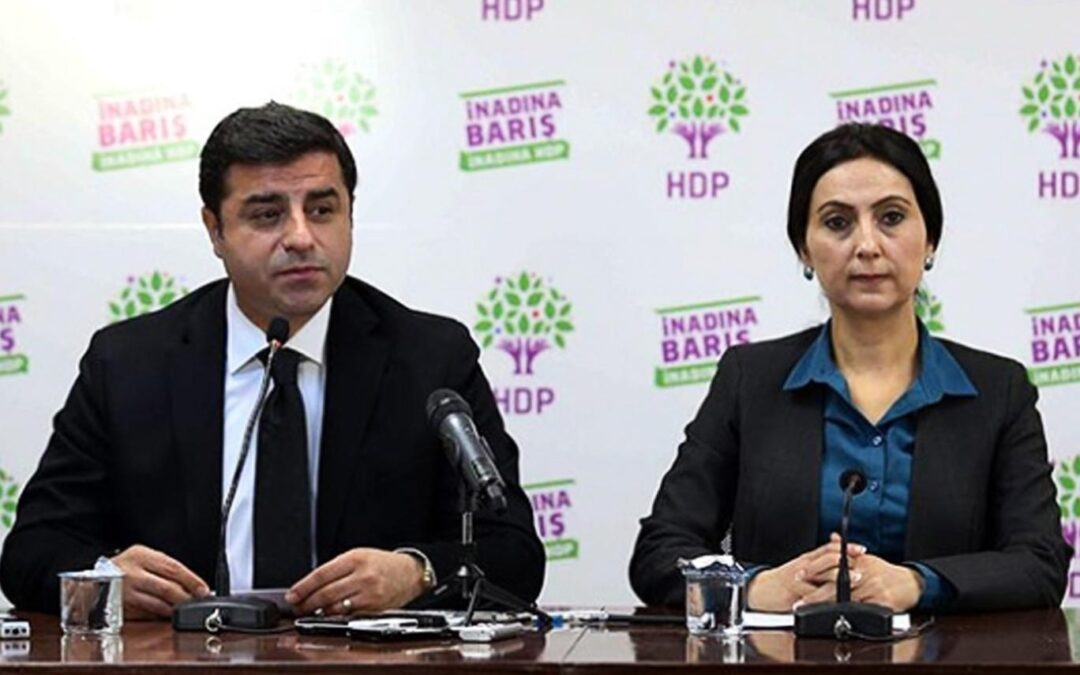
The Turkish government should abide by international law and implement the binding judgments of the European Court of Human Rights (ECtHR) by immediately releasing politicians Selahattin Demirtaş and Figen Yüksekdağ, who formerly co-chaired the opposition Peoples’ Democratic Party (HDP), four rights organizations said today.
The four nongovernmental organizations—Human Rights Watch, the Turkey Human Rights Litigation Support Project, the International Commission of Jurists, and the International Federation for Human Rights—made their call on the seventh anniversary of the politicians’ wrongful imprisonment.
“The seventh anniversary of the unlawful incarceration of Selahattin Demirtaş and Figen Yüksekdağ is a stark reminder of the Erdoğan presidency’s willingness to use detention for political ends to silence democratically elected opposition politicians representing millions of Kurdish and leftist voters in Turkey,” said Hugh Williamson, Europe and Central Asia director at Human Rights Watch. “In defying the binding ECtHR judgments ordering the politicians’ release, Turkey is flagrantly violating its legal obligations under the European Convention on Human Rights and international law more broadly.”
On November 4, 2016, months after being stripped of their parliamentary immunity, Demirtaş, Yüksekdağ and eight fellow members of parliament from the HDP were arbitrarily detained and placed in pretrial detention, with four others incarcerated over the following five months. At the time, the HDP held 10.7 percent of seats in Turkey’s parliament and was backed by over five million voters. While the 12 other deputies whose cases are covered in the ECtHR judgments are no longer in detention, Demirtaş and Yüksekdağ remain incarcerated.
All the former parliamentarians have been repeatedly prosecuted in individual proceedings based exclusively on their exercise of their right to freedom of expression, protected under international law. This included their political speeches and activities, which did not involve or advocate violence. When a mass trial was opened against them in 2021, many of those ongoing individual case files were merged. The vague and wide-reaching accusations against them in this trial include allegations of “undermining the unity and territorial integrity of the State” (separatism) and even “murder.” These accusations relate to their support for protests that mainly took place in cities in southeast Turkey between October 6 and 8, 2014. The politicians have been held responsible for all offences allegedly committed over the course of these protests, which were organized against the brutal siege of the Kurdish-majority northern Syrian town of Kobane by the extremist armed group Islamic State (also known as ISIS). During the protests, 37 people reportedly died.
The evidence against the politicians, on the basis of which Demirtaş and Yüksekdağ are currently detained, consists of two social media postings supporting protests over the Kobane siege sent from the HDP Twitter account, together with the politicians’ nonviolent political speeches, lawful activities, and witness statements against them added to the case file years later that raise serious questions of credibility.
The ECtHR determined in three judgments—two pertaining to Demirtaş in November 2018 and December 2020, and one to Yüksekdağ and 12 others in October 2022—that their detention on the basis of speeches and social media postings was a politically motivated move to silence them, “stifling pluralism and limiting freedom of political debate, the very core of the concept of a democratic society.” The court found that their rights to liberty, to freedom of expression, and to be elected had been violated. The facts forming the basis on which Demirtaş and Yüksekdağ are detained and were prosecuted for in the 2021 mass trial are substantially the same as those contained in the proceedings which the ECtHR found to be insufficient grounds for their detention.
“Despite the European Court ruling that the grounds to justify Yüksekdağ and Demirtaş’s detention were insufficient, the Ankara public prosecutor in April 2023 requested their conviction on numerous alleged offences concerning their political speech, which may result in their life imprisonment without parole,” said Temur Shakirov, interim director of the International Commission of Jurists’ Europe and Central Asia Programme. “This underscores the ultimate political motives behind the ongoing case targeting the two and reinforces doubts about the fair administration of justice in the country.”
After Demirtaş and Yüksekdağ’s detentions in November 2016, Turkey held a landmark referendum and several crucial election campaigns. The April 16, 2017 constitutional referendum introduced a system of governance concentrating power in the hands of the president. It was followed by the June 24, 2018 presidential election in which Demirtaş ran as a candidate from his prison cell against President Recep Tayyip Erdoğan, the March 31, 2019 local elections, and, most recently, the May 14-28, 2023 parliamentary and presidential elections.
“With two prominent figures of the opposition in detention, the country has been deprived of a significant measure of meaningful democratic debate and fair elections around these crucial campaigns,” said Reyhan Yalçındağ, vice president of the International Federation for Human Rights. “With the March 2024 local elections fast approaching, the Committee of Ministers and the other Council of Europe bodies need to use all available means to ensure the end of the continuing violations of Demirtaş’s and Yüksekdağ’s rights, including their rights to participation in public affairs, which is also a violation of the rights of millions of voters.”
The Council of Europe’s Committee of Ministers, responsible for overseeing member states’ implementation of ECtHR judgements, has issued six decisions and two resolutions calling on Turkey to release Demirtaş from detention. At its December 5-7 session this year, the Committee of Ministers will for the third time examine Turkey’s failure to implement the judgment pertaining to Yüksekdağ and release her from detention.
The four nongovernmental organizations have made a joint submission to the Committee of Ministers asking it to issue a decision in December calling for the release of Yüksekdağ.
“Turkey has ignored the Committee’s numerous decisions and interim resolutions calling for Demirtaş’s immediate release. This refusal to comply with Turkey’s international obligations has been repeated in the case of Yüksekdağ,” said Ayşe Bingöl Demir, director of the Turkey Human Rights Litigation Support Project. “The Committee must intensify its scrutiny against Turkey in relation to these cases without further delay, and this must include the triggering of infringement proceedings, in line with the route rightly followed in the case of the imprisoned rights defender Osman Kavala.”
Eighteen other elected former party officials and mayors from the HDP and an affiliated party, the Democratic Regions Party, are also currently detained. Among them is the prominent former elected mayor of Diyarbakır, Gültan Kışanak, detained since October 25, 2016, and Sebahat Tuncel, former co-chair of the Democratic Regions Party, detained on November 6, 2016. Kışanak’s pretrial detention has exceeded the legal limit of seven years under Turkish law, notwithstanding that seven years’ pretrial detention is a flagrant violation of international human rights law. The detentions of the politicians are blatantly arbitrary and politically motivated, and those imprisoned should be immediately released, the organizations said.
Press release in Turkish: Turkey Demirtas and Yuksekdag press release TURKISH