Dec 3, 2013 | Новости, Статьи
Сегодня МКЮ рассмотрела слушание по делу Зинаиды Мухортовой, адвоката, задержанной до недавнего времени в психиатрическом учреждении, предположительно из за выполнения своих профессиональных обязанностей, но выпущенной 1 ноября.
На слушании 2 декабря Карагандинский областной суд подтвердил законность ее задержания, поддерживая ранее принятое решение Балхашского городского суда 20 августа 2013 года о предоставлении ходатайства прокуратуры о задержании адвоката.
«Вероятность ее повторного задержания для законного осуществления ее профессии поднялась после этого решения», – прокомментировала Альмаза Османова, наблюдатель МКЮ, присутствовавшая на слушании.
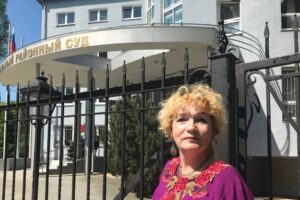
Заместитель начальника медицинского учреждения, в котором была задержана Зинаида Мухортова (фото), доктор Р.Р. Искаxaков присутствовал на слушании и настаивал на законности ее задержания.
МКЮ ранее сообщала об отказе доктора Искахакова освободить адвоката Мухортову до завершения всех судебных процессов.
Миссия МКЮ по наблюдению за судом состояла из двух наблюдателей: Альмазы Османовой, практикующего юриста из Кыргызстана и Каюма Юсуфова, практикующего юриста из Таджикистана.
МКЮ прежде уже делала заявления после задержания адвоката Мухортовой и последующего освобождения из психиатрического учреждения:
Казахстан: МКЮ приветствует освобождение адвоката, содержавшейся в психиатрическом учреждении
Казахстан: Содержание адвоката в психиатрической лечебнице должно быть прекращено
Контакты:
Роушин Пиллей, директор Региональной программы МКЮ по Европе, roisin.pillay(a)icj.org
Тимур Шакиров, правовой советник Региональной программы МКЮ по Европе, temur.shakirov(a)icj.org
Dec 3, 2013 | News
Today, the ICJ observed a hearing in a case concerning Zinaida Mukhortova, a lawyer detained until recently in a psychiatric facility, allegedly for carrying out her professional duties, but released on 1 November.
At the hearing on 2 December, the Karaganda Regional Court confirmed the lawfulness of her detention, upholding the earlier decision of the Balkhash City Court of 20 August 2013, to grant the motion of the Prosecutor’s Office to detain the lawyer.
“The likelihood of her repeated detention for the lawful exercise of her profession has risen following this decision,” Almaza Osmanova, an ICJ observer present at the hearing, commented.
The deputy Head of the Medical Facility in which Zinaida Mukhortova (photo) was detained, Doctor R.R. Iskahakov was present at the hearing and insisted on the lawfulness of her detention.
The ICJ previously reported Doctor Iskahakov’s refusal to release lawyer Mukhortova until all the court proceedings had been completed.
The ICJ trial observation mission consisted of two observers: Almaza Osmanova, a practicing lawyer from Kyrgyzstan and Kayum Yusufov, a practicing lawyer from Tajikistan.
The ICJ has previously made statements following lawyer Mukhortova’s detention and subsequent release from the psychiatric facility:
Kazakhstan: ICJ welcomes release of a lawyer from psychiatric detention
Kazakhstan: psychiatric detention of lawyer must be ended
Contact:
Róisín Pillay, Director, ICJ Europe Programme, roisin.pillay(a)icj.org
Temur Shakirov, LegalAdviser, ICJ Europe Programme, temur.shakirov(a)icj.org
Nov 18, 2013 | News
Following its mission to Tajikistan on 10-13 November, the ICJ called on the Tajikistan authorities to reconsider provisions of a draft law which could undermine the independence of the legal profession.
The draft Law on Lawyers’ Activities and Advokatura would allow the Ministry of Justice a significant role in regulating entry to the profession.
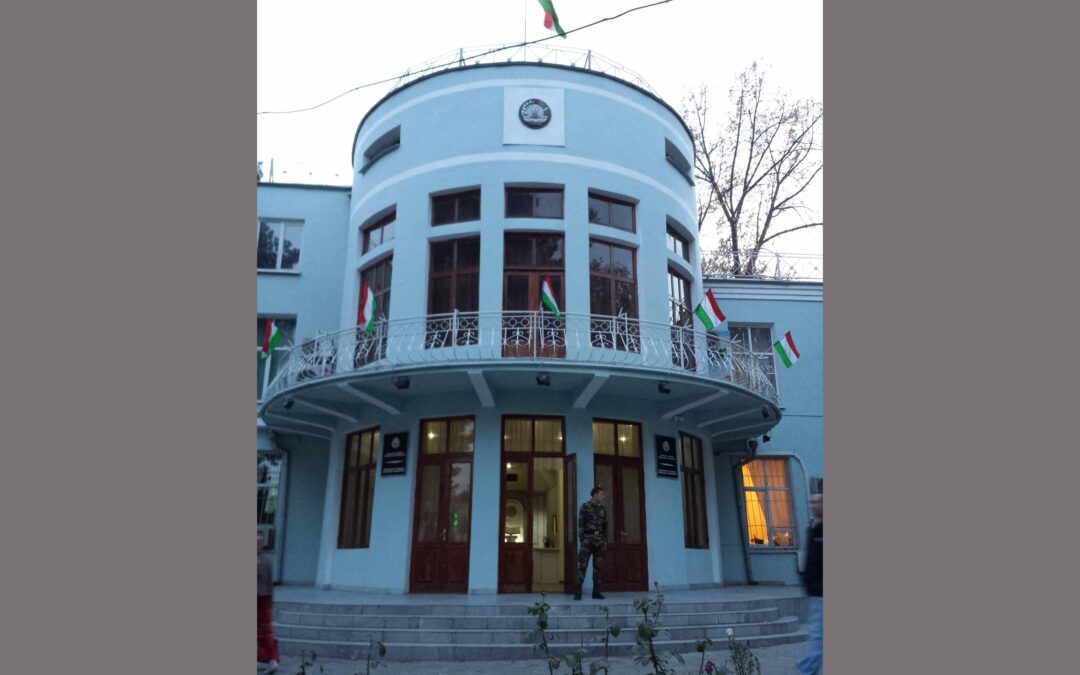
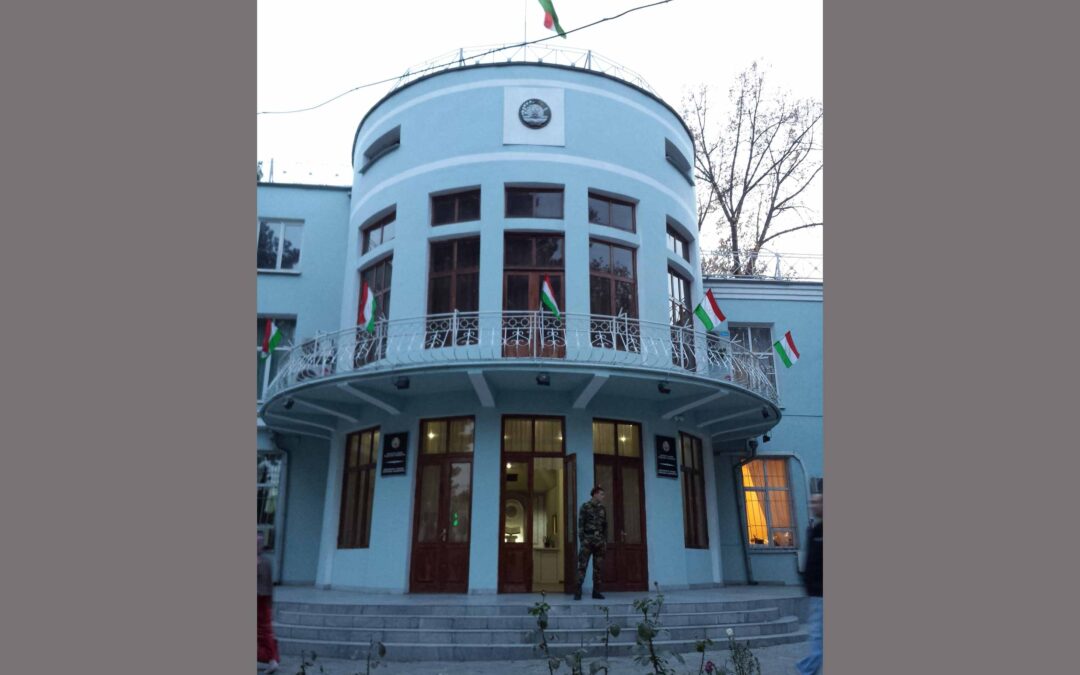
In particular, the Qualification Commission for lawyers, which would be responsible for access to the profession, would operate under the Ministry of Justice (picture).
It would be chaired by a deputy Minister, and would also include five lawyers, one representative of Parliament, one legal academic, and one other representative of the Ministry of Justice.
It is particularly worrying that all lawyers would be required to go through a new qualification process, carried out by this Commission, within one year of the new law coming into force.
“The draft law would bring welcome reforms, unifying a divided profession under a single, independent, Union of Lawyers. However, the value of these reforms would be undermined, since every lawyer would have to go through a new qualification process, the nature of which is not yet clear, administered by a body under the Ministry of Justice,” said Judge Egbert Myjer, Commissioner of the ICJ.
“The procedure would risk cleansing the profession of independent lawyers and leading to de facto domination of the profession by the Ministry of Justice, contrary to the UN Basic Principles on the Role of Lawyers,” he added.
Under international standards on the role of lawyers, independent self-governing professional associations of lawyers should be established, and should have sufficient powers to regulate the profession, including control of the qualification of lawyers.
The ICJ emphasized that at present there is a lack of consistency in the varied qualification procedures in the different sections of the legal profession in Tajikistan, which impedes high professional standards.
This should be addressed through a unified, independent and rigorous qualification process administered by the profession itself, in line with international standards, and as recommended by the UN Human Rights Committee, the International Bar Association and the ICJ.
The ICJ heard consensus from lawyers’ associations in Tajikistan that the proposed role of the Ministry of Justice would impair the effective and independent work of lawyers.
The lawyers’ associations added that these concerns were not taken into account in the drafting process.
In response to criticism by the UN Human Rights Committee earlier this year, the Minister of Justice stated that the Qualification Commission would only be placed under the Ministry for Justice for a transitional period.
This is not reflected in the current draft law. However, the authorities reassured the ICJ that the role of the Ministry of Justice in qualification was not intended to be permanent.
The ICJ mission to Tajikistan took place from 10 to 13 November. It was led by Justice Egbert Myjer, an ICJ Commissioner and former judge of the European Court of Human Rights, and also included ICJ staff members Róisín Pillay, Director of the Europe Programme of the ICJ, and Temur Shakirov, Legal Advisor of the Europe Programme.
The mission included a roundtable discussion with lawyers’ associations of Tajikistan, as well as meetings with representatives of the judiciary, the Ombudsman, and the National Legislative Centre and NGOs.
On 14 November, ICJ staff members met with the first deputy Minister of Justice.
The ICJ mission followed its report on the Independence of the Legal Profession in Central Asia, which analysed the law and practice of each of the five Central Asian states, including Tajikistan, in light of international law and standards, and made recommendations on the principles that should guide reform of the legal profession.
Contact:
Róisín Pillay, Director, ICJ Europe Programme, roisin.pillay(a)icj.org
Temur Shakirov, Legal Adviser, ICJ Europe Programme, temur.shakirov(a)icj.org
Tajikistan-ICJ Mission-news-web story-2013 (full text in pdf)
Tajikistan-ICJ Mission-news-webs story-2013-rus (full text in pdf)
Nov 18, 2013 | Новости, Статьи
По завершении своей миссии в Таджикистан, проведённой с 10 по 13 ноября, МКЮ призвала власти Таджикистана пересмотреть положения законопроекта, которые способны подорвать независимость юридической профессии.
Проект закона «Об адвокатской деятельности и адвокатуре» предоставит Министерству юстиции значительную роль в регулировании доступа к профессии.
В частности, Квалификационная комиссия, орган ответственный за доступ к профессии, будет действовать при Министерстве юстиции.
Комиссия будет осуществлять свою деятельность под председательством заместителя Министра, также будет включать пять адвокатов, одного представителя парламента, одного учёного-правоведа, а также ещё одного представителя Министерства юстиции.
Вызывает особое беспокойство тот факт, что все адвокаты должны будут заново пройти процедуру квалификации, осуществляемую данной Комиссией, в течение одного года после вступления закона в силу.
«Проект закона даст начало желаемым реформам, которые объединят разобщённую профессию в единый, независимый Союз адвокатов. Однако значение этих реформ может быть подорвано, в связи с тем, что каждому адвокату необходимо пройти через новый, до сих пор не разработанный процесс квалификации, осуществляемый органом при Министерстве юстиции», – сказал судья Эгберт Мейер, комиссар Международной комиссии юристов.
«Данная процедура создаёт риск «очищения» профессии от независимых адвокатов и фактическому главенствованию над адвокатами Министерства юстиции, вопреки требованиям Основных принципов ООН, касающихся роли юристов», – добавил он.
В соответствии с международными стандартами о роли юристов, необходимо создание независимых самостоятельных профессиональных объединений адвокатов, и они должны иметь достаточные полномочия для регулирования профессии, включая и контроль над квалификацией адвокатов.
МКЮ подчеркнула, что в настоящее время отсутствует последовательность в различающихся процедурах квалификации в разных сегментах юридической профессии в Таджикистане, что препятствует существованию высоких профессиональных стандартов.
Эту проблему необходимо решать через единый, независимый и строгий процесс квалификации, находящийся в ведении самих адвокатов, в соответствии с международными стандартами, и рекомендациями Комитета ООН по правам человека, Международной ассоциации юристов и МКЮ.
МКЮ слышала консенсусное мнение коллегий адвокатов в Таджикистане о том, что предлагаемая роль Министерства юстиции умаляет эффективную и независимую работу адвокатов. Коллегии адвокатов добавили, что эта озабоченность не была принята во внимание в процессе разработки законопроекта.
В ответ на критику со стороны Комитета ООН по правам человека ранее в этом году, министр юстиции заявил, что Квалификационная комиссия будет находиться в ведении министерства юстиции лишь в течение переходного периода. Это не отражено в текущем законопроекте.
Однако власти заверили МКЮ в отсутствии намерений делать роль Министерства юстиции в квалификации постоянной. Миссия МКЮ в Таджикистан проходила с 10 по 13 ноября.
Её возглавил судья Эгберт Мейер, комиссар МКЮ и бывший судья Европейского суда по правам человека, в миссию также входили сотрудники МКЮ Роушин Пиллей, директор программы МКЮ по Европе, и Тимур Шакиров, правовой советник Программы МКЮ по Европе.
Во время миссии был проведён круглый стол с коллегиями адвокатов Таджикистана, а также встречи с представителями судебной системы, омбудсменом, Национальным центром по законодательству и неправительственными организациями.
14 ноября сотрудники МКЮ встретились с первым заместителем министра юстиции.
Миссия МКЮ была проведена вслед за опубликованием доклада «О независимости юридической профессии в Центральной Азии», в котором был представлен анализ законодательства и практики каждого из пяти государств Центральной Азии, включая Таджикистан, в свете международного права и стандартов, а также были сделаны рекомендации относительно принципов, которыми следует руководствоваться при проведении реформы юридической профессии.
Контакты:
Роушин Пиллей, директор Региональной программы МКЮ по Европе, roisin.pillay(a)icj.org
Тимур Шакиров, правовой советник Региональной программы МКЮ по Европе, temur.shakirov(a)icj.org
Tajikistan-ICJ Mission-news-webs story-2013-rus (полный текст)
Nov 7, 2013 | News
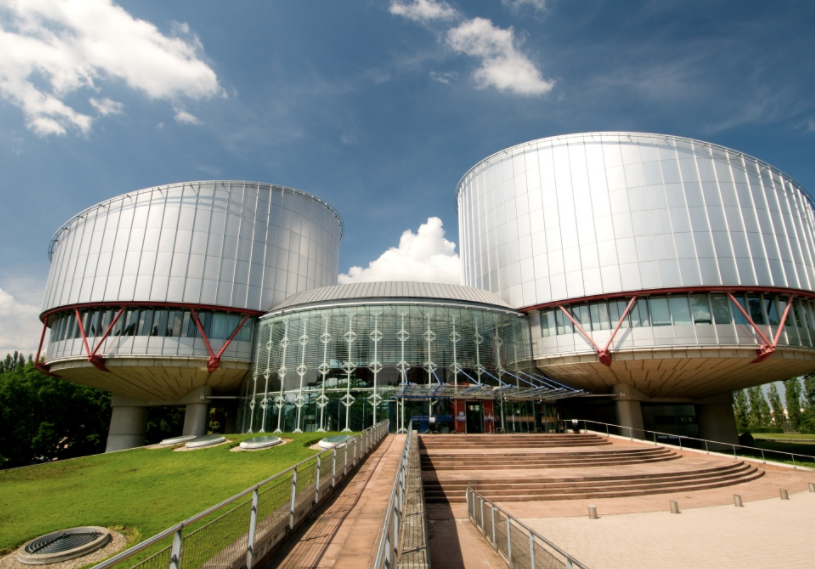
The Court of Justice of the European Union (CJEU) today declined to hold that the criminalisation of consensual same-sex activity necessarily constitutes “persecution” for the purposes of EU asylum law.
This ruling is out of step with international human rights and refugee law, the ICJ and Amnesty International said.
In X, Y and Z v Minister voor Immigratie, Integratie en Asiel the Luxembourg-based CJEU considered three joined cases arising from asylum requests lodged in the Netherlands by nationals of Senegal, Sierra Leone and Uganda.
The three men claimed that they have a well-founded fear of persecution based on their – undisputed – same-sex sexual orientation and the fact that sex between men is criminalised in their home countries.
“The Court skirted around the real issue in this case and missed a key opportunity to state clearly that to criminalise consensual same-sex conduct ultimately amounts to criminalising people for who they are and, therefore, amounts to persecution per se, regardless of how often sentences of imprisonment are enforced,” said Sherif Elsayed-Ali, Amnesty International’s Head of Refugee and Migrants’ Rights.
A key question facing the Court was whether “the criminalisation of homosexual activities and the threat of imprisonment” for the same constitute “persecution” under EU asylum law.
The Court did affirm that the prosecution and imprisonment of a person for such conduct would constitute persecution.
However, according to the two organizations, the mere existence of laws that criminalise consensual same-sex sexual activities – and which thus effectively criminalise individuals for their sexual orientation and who they are – also runs contrary to international human rights law and jurisprudence, as well as a growing raft of national court decisions.
“The Court should have found that these laws, even when they have not recently been applied in practice are capable of giving rise to a well-founded fear of persecution in lesbian, gay, bisexual transgender and intersex people, and who accordingly should be recognised as refugees when they apply for asylum,” said Livio Zilli, Senior Legal Adviser at the International Commission of Jurists.
Amnesty International has extensively documented how these laws provide state actors with the means to perpetrate human rights violations and contribute to an atmosphere of state-supported homophobia.
They enable harassment and abuse, and deny lesbian, gay, bisexual, transgender and intersex (LGBTI) individuals – or those perceived to be LGBTI – effective state protection to which they are entitled under international human rights law.
Contact:
Livio Zilli, Senior Legal Adviser, ICJ, t + 41 22 979 38 23 ; e-mail: livio.zilli(a)icj.org
Notes:
In its request to the CJEU, the Dutch Council of State asked the Luxembourg-based CJEU to answer the following questions:
1) “Do foreign nationals with a homosexual orientation form a particular social group as referred to in Article 10(1)(d)” of the Qualification Directive?
2) “Which homosexual activities fall within the scope of the Directive”; “how should national authorities assess what constitutes persecution in this context” and “whether applicants for refugee status should be expected to conceal, or exercise restraint in expressing, their sexual orientation in their country of origin” in order to avoid persecution?
3) Do the criminalisation of same-sex sexual activity and the possibility of imprisonment upon conviction constitute persecution within the meaning of the Qualification Directive?
Read also:
Criminalization of same-sex acts and the threat of imprisonment give rise to a well-founded fear of persecution