
Feb 11, 2014
An ICJ report published today raises concerns at the effect that the recent reform is having on the organization and effective functioning of the legal profession in the country.
The report casts light on a conflict in the legal profession, which has led to apparently arbitrary disciplinary action against a significant number of lawyers.
The report, Ukraine: conflict, disbarments and suspensions in the legal profession, reveals the escalating dispute in the legal profession following the implementation of a new law, signed by the President on 5 July 2012, which significantly changed the organization of the profession and provides for the establishment of a new bar association.
The law, which provided an opportunity to strengthen the independence of the profession, in practice has led to a serious split between rival groups of lawyers and to the abuse of the disciplinary process.
The conflict in the profession came to a head when a number of lawyers were prevented from taking part in the founding Constituent Congress for the establishment of the new bar association, in November 2012.
This led to those lawyers forming a parallel Congress and to the establishment of two rival National Associations of Lawyers.
“The fact that approximately half of the delegates were unable to take part in the main founding Congress of the National Association of Lawyers points to a worrying fracturing and weakness in the institutions and procedures of the profession,” Temur Shakirov, Legal Adviser of the Europe Programme, said today. “More generally, the way in which the reform was implemented has led to instances of abuse of powers within the legal profession, through for example imposing disciplinary sanctions.”
After the conclusion of the Congress, seemingly unwarranted disciplinary action was taken against lawyers who were active in one of the two rival National Bar Associations.
The report finds a consistent pattern in the decisions to initiate such disciplinary proceedings, suggesting reasons other than those related the lawyers’ professional conduct.
These disciplinary proceedings raise serious concerns in regard to possible violations of rights to freedom of association and the right to participate in the governance of the legal profession.
The ICJ noted that the UN Basic Principles on the Role of Lawyers, require the State to ensure that disciplinary sanctions are not unfairly or arbitrarily imposed on lawyers for action taken in accordance with the legitimate exercise of their professional duties, and in accordance with accepted standards of professional conduct.
“We call on the authorities to investigate the conflict in the profession and subsequent disciplinary action,” said Temur Shakirov. “They must ensure that lawyers are able to carry out their duties in an atmosphere free of intimidation, hindrance, harassment or improper interference.”
Contact:
Róisín Pillay, Director, ICJ Europe Programme, roisin.pillay(a)icj.org
Temur Shakirov, Legal Adviser, ICJ Europe Programme, temur.shakirov(a)icj.org
Ukraine – Conflict, Disbarments And Suspensions In The Legal Profession – publications-report-2014-eng (full text in pdf)
Ukraine – Conflict, Disbarments And Suspensions In The Legal Profession – publications-report-2014-ukr (full text in pdf)
Feb 3, 2014
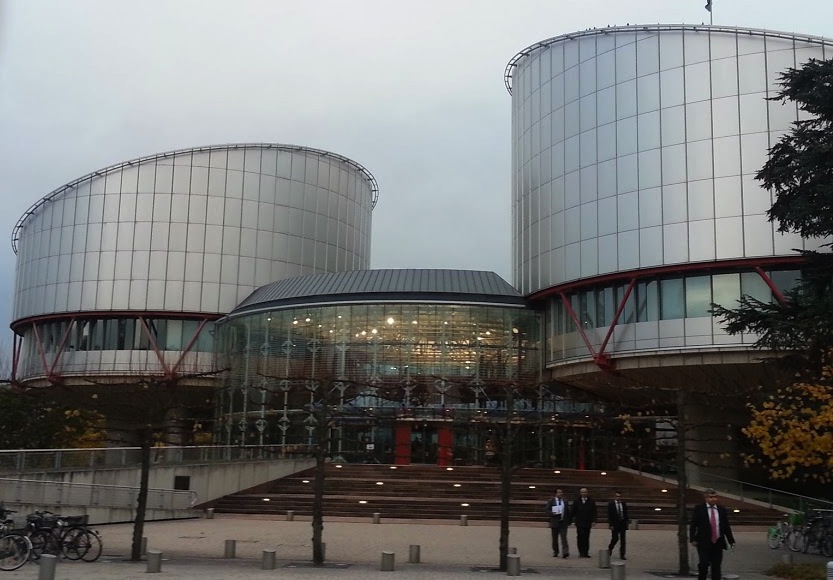
The ICJ, together with Amnesty International, has responded to a Council of Europe consultation on the long-term future of the European Convention on Human Rights and European Court of Human Rights system.
In their response, the ICJ and Amnesty International stress that the guiding principles in any new reforms of the Convention system must be that they serve to enhance the protection of human rights, and in particular to ensure better implementation of the Convention at national level; that they enhance access of individuals to justice for violations of the full range of Convention rights; that that they ensure more effective reparation for violation of the rights guaranteed under the Convention. The success of the Convention system in the long-term requires:
- respect by all Member States for the Convention institutions, and acknowledgment of the shared responsibility for the protection of Convention rights;
- enhanced national implementation of the Convention, including by states bringing their law and policy into line with judgments of the Court regarding other Member States;
- adequate powers and jurisdiction of the Court to ensure consistency in standards, and to ensure effective protection to individuals, preserving the system of individual petition in its current form;
- measures to address systemic human rights problems leading to numerous similar applications to the Court;
- further reforms to execution of judgments and supervision of execution procedures, in particular for systemic violations, making Article 46(4) operational and giving further consideration to financial penalties.
Europe-long-term future of EU Convention-advocay-position paper-2014 (full text in pdf)
Jan 28, 2014
The ICJ has made a submission to the CEDAW in advance of the examination of Kazakhstan’s combined third and fourth periodic reports under Article 18 of the Convention on the Elimination of All Forms of Discrimination against Women.
The ICJ submission draws the Committee’s attention to concerns related to gender-based violence and gender-discrimination.
It also includes a number of broadly framed recommendations urging the authorities in Kazakhstan to address these concerns and give effect to the State Party’ obligations under the Convention.
The Committee will examine the combined third and fourth periodic reports of Kazakhstan during its 57th session in February 2014, following which it will adopt Concluding Observations setting out recommendations to the Government of Kazakhstan.
Kazakhstan-ICJ Submission to CEDAW-advocacy-legal submission-2014 (download in pdf)
Jan 22, 2014
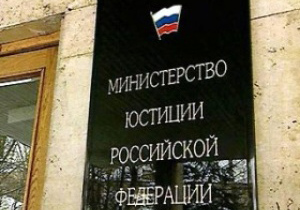
An ICJ legal opinion issued today concludes that recent Amendments to the NGO Law amount to an illegitimate interference with rights to freedom of association and expression protected in international human rights law.
Amendments to the NGO Law require a wide range of Russian non governmental organizations (NGOs) to register as “foreign agents” or else face severe sanctions.
Analyzing the law and its recent application in practice, the ICJ opinion describes the serious impact of the law on Russian civil society organizations that seek to contribute to public debate on issues such as the protection of human rights or the environment.
Under the law, NGOs that receive donations from foreign sources and engage in “political activity” must register as “foreign agents”.
Those NGOs that register as foreign agents are subject to additional burdensome administrative requirements. NGOs that fall within the definition of foreign agents but do not register are liable to heavy fines and other penalties.
Róisín Pillay, Director of the Europe Programme at the ICJ said: “This law confronts many NGOs with unacceptable choices. They may opt to stop receiving foreign funding, which may threaten their very viability and survival. They may withdraw from any activity that could be considered ‘political’, meaning that they cease to take action or voice their opinions on the issues of public concern that the NGO was formed to address. Or, they may register as a foreign agent, which is likely to impair the organization’s capacity to function effectively, if at all. Whichever route an NGO chooses, its freedom of association and expression will be detrimentally affected.”
The ICJ opinion concludes that the inherently vague scope of application of the law, and in particular the wide and unclear definition of “political activity” as well as of other terms in the law, mean that NGOs are unable to predict with any certainty whether or not they will be required to register as “foreign agents”, or when they will be liable to criminal or administrative penalties under the law.
It adds that the broad terms in which the law is formulated leave room for inconsistent or arbitrary application of the law by courts, contrary to international human rights law.
The opinion also notes that it is not clear that the restrictive measures introduced by the amendments serve any of the legitimate aims recognized by international human rights law on freedom of expression or freedom of association.
It finds that the severity of the punitive measures for NGOs that fail to register as “foreign agents” in accordance with the law, as well as the additional requirements imposed on those that do, cannot be justified as necessary and proportionate restrictions on rights.
Róisín Pillay added: “Given the wide range of NGOs directly affected by the law, and the even wider group on whose exercise of their freedom of association and expression the law is likely to have a chilling effect, it is clear to us that the measures are disproportionate to any aims to which they might be directed, and therefore violate international human rights law.”
Contact:
Róisin Pillay, Director, Europe Programme, t + 32 273 48 46, roisin.pillay(a)icj.org
Temur Shakirov, Legal Adviser, Europe Programme, t + 41 22 979 38 32, temur.shakirov(a)icj.org
Russia-NGO law amendments-analysis brief-2014 (download in pdf)
Russia-NGO law amendments-press release-2014-rus (download in pdf)
Russia-NGO law amendments-analysis brief-2014-rus (download in pdf)
Jan 22, 2014 | Адвокаси, Краткий анализ, Новости, Пресс-релизы
В опубликованном сегодня юридическом заключении, МКЮ пришла к выводу, что принятые недавно изменения в Федеральный Закон “О НКО”, могут быть признаны незаконным вмешательством в право на свободу ассоциаций и свободу выражения мнений, защищаемых международным правом в области прав человека.
Настоящие изменения в ФЗ обязывают широкий круг российских некоммерческих организаций (НКО) зарегистрироваться в качестве “иностранных агентов” под угрозой, в случае неисполнения данного требования, быть подвергнутыми жестким санкциям.
Анализ положений Закона и практики его применения, приведенный МКЮ, демонстрирует серьезное влияние, которое оказал Закон на российские некоммерческие организации, цели создания которых направлены на развитие дискуссии по таким вопросам, как защита прав человека или защита окружающей среды.
В соответствии с изменениями в Закон, некоммерческие организации, получающие финансирование из иностранных источников и участвующие в “политической деятельности” должны зарегистрироваться в качестве “иностранных агентов”.
Организации, которые регистрируются в качестве иностранных агентов сталкиваются с дополнительными обременительными требованиями к их отчетности. Те организации, которые подпадают под определение иностранного агента, но не регистрируются в качестве такового, могут быть подвергнуты высоким штрафным санкциям и другим мерам наказания.
Роушин Пиллей, Директор Программы МКЮ по Европе завила: “Этот закон ставит многие неправительственные организации перед сложной дилеммой. Они могут отказаться от получения иностранного финансирования, что может поставить под угрозу их жизнеспособность и существование. Они могут прекратить любую деятельность, которая может рассматриваться как “политическая”, что означает прекращение проведения акций или высказывания своей позиции по вопросам, представляющим общественный интерес, для чего эти организации и были созданы. Или, они могут зарегистрироваться в качестве иностранного агента, что, в результате, скажется на их жизнеспособности и самом существовании. Какой бы путь организация не выбрала, её право на свободу ассоциаций и выражения мнений будет нарушено”.
В своем заключении МКЮ пришла к выводу, что отсутствие однозначной практики применения изменений в Закон, и, в частности, расширительное и нечеткое определение «политической деятельности», а также иных положений этих изменений по сути означает, что НКО не смогут прогнозировать с достаточной определённостью, будут ли они обязаны зарегистрироваться в качестве «иностранных агентов» или нет, а также в каких случаях они будут нести уголовную или административную ответственность предусмотренную изменениями в Закон.
Кроме того, нечеткая формулировка его положений создает предпосылки для непоследовательного и произвольного применения закона судами в нарушение международного права в области прав человека.
В заключении также отмечено, что из изменений в Закон не следует, что ограничения, предусмотренные ими, направлены на достижение одной из законных целей, предусмотренных в международном праве в области защиты свободы выражения мнений и свободу ассоциаций.
В тексте изменений также указывается, что санкции, установленные в отношении НКО, не зарегистрировавшихся в качестве «иностранных агентов», как того требуют изменения в Закон, а также дополнительные требования, предъявляемые к тем организациям, которые зарегистрировались в указанном качестве, не могут быть квалифицированы как необходимые и пропорциональные ограничения прав.
Роушин Пиллей добавила: “Учитывая широкий диапазон организаций, интересы которых затрагивают изменения в Закон, и ещё более широкий круг лиц, на которых изменения в Закон может оказать «охлаждающий эффект», нам очевидно, что рассматриваемые меры не являются пропорциональными ни одной из целей, на достижение которых они могут быть направлены, и, следовательно, принимаются в нарушение норм международного права в области защиты прав человека.”
Контакты:
Роушин Пиллей, директор Региональной программы МКЮ по Европе, roisin.pillay(a)icj.org
Тимур Шакиров, правовой советник Региональной программы МКЮ по Европе, temur.shakirov(a)icj.org
Russia-NGO law amendments-press release-2014-rus (пресс-релиз на русском, PDF)
Russia-NGO law amendments-analysis brief-2014-rus (полный анализ на русском, PDF)