Jun 19, 2013
The ICJ issues this brief analysis of international standards regarding grounds and procedures for disciplinary action against lawyers in CIS countries.
It is published in response to a pattern of disbarment or suspension of lawyers on improper grounds, in CIS countries.
It outlines the international standards on the role of lawyers; guarantees for the functioning of lawyers; and the principles governing disciplinary action.
These standards reinforce the independence of the legal profession and of individual lawyers; they aim to ensure that lawyers can contribute to the fair administration of justice under the rule of law.
The recommendations, at the end of the document, are based on the legal analysis. They aim to provide guidance for national bar associations and the relevant state bodies.
CIS-icj opinion lawyers discipline law-advocacy-analysis brief-2013-eng (full text in pdf)
CIS-icj opinion lawyers discipline law-advocacy-analysis brief-2013-rus (full text in pdf)
Jun 13, 2013
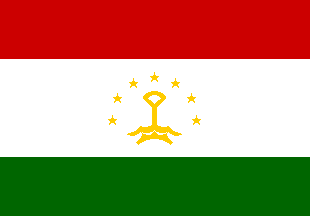
The ICJ has submitted an alternative report to the Human Rights Committee on Tajikistan’s compliance with the International Covenant on Civil and Political Rights (ICCPR).
The report focuses on questions arising under Articles 7, 9 and 14 of the International Covenant on Civil and Political Rights (ICCPR) concerning the weak framework of protection against torture and other ill-treatment for those apprehended and detainees; the practices of arbitrary arrest and detention; and the inadequate protection of the right to a fair trial.
The ICJ raises various concerns about the criminal justice system, including the use of pre-trial detention in the majority of cases as the sole measure of restraint, and the use of torture and ill-treatment to extract “confessions”. The ICJ also addresses the lack of equality of arms in the criminal process; and impediments to lawyers in the exercise of their professional duties.
Tajikistan-HRCttee108-ICJ-AlternativeReport-LegalSubmission-2013 (download full alternative report by the ICJ)

Jun 10, 2013
In a statement delivered today by UPR-Info, the ICJ joined 72 NGOs to draw the Human Rights Council’s attention to attacks on the integrity of UPR Working Group reports.
In a general debate under Item 6 (Universal Periodic Review), the statement drew attention to recent amendments to the draft UPR Working Group report on the Russian Federation in which recommendations were removed by the State under review for reasons of their being irrelevant. The statement emphasised that both accepted and noted recommendations should be included in Working Group reports, irrespective of the country making them or of the issues raised.
The statement was delivered during the Human Rights Council’s 23rd regular session (27 May to 14 June 2013).
HRC23-Item6GD-LegalSubmission-2013 (download full oral statement in PDF)
Jun 7, 2013 | News
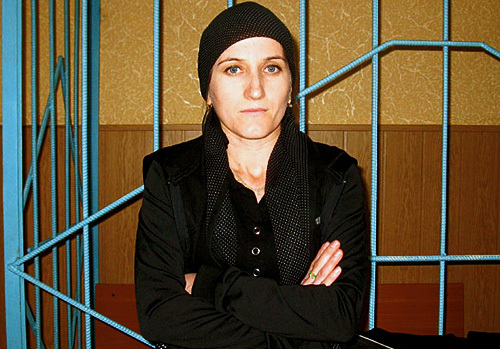
The ICJ today expressed its grave concern at death threats received by lawyers Sapiyat Magomedova and Musa Suslanov.
The authors of the threats demanded that the lawyers cease their involvement in a case alleging the murder of five individuals.
The ICJ called on the authorities to take urgent protective measures to ensure the safety of lawyers who received these threats.
On 8 May, Sapiyat Magomedova and Musa Suslanov took on a case to represent relatives of a local parliamentarian, Magomed Gamzatov, his brothers Osman, Yusup and Gazidibir and their cousin Magomed Omarov. The men were killed by firearms in the city of Kizlyar, Dagestan, on 18 March.
According to relatives, the shootings resulted from a conflict of a personal nature. A criminal case was opened and several people arrested in relation to the killing.
However, the relatives of the victims have alleged that they have been subjected to continuous surveillance and pressure. Witnesses reportedly now fear to testify in the case.
From the start the lawyers began to be subject to intimidation, which included threats that their professional offices would be set on fire or blown up with the lawyers inside. Such threats were delivered through acquaintances of the lawyers.
On 19 and 20 may, after the two lawyers had announced a more proactive intervention in the case, including by inviting information from additional witnesses, the lawyers received text messages warning them that they should drop the case which was “their chance to stay alive”.
Another message demanded that they drop their involvement in the case and “not butt into something they should not do”.
The ICJ considers that there is an imminent risk to the lives and physical security of lawyers, especially taking into account the recent case of murder of a lawyer in Dagestan.
On 20 January 2012, a lawyer in Dagestan was shot to death with the alleged involvement of security forces. According to the information received by the ICJ, the case has still not been properly investigated and no one has been held accountable.
The ICJ recalls that under international law and standards, Russia has an obligation to protect the right to life of individuals where there is a real and immediate risk to the life of an individual from the criminal acts of a third party.
The UN Basic Principles on the Role of Lawyers provide that “where the security of lawyers is threatened as a result of discharging their functions, they shall be adequately safeguarded by the authorities”.
Effective measures to protect the lawyers should include security measures as necessary, such as police monitoring and guards. This issuance of death threats constitutes criminal conduct.
The ICJ called on the Russian authorities to promptly and thoroughly investigate these threats and to bring the perpetrators to justice in fair trials.
Lawyer-deaththreats-Russia-eng (download the statement in English)
Lawyer-deaththreats-Russia-rus (download the statement in Russian)
Contact:
Róisín Pillay, Director, ICJ Europe Programme, t +41 22 979 38 30; e-mail: roisin.pillay(a)icj.org
Temur Shakirov, Legal Adviser, ICJ Europe Programme, t +41 22 979 38 32: e-mail: temur.shakirov(a)icj.org
Jun 7, 2013 | Новости, Статьи
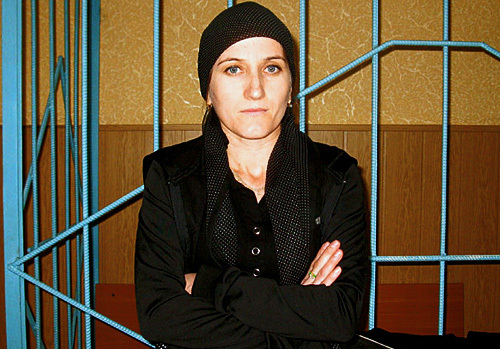
Международная комиссия юристов выразила сегодня серьезную озабоченность в связи с угрозами в адрес адвокатов Сапият Магомедовой и Мусы Сусланова.
Угрожавшие требуют прекращения участия адвокатов в деле о предполагаемом убийстве пяти человек.
МКЮ призвала власти принять срочные защитительные меры для обеспечения безопасности адвокатов, получивших угрозы.
8 Мая Сапият Магомедова и Муса Сусланов вступили в дело для представления интересов родственников бывшего депутата местного парламента Магомеда Гамзатова, его братьев Османа, Юсупа и Газидибира и их двоюродного брата Магомед Омаров. Мужчины были убиты из огнестрельного оружия в городе Кизляр в Дагестана 18 марта.
По словам родственников, стрельба произошла в результате конфликта личного характера. В связи с убийством было возбуждено уголовное дело, и несколько человек были арестованы.
Тем не менее, родственники погибших утверждают, что они находятся под непрерывным наблюдением и на них оказывалось давление. Как сообщается, свидетели по опасаются давать показания по делу.
С самого начала адвокаты стали подвергаться запугиванию, включая угрозы о том, что их офисы будут подожжены или взорваны вместе с адвокатами. Подобные угрозы передавались через знакомых этих адвокатов.
19 и 20 мая, после того, как адвокаты объявили о своей более активной работе по делу, в том числе о привлечении дополнительных свидетелей, адвокаты получили смс сообщения с предупреждениями, что они должны отказаться от дела, что являлось их “шансом остаться в живых”.
Другое сообщение содержало требование отказаться от своего участия в деле, и “не соваться куда им не следует”.
МКЮ считает, что существует непосредственная опасность для жизни и физической безопасности адвокатов, особенно принимая во внимание недавнее дело об убийстве в Дагестане адвоката.
20 января 2012 года, в Дагестане был застрелен адвокат с предполагаемым участием сотрудников сил безопасности. Согласно информации, полученной МКЮ, дело до сих пор не было надлежащим образом расследовано, и никто не был привлечен к ответственности.
МКЮ напоминает, что в соответствии с международным правом и стандартами, Россия приняла на себя обязательства по защите права на жизнь лиц в случаях, когда существует реальная и непосредственная угроза для жизни человека от преступных действий третьих лиц.
Основные принципы ООН, касающиеся роли юристов предусматривают, что в случаях “когда возникает угроза безопасности юристов в результате выполнения ими своих функций, власти обеспечивают им надлежащую защиту».
Эффективные действия по защите адвокатов должны включать необходимые меры безопасности, такие как полицейское наблюдение и обеспечение охраной. Данные угрозы убийством являются преступным актом.
МКЮ призвала Российские власти оперативно и тщательно расследовать эти угрозы и привлечь виновных лиц к ответственности в справедливом судебном разбирательстве.
Контакты:
Роушин Пиллей, директор Региональной программы МКЮ по Европе, roisin.pillay(a)icj.org
Тимур Шакиров, правовой советник Региональной программы МКЮ по Европе, temur.shakirov(a)icj.org
Lawyer-deaththreats-Russia-rus (полное изложение на русском, PDF)