Mar 22, 2021 | Advocacy, Non-legal submissions
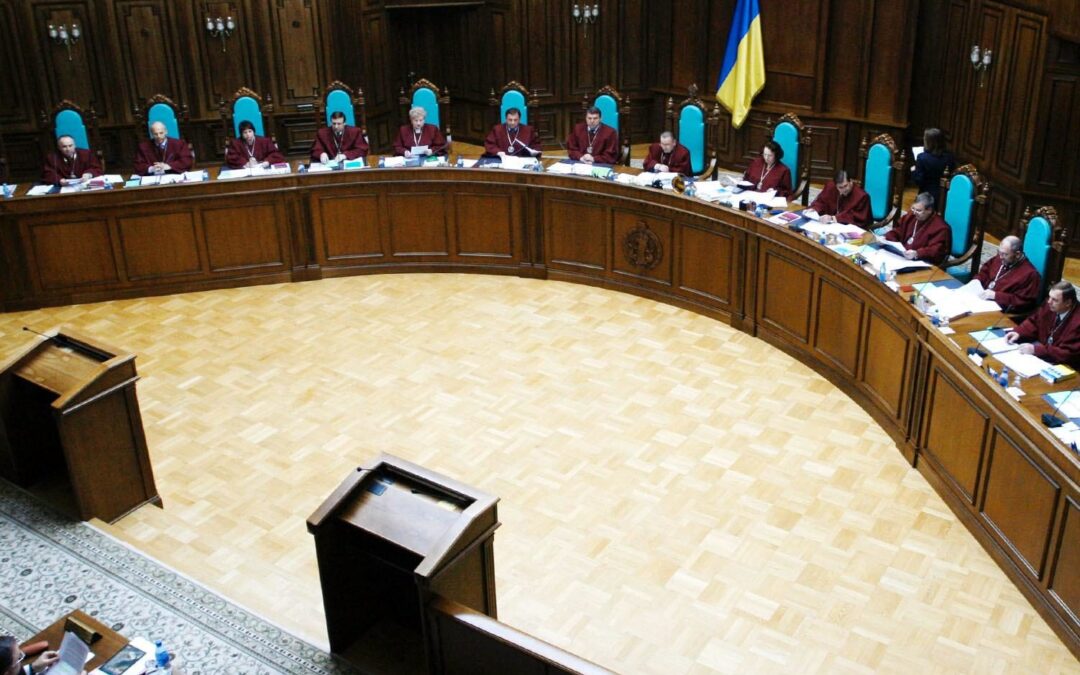
Today, before the UN Human Rights Council, the ICJ called on Ukrainian authorities to ensure the security of lawyers and the independence of the judiciary, essential elements to make effective any human rights technical assistance and capacity building.
The statement reads as follows:
“Madame President,
In Ukraine, a number of lawyers, including those who defend human rights, in and outside of courts, including to face threats, harassment, and other attacks on their security.
Lawyers continue to be associated with their clients and may face detrimental consequences for representing them.
For example, in November 2020, lawyer Nikolay Osipchuk was physically attacked by the local Prosecutor and several other people in the court room of a district court. A pattern of such attacks was identified by the ICJ in a report issued last year.
The ICJ is further concerned at recent the attempts of interference by the Government with the independence of the judiciary in Ukraine.
The ICJ welcomes the withdrawal of the presidential draft law by which all judges of the Constitutional Court would have been dismissed. However, it is concerning that, following a criminal case initiated against him, the President of the Constitutional Court was suspended by a decision of the President of Ukraine. This decision, on dubious legal grounds, undermines the independence of the judiciary.
The ICJ urges that Ukraine:
- Ensure prompt, thorough, impartial and independent investigations of all attacks on lawyers, leading where appropriate, to bringing those responsible to justice;
- refrain from any acts which interfere with the independence of the judiciary and annul the suspension of the President of the Constitutional Court.
I thank you.”
Contact:
Massimo Frigo, ICJ UN Representative, e: massimo.frigo(a)icj.org, t: +41797499949
Mar 19, 2021 | News
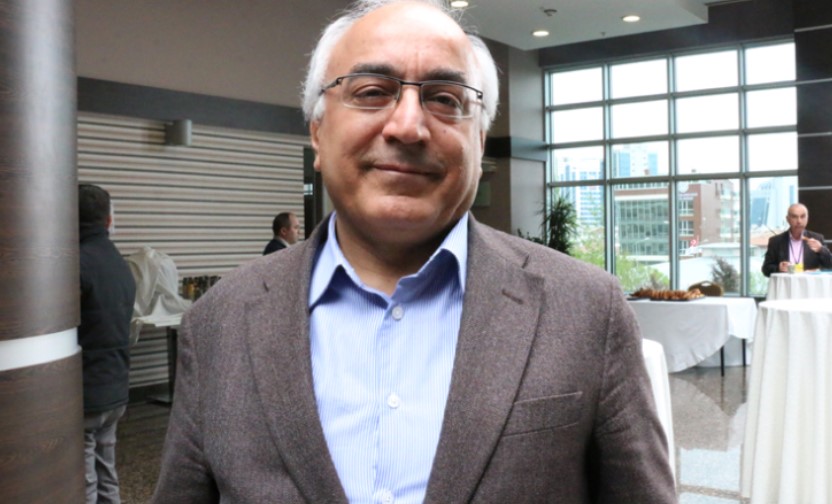
The ICJ called today on the Turkish authorities to immediately release human rights defender and lawyer Öztürk Türkdoğan, who was arrested this morning after an unlawful search of his home. The charges against him, if any, are unkown and he is currently being held without access to his lawyer.
Öztürk Türkdoğan is the chair of the Human Rights Association and a lawyer and member of the Ankara Bar Association.
“The arrest and search of Öztürk Türkdoğan’s continues a systematic pattern of misuse of the criminal law to harass and persecute human rights defenders and lawyers in Turkey in recent years,” said Roisin Pillay, ICJ’s Europe and Central Asia Programme Director. “Öztürk Türkdoğan must be released immediately. If he remains in detention then he must be ensured immediate and confidential access to a lawyer, and be informed of the nature of any charges against him and brought promptly before a court.”
The arrest occurred during a search of Öztürk Türkdoğan’s home without the presence of a lawyer, which is in direct contravention of Turkish criminal procedural law.
While no information has been made available on the charges against Öztürk Türkdoğan, he is currently being detained without access to a lawyer for 24 hours, which indicates that the charges are likely related to terrorism or to offences against the State. These offences, contrary to obligations under international human rights law, are vaguely and broadly defined and have been long used and abused by prosecutors in Turkey to suppress human rights defenders, lawyers and political opponents.
Under international human rights law, anyone arrested has a right to prompt and confidential access to a lawyer, and to information on the charges against them. Arrests and searches of homes must not be arbitrary and must be carried out in compliance with international standards and national laws and procedures.
“Hundreds of lawyers, judges and prosecutors have been improperly arrested, harassed and detained in the past few years by Turkish authorities ” said Roisin Pillay. “Using the criminal justice system in this way is contrary to the most fundamental principles of the rule of law.”
Background
Systematic violations of human rights in investigation and prosecution of counter-terrorism offences in Turkey have also been documented by the UN Special Rapporteur on the promotion and protection of human rights while countering terrorism, the UN Special Rapporteur on the situation of human rights defenders, the UN Special Rapporteur on the independence of judges and lawyers, theWorking Group on Arbitrary Detention, the Special Rapporteur on the rights to freedom of peaceful assembly and of association and the Special Rapporteur on the promotion and protection of the right to freedom of opinion and expression, and the Commissioner for Human Rights of the Council of Europe.
The ICJ has extensively documented these violations:

Mar 17, 2021 | News
All children regardless of their age must have access to procedural rights when they are accused of criminal acts, the Council of Europe’s European Committee of Social Rights decided in a landmark case (No. 148/2017) brought by the International Commission of Jurists (ICJ) with support from the Prague-based Forum for Human Rights.
The ICJ and Forum lodged a complaint challenging the failure of the Czech Republic to provide for legal assistance to children under the age of 15 (the age of criminal responsibility in the Czech Republic) in the pre-trial stage of proceedings and failure to provide alternatives to formal judicial proceedings for them.
The European Committee of Social Rights, which is responsible for oversight of the European Social Charter of 1961, found the Czech Republic was violating the rights of children under 15, who face proceedings in the child justice system but are below the age of criminal responsibility. The Committee found that the failure to provide these due process safeguards violated the rights of the children to social protection under Article 17 of the 1961 Charter. Human rights protected under the European Social Charter are legally binding on States party to it.
“The Committee’s decision is ground-breaking in many ways, yet two implications are revolutionary. First, it clearly emphasises the inter-dependence between fair-trail rights and child’s well-being. In modern human rights law, there is no such a thing as a clear-cut division between civil and political rights and social rights. But most importantly, the decision undermines paternalistic attitudes towards young children who enter the juvenile justice system and makes clear that all children – regardless their age – must be ensured adequate procedural protection in the course of the whole proceedings, based on the restorative justice principles,” said Maroš Matiaško, senior legal consultant of Forum.
The decision of the European Committee on Social Rights should lead to fundamental changes in the Czech child justice system, Forum for Human Rights and the International Commission of Jurists said today.
“We brought this case to ensure that children below the age of criminal responsibility do not have lower standards of protection of their rights compared to the older children in the child justice system,” said Karolína Babická, ICJ Legal Adviser. “We expect the Czech Republic to swiftly implement the decision of the Committee and ensure that all children regardless their age have access to procedural rights and alternative procedures like settlements and conditional termination or withdrawal of prosecution.”
Background
The legal findings come following a collective complaint submitted to the European Committee on Social Rights by Prague-based Forum for Human Rights and the International Commission of Jurists in 2017.
The Committee’s decision is built on two legal grounds, (I) mandatory legal representation for all children in conflict with the law regardless of age already in the pre-trial stage and (II) their access to alternatives in line with restorative justice principles.
On the first ground, the Committee found that the State must ensure mandatory legal assistance to children below the age of criminal responsibility already in the pre-stage of the proceedings. The reasoning is built on four grounds:
–Children below the age of criminal responsibility are not always able to understand and follow pre-trial proceedings due to their relative immaturity. It cannot therefore be assumed that they are able to defend themselves in this context.
–Children below the age of criminal responsibility should be assisted by a lawyer in order to understand their rights and the procedure applied to them, so as to prepare their defence. The failure to ensure legal assistance for children below the age of criminal responsibility in the pre-trial stage of proceedings is likely to impact negatively on the course of the proceedings, thereby increasing the likelihood of their being subjected to measures such as deprivation of liberty.
–Legal assistance is necessary in order for children to avoid self-incrimination and fundamental to ensure that a child is not compelled to give testimony or to confess or acknowledge guilt.
–The assistance of a lawyer is also necessary in situations where parents/legal guardians have interests that may conflict with those of the child and where it is in the child’s best interest to exclude the parents/legal guardians from being involved in the proceedings. Therefore, the Committee concluded that mandated separate legal representation for children is crucial at the pre-trial stage of proceedings.
In relation to the second legal ground, the Committee emphasised that diversion (alternatives to proceedings, such as settlement or conditional termination or withdrawal of criminal proceedings) from judicial proceedings should be the preferred manner of dealing with children in the majority of cases and diversion options should be available from as early as possible after contact with the system, before a trial commences, and throughout the proceedings. The principle applies to an even greater degree to a situation in which children below that age can still be engaged in the child justice system.
It may be left to the discretion of States Parties to decide on the exact nature and content of diversion measures, and to take the necessary legislative and other measures for their implementation, though there are relevant standards that should be taken into account, especially those developer by the UN Committee on the Rights of the Child.
Collective complaints alleging violations of obligations under the European Social Charter, may be brought against States which have ratified the 1995 Additional Protocol to the European Social Charter. On the basis of the European Committee on Social Rights’ decision on a collective complaint, the Council of Europe Committee of Ministers may recommend that the State take specific measures to implement the decision.
Read the full decision here.
See more information about the case here.
Watch our talk on the case and its importance:
Contact:
Karolína Babická, Legal adviser Europe and Central Asia Programme; karolina.babicka(a)icj.org
Mar 15, 2021 | Advocacy, Non-legal submissions
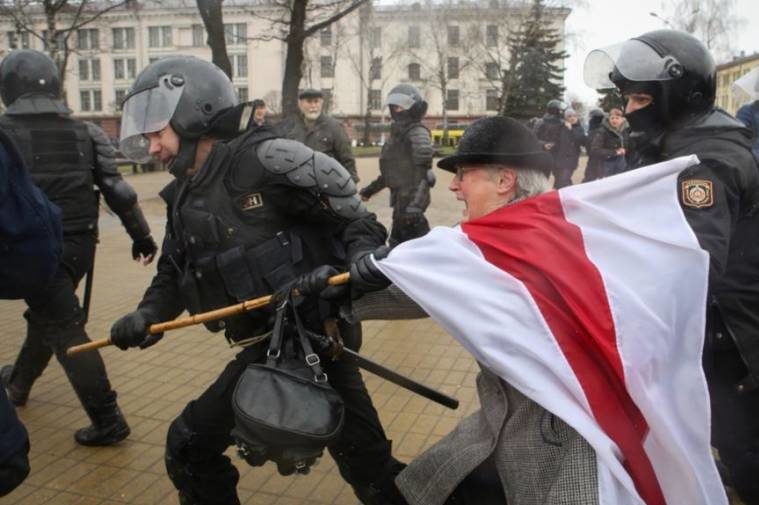
Today, the ICJ joined IBAHRI, Human Rights House Foundation and the OMCT in a statement before the UN Human Rights Council condemning human rights violations against lawyers in the country.
The joint statement delivered during the debate on the outcome of the UPR of Belarus reads as follows:
“The IBAHRI, the International Commission of Jurists, the Human Rights House Foundation and the OMCT would like to echo concerns that have been raised during the UPR review and are reflected in the UPR outcome document.
We strongly condemn the numerous, widespread human rights violations committed in the aftermath of the 2020 Belarus Presidential election, in particular:
- First – The disproportionate use of force by security forces against peaceful protestors, the arbitrary arrest and detention of thousands of people, systematic torture and ill-treatment following arrest or during detention, reports of enforced disappearances and denied access to a lawyer.
- Second – The systematic control of the executive over the judiciary and the court system. The judiciary continues to selectively use legislation to intimidate dissenting voices and tightly controls the licensing and activities of lawyers working under threat of being targeted.
- Third – The Illegal and arbitrary restrictions to fundamental rights and freedoms, including the right to peaceful assembly, free expression and access to information. From violent targeting of journalists and the media, to state sanctioned internet shutdowns resulting in censorship.
Therefore, we urge Belarus to:
- Immediately and unconditionally release all individuals arbitrarily detained and stop any practices of torture and ill-treatment of detainees;
- Undertake impartial, independent, effective and prompt investigations into allegations of human rights abuses;
- Bring perpetrators to justice, ensuring effective remedy and reparation for victims;
- Allow professionals – including legal and media professionals – to conduct their work without fear of targeting;
- Ensure respect and practice for all human rights, including free expression, online and offline, providing unconstrained access to information for all; lastly
- Adopt all necessary measures to prevent further human rights violations, without delay.”
Contact:
Massimo Frigo, ICJ UN Representative, e: massimo.frigo(a)icj.org, t: +41797499949
Mar 5, 2021
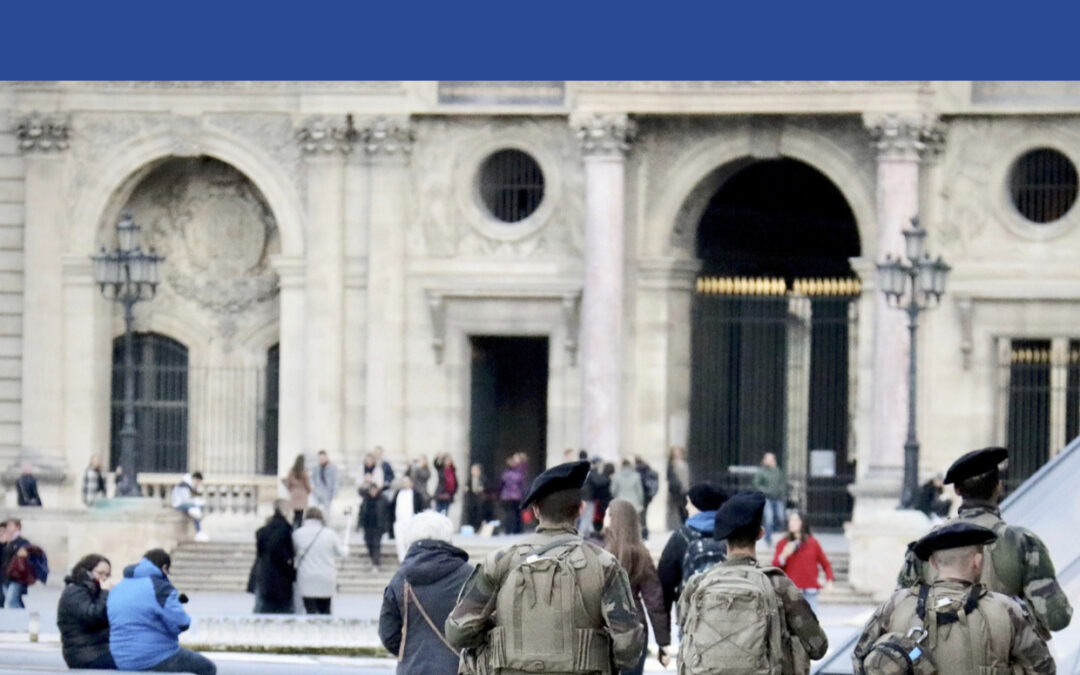
Today, the ICJ published Terrorism offences and human rights in the EU: a short guide aimed at supporting civil society and others advocating for the human rights of people affected by terrorism and counter-terrorism
Across Europe, national laws criminalise a wide range of conduct in the name of countering terrorism. In practice, these laws can affect rights to freedom of movement, expression, association, assembly, privacy, private and family life or the right to political participation. They may be applied in a way that is discriminatory, or through processes involving insufficient procedural safeguards that affect the right to liberty or the right to a fair trial..
This short Guide presents an overview of the international and EU legal framework for the protection of human rights in the application of terrorism-related criminal offences in EU Member States. It particularly addresses the impact on human rights of investigating, prosecuting and trying offences under the EU Directive on combatting terrorism.
The Guide outlines the scope of conduct considered as “terrorism” in international and EU law, as well as international law and standards on the rights of victims of terrorism and of suspects of terrorism-related crimes.
It summarises how international human rights law applies to counter-terrorism criminal law, including in times of crisis, in accordance with principles of legality, necessity and proportionality, and non-discrimination.
The Guide is complemented by the more detailed legal analysis of these issues in Counter-terrorism and human rights in the courts: guidance for judges, prosecutors and lawyers on application of EU Directive 2017/541 on combatting terrorism (the Guidance), published by the ICJ in collaboration with Human Rights in Practice, Nederlands Juristen Comité voor de Mensenrechten (NJCM) and Scuola Superiore Sant’Anna di Pisa in November 2020 as part of the EU JUSTICE project.
Download here: Terrorism offences and human rights in the EU: a short guide
Contact:
Róisín Pillay, Director Europe and Central Asia Programme; roisin.pillay(a)icj.org
Karolína Babická, Legal adviser Europe and Central Asia Programme; karolina.babicka(a)icj.org