Sep 29, 2020 | Advocacy, Non-legal submissions
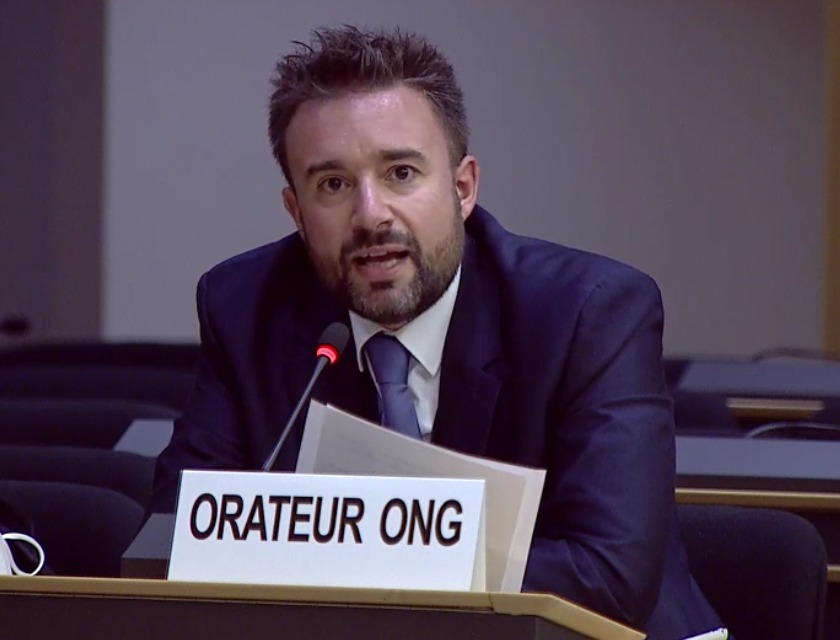
The ICJ and IHOP today put the spotlight the lack of independence of the judiciary and the abuse of criminal and anti-terrorism laws in Turkey, speaking at the UN Human Rights Council in Geneva.
The statement, made during the consideration of the Universal Periodic Review (UPR) of Turkey, reads as follows:
The International Commission of Jurists (ICJ) and the Human Rights Joint Platform (IHOP) welcome the acceptance by Turkey of recommendations to ensure the independence of the judiciary (recommendations 45.112, 45.113, 45.114, 45.115, 45.118, 45.120, 45.121, 45.124, 45.125, 45.126, 45.127, 45.128, 45.129, 45.132, 45.133).
The ICJ and IHOP however regret to report that, based on their research and experience, the statements by the Turkish Government that the recommendations on the independence of the judiciary have already been implemented is simply not correct.
On the contrary, during the state of emergency more than 4000 judges and prosecutors were dismissed, more than 2000 judges and prosecutors were detained, through arbitrary processes that did not meet international standards.
The judiciary in Turkey does not enjoy basic guarantees of institutional independence because its Council of Judges and Prosecutors is fully appointed by the Legislative and Executive powers contrary to international standards on judicial independence.
The ICJ and IHOP further regret that Turkey only noted and did not explicitly support the recommendations to reform its penal and counter-terrorism legislation in line with international standards on freedom of expression (recommendations 45.90, 45.91, 45.92, 45.93, 45.94, 45.95, 45.96, 45.97, 45.98, 45.99, 45.100, 45.101, 45.102, 45.103, 45.104, 45.148, 45.158).
The statement by the Government that “legal amendments have already been adopted” and that these laws are in line with international standards is also fundamentally incorrect.
Anti-terrorism laws and other criminal offences continue to be abused to unjustifiably prosecute political opposition members, judges, lawyers, prosecutors and human rights defenders.
To actually implement the recommendations accepted by Turkey, ICJ calls on Turkish authorities to
- radically reform the governance of the judiciary to restore its independence in line with international standards;
- promptly finalize all criminal and administrative cases concerning former judges and prosecutors, respecting international standards of judicial independence;
- truly reform the country’s anti-terrorism law, and
- stop all arbitrary prosecution of human rights defenders, lawyers, judges, prosecutors and academics.
Contact:
Massimo Frigo, ICJ Senior Legal Adviser, e: massimo.frigo(a)icj.org, t: +41797499949
Sep 23, 2020 | News
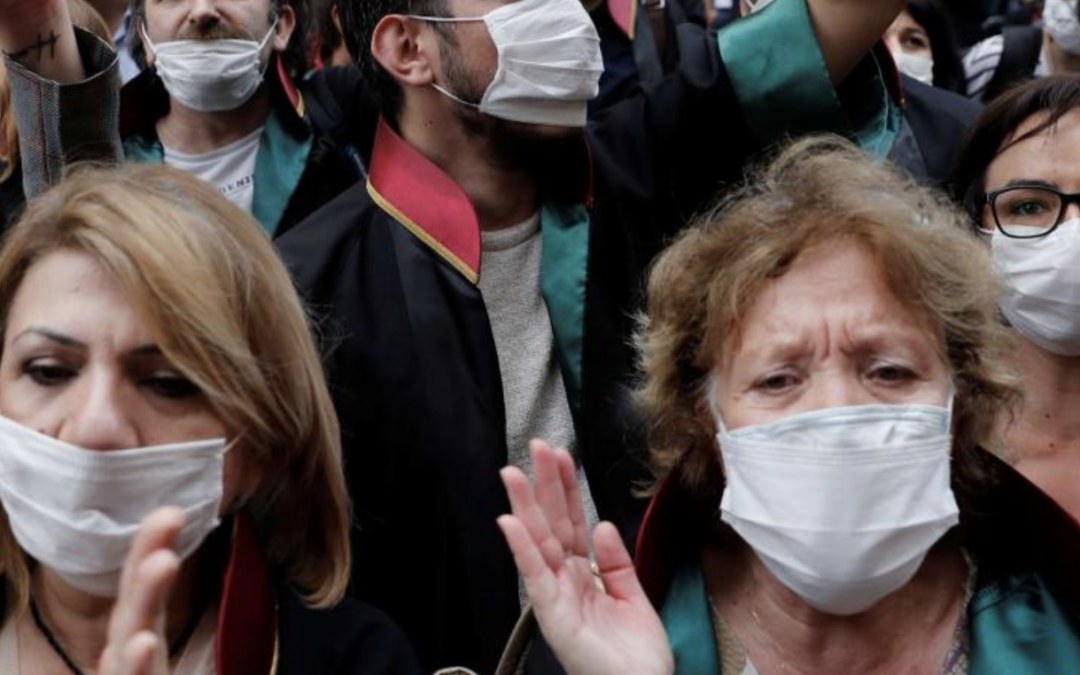
The ICJ called today on the Public Prosecutor Office of Istanbul to drop criminal charges and investigations against the President and Board Members of the Istanbul Bar Association for having publicly displayed a photograph of lawyer Ebru Timtik, who died following a hunger strike while in detention.
“These charges have been brought as a direct result of the lawyers’ exercise of their freedom of expression,” said Massimo Frigo, Senior Legal Adviser with the ICJ Europe and Central Asia Programme. “ They should be dropped immediately.”
On 21 September, the Chief Public Prosecutor’s Office of Istanbul notified to the 11 members of the board of the Istanbul Bar Association, including its President Mehmet Durakoğlu, that they were under criminal investigation.
The charges are not yet known but it is confirmed that the investigation concerns their hanging of a large picture of lawyer Ebru Timtik out of the window of the Istanbul Bar Association’s headquarters.
Lawyer Ebru Timtik died last 27 August on the 238th day of her hunger strike, while in detention on remand. She was a lawyer in the Progressive Lawyers Association and was under trialto answer to the unfounded accusation of being a member of a terrorist organisation. She undertook the hunger strike to protest against these accusations, which are often used in Turkey to silence political opposition and human rights defenders.
Following the bar association’s display of Ebru Timtik’s photograph, Minister of Interior Süleyman Soylu targeted the İstanbul Bar, saying, “I strongly condemn the ones who hung the photograph of a terrorist organization member on the İstanbul Bar Association.” Minister of Justice Abdulhamit Gül also said, “It is unacceptable that the bar association has become a backyard for illegal and marginal structures.” President Erdoğan also stated in the opening speech of the new legal year that “In the next period, we will do what is necessary to cut the bloody road extending from being attorneys to terrorists.”
“It is particularly worrying that these investigations were triggered after statements by the Minister of the Interior and the President, besmirching the legitimate work of lawyers and bar associations as linked to ‘terrorism,” added Massimo Frigo.
International standards
The UN Basic Principles on the Role of Lawyers state:
18. Lawyers shall not be identified with their clients or their clients’ causes as a result of discharging their functions.
23. Lawyers like other citizens are entitled to freedom of expression, belief, association and assembly. In particular, they shall have the right to take part in public discussion of matters concerning the law, the administration of justice and the promotion and protection of human rights and to join or form local, national or international organizations and attend their meetings, without suffering professional restrictions by reason of their lawful action or their membership in a lawful organization. In exercising these rights, lawyers shall always conduct themselves in accordance with the law and the recognized standards and ethics of the legal profession.
24. Lawyers shall be entitled to form and join self-governing professional associations to represent their interests, promote their continuing education and training and protect their professional integrity. The executive body of the professional associations shall be elected by its members and shall exercise its functions without external interference.
Contact
Massimo Frigo, Senior Legal Adviser, e: massimo.frigo(a)icj.org, t: +41797499949; twitter: @maxfrigo
Sep 21, 2020 | Advocacy, Non-legal submissions
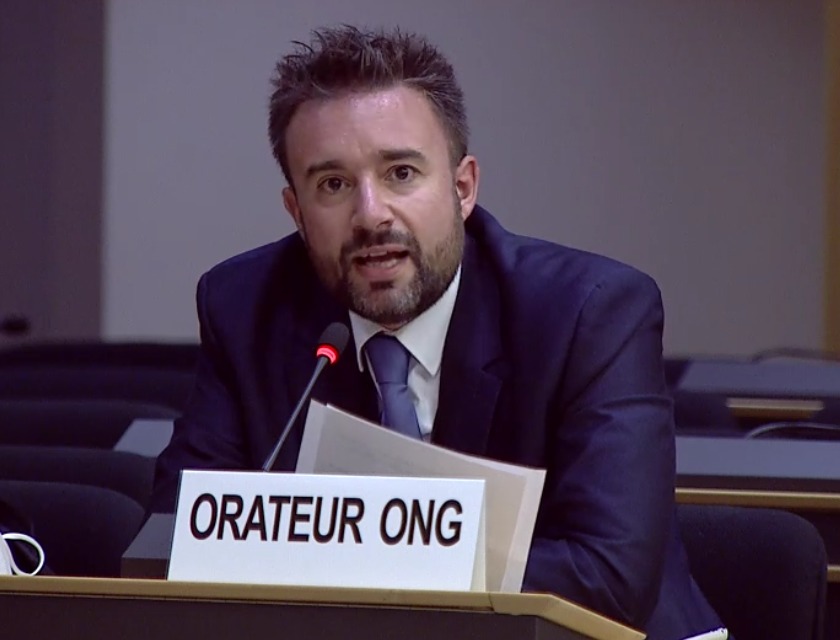
At the interactive dialogue with the Working Group on Enforced and Involunatary Disapparances during the UN Human Rights Council in Geneva, the ICJ has called on Tajikistan and Turkey to comply with the recommendations by the Working Group and to end practices of abduction and forced return.
The Chair of the Working Group on Enforced and Involuntary Disapperances in his replies to the questions pressed Turkey to implement the recommendations of the Working Group’s report.
The oral statement read as follows:
Mr Vice-President
The International Commission of Jurists (ICJ) welcomes the report by the Working Group on the follow up of its recommendations on its visit to Turkey (A/HRC/45/13/Add.4) and shares its concerns at the lack of implementation by the Turkish authorities and at the State-sponsored practice of “abductions and forced returns” (para 8). The ICJ agrees with the Working Group that a critical factor that fosters impunity in Turkey is “the lack of judicial independence and impartiality” (para 17).
The ICJ also welcomes the Working Group’s report on Tajikistan (A/HRC/45/13/Add.1). The ICJ shares its concern at the forcible return of Tajikistan nationals to the country, involving enforced disappearances (para 53), the harassment of lawyers (para 9) including the lengthy imprisonment of Buzurgmehr Yorov and Nuriddin Makhkamov, the obstruction of lawyers’ access to detainees, and inadequate judicial review of detention (para 47).
The ICJ urges both countries to fully implement the recommendations of the Working Group and particularly:
- on Tajikistan, to end forced return of their nationals, and to ensure prompt and confidential access to lawyers for detainees and prompt and independent judicial review of detention.
- on Turkey, to stop all practices of abduction and forced return from other countries and to restore the independence of its judiciary.
Sep 18, 2020 | Advocacy, Non-legal submissions
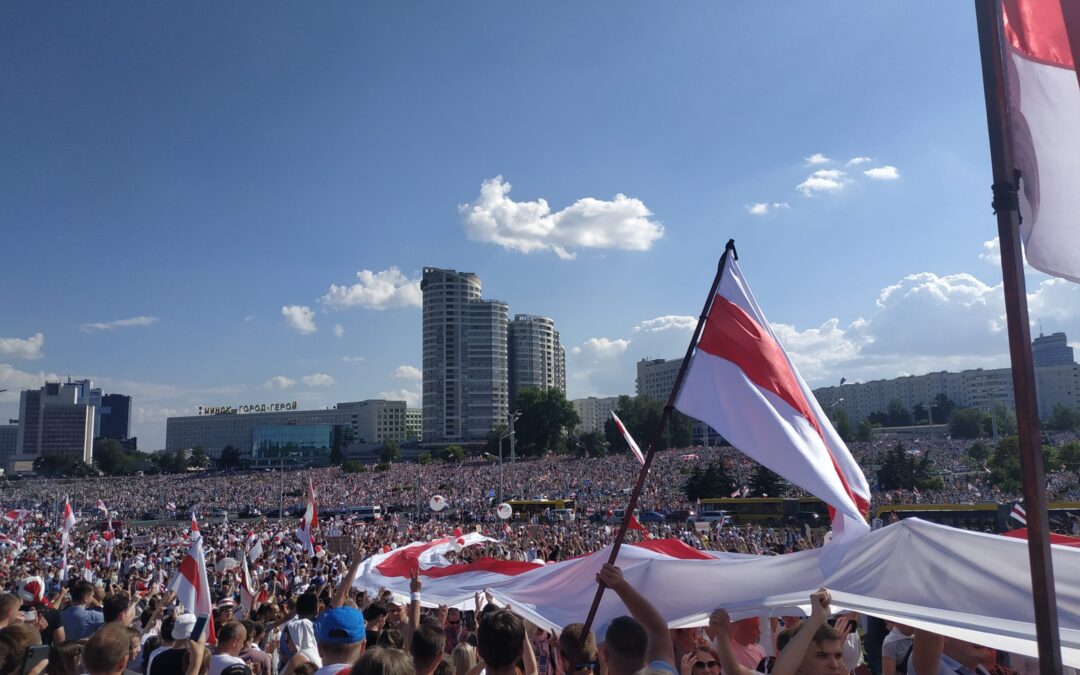
At a special session of the UN Human Rights Council in Geneva, the ICJ and IBAHRI have called on Belarus to comply with its international human rights obligations, including by releasing those arbitrarily detained and ceasing abusive prosecutions as well as harassment of lawyers.
The oral statement read as follows:
“Madame President,
The International Commission of Jurists (ICJ) and the International Bar Association’s Human Rights Institute (IBAHRI) are concerned at the continuing human rights violations in Belarus following the Presidential election. Widespread arbitrary arrests, police violence against peaceful protesters, torture and other ill-treatment of detainees and allegations of enforced disappearances, violate Belarus’s international law obligations, and require accountability.
Our organizations are particularly concerned about reports that these violations are accompanied by widespread denial of detainees’ access to a lawyer. Lawyers face harassment and obstacles in carrying out their professional duties.
We highlight the recent arrests and detention of two prominent lawyers, Ilya Salei and Maxim Znak, on politically motivated charges on 9 September 2020. According to official information, the lawyers are charged with the crime of “calls for actions aimed at causing harm to the national security of the Republic of Belarus”.
We urge the Council to call on Belarus to:
- comply with its international human rights obligations, including by releasing those arbitrarily detained and ceasing abusive prosecutions;
- provide detainees with confidential access to lawyers of their choice;
- end harassment of lawyers and ensure accountability and reparations for those whose human rights have been violated; and
- request OHCHR to monitor and report to the Human Rights Council on the human rights situations in Belarus.
Thank you”
Sep 17, 2020 | Events, News
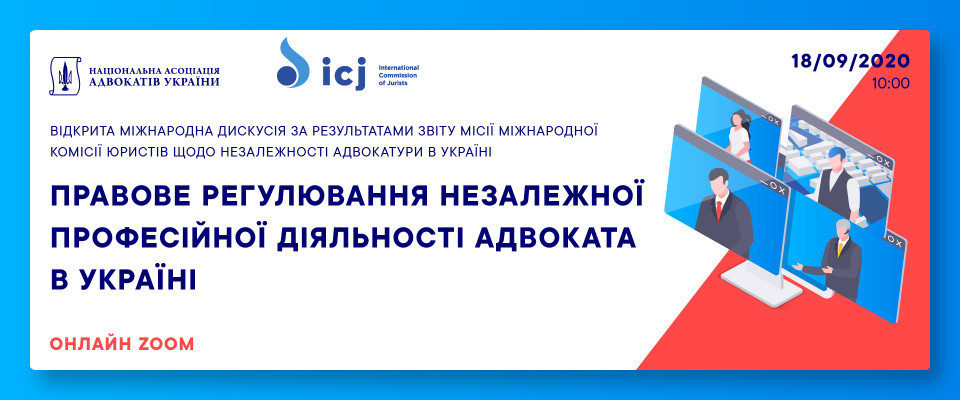
The ICJ in cooperation with the Ukraine National Bar Association will hold an online roundtable discussion “Security of lawyers and state of legal profession in Ukraine”.
The event of 18 September 2020 will assemble leading legal experts and practitioners from Ukraine and other countries who will discuss the state of the legal profession in Ukraine in light of the international standards on the role and independence of lawyers, and national legislation and practice. The discussion will center around the challenges to security of lawyers, especially where they protect human rights, as well as the institutional independence and self-governance of legal profession in Ukraine.
The round table follows an ICJ mission report, Between the Rock and the Anvil: Lawyers under Attack in Ukraine, that documents and analyses the state of the independence of the legal profession in Ukraine and risks that lawyers face in their work in defence of their clients.
The event is open for participation upon online registration. Please contact Leyla Madatli at Leyla.Madatli@icj.org.
The working languages of the event is Ukrainian, Russian and English. The roundtable will continue from 10.00 to 14.00 Ukraine time (CET 9.00-13.00).
Agenda in English.