Jul 4, 2019 | Доклады, Доклады судебного наблюдения, Новости, Публикации
Сегодня МКЮ опубликовала юридическое заключение, в котором анализируется пересмотр уголовного дела в отношении правозащитника из Кыргызстана Азимжана Аскарова. Пересмотр дела имел место в свете решения Комитета по правам человека ООН, признавшего многочисленные нарушения прав человека в ходе первого судебного процесса по делу. МКЮ пришла к выводу о том, что данные нарушения не были исправлены в ходе пересмотра дела.
В частности, МКЮ отмечает, что в ходе пересмотра не были должным образом исследованы заявления Аскарова о пытках, которым он подвергался во время заключения под стражей. Не было проведено новое расследование, суд не допросил новых свидетелей и не подверг критическому анализу доказательства, которые легли в основу обвинительного приговора. В результате в ходе пересмотра дела не была соблюдена презумпция невиновности и требования справедливого судебного разбирательства.
Следовательно, обвинительный приговор по делу Азимжана Аскарова подлежит отмене, а сам Аскаров должен быть освобожден, заявляет МКЮ.
«Проведенный нами анализ показал, что несмотря на многолетний процесс Азимжан Аскаров был лишен права на справедливое судебное разбирательство и эффективное расследование по жалобам на пытки. Мы призываем власти Кыргызстана принять меры в свете данных выводов и отменить обвинительный приговор в отношении Аскарова, а самого Аскарова освободить из-под стражи. Если этого не будет сделано, решение Комитета ООН по правам человека останется неисполненным», – заявила Роушин Пиллей, директор Региональной программы МКЮ по странам Европы и Центральной Азии.
МКЮ пришла к выводу о необходимости возбудить расследование по жалобам на пытки и иные нарушения прав человека в отношении Аскарова, и ему должно быть предоставлено надлежащее возмещение ущерба, причиненного в связи с указанными нарушениями.
Общие сведения
15 сентября 2010 года Азимжан Аскаров, известный правозащитник из Кыргызской Республики, был признан виновным в убийстве сотрудника правоохранительных органов, покушении на соучастие во взятии заложника, незаконном ношении оружия, возбуждении межэтнической ненависти и организации массовых беспорядков.
Международная комиссия юристов (МКЮ) наблюдала за процессом с самого начала судебного разбирательства вплоть до осуждения Аскарова, и выявила многочисленные нарушения прав человека в ходе содержания Аскарова под стражей, судебного разбирательства по его делу и вынесения обвинительного приговора в 2010 году.
В 2016 г. Комитет по правам человека ООН (КПЧ) принял Соображения, в которых признал нарушения прав Аскарова, гарантированных Международным пактом о гражданских и политических правах (МПГПП). КПЧ указал, что Кыргызстан обязан выплатить Аскарову надлежащее возмещение ущерба, принять необходимые меры к его незамедлительному освобождению, отменить обвинительный приговор и, при необходимости, осуществить пересмотр дела с соблюдением гарантий справедливого судебного разбирательства.
По итогам решения КПЧ Верховный Суд Кыргызской Республики направил дело Азимжана Аскарова на новое рассмотрение по вновь открывшимся обстоятельствам в Чуйский областной суд. Пересмотр дела проходил с 4 октября 2016 года по 24 января 2017 г. Обвинительный приговор отменен не был: имело место лишь «возобновление» производства по делу.
В основу Юридического заключения МКЮ легли выводы наблюдателей, присутствовавших на ряде заседаний в Чуйском областном суде, а также анализ материалов дела. Судебный процесс анализируется в свете национального законодательства Кыргызстана, а также относимого международного права и соответствующих стандартов. От лица МКЮ заключение подписали следующие комиссары: Азхар Качалия, судья Верховного апелляционного суда ЮАР; Николас Братца, бывший председатель Европейского суда по правам человека; профессор Хуан Мендес, бывший Специальный докладчик ООН по вопросу о пытках и иных видах жестокого, бесчеловечного и унижающего достоинство обращения и наказания.
Полный текст юридического заключения доступен по ссылке: Kyrgyzstan-Askarov report II-Publications-Reports-Trial Observation reports-RUS

Jul 4, 2019 | News, Publications, Reports, Trial observation reports
In a legal opinion issued today analyzing the retrial of the Kyrgyz human rights defender Azimjan Askarov, which followed the UN Human Rights Committee finding of multiple human rights violations in his first trial, the ICJ concludes that these violations have not been remedied by the retrial.
In particular, the ICJ finds that the retrial did not effectively examine allegations of the torture of Askarov in detention. It failed to conduct new investigations, hear new witnesses or question the elements on which the initial conviction was based. As a result, the retrial did not respect the presumption of innocence or comply with the requirements of a fair trial.
As a consequence, Azimjan Askarov’s conviction should be quashed and he should be released, the ICJ said.
“This analysis shows that despite years of court hearings, Azimjan Askarov has never been afforded a fair trial or an effective investigation into his allegations that he was tortured. We call on the Kyrgyz authorities to act on these findings and to quash his conviction and release him from detention. Without this, the decision of the UN Human Rights Committee will remain unimplemented ” said Róisín Pillay, ICJ Europe and Central Asia Director.
An investigation into allegations of torture and other violations of Askarov’s human rights should be launched, the ICJ concluded, and he should be accorded full reparations for violations of his human rights.
Background
Azimjan Askarov, a prominent human rights defender in the Kyrgyz Republic, was convicted on 15 September 2010 of complicity in the murder of a law enforcement officer, attempted complicity in hostage-taking, illegal possession of firearms, incitement of interethnic hatred, and organization of riots.
The ICJ has followed his case since the initial trial and Askarov’s eventual conviction – and identified multiple violations of his human rights in detention, trial and conviction in 2010.
In 2016, the UN Human Rights Committee (HRC) adopted Views in which it found violations of Askarov’s rights under the International Covenant on Civil and Political Rights (ICCPR). The HRC decided that Kyrgyzstan was to make full reparation to Askarov; take appropriate steps to immediately release him; quash his conviction and, if necessary, conduct a new trial in due compliance with fair trial guarantees.
Following the HRC decision, the Supreme Court of the Kyrgyz Republic remanded the case of Azimjan Askarov for retrial to the Chuy Regional Court due to new circumstances. The retrial took place from 4 October 2016 to 24 January 2017. The retrial proceeded without quashing the defendant’s conviction but with “resumption” of the proceedings in the case.
The ICJ legal opinion is based on the findings from the observation of a number of hearings before the Chuy Regional Court and analysis of documents in the case. It assesses the proceedings in light of Kyrgyzstan’s domestic law as well as relevant international law and standards. The opinoin is signed on behalf of the ICJ by ICJ Commissioners Justice Azhar Cachalia, Judge of the Supreme Court of Appeal of South Africa; Justice Nicolas Bratza, former President of the European Court of Human Rights, Professor Juan Mendez, former UN Special Rapporteur on Torture and Other Cruel, Inhuman and Degrading Treatment or Punishment.
The full text of the legal opinion is available below.
In English: Kyrgyzstan-Askarov report II-Publications-Reports-Trial observation report-2019-ENG
In Russian: Kyrgyzstan-Askarov report II-Publications-Reports-Trial observation reports-2019-RUS
Jul 3, 2019 | Advocacy, Non-legal submissions
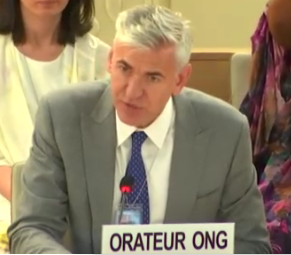
The ICJ today highlighted rising threats to the rule of law in Europe, specifically mentioning Poland, Hungary, Turkey, and Kazakhstan in a statement to the UN Human Rights Council in Geneva.
The statement read as follows:
“The International Commission of Jurists (ICJ) adopted a Declaration on Reinforcing the Rule of Law last March at its 19th World Congress in Tunis.
The Tunis Declaration (link) stresses that not only are human rights and the Rule of Law indispensable to the betterment of the human condition, but to address such contemporary challenges as catastrophic climate change and the effects of digital technology.
Against these standards, however, the ICJ is concerned at the increasing and serious threats to the Rule of Law and those who defend it around the world, including across Europe.
In Poland, the attacks on the judiciary continue under the guise of disciplinary proceedings against judges who took recourse to EU institutions to defend the Rule of Law.
Hungarian authorities, while pausing their reforms of administrative courts, have not abandoned unjustified restrictions on the judiciary’s independence and on civil society.
Finally, in Turkey, the judiciary continues to have no guarantees in law to guarantee its independent functioning.
Across Central Asia, lawyers may face disciplinary or criminal persecution for discharging their profession independently. For example, in Kazakhstan, Sergey Sizintsev was disbarred on arbitrary grounds for criticizing a problematic reform of the legal profession.
The ICJ urges the Council to give attention to these developments of extreme concern.
Jun 28, 2019
The ICJ and Amnesty International presented today a third party intervention in the case of al-Hawsawi v. Lithuania before the European Court of Human Rights.
The interveners made submissions to the Court in this case on complicity with the US-led rendition, secret detention and interrogation programme on:
- knowledge imputable to Contracting Parties, in particular, Lithuania, at the relevant times;
- enforced disappearance as a violation of Article 3 of the Convention;
- non-refoulement obligations;
- and post-transfer obligations under the Convention.
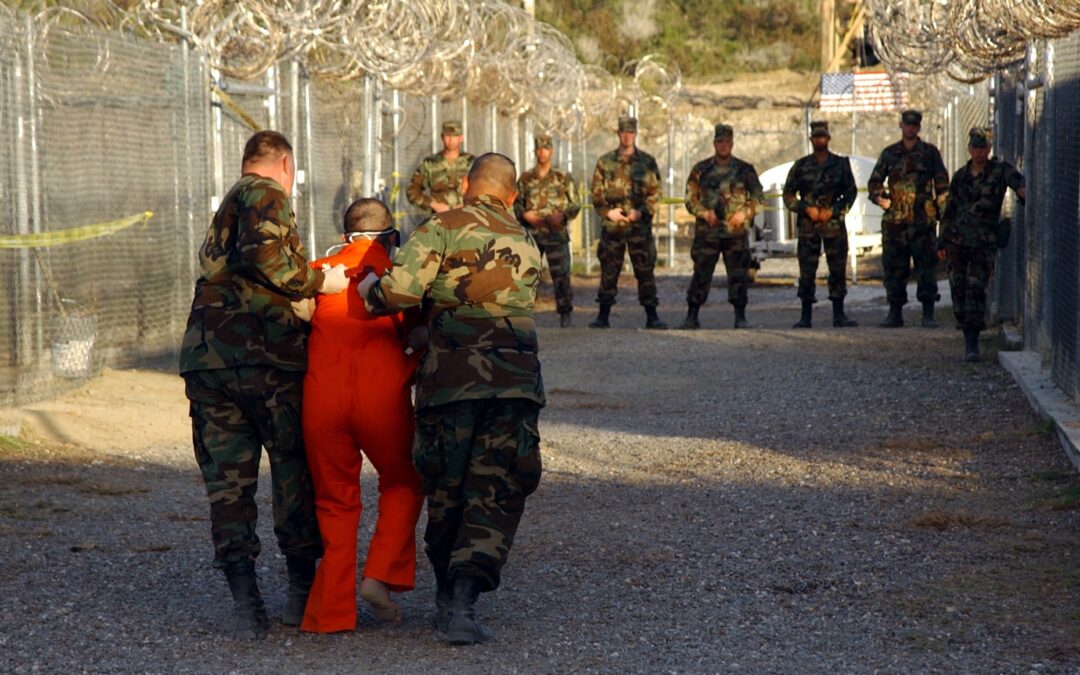
Mustafa al Hawsawi, a Saudi Arabian national currently detained at Guantanamo, was arrested in Pakistan in 2003 and subjected to rendition and secret detention. He was one of the many “high-level” persons subjected to torture following his rendition.
He was subject to treatment that could “easily approximate waterboarding”. He arrived in Guantánamo on 6 September 2006.
He is currently subject to proceedings before a military commission together with four other defendants; they are all charged with being involved in the 9/11 attacks.
The UN Working Group on Arbitrary Detention found that his right to liberty and to a fair trial had been violated and that the US has a duty to release him and provide him with compensation.
Several UN Special Rapporteurs raised serious concerns at the denial of medical treatment for Mr al Hawsawi, leading to a deterioration in his health, and the inhumane detention conditions.
The full intervention can be downloaded here: Al-Hawsawi-submission-2019-ENG
Jun 24, 2019 | Advocacy, Non-legal submissions
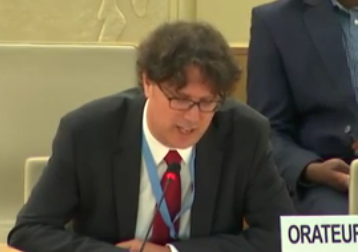
At the UN, the ICJ today highlighted the rights and duties of judges and prosecutors to exercise their freedoms of expression, assembly and association to defend the rule of law and human rights.
The oral statement was delivered in a Clustered Interactive Dialogue with the Independent Expert on Sexual Orientation and Gender Identity and the Special Rapporteur on the Independence of Judges and Lawyers, at the UN Human Rights Council in Geneva.
It read as follows:
“The International Commission of Jurists (ICJ) welcomes the report of the Special Rapporteur on the Independence of Judges and Lawyers on freedom of expression, association and peaceful assembly of judges and prosecutors.[1]
As the report acknowledges, exercise of these rights can be subject to restrictions arising from the fundamental need for judges and prosecutors to be perceived as independent and impartial. At the same time, as the report also emphasizes, any such restrictions must be provided by law and be demonstrably necessary to such legitimate aims, which in turn crucially requires proportionality.[2] These standards have been recognized both globally and in all regions of the world.[3] Any such restrictions on judges should be adopted and enforced by the judiciary itself.
We particularly welcome the recognition in the report that in situations where democracy and the rule of law are under threat, judges and prosecutors have not only the right, but potentially a duty, to speak out and organize in defence of democracy, the rule of law, and human rights, and that this can include participating in peaceful public demonstrations.[4]
Far too often in the ICJ’s work around the world, we see Executive and Legislative bodies, as well as compromised judicial hierarchies, arbitrarily or selectively targeting judges and prosecutors for removal, demotion or other disciplinary measures, precisely for exercising these rights to defend against threats to the rule of law. Examples highlighted in our submission to your study included Egypt, Morocco, Honduras, Hungary and Bulgaria.[5]
Mr. Rapporteur, how can judiciaries, governments, and civil society organisations (including international or regional legal professional associations) act internationally to support judges and prosecutors who are facing such abuse in another country?
The ICJ also welcomes the reports of the Independent Expert on protection against violence and discrimination based on sexual orientation and gender identity. We urge all States to strongly support the renewal of this essential mandate at the current session.
Thank you.”
[1] ICJ’s detailed submission to the Special Rapporteur’s consultation is available at: https://www.icj.org/judgesexpression2019/
[2] Paragraphs 39, 45, 46, 89.
[3] In addition to the global and European, Asian, and American standards cited in the report, see the African Commission on Human and Peoples’ Rights, Principles and Guidelines on the Right to a Fair Trial and Legal Assistance in Africa (2005), paras A(4)(s) and (t), and F(d) and (e).
[4] Paragraphs 61, 69, 90, 102.
[5] See for further information: https://www.icj.org/judgesexpression2019/