Sep 18, 2019
La CIJ a publié son rapport annuel 2018 (disponible uniquement en anglais), qui offre un résumé concis du travail effectué par la CIJ au cours de l’année écoulée.
Le rapport peut être télécharger ici au format PDF: Universal-ICJ Annual Report 2018-Publications-Reports-Annual Report-2019-ENG
Sep 17, 2019 | Events, News
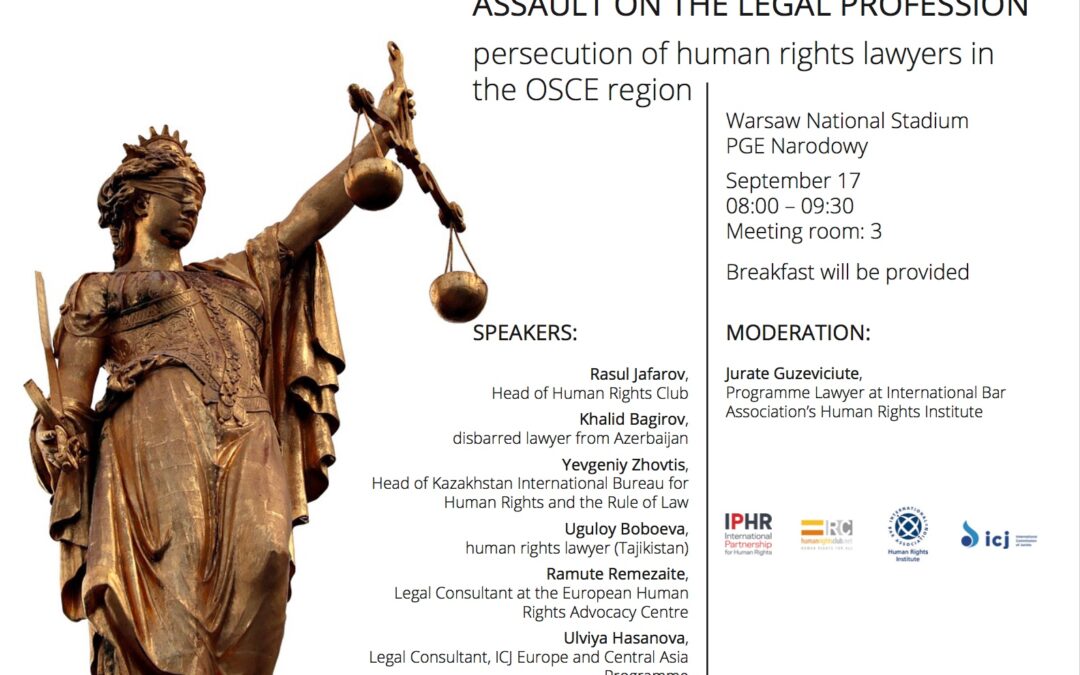
This event held in Warsaw, Poland, will provide an overview of the ongoing challenges human rights lawyers in the OSCE region are facing in their daily work.
A flyer for the event is available here.
Sep 14, 2019
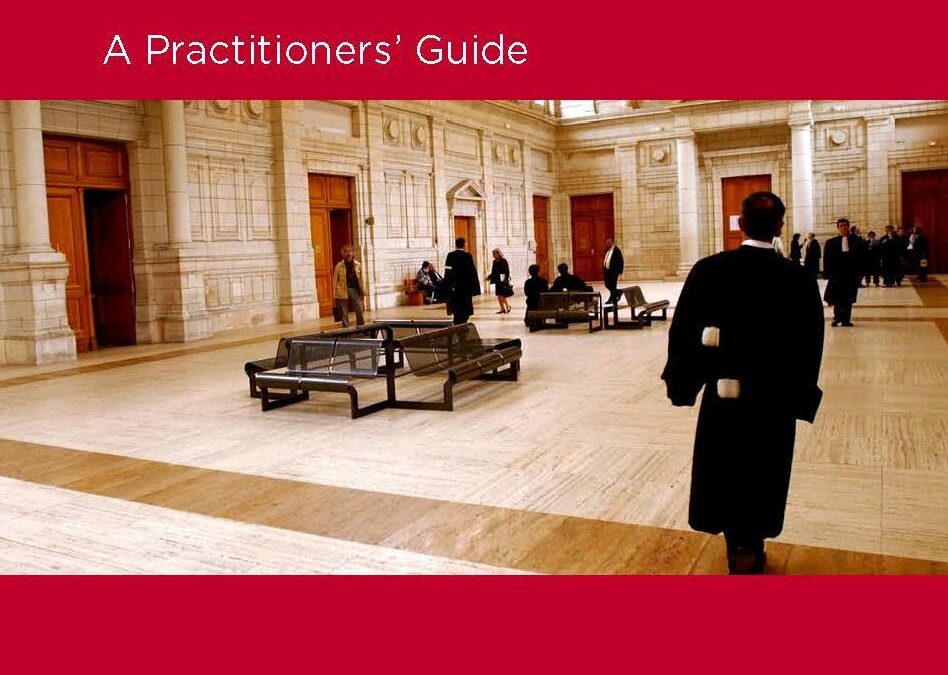
ICJ Practitioners’ Guide no. 14 Investigation and Prosecution of Potentially Unlawful Death aims to help legal practitioners ensure that potentially unlawful death is investigated in a manner that respects international human rights law and, where responsibility is identified, that appropriate measures of accountability ensue.
At the heart of the Guide is the Minnesota Protocol on the Investigation of Potentially Unlawful Death (2016), which was published by the Office of the United Nations High Commissioner for Human Rights (OHCHR) in 2017.
The revised Minnesota Protocol (2016) is the Revised United Nations Manual on the Effective Prevention and Investigation of Extra-legal, Arbitrary and Summary Executions, the revision of which involved expertise from the International Commission of Jurists and other leading organizations.
It is a companion document to the UN Principles on the Effective Prevention and Investigation of Extra-legal, Arbitrary and Summary Executions (1989), and sets a common standard of performance in investigating potentially unlawful death and a shared set of principles and guidelines for States, as well as for institutions and individuals who play a role in death investigations.
Topics covered by the Practitioners’ Guide include:
- Potentially unlawful death and the duty to prosecute;
- The duties of states to investigate and prosecute;
- The rights of victims’ families and of witnesses;
- General principles of forensic investigation of potentially unlawful death;
- Forensic investigation of potentially unlawful death: types of evidence and the chain of custody;
- Forensic investigation of potentially unlawful death: crime scene management and victim identification;
- Forensic investigation: the autopsy;
- The effective prosecution of individuals responsible for unlawful death;
- Specific guidance for prosecutors and defence lawyers; and
- Potentially unlawful death in armed conflict.
This Practitioners’ Guide builds on earlier Guides, especially:
– The right to a remedy and reparation for gross human rights violations – 2018 update to Practitioners’ Guide no. 2
– International Law and the Fight Against Impunity: ICJ Practitioners’ Guide no. 7
– Enforced Disappearance and Extrajudicial Execution: Investigation and Sanction – ICJ Practitioners’ Guide no. 9
– Enforced Disappearance and Extrajudicial Execution: the Right of Family Members – ICJ Practitioners’ Guide no. 10
The Practitioners’ Guide would not have been possible without the financial support of the Ministry of Foreign Affairs of Finland and was produced as part of the ICJ’s Global Accountability Initiative.
Download the full report
Universal-PG 14 Unlawful death-Publications-Reports-Practitioners Guides series-2019-ENG (PDF of English version)
Universal-PG 14 Unlawful death-Publications-Reports-Practitioners Guides series-2021-THA (PDF of Thai version)
Universal-PG 14 Unlawful death-Publications-Reports-Practitioners Guides series-2020-SPA (PDF of Spanish version
Sep 10, 2019 | Events, News
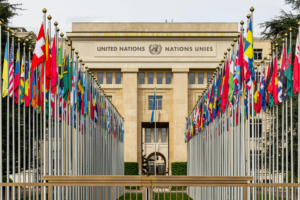
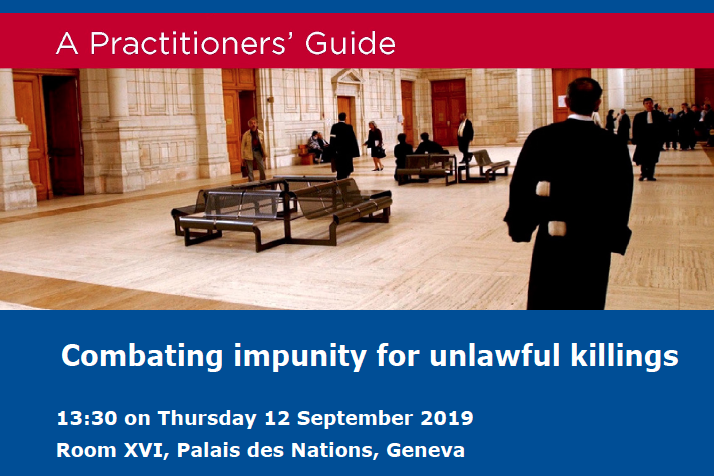
The ICJ invites you to a discussion of new tools to assist investigation and accountability for extrajudicial, summary or arbitrary executions, and other potentially unlawful deaths. The event takes place on Thursday, 12 September, 13:30, Room XVI, at the Palais des Nations in Geneva.
ICJ’s new Practitioners’ Guide No 14 on the Investigation and Prosecution of Unlawful Death helps legal practitioners ensure that investigation and accountability processes are implemented in accordance with international human rights law.
The Guide elaborates on the revised Minnesota Protocol on the Investigation of Potentially Unlawful Death (2016), a set of practical standards and guidelines that was updated by former UN Special Rapporteur on extrajudicial, summary or arbitrary executions, Christof Heyns, and published by the Office of the United Nations High Commissioner for Human Rights (OHCHR) in 2017.
The panel discussion will highlight key elements of the Protocol and Practitioners Guide, and their relevance to cases such as the 2016 killing of political commentator, Kem Ley, in Cambodia and the 2018 killing of Saudi Journalist, Jamal Khashoggi in Turkey.
Speakers
- Agnes Callamard, Special Rapporteur on extrajudicial, summary or arbitrary executions (by video conference, TBC).
- Stuart Maslen, Honorary Professor, Centre for Human Rights, University of Pretoria.
- Kingsley Abbott, Senior Legal Adviser & Coordinator of the ICJ’s Global Accountability Initiative.
Moderator
- Carolina Villadiego, ICJ Legal and Policy Adviser, Latin America
Printed copies of the ICJ’s Practitioners’ Guide No 14 on the Investigation and Prosecution of Unlawful Death will be available.
A flyer for the event is available here.
*** Room XVI is on the 5th floor of Building A, behind the Assembly Hall, accessible by the elevators at the Salle des Pas Perdus. Details here.

Aug 21, 2019
On the occasion of the second United Nations’ International Day of Remembrance of and Tribute to Victims of Terrorism, the ICJ has today published a compilation of international sources on human rights of victims of terrorism.
The compilation features a preface by the UN Special Rapporteur on the promotion and protection of human rights and fundamental freedoms while countering terrorism, Ms Fionnuala Ni Aolain.
It collects relevant UN General Assembly, Human Rights Council, and Security Council resolutions; findings and recommendations of the Special Rapporteur; and other UN and regional sources.
Human rights of victims of terrorism are set to receive new attention and focus at the global level.
Among important current developments are the following:
- The Human Rights Council’s most recent renewal, in March, of the mandate of the UN Special Rapporteur, highlighted and endorsed the ongoing efforts of current Special Rapporteur Fionnuala Ni Aolain to mainstream and highlight the human rights of victims of terrorism in relation to country visits and thematic work carried out by the mandate.
- In June in New York, a group of States led by Afghanistan and Spain launched a “Group of Friends of Victims of Terrorism” with the aim of bringing additional focus and activity at the United Nations to this topic.
- In July the General Assembly adopted for the first time a resolution on “Enhancement of international cooperation to assist victims of terrorism”.
- The UN Office of Counter-Terrorism is preparing to convene a global Congress of Victims of Terrorism in June 2020.
Many governments have long invoked the suffering of victims of terrorism in seeking to justify counter-terrorism measures that do not comply with human rights law, or indeed the rule of law more generally, while failing in practice to adopt and implement concrete measures at the national or global level to respect, protect and fulfil the actual human rights of victims of terrorism.
The ICJ accordingly welcomes the renewed focus and cooperation within the United Nations on concrete measures to ensure that the human rights of victims of terrorism are fully respected, protected and fulfilled.
Civil society, including groups that specifically represent victims as well as other organizations with a range of relevant experience and expertise, has an important role to play, not only in implementing but also in helping to shape those efforts.
The ICJ hopes the present publication will be found useful by all engaged in these processes, and looks forward to further engagement and progress towards the better realization of human rights of victims of terrorism in the years to come.
For more information, contact un(a)icj.org
Download
Universal-Compil Victims of Terrorism USLet-Publications-reports-thematic reports (full compilation in PDF)