Apr 12, 2017 | News
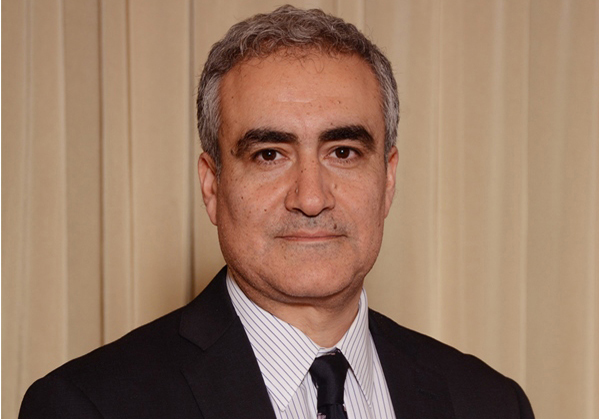
Saman Zia-Zarifi is the new Secretary General of the ICJ. He replaces Wilder Tayler who retired in March, the Geneva-based organization announced today.
An Iranian-American lawyer, Zarifi joined the ICJ in 2012 as Regional Director for the Asia & Pacific Region based in Bangkok, Thailand. Prior to joining the ICJ, he served as Amnesty International’s director for Asia and the Pacific from 2008 to 2012, and before that worked at Human Rights Watch from 2000.
“Wilder Tayler masterfully guided the ICJ for the past 10 years and expanded its reach across the world in perilous times,” said Prof Robert Goldman, the ICJ’s Acting President.
“The Commission is fully confident that Sam Zarifi will build on this legacy by bringing to the ICJ as a whole the energy and vision he deployed so successfully in the Asia Pacific region.”
The ICJ, founded in Berlin in 1952, is one of world’s oldest human rights organizations.
Composed of 60 accomplished jurists from all regions of the world, the ICJ has for 65 years devoted itself to promoting the observance of the rule of law and the legal protection of human rights.
The ICJ Secretary General leads the implementation of the Commission’s objectives through the ICJ’s International Secretariat.
The International Secretariat operates in locations around the world including Guatemala, Zimbabwe, South Africa, Tunisia, Belgium, Switzerland, Lebanon, Pakistan, India, Nepal, Myanmar, and Thailand.
“There is an urgent need to stand up against the recent attacks on the concept of rule of law and the international human rights legal framework that the ICJ was instrumental in building,” said Zarifi.
“We will challenge human rights violations and work with lawyers, judges and human rights defenders around the world to bring perpetrators to account and ensure victims receive justice,” he added.
The ICJ currently works globally and in all regions to protect human rights, defend the rule of law and strengthen the independence and accountability of judges and lawyers.
“Around the world, authoritarian rulers and demagogues are cynically using fearmongering and discriminatory language to justify erosion of the rule of law and weaken an independent judiciary,” Zarifi said.
“An increasing number of powerful politicians around the world attack international law when it suits them as a means of gaining more authority and hurting the most vulnerable segments of society.”
“The international legal framework has failed to address some very serious human rights crises and it has allowed gross economic inequalities to develop, but the answer is to fix the system and improve it, not just destroy it and allow the most powerful to rule without any legal restrictions,” Zarifi added.
The ICJ has been instrumental in developing many of the key universal and regional human rights legal standards, ranging from treaties on torture and enforced disappearances, the right to remedy and reparation, and most recently, seeking accountability for abuses by business entities.
It has provided both conceptual depth and practical advance to questions such as the justiciability of economic, social and cultural rights; human rights in states of emergency and other crises; and the fight against impunity.
“The ICJ’s experience over the past six decades has clearly shown that countries that respect the rule of law and protect human rights benefit from greater security and more sustainable economic development,” Zarifi said.
“There is greater demand than ever for the ICJ’s factual, law-based analysis of human rights problems and most important, how to improve the situation.”
Sam Zarifi was born and raised in Tehran, Iran. He moved to the United States in 1983 and completed a BA from Cornell University in 1990 and a Juris Doctor from Cornell Law School in 1993, and after a stint as a corporate litigator in Los Angeles, an Ll.M. in Public International Law from New York University School of Law in 1997.
He was Senior Research Fellow at Erasmus University Rotterdam from 1997 to 2000, where he co-edited Liability of Multinational Corporations under International Law (Kluwer 2000) as well as several other publications on the subject.
Contact
Sam Zarifi, ICJ Secretary General, t: +41 22 979 3825, c: +41 79 726 44 15 ; e: sam.zarifi@icj.org

Mar 24, 2017
The ICJ published today a Serbian translation of its Practitioners Guide no. 6 on Migration and International Human Rights Law.
This updated edition of the Practitioners Guide analyses the protection afforded to migrants by international law and the means to implement it at national and international levels.
The ICJ Guide synthesizes and clarifies international standards on key issues, in particular:
- the rights and procedures connected to the way migrants enter a country and their status in the country of destination;
- human rights and refugee law constraints on expulsion;
- the human rights and refugee law rights linked to expulsion procedures;
- the rights and guarantees for administrative detention of migrants;
- rights connected to work and labour; and
- rights to education, to the highest attainable standard of health, to adequate housing, to water, to food, and to social security.
Universal-PG 6 Migration-Publications-Practitionners’ Guides Series-2016-SER (full guide in PDF)
Mar 17, 2017
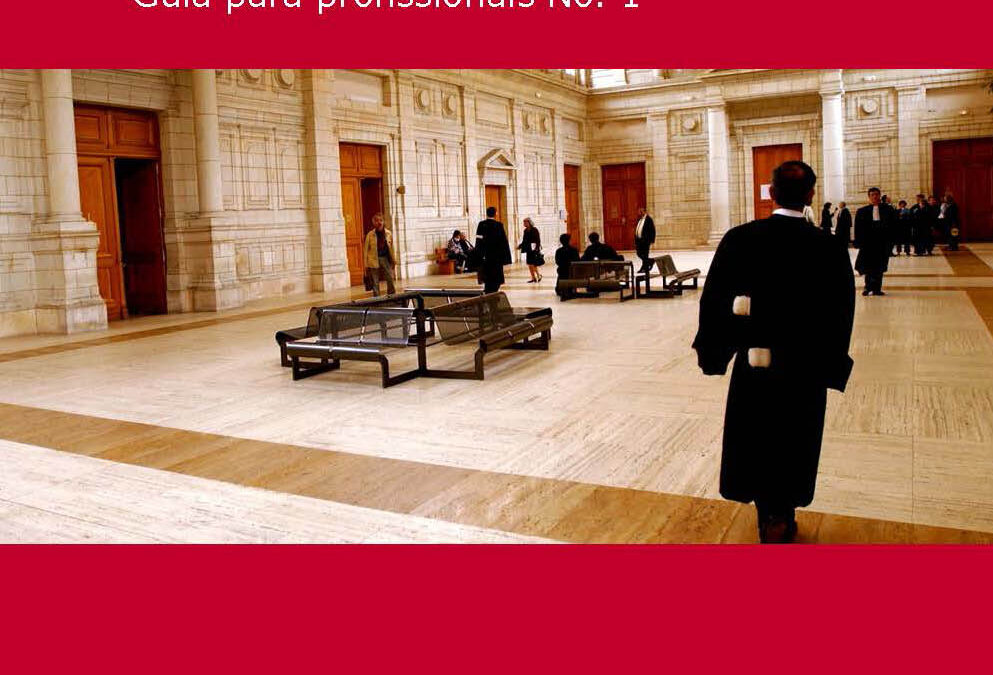
The ICJ has now published a Portuguese translation of its Practitioner’s Guide N°1 International Principles on the Independence and Accountability of Judges, Lawyers and Prosecutors.
The Guide outlines the roles to be played by a strong legal profession, an independent judiciary and an impartial and objective prosecuting authority.
Part one of this guide provides an analysis of the law and concrete examples drawn from international practice. Part two includes relevant global and regional standards on the topic.
Universal-PG N°1 Portugues-Publications-Practitioners’ Guide series-2017-POR (full guide, in PDF)