Jun 20, 2013
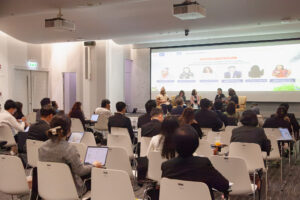
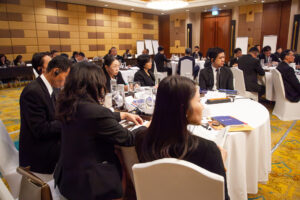
This is the Report of the Legal Seminar organized in Geneva by the ICJ with the support from Geneva for Human Rights, FIAN International and Al-Haq on 31 May 2013.
The seminar was convened to provide a space for in depth discussion of specific cases that illustrate many of the legal and political obstacles that victims of corporate human rights abuse face in their pursuit of justice.
It is one among several activities the ICJ is undertaking with a view to assessing the need for a new international instrument in the field of business and human rights.
The seminar was held under Chatham House rules.
Universal-Report Corporate Complicity Legal Seminar-publications-seminar report-2013 (full text in pdf)

Jun 20, 2013 | News
Today the ICJ launches two new innovative legal tools: the Sexual Orientation & Gender Identity UN Database and the Sexual Orientation & Gender Identity Legislative Database.
The UN Database gathers all the SOGI-related doctrine and jurisprudence of the UN human rights system in one searchable database.
It is the electronic version of the UN Compilations, which the ICJ has issued regularly since 2005.
The documents are organized by source (such as treaty body, special rapporteur or working group) and it is possible to search the database by source or by country, region or key word.
The Legislative Database is the result of a year-long pilot project in collaboration with the International Human Rights Program at the University of Toronto Faculty of Law.
Student researchers gathered and analyzed laws from twenty-four countries in all regions of the world. Each country is introduced with a legislative overview.
The laws themselves are LGBT-friendly or neutral with regard to sexual orientation and gender identity. It is searchable by country and topic.
The purpose was to provide the actual texts of laws as comparative examples for use in legislative reform efforts.
The ICJ is very pleased to announce the launch of these new resources to help activists and lawyers around the world advocate for LGBT human rights.
Both databases were created by HURIDOCS.
The hard copy version of the 2013 edition of the UN Compilation can be downloaded below:
SOGI UN Compilation electronic version – publications-2013 (full text in pdf)

Jun 19, 2013
This side event was held recently at the UN Human Rights Council. If you missed it, you can read the summary report and/or watch it here. Listen also to interviews of human rights defenders from Ecuador and Uganda.
UNSideEvent-Corporate complicity-conference report-2013 (full text in pdf)
Watch the side event:
Listen to the interview in Spanish with Humberto Piaguaje Lucitante (Ecuador)
Listen to the interview in Spanish with Pablo Fajardo Mendoza (Ecuador)
Listen to the interview with Peter Kayiira (Uganda)
Jun 12, 2013 | News
The Tshwane Principles on National Security and the Right to Information seek to protect the right to information and to ensure public access to information held by governments, without jeopardizing legitimate efforts to protect people from security threats.
Jun 12, 2013 | Agendas, Events
On Tuesday 11 June 2013, the ICJ convened a parallel event, organised with the Geneva Academy of International Humanitarian Law and Human Rights, during the Human Rights Council’s 23rd regular session held in Geneva.
The event, held in Room XXV of the Palais des Nations, discussed how human rights will be promoted by the Arms Trade Treaty (ATT), including ways to ensure compliance with the ATT and the relevance of the treaty for activities of the Human Rights Council and international human rights experts. The event was chaired by Alex Conte, Director of the ICJ’s International Law and Protection Programmes. Panelists were Simon Bagshaw, Senior Policy Adviser for the UN Office for the Coordination of Humanitarian Affairs; Professor Andrew Clapham, Director of the Geneva Academy of International Humanitarian Law and Human Rights; and Dr Stuart Casey-Maslen, Head of Research at the Geneva Academy of International Humanitarian Law and Human Rights.
Simon Bagshaw provided a background to the treaty from a humanitarian perspective, recognising that the ATT provides an opportunity to address some of the humanitarian impacts and costs of the arms trade. He also stressed the importance of specific elements within the treaty, such as the obligation to refrain from authorising the transfer of weapons where a substantial risk exists that this may result in serious violations of international human rights law or international humanitarian law.
Andrew Clapham and Stuart Casey-Maslen focussed on the human rights perspective. Professor Clapham promoted the use of mechanisms such as the Human Rights Council and its Universal Periodic Review to assist in implementation of the treaty. Dr Casey-Maslen discussed areas that may help ratification, implementation and monitoring of the ATT, including the role of civil society in that regard.
Several questions were raised during discussions concerning how the treaty would work in practice and its broader implications for non-State actors. Panellists confirmed that the ATT includes the facilitation of crimes as enumerated in the treaty and may also cover domestic crimes of terrorism. Since the ATT does not provide for the establishment of fact-finding missions, it was emphasised that civil society will need to act to monitor compliance with the ATT. Panellists also pointed out the important role of the treaty regarding the conduct of non-State actors. Although the treaty sets out obligations for States only, States parties will be responsible for providing licensing to arms manufacturers and private companies working within the weapons industry.
UN HRC-Arms Treaty side event flyer-event-2013 (event flyer in pdf)