Aug 20, 2012 | News
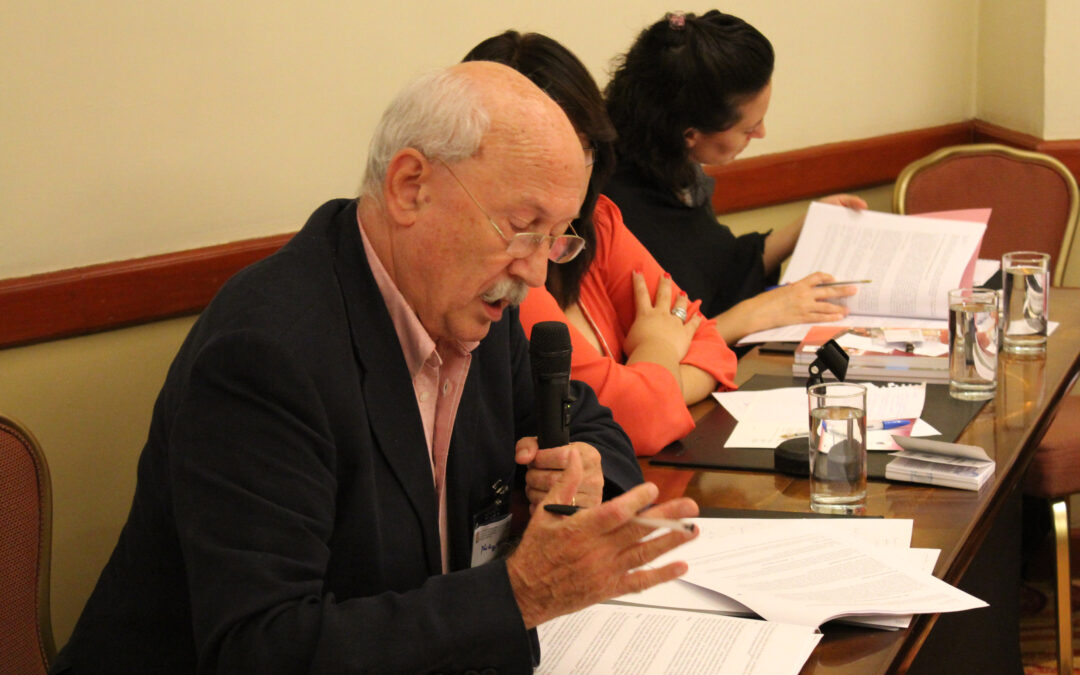
With the support of ICJ Commissioner Justice Philippe Texier, the ESCR Programme and the Central America Regional Office organized a two-day workshop in San Salvador on August 16 and 17, 2012.
A group of 25 representatives of human rights and development NGOs as well as trade unions, lawyers and academic experts participated in a first consultation on access to justice for victims of violations of economic, social and cultural rights.
The discussions tackled obstacles and advances in the field of access to justice with regard to the legal and institutional frameworks, as well as in the administration of justice and material issues.
Coming from very different backgrounds, the participants valued the opportunity to work together and share their experience related to economic, social and cultural rights (ESCR) of a variety of rights-holders and their attempts to seek justice.
This first consultation and workshop will be followed by other activities in the course of the national project.
Background of the workshop
With national projects such as the one in El Salvador, the ICJ programme on Economic, Social and Cultural Rights aims at contributing to improve accountability for human rights violations and access to justice for all, including for victims of threats against and violations of economic, social and cultural rights.
The ICJ has embarked on research processes at national level to identify obstacles and opportunities for access to justice, as well as on consultation and collaboration processes with national allies to define strategies to address gaps.
Depending on the needs identified, the ICJ will support the implementation of recommendations and steps that includes trainings and legal interventions.

May 29, 2012
 The purpose of the mission, which took place between 8 and 12 May 2012, was to observe the trial of President Bouterse and 24 Others by a Military Court in Boxel, Suriname, and surrounding context.
This is a report from an independent trial observation mission carried out by the International Commission of Jurists (ICJ), based in Geneva, Switzerland. The purpose of the mission, which took place between 8 and 12 May 2012, was to observe the trial of President Bouterse and 24 Others by a Military Court in Boxel, Suriname, and surrounding context.
In accordance with rigorous methods of assessment, the ICJ independent trial observer, a lawyer/academic of British nationality, made an assessment of the social and political context in which the trial has been taking place. Based on numerous interviews and separate, independent sources of information, it gradually became clear that the atmosphere in the country had a certain bearing on the trial. This atmosphere certainly had positive dimensions, but there were also aspects of concern. Following a brief summary of the judgement, the ICJ evaluated the Court’s judgement handed down on 11 May 2012, in order to assess compliance with judicial guarantees of fair trial and due process, in accordance with internationally recognised standards. The ICJ also considered the procedural implications and associated human rights consequences of the judgement itself.
Finally, in light of the ICJ’s assessment of facts, and its legal assessment of the 11 May 2012 judgement, the ICJ offers conclusions, as well as recommendations to the Government of Suriname, the Judiciary, the media and diplomatic delegations.
Suriname-trial Bouterse 1982 executions-trial observation report-2012 (full text, PDF)

Apr 12, 2012 | News
 La CIJ y el Observatorio expresaron su preocupación común por la continuada privación arbitraria de libertad de la Jueza María Lourdes Afiuni y por los actos de intimidación y amenazas contra los abogados que la defienden.
Apr 11, 2012 | Advocacy, Non-legal submissions
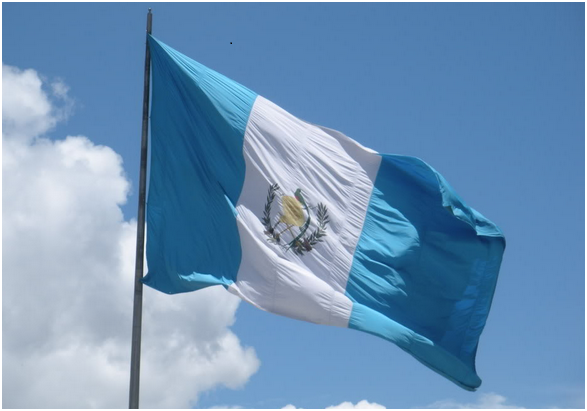
 Under the second cycle of the Universal Periodic Review (UPR) mechanism, the UN Human Rights Council Working Group on the UPR will be undertaking a review of Guatemala during its 14th session.
In a submission to the Working Group, the International Commission of Jurists has focused on the discrete issues of:
- lack of independence of the judiciary;
- impunity for gross human rights violations committed during the armed conflict;
- lack of access to justice for indigenous people and impunity for human rights violations against them;
- abolition of the death penalty; and
- Guatemala’s party status to international human rights instruments and its cooperation with the UN treaty bodies and the Council’s Special Procedures.
Guatemala-ICJ submission UPR-non-judicial submission-2012 (full text in English, PDF)
Guatemala-Comparison second cycle-advocacy-2012 (full text in English, PDF)

Mar 23, 2012 | News
 The ICJ is pleased with the decision of the Inter-American Court of Human Rights that parental sexual orientation is not a factor in child custody cases.
On 20 March the Inter-American Court of Human Rights ruled that parental sexual orientation is not a factor in child custody cases and that Chile had violated Karen Atala’s rights to equality, non-discrimination and privacy when the Supreme Court of Chile removed custody of her three daughters from her because she had begun a relationship with another woman.
In its first sexual orientation case, the Court held that sexual orientation is a protected ground, included under “other social condition” in Article 1 of the American Convention on Human Rights.
The Court further stated that the best interests of the child test could not be used as a pretext for prohibited discrimination in custody cases.
The Court also found that the Supreme Court of Chile’s reliance on stereotypes and prejudices was a violation of the State’s obligation to protect rights. Finally, the Court stated that the American Convention did not protect a specific form of traditional family and that states must recognize diverse family structures.
The International Commission of Jurists was called by the Inter-American Commission as an expert and submitted written and oral testimony on the role of parental sexual orientation as a factor in child custody cases.
Decision:
(http://www.corteidh.or.cr/docs/casos/articulos/seriec_239_esp.pdf)
Expert Submission:
(https://www.icj.org/dwn/database/Jernow%20Written%20Submission.pdf)