Sep 11, 2012 | Events, News
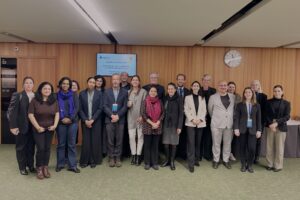
On 9-10 September 2012, the ICJ participated in a conference on “the independence of the judiciary in Egypt in light of the constitutional reform process and international standards”.
The conference, organized jointly by the ICJ, the Hisham Mubarak Law Centre and the Egyptian Organisation for Human Rights, was attended by international and national experts, including Justice Ian Binnie, a former judge of the Supreme Court of Canada, Justice Ketil Lund, a former judge of the Supreme Court of Norway and Wilder Tayler, Secretary General of the ICJ.
The conference addressed the following topics: the independence of the judiciary; the statute for judges; the High Judicial Council; the Supreme Constitutional Court; military and security courts and the independence of the judiciary; and the independence and impartiality of the office of the public prosecutor.
Egypt-Concept Note Independence of Justice conference-events-2012 (full text, PDF)
Egypt-ICJ Statement on Military Tribunals-events-2012 (full text, PDF)
Sep 7, 2012 | News
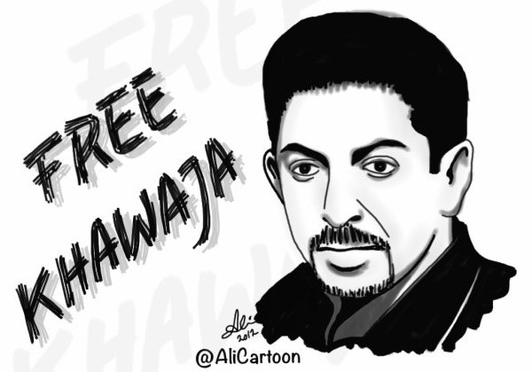
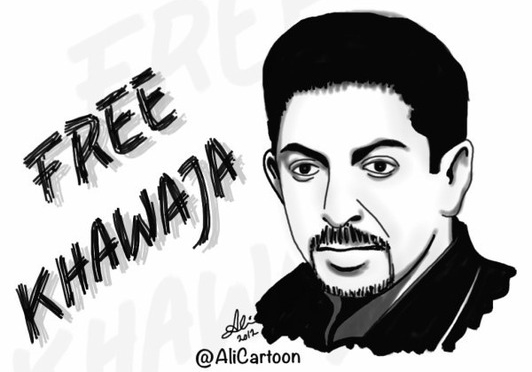 The ICJ calls upon the Bahraini authorities to immediately and unconditionally release 13 human rights defenders and political activists convicted by the Criminal Court of Appeal in Bahrain.
On 4 September 2012, they were convicted on charges relating to “conspiracy to overthrow the government”, “espionage” and “violation of the Constitution”. The sentences against the defendants ranged from 5 years to life imprisonment.
The ruling of the Criminal Court of Appeal upheld the convictions and sentences of the detainees handed down last year by the National Safety Court and the National Safety Court of Appeal, two exceptional military courts established under the royal decree of 15 March 2011, which declared the “state of emergency”. On 30 April 2012, the Bahraini Cassation Court ordered their retrial before a civilian court.
“The retrial by the Criminal Court of Appeal failed to remedy the failures of the original trials and to meet international standards of fair trial, including the right to be presumed innocent and to equality of arms. The Prosecution failed to provide any credible evidence against these detainees and their right to defence has been severely undermined at all stages of the proceedings,” said Said Benarbia, Senior Legal Adviser of the ICJ Middle East and North Africa Programme. “The retrial relied heavily on the findings of the first two trials, including “confessions” that the defendants claimed were obtained through torture and other ill-treatment.”
The Bahraini authorities should ensure that these allegations of torture and ill-treatment are promptly, independently and effectively investigated.
The Bahraini authorities should also ensure that the rights of human rights defenders and political activists to freedom of expression, association, and assembly are fully respected.
“Instead of subjecting these defenders and activists to various forms of harassment, intimidation and unfair trials, the Bahraini authorities should initiate comprehensive, meaningful and lasting constitutional and legal reforms that establish the rule of law and that fully protect the rights of Bahrainis to take part in the conduct of public affairs and to choose the form of their government,” Benarbia added.
For more information:
Saïd Benarbia, Middle East & North Africa Senior Legal Adviser, ICJ, t +41 22 979 3817; e-mail: said.benarbia(at)icj.org

Aug 9, 2012 | News
 The ICJ is urging the Syrian authorities to immediately and unconditionally release Mazen Darwish, a prominent human rights lawyer and defender, and President of the Center for Media and Freedom of Expression (SCM).

Aug 6, 2012 | News
 The ICJ calls on the United Arab Emirates (UAE) authorities to end their crackdown on lawyers and human rights defenders.

Aug 6, 2012
 In July 2012, the ICJ issued a legal memorandum in collaboration with the FIDH concerning economic, social and cultural rights in Tunisia.
This memorandum has been brought to the attention of the Tunisian Constituent Assembly and the Ministry for Human Rights and Transitional Justice for their consideration within the framework of the legal reform process that the country is currently undertaking.
The ICJ and the FIDH are convinced that this reform process, especially the elaboration of a new Constitution, offers Tunisia a unique opportunity to ensure the effective protection of all human rights in compliance with international law standards.
Tunisie CIJ-FIDH_NoteJuridiqueDESC-legal submission 2012 (Download in French)