Nov 20, 2020 | News
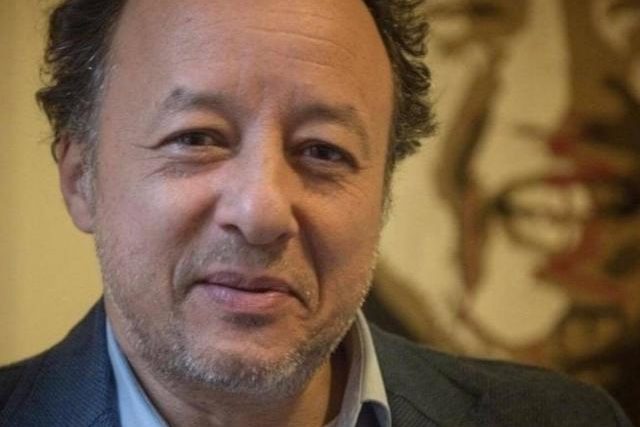
The ICJ today called on the Egyptian authorities to immediately and unconditionally release human rights defenders Gasser Abdel-Razek, Mohamed Bashseer and Karim Ennarah.
The detainees, senior staffers of the Egyptian Initiative for Personal Rights (EIPR), a leading human rights organization, were targeted in connection with their human rights work.
The arrests are part of a broader, relentless campaign by the military and government to intimidate and silence civil society organizations, including through such means as trumped-up “terrorism” charges and sham judicial proceedings.
“By arresting Mohamed Bashseer, Karim Ennarah and Gasser Abdel-Razek, and charging them with terrorism-related offences, the Egyptian government led by President Al-Sisi are writing a new, terrifying chapter in their repression playbook,” said Said Benarbia, Director of ICJ’s Middle East and North Africa Programme.
“Their crackdown on independent civil society must end.”
On 19 November 2020, Gasser Abdel-Razek, EIPR’s Executive Director, was arrested by security forces from his home in Maadi, Cairo. He appeared before the Supreme State Security Prosecution (SSSP) and charged in case No. 855/2020 with, among other charges, “joining a terrorist group” and “spreading false news.”
On 15 November 2020, EIPR’s Administrative Manager Mohamed Bashseer, was arrested at his house in Cairo. On 17 November 2020, Karim Ennarah, EIPR’s director of the criminal justice programme, was also arrested.
They both face similar charges in the same case No. 855/2020, together with other numerous lawyers and human rights defenders, including Mohamed El-Baqer and Mahienour al-Massry.
Over the past seven years, EIPR has been subjected to a pattern of harassment and persecution by the military and government.
In 2016, the assets of EIPR’s founder and former executive director, Hossam Bahgat, were frozen and he was subjected to a travel ban since then.
On February 2020, Patrick George Zaki, an EIPR researcher, was arrested at Cairo Airport by National Security Agency officers who reportedly subjected him to torture, including with electric shocks. He was charged by a public prosecutor with, among other charges, “spreading false news” and “inciting protest without authorization”. He remains in custody
The recent arrests of the three senior EIPR officials follow a visit by a number of European ambassadors and other diplomats to the EIPR Cairo offices on 3 November 2020, during which the human rights situation in Egypt was discussed.
“The international community and in particular States engaging in political and security cooperation with Al-Sisi’s regime must not overlook the serious violations against human rights defenders taking place in the country,” added Benarbia.
“They should demand an end to these violations and ensure that individuals and independent human rights groups are able to do their legitimate and critical human rights work freely and without intimidation.”
Contact
Said Benarbia, Director, ICJ Middle East and North Africa Programme, t: +41-22-979-3817; e: said.benarbia(a)icj.org
Download the Arabic version
Egypt-EIPR crackdown-News-2020-ARA
Nov 20, 2020
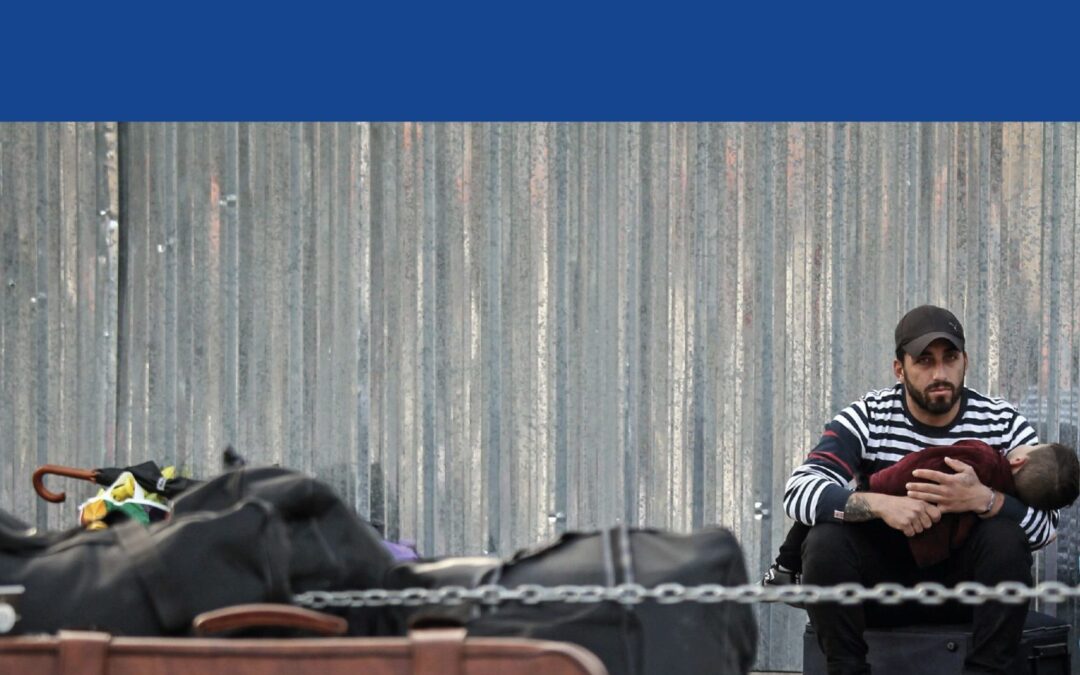
In a report published today, the ICJ calls on the Lebanese authorities to adopt and enforce a just, fair and effective legal and policy framework to address the plight of refugees, migrants and stateless persons and ensure the protection of their human rights in full compliance with Lebanon international law obligations.
In particular, the ICJ calls on the Lebanese authorities to strictly comply with their non-refoulement obligations, including by ensuring that no individual is transferred to a country where he or she faces a real risk of persecution or other forms of serious harm, such as torture or cruel, inhuman or degrading treatment or punishment.
“Lebanon has the highest refugee population per capita of any country in the world, yet it lacks any framework or procedures for individuals claiming international protection to have access to an effective process for determining their entitlement to such protection”, said Said Benarbia, ICJ MENA director.
“It is high time for the Lebanese authorities to address this normative gap and reverse their harmful policies and practices that undermine refugees’ human rights, including their right to not be subjected to refoulement.”
In its report Unrecognized and Unprotected: The Treatment of Refugees and Migrants in Lebanon the ICJ analyses how normative gaps, together with restrictive provisions of the 1962 Law of Entry and Exit, including those criminalizing “irregular entry”, undermine the right of refugees to an individual examination of their asylum claim, their right to liberty and security of person, and their right to an effective legal remedy against human rights violations.
The Lebanese authorities should ensure that no-one is deprived of their liberty solely on grounds of their immigration status, including in cases of “irregular entry” or stay. Detention must only be resorted to when there is both a clear legal and factual basis to justify it, and when it is necessary, reasonable and proportionate in the circumstances of the individual case at hand.
In the report, the ICJ expresses concern that legal and policy gaps – coupled with excessive and unchecked powers to adopt and implement migration and asylum-related policies on the part of the authorities, such as the General Security Office, local municipalities, the Ministry of Labour and the Lebanese army – are the reasons why violations of the human rights of refugees, migrants and stateless persons are rife in Lebanon.
In light of this, the ICJ calls on the Lebanese Council of Ministers and Parliament to ensure that all migration and asylum-related policies fully comply with Lebanon’s obligations under international law.
The restrictions on Syrian refugees with respect to their residency and freedom of movement and the raids and arbitrary arrests and detentions they are subjected to effectively continue to force many of them to return to Syria. Their return in those circumstances is anything but voluntary and amounts to constructive refoulement.
“Lebanon should establish a moratorium on all removals to Syria and ensure that internationally protected individuals are not transferred to a country where they face a real risk of persecution,” Benarbia added.
The restrictions and high costs imposed for obtaining or renewing legal residence permits in Lebanon force many migrants and refugees to remain in the country “illegally”, contributing to significant violations of their right to freedom of movement and to making them further liable to detention and deportation.
Background:
The ICJ addresses a number of recommendations for the Lebanese authorities in this report, including the following:
1. Become a party to the following treaties:
- the 1951 UN Refugee Convention and to its 1967 protocol;
- the 1954 UN Convention relating to the Status of Stateless Persons and the 1961 Convention on the Reduction of Statelessness;
- the International Convention on the Protection of the Rights of All Migrant Workers and Members of Their Families;
2. Ensure that people entitled to international protection, chiefly refugees, are not penalized for their “illegal” entry and stay;
3. Ensure that migrants, refugees, asylum seekers and stateless persons have – at all times and regardless of their immigration status under domestic law – the right to access the courts, to claim and be granted an effective remedy and reparation for violations of civil, political, economic, social and cultural rights recognized under international law;
4. Ensure that all allegations of torture and other ill-treatment against refugees and migrants, including those instances linked to death in police and military custody, be investigated promptly, independently and thoroughly, and those responsible be held to account.
Contact
Said Benarbia, Director, ICJ Middle East and North Africa Programme, t: +41-22-979-3817; e: said.benarbia(a)icj.org
Download
Lebanon-Migrant rights-Publications-Reports-Thematic reports-2020-ENG (full report in English, PDF)
Lebanon-refugees report-News-2020-ARA (story in Arabic, PDF)
Lebanon-Migrant rights-Publications-Reports-Thematic reports-2020-ARA (full report in Arabic, PDF)
Nov 12, 2020 | News
The ICJ, the Cairo Institute for Human Rights Studies (CIHRS), the Defender Center for Human Rights (DCHR), Lawyers for Justice in Libya (LFJL) and the Libyan Women’s Platform for Peace (LWPP) have issued today a joint statement on the assassination of lawyer and political activist Hanan al-Barassi .
The undersigned human rights groups are appalled by the assassination of lawyer and political activist Hanan al-Barassi in Benghazi on 10 November 2020, and call on the competent authorities to launch an independent, impartial and effective investigation into the killing and bring those responsible to justice through fair trials.
On 10 November, a group of unknown armed men shot al-Barassi in Benghazi city centre in broad daylight. Al-Barassi was known for her political engagement and criticism of the human rights violations and abuses and corruption allegedly committed by authorities in Eastern Libya and their affiliated militias. Al-Barassi was active on social media, and often posted videos on Facebook in which she criticised the Libyan Arab Armed Forces (LAAF). Her last video was posted a few hours before her killing.
Al-Barassi’s murder follows a disturbing pattern in recent years of violent attacks against prominent women activists who are critical of the authorities and affiliated militias. In June 2014, gunmen assassinated prominent human rights activist and lawyer Salwa Bugaighis. This was followed by the killing of former Derna Congress member Fariha Al-Berkawi on 17 July 2014, and human rights activist Entisar El Hassari on 24 February 2015. Women’s rights defender and member of the Tobruk-based House of Representatives Seham Sergiwa was abducted from her home by armed men on 17 July 2019, and her whereabouts remains unknown.
The failure of Libyan authorities to effectively investigate these attacks, despite public commitments to do so, has created an environment of impunity, in which women are frequently targeted, both online and offline, with threats, smear campaigns and violence for their political or human rights views. Al-Barassi’s assassination is also a stark demonstration of how online violence against women can carry over to have lethal consequences on the ground.
Such atrocities are prevalent in Libya today. The pattern of violence including enforced disappearances and assassinations of activists, human rights defenders, judges and journalists across the country is alarming, and will only continue in the absence of any effective, independent and impartial investigations. Addressing these crimes by holding the perpetrators to account must be a priority, including within any political process.
Al-Barassi’s killing has taken place as the Libyan Political Dialogue Forum (LPDF) continues talks aimed at ending the conflict and preparing for national elections, underscoring the importance of ensuring accountability and justice in the country. There can be no meaningful democratic transition in Libya until the basic security and human rights of the population are guaranteed.
Given the absence of any real commitment to effectively investigating ongoing crimes under international law being committed in Libya, the newly established Independent Fact-Finding Mission (FFM) on Libya must be urgently provided with the necessary resources to begin its investigations and preserve evidence without delay. We urge the Libyan authorities to fully cooperate with the FFM, and UN Member States to swiftly provide the needed support and adequate resources.
Signatories
- International Commission of Jurists (ICJ)
- Cairo Institute for Human Rights Studies (CIHRS)
- Defender Center for Human Rights (DCHR)
- Lawyers for Justice in Libya (LFJL)
- Libyan Women’s Platform for Peace (LWPP)
Find the Joint Statement in Arabic and English here:
Lybia-Hanan_Albarassi -JointStatement-2020-ARA
Lybia-Hanan_Albarassi -JointStatement-2020-ENG
Oct 30, 2020
As the country votes in a referendum Sunday, the ICJ called on the Algerian authorities to withdraw proposed constitutional amendments and reboot the flawed and inadequate amendment process so as to ensure wide public participation and debate in achieving reform.
In a briefing paper published today, the ICJ emphasized that central objective of the process should be to ensure that the amendments and the rule of law and human rights provisions in particular fully comply with Algeria’s international law obligations.
On 7 May, a set of draft Constitutional amendments were released by the Committee of experts, established by the President, Abdelmadjid Tebboune, in response to the mass protest movement (Hirak) that erupted across Algeria since February 2019.
The final draft was approved by the Algerian Parliament on 10 September and will be voted on by the Algerian people in a referendum on 1 November.
ICJ’s briefing paper analyses both the drafting process and the content of the proposed draft Constitution in light of international law and standards, providing a number of recommendations to the Algerian authorities to bring the process of amending the Constitution into compliance.
The ICJ is concerned that such process has failed to respect the principles of inclusiveness, participation and transparency. The arrangements relating to the role and powers of the President, the military and judiciary stand as an obstacle to a clean break form authoritarianism and decades of poor human rights practices in Algeria.
The ICJ called for a Constitution that lays the foundations for the establishment of the rule of law, the separation of powers and judicial independence.
“Under the constitutional amendments, the military is unaccountable, the president’s powers are unbridled, and the judiciary is subordinated to the President and the executive,” said Said Benarbia, the ICJ’s MENA Programme Director.
“The amendments are a roadmap to the past, not to a genuine democracy in Algeria,” he added.
The consultation process took place hastily and briefly in the middle of the Covid-19 pandemic and with restrictions on the right to freedom of assembly, against the backdrop of the government’s crackdown on the Hirak leaders, activists and journalists.
“Only a constitutional reform process that allows for the requisite public participation and direct discussion to take place can lead to a Constitution reflective of the views of large categories of the society,” said Benarbia.
“The failure to satisfy this standard undermines the right of all Algerians to take part in the conduct of public affairs and to freely determine and choose the form of their Constitution and government.”
Background
In the briefing paper, the ICJ makes a number of recommendations to the Algerian authorities, including to ensure:
- Adequate time and facilities are provided for the Constitution-making process to allow for a comprehensive public dialogue and the production of a draft Constitution that fully represents the views of Algerians.
- The full accountability and civilian oversight of the armed forces and their effective subordination to a legally constituted civilian authority, and that their role is adequately defined in the Constitution and specifically limited to matters of national defence.
- The rule of law is fully embedded in the framework for the functioning of the State, including by ensuring the clear separation of powers, attribution of competences and checks and balances between the legislature, the executive and the judiciary.
- That the High Judicial Council is independent from the executive, including by amending its composition to exclude the President from its membership and ensuring that the majority of members are from the legal profession and are elected by judges; that it is pluralistic and gender representative; and that it is empowered to uphold the independence of the judiciary.
- The primacy of international human rights law over domestic law. To this end, unequivocally assert that internal law, including the Constitution, cannot be invoked or deployed as a justification for non-compliance with human rights treaties to which Algeria is a party or customary international law.
- That permissible limitations or restrictions to human rights are undertaken only for a legitimate purpose as defined in international human rights law, are precise, free of ambiguity, limited in time and necessary and proportionate to the legitimate purpose.
Contact:
Said Benarbia, Director, ICJ Middle East and North Africa Programme, t: +41-22-979-3817; e: said.benarbia(a)icj.org
Download
Algeria-NewConstitution-Advocacy-Analysis Brief-2020-ENG (full briefing paper, English, in PDF)
Algeria- New Constitution-News-2020-ARA (full story, Arabic, in PDF)
Algeria- New Constitution-Advocacy-Analysis Brief-2020-ARA (full briefing paper, Arabic, in PDF)
Oct 30, 2020 | Agendas, Events, News
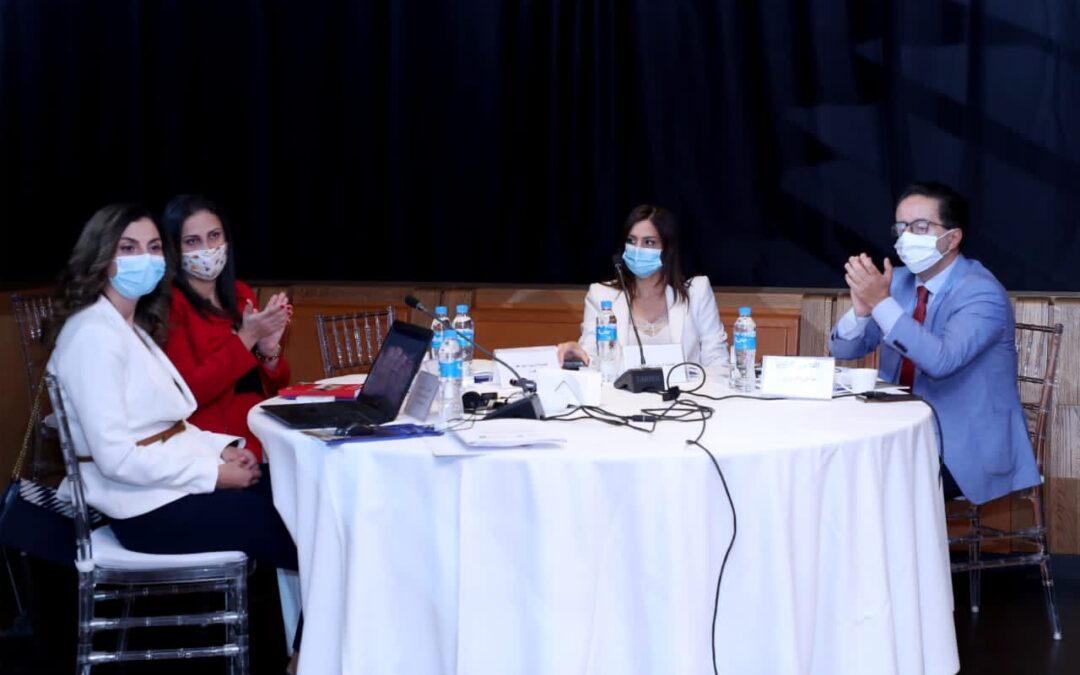
From 27 to 28 October 2020, the ICJ, in collaboration with the National Commission for Lebanese Women (NCLW), held a seminar on recommended practice with respect to evidentiary standards in the investigation, prosecution and adjudication of sexual and gender-based violence offences in Lebanon.
Consultations held by the ICJ with the Lebanese authorities and with practitioners in July 2019 revealed the need to support and bolster the capacity of criminal justice system actors to effectively investigate, prosecute, adjudicate and sanction SGBV, prompting the ICJ, together with NCLW, to organize the seminar.
The seminar accordingly aimed to address the significant gaps in law and procedure and practical obstacles to ensuring key evidence be identified, collected and assessed in a manner consistent with international standards, including Lebanon’s obligations under international human rights law. It also aimed to provide a platform to connect Lebanese judges, prosecutors, police officers, lawyers, forensic practitioners and international experts, with a view to identifying solutions that will ensure women and girls’ effective access to justice for SGBV in Lebanon, in addition to accountability for, and protection from, SGBV.
The discussions predominantly focused on the international law and standards that apply to the identification, gathering, storing, admissibility, exclusion and evaluation of evidence in SGBV cases and how such standards may be used to fill gaps and strengthen domestic law and practice. Participants also discussed the adverse impact patriarchal and other harmful stereotypes have on investigation, prosecution and adjudication processes.
The seminar commenced with opening remarks from NCLW’s President and the International Commission of Jurists’ Middle East and North Africa Programme Director. Speakers included practitioners from international and domestic courts and tribunals, as well as ICJ staff.
The seminar followed the publication of ICJ guidance and recommendations to criminal justice actors in its report Accountability for Sexual and Gender-Based Violence in Lebanon, published on 22 October 2020.
Informed by international law and standards, the ICJ will now formulate recommendations based on the identification by the seminar’s participants of the reforms needed with respect to the Lebanese framework and practice. These recommendations will be included in the ICJ’s forthcoming publication on evidentiary rules and recommended practices in cases of SGBV in Lebanon, which will be published and disseminated among practitioners in Lebanon.