Nov 9, 2016
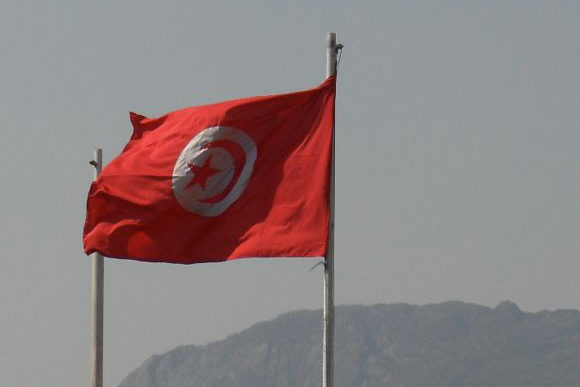
The ICJ has called on the Tunisian authorities to adopt effective measures to ensure that the newly established Specialized Criminal Chambers (SCC) deliver meaningful justice for victims of human rights violations.
In a memorandum published today the ICJ stressed that the SCC had been given a critical role in holding all those responsible for such violations to account in line with international law and standards.
However, the ability for the SCCs to effectively fulfil that role would depend on the willingness of the Tunisian authorities to adopt a number of measures, as set out in recommendations contained in the memorandum.
The memorandum analyses the guarantees for the selection and appointment of the SCC judges; the SCC’s jurisdiction over gross human rights violations; and the legal and practical obstacles that may hinder the SCC’s capacity to deliver justice effectively.
The ICJ has recognized the importance of State initiatives to establish mechanisms and measures to address past human rights violations under the framework of “transitional justice”, such as the Instance Vérité et Dignité (IVD) in Tunisia.
“But mechanisms of this kind and particularly the SCC must not undermine justice and accountability and must be complementary to the ordinary justice system rather than a substitute for it,” said Said Benarbia, Director of the ICJ Middle East and North Africa Programme.
The ICJ stressed that for the SCC to be effective, the authorities need to act to clearly set out the procedures before the SCC; ensure that such procedures are consistent with international fair trial rights; establish specialized investigation and prosecution services; and provide for witness and victims protection units in line with international standards.
Obstacles potentially impeding accountability efforts in Tunisia include flawed definitions of crimes and of superior responsibility in the Criminal Code; the application of limitation periods in cases of serious human violations, and uncertainty over whether victims have direct access to lodge complaints before the SCC.
The ICJ identified measures for adoption by the Tunisian authorities to eliminate these obstacles and to ensure the effective functioning of the SCC. These steps include:
- introducing a clear framework regulating the mandate of the SCC and their relation with the ordinary justice system institutions and the IVD;
- ensuring that all alleged human rights violations are investigated and prosecuted, including allegations that are not transferred by or submitted to the IVD;
- ensuring that impunity for gross human rights violations is not facilitated by the application of limitation periods;
- ensuring that Tunisian laws are not construed to allow an individual responsible for a gross human rights violation to rely on an order received from a superior officer or public authority to escape criminal responsibility; and
- ensuring that the SCC contribute to the full realization of the victims’ right to effective, prompt remedy and reparation in all its forms recognized under international law.
Contact
Theo Boutruche, Legal Adviser of the ICJ Middle East and North Africa Programme, tel: +96 170 888 961, e-mail: theo.boutruche(a)icj.org
tunisia-scc-memo-news-press-releases-2016-ara (full story in Arabic, PDF)
tunisia-memo-on-scc-advocacy-analysis-brief-2016-eng (full memo in English, PDF)
tunisia-memo-on-scc-advocacy-analysis-brief-2016-ara (full memo in Arabic, PDF)
Oct 12, 2016
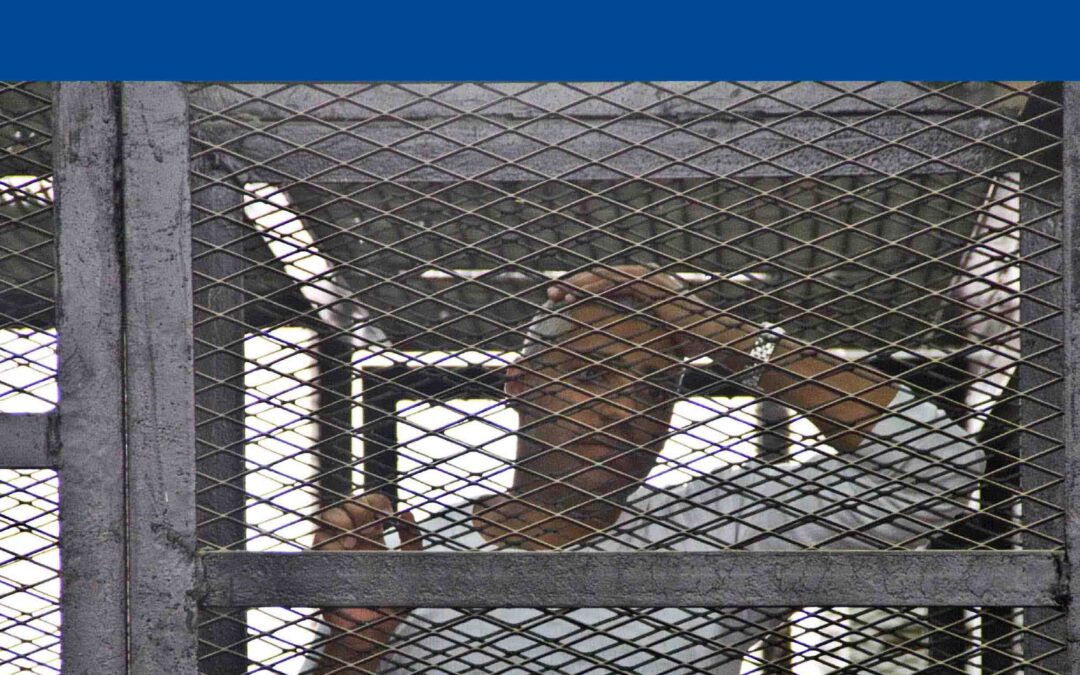
The Egyptian authorities must end executive interference in judicial affairs and act to ensure that the judiciary is independent and that it serves to safeguard human rights and uphold the rule of law, the ICJ said today.
The statement came as the ICJ released its new report Egypt’s Judiciary: a Tool of Repression. Lack of Effective Guarantees of Independence and Impartiality.
The report documents the many ways in which the judiciary has been used as a tool to silence those suspected of opposing the Military and Executive.
This include prosecutors and judges initiating and continuing prosecutions on unfounded charges; adopting a presumption in favour of pre-trial detention; applying laws in violation of human rights standards and refusing to permit constitutional challenges to those laws; and failing to respect fundamental fair trial rights.
Convictions in Egypt are regularly based on poorly reasoned judgments and without individual findings of guilt.
“Egypt’s military and executive have subordinated the judiciary to their political will, making it a docile tool in their on-going, sustained crackdown on human rights in Egypt,” said Said Benarbia, ICJ MENA Director.
“In doing so, judges and prosecutors have abdicated their primary responsibility in upholding the rule of law. Rather than acting as a check on the arbitrary exercise of power, judges themselves have become complicit in violating the very rights they are mandated to protect,” he added.
Thousands of political opponents, human rights defenders, pro-democracy campaigners, journalists and individuals exercising their right to freedom of expression and assembly have been subjected to politicized prosecutions and convicted following unfair trials.
The report also documents how the military and the executive’s crackdown has extended to lawyers and judges suspected of opposing the authorities, the very individuals who are supposed to be the last line of defence of rights and freedoms.
The ICJ has found that the structural and systemic politicization of the Egyptian judiciary has been facilitated, in part, by the failure of the legal framework in force to provide for the necessary guarantees for judicial independence and accountability.
The report analyses how the composition, mandate and actions of the High Judicial Council (HJC), have undermined its ability to ensure respect of judicial independence.
The institutional and functional subordination of the Office of the Public Prosecutor to the Executive has meant politicized prosecutions against perceived opposition figures, and a failure to investigate and prosecute alleged human rights violations by police and military personnel.
The report also document how the wide jurisdiction of military and exceptional courts as well as the limited access to the Supreme Constitutional Court (SCC) have contributed to further undermining judicial independence.
The report contains 136 recommendations to the Egyptian authorities aimed at guaranteeing, in law and practice, the independence and accountability of the judiciary in Egypt.
Contact
Said Benarbia, ICJ Director of the ICJ Middle East and North Africa Programme, tel: +41 22 979 38 17, e-mail: said.benarbia(a)icj.org
egypt-tool-of-repression-report-launch-news-press-release-2016-eng (full text with recommendations, in PDF)
egypt-tool-of-repression-report-launch-news-press-release-2016-ara (full text in Arabic, PDF)
egypt-tool-of-repression-publications-reports-thematic-reports-2016-eng (full report, in PDF)
egypt-tool-of-repression-publications-reports-thematic-reports-2016-ara (full report, Arabic version, in PDF)
Sep 26, 2016 | Advocacy, Non-legal submissions
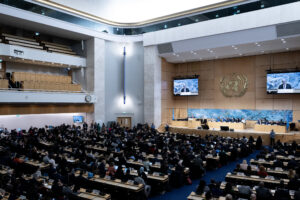
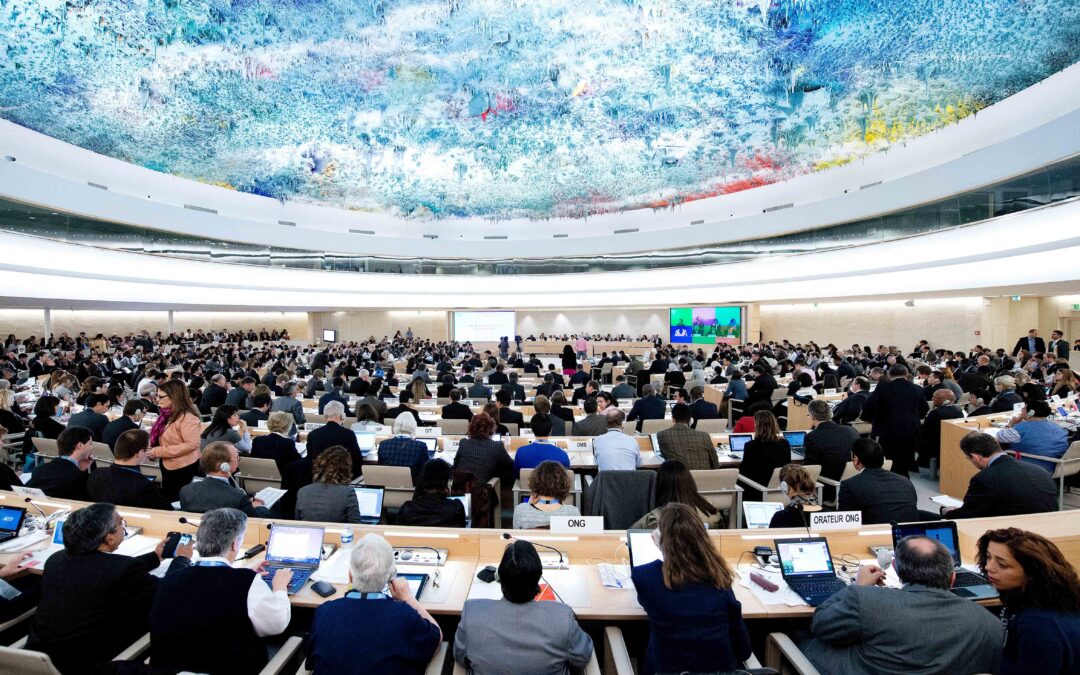
The ICJ today at the UN Human Rights Council, joined other organisations to condemn the increasing attacks aimed at deterring NGOs from exposing human rights violations.
The statement was delivered by the leading international NGO the International Service for Human Rights (ISHR), on behalf of ICJ, Amnesty International, Asian Forum for Human Rights and Development (FORUM-ASIA), Centros de Estudios Legales y Sociales (CELS), Conectas Direitos Humanos, East and Horn of Africa Human Rights Defenders Programme (EHAHRDP), and Gulf Centre for Human Rights (GCHR), during a general debate on Follow up to the Vienna Declaration and Programme of Action (VDPA).
The organisations stated as follows:
“The failure of States to protect in these instanes is incompatible with the VDPA’s recognition of the ‘important role of non-governmental organisations in the promotion of all human rights’, that NGOs should be able to play this role ‘without interference’, and that they ‘enjoy the rights and freedoms recognised in the Universal Declaration of Human Rights’.
One example of such interference is the ruling on 17 September by a Cairo Criminal Court to freeze the personal bank accounts of five Egyptian human rights defenders – Bahey el din Hassan, Hossam Bahgat, Gamal Eid, Mostafa El-Hassan, and Abdel Hafiz Tayel – as part of the ongoing investigations into case no.173, also known as the foreign funding case.
The court also froze the bank accounts of three human rights NGOs: the Cairo Institute for Human Rights Studies, Hisham Mubarak Law Center, and Center for the Right to Education.
As a result, a judicial committee is now expected to manage the funds of these independent NGOs and defenders, as well as have full access to their records and databases of the NGOs, including files related to victims of human rights violations.
The VDPA makes clear that the ‘administration of justice, … especially, an independent judiciary and legal profession in full conformity with applicable standards contained in international human rights instruments, are essential to the full and non-discriminatory realization of human rights’.
To illustrate: In Egypt, the judiciary has been used as a tool in the ongoing crackdown on civil society, systematically failing to respect fair procedures. None of the individuals or organizations accused have thus far been permitted to view their entire case file, nor to present their defense before the investigative judges. Further, the court relied for its verdict on allegedly falsified investigations compiled by Egypt’s National Security Agency (NSA), and disregarded all material evidence presented by the defendants.
Such systematic attacks on civil society are not only illegal, but ill-advised and absolutely inimical to a State’s national interests, peace and prosperity.
We call on Egyptian authorities to immediately and unconditionally reverse the ruling and drop the investigation into case no. 173. We also stress that Egyptian human rights defenders need the support of this Council, particularly those States that have repeatedly expressed their commitment to protecting HRDs. We urge States to demonstrate their genuine leadership in this regard.”

Sep 14, 2016 | Events
This panel discussion features two Iraqi torture survivors, Salah Hassan Nsaif and Ali Shallal Abbas, who will share their first-hand accounts serious abuse suffered at Iraq’s notorious Abu Ghraib prison, and the role of U.S. contractors in that torture and abuse.
The event organised by the International Commission of Jurists, the International Federation of Human Rights (FIDH), and the Center for Constitutional Rights, takes place 15 September 2016, 11:00-12:00, at the Palais des Nations Room XXVII in Geneva, Switzerland.
CCR Senior Staff Attorney Katherine Gallagher will discuss legal cases, Saleh v Titan and Al Shimari v CACI, brought in the United States on behalf of victims as they seek justice. The cases will be placed in context of broader corporate accountability efforts, including those of the UN Working Group on Mercenaries and the Open-Ended Working Group on a legally binding instrument on transnational corporations and other business enterprises.
Speakers:
Salah Hassan, journalist and photographer for Al Jazeera network and Abu Ghraib torture survivor
Ali Shallal Abbas, Founder and President of the Association of victims of the American and Iranian prisons in Iraq, and Abu Ghraib torture survivor
Katherine Gallagher, Senior Staff Attorney, Center for Constitutional Rights
Carlos Lopez, Senior Legal Adviser, Business and Human Rights, International Commission of Jurists (moderator)
Remarks will also be made by Patricia Arias, Chair of the UN Working Group on Mercenaries.
Following the event, there will be the opening of an art exhibit organized by the UN Working Group on the use of mercenaries. Ms. Arias, Mr. Nsaif, and Mr. Abbas will make remarks, and guests are invited to engage with the photographs, multimedia display, and virtual reality film. The exhibit is open to delegates, NGOs, and the public. “Private Actors in Warfare: Stories from victims of private military and security companies and foreign fighters” will take place at 13:00 – 15:00 in Palais des Nations Room XXIII.
A flyer for the event may be downloaded, in PDF format, here: side-event-pmsc-abu-graib-sept2016
Jul 21, 2016
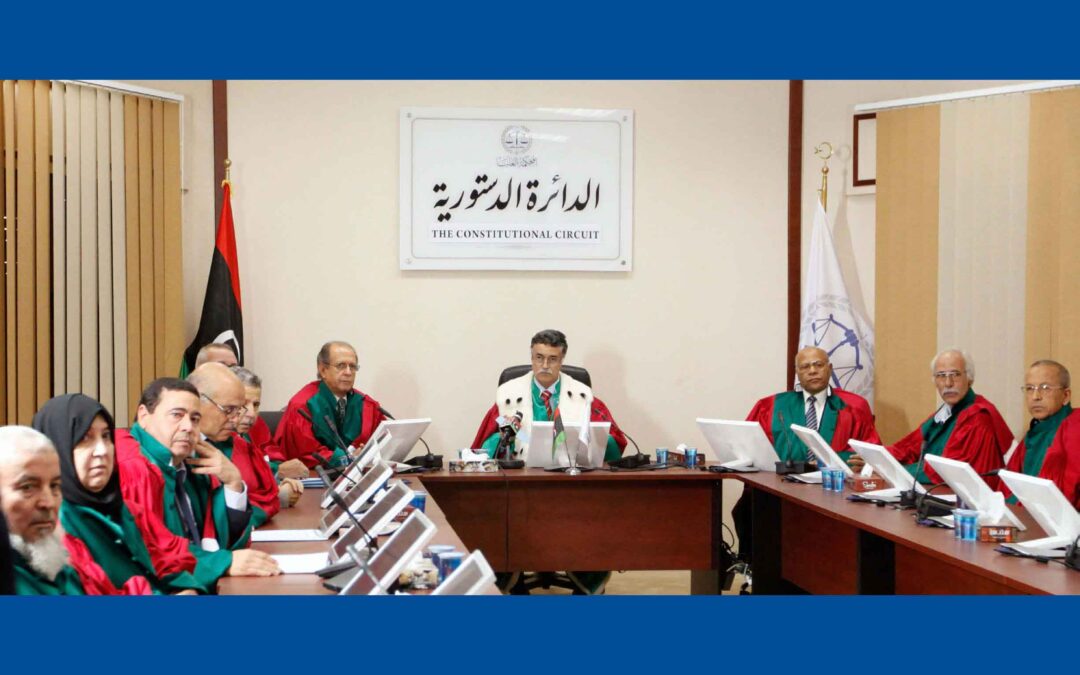
Libya must reform its legal framework and make revisions to the current draft Constitution in order to consolidate the rule of law and judicial independence and to address ongoing impunity in the transitional process, the ICJ said today.
The statement came as the ICJ released its new report Challenges for the Libyan Judiciary: ensuring independence, accountability and gender equality.
In the report, the ICJ calls on the Libyan authorities to revise the legislation governing the organization of the judiciary, the Supreme Judicial Council, (SJC), the prosecutor’s office and the use of military tribunals in line with international law and standards on the independence and accountability of the judiciary and on gender equality.
The ICJ also calls on the Constitution Drafting Assembly to revise the latest draft of the Constitution to ensure that it fully accords with international law and standards.
In May, the ICJ held a high level conference, in part to discuss the report’s findings bringing together senior judges, former ministers, members of the Constitution Drafting Assembly, lawyers, prosecutors and legal academics from across Libya.
Participants recognized the need for reforms and expressed their commitment to strengthening the independence of the judiciary and consolidating the rule of law in Libya.
“If Libya is to move forward towards a new era where the rule of law is held paramount, the new Constitution and legislation on the administration of justice must conform to the principles of judicial independence, impartiality and accountability,” said Said Benarbia, Director of the MENA programme at the ICJ.
The report emphasizes the need for the Supreme Judicial Council to be institutionally, financially, and administratively independent from the executive.
It is also important that its membership be pluralistic and gender-representative, with a majority of judges elected by their peers, the report says.
The existing Statute on the Judiciary needs revision to provide fair and transparent procedures for the selection, appointment, promotion and discipline of all judges, according to the report.
It also needs to provide for specific measures aimed at increased representation of women in the judiciary, including in senior positions.
The ICJ report also calls on the Libyan authorities to ensure the functional independence of the prosecutor’s office from both the executive and the rest of the judiciary.
Such independence is important to ensure that any past and ongoing gross human rights violations in Libya are impartially and thoroughly investigated and prosecuted and that all those responsible for such violations are criminally held to account, the ICJ says.
The report underlines that the jurisdiction of military tribunals must be restricted only to cases involving members of the military for alleged breaches of military discipline.
Alleged violations of human rights committed by the military or armed forces must be investigated and prosecuted by civilian authorities, it says.
The report recommends that immediate measures be taken to end arbitrary detention across Libya and ensure to all detainees the right to a fair trial.
Contact
Doireann Ansbro, Associate Legal Adviser of the ICJ Middle East and North Africa Programme, email: doireann.ansbro(a)icj.org
Libya-IoJ report launch-News-Pres releases-ARA-2016 (full press release in Arabic, PDF)
Libya-Challenges the Judiciary-Publications-Reports-Thematic report-2016-ENG (full report in English, PDF)
Libya-Challenges the Judiciary-Publications-Reports-Thematic report-2016-ARA (full report in Arabic, PDF)