The ICJ drew the Council’s attention to the persistent violations of Israel’s obligations as the Occupying Power under international law as well as the continuous discrimination against the Arab citizens of Israel.

The ICJ drew the Council’s attention to the persistent violations of Israel’s obligations as the Occupying Power under international law as well as the continuous discrimination against the Arab citizens of Israel.
 The ICJ drew Council’s attention to the continuous gross and systematic violations of human rights in Burundi.
The ICJ raised in its submission the Government of Pakistan’s failure to fully and effectively ensure and protect human rights and the rule of law in the fight against terrorist acts and to protect people against terrorism.
The ICJ also addressed the issue of the Government’s attacks on the rule of law, the independence of the judiciary, and the legal profession over the last nine months, and especially since 3 November 2007. These concerns should be addressed as a matter of priority in the Human Rights Council’s Universal Periodic Review of Pakistan.
Pakistan-UPR-advocacy-2008 (full text, PDF)

The ICJ addressed in its submission the deteriorating human rights situation, occurring in the context of an armed conflict and emergency anti-terrorism measures that have weakened the rule of law.
The ICJ also raised an appalling prevalence of impunity for violations of human rights and international humanitarian law and the lack of capacity by state institutions and mechanisms to protect people from increasing human rights violations.
Sri Lanka-ICJ Submission to the Universal Periodic Review-Non-judicial submissions-2008 (full text, PDF)
 This is the ICJ Submission to the Human Rights Council Universal Periodic Review of Tunisia, published on 20 November 2007.
This is the ICJ Submission to the Human Rights Council Universal Periodic Review on Morocco, published on 20 November 2007.

JUSTICE, the UK section of the ICJ, and Liberty made written submissions to the Human Rights Council on the Universal Periodic Review of the UK.
 NJCM, the Dutch section of the ICJ, as part of a coalition of Dutch NGOs, made written submissions to the Human Rights Council on the Universal Periodic Review of the Netherlands.
The submission addressed the legal status of UN human rights instruments in Dutch law; the role of the Netherlands in setting international human rights law standards; issues in reporting under UN human rights treaties; national processes for assessing compliance with human rights; gender policy and mainstreaming; counter-terrorism policy; rights of aliens; and rights to health and education.
Netherlands-Dutch NGOs-UPR-non-judicial submission-2007 (full text, PDF)

The ICJ made written submissions to the Human Rights Council on the Universal Periodic Review of Poland, as part of the first round of Universal Periodic Review.
This submission focused on an issue which should be central to the Council’s review of human rights in Poland: the existence of at least one CIA-run secret detention centre in Poland, and of renditions of suspects to and from this centre, between 2003 and 2005. In addition, the ICJ drew the attention of the Council to recent difficulties in the judicial appointments process in Poland, which raise concerns regarding judicial independence.
Poland-ICJ Submission UPR-Analysis briefs-2007 (full text, PDF)

ICJ Intervention on the Guidelines for the preparation of information under the Universal Periodic Review Mechanism.
Oral statement of the ICJ on the Progress reports and further discussion or decisions of the Working Group on the Universal Periodic Review, released on Monday 4 December 2006 at the third session of the Human Rights Council.
Please find attached a document on launched by the ICJ and other NGOs on the Universal Periodic review of the UN Human Rights Council.
Joint UPR mechanism-Publication-2006 (full text, PDF)
Document submitted by the ICJ to the UN Human Rigths Council Working Group on the Universal Periodic Review on 15 August 2006.
1. The General Assembly Resolution
In Resolution 60/251 of 15 March 2006, establishing the Human Rights Council, the General Assembly decided:
“That the Council shall, inter alia: […](e) Undertake a universal periodic review, based on objective and reliable information, of the fulfilment by each state of its human rights obligations and commitments in a manner which ensures universality of coverage and equal treatment with respect to all states.
UPR Human Rights Council-Analysis briefs-2006 (full text, PDF)
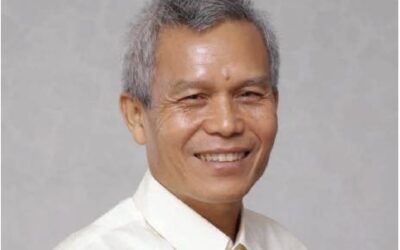
15 December 2024: On the 12-year anniversary of the unresolved enforced disappearance of Lao civil...
Pakistan’s fourth Universal Periodic Review (UPR) has drawn global attention to a number of serious human rights violations in the country, said the International Commission of Jurists (ICJ) today.
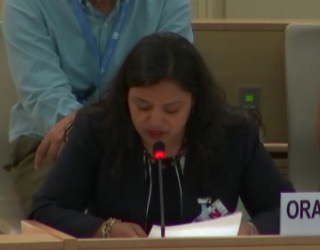
The ICJ today highlighted Nepal’s failure to implement recommendations accepted under its Universal Periodic Review, at the United Nations.The statement was made during General Debate on the Universal Periodic Review, at the UN Human Rights Council in Geneva. The statement read as follows:
“The UPR can help ensure that States comply with international human rights standards, but only if accepted recommendations are in fact implemented. Lack of follow-up on States’ implementation after adoption of UPR outcomes allows States to disregard their UPR commitments, undermining the mechanism, as is illustrated by the example of Nepal.
More than two years after its last review, the Government has still not implemented accepted recommendations related to transitional justice and accountability for past human rights violations.
Of particular concern is the continuing failure of the Government to establish credible transitional justice mechanisms to effectively address past human rights violations.
The Truth and Reconciliation Commission and Commission on Investigation of Disappeared Persons continue to fall short of international standards, both in constitution and operation.
The recently published draft bill on transitional justice provides for short-term community service as an alternative punishment for perpetrators convicted of international crimes, including torture and enforced disappearance. Such manifestly inadequate punishment would constitute a form of impunity.
Furthermore, the establishment of a special court under the bill will not be effective unless crimes such as torture, enforced disappearance, war crimes and crimes against humanity are criminalized in national law in accordance with international standards.
The ICJ urges the Council to adopt measures to ensure effective implementation of accepted UPR recommendations.”
Pakistan’s third Universal Periodic Review (UPR) has drawn global attention to a number of serious human rights failures in the country, said the ICJ today.
On 16 November, the UPR Working Group of the Human Rights Council adopted a draft UPR outcome report for Pakistan. Pakistan received a total of 289 recommendations – a substantial increase from its previous UPR in 2012, when Pakistan received 167 recommendations. As many as 111 State delegations took the floor to make statements, and 14 States submitted their questions in advance.
“That well over a hundred delegations participated in the review indicates the global community’s interest in Pakistan’s human rights situation,” said Frederick Rawski, ICJ’s Asia Director.
Key recommendations urge Pakistan to:
“The States’ recommendations echo the concerns of dozens of civil society organizations and even the National Commission of Human Rights – who all agree that the Government must take urgent measures to address the downward spiral of rights in the country”, Rawski said.
Pakistan will now examine the recommendations and respond to the Human Rights Council at latest by the Council’s next session in March 2018.
Pakistan’s review comes at a time of serious concern about the rights situation in the country.
The Government lifted the informal moratorium on the death penalty and carried out nearly 500 executions in less than three years – among the highest execution rates in the world; Parliament enacted laws allowing military courts to try civilians for certain terrorism-related offences in secret trials; and the authorities started a new wave of crackdowns on NGOs, journalists and human rights defenders, including subjecting them to enforced disappearance.
Persecution of religious minority communities also continues despite the Government’s claims that religious minorities “enjoy equal rights as equal citizens of Pakistan”. Last month, three Ahmadi men were sentenced to death for blasphemy for allegedly scratching anti-Ahmadi pamphlets that had the “Mohr-e-Nabbuwat” (seal of the Prophet Muhammad) printed on them. And earlier this week, the Islamabad High Court directed the Government to respond to a petition demanding a separate database for Ahmadis in the civil service to ensure they are not “posted in offices involving sensitive matters”.
“As a member of the Human Rights Council, Pakistan is expected to uphold the highest standards in the promotion and protection of human rights, something it has clearly failed to do,” added Rawski.
“Pakistan should make use of this process by accepting the recommendations made during the review and adopting a concrete, action-based national human rights plan to ensure their effective implementation.”
Contact
Frederick Rawski, ICJ Asia Pacific Regional Director, t: +66 64 478 1121, e: frederick.rawski@icj.org
Reema Omer, ICJ International Legal Adviser for Pakistan (London), t: +447889565691; e: reema.omer(a)icj.org
Pakistan-UPR-PressRelease-2017-eng (download the press release)
Additional information
UN Member States reviewed Pakistan’s human rights record for the third time on Monday, 13 November, through the UPR process.
The UPR is a unique mechanism of the UN Human Rights Council aimed at improving the human rights situation of each of the 193 UN Member States. Under this mechanism, the human rights record of all UN Member States is peer-reviewed every four to five years by the UPR Working Group, consisting of the 47 UN Member States of the Human Rights Council; however, any UN Member State can take part in the discussions and the dialogue during the UPR of the reviewed States. States then make recommendations to the country under review, which has the option of accepting or noting the recommendations.
The ICJ in the intervention on 13 December 2007 pointed to the necessity of the mandate on the promotion and protection of human rights while countering terrorism because of increase of terrorism and rapid developments in counter terrorism.
An opinion piece by Mathuri Thamilmaran, National Legal Advisor – Sri Lanka at the International Commission of Jurists
Recently, the Mauritius Supreme Court ruled that a 185-year-old law criminalizing consensual same-sex sexual conduct was unconstitutional. This latest ruling adds Mauritius to the growing number of States where, in the past few years, consensual same-sex sexual relations have been decriminalized, either through the adoption of specific legislation or as a result of judicial decisions. It is anticipated – and very much hoped – that Sri Lanka will join this global wave of change in the coming months.
Like Sri Lanka, most of these States had laws criminalizing consensual same-sex sexual conduct originally imposed on them as a result of colonial rule. The British introduced the Penal Code in 1833, when Sri Lanka (Ceylon) was still a British colony. The Sri Lankan Penal Code was modeled on the Indian Penal Code of 1860. While three colonial powers – the Portuguese, the Dutch and the British – had ruled Sri Lanka, it was the British who codified the criminalization of consensual same-sex sexual conduct through the introduction of criminal provisions proscribing “unnatural offences”, namely, “carnal intercourse against the order of nature” (section 365) and “gross indecency” (section 365A) in the Sri Lankan Penal Code. None of these terms has been defined in the law but, in practice, they have been interpreted and applied to those who engage in consensual same-sex sexual conduct or are perceived to do so.
Sri Lanka gained independence from the British in 1948. But, 140 years since their enactment, these penal provisions continue to be in place with a few amendments and, while rarely enforced, they have been used as a tool of harassment, blackmail and persecution against lesbian, gay, bisexual, transgender (LGBT) and non-binary persons by State and non-State actors alike. Criminalizing same-sex sexual conduct between two consenting individuals only serves to perpetuate discrimination, violence and stigma motivated in whole or in part by ignorance of, prejudice and hatred against real or imputed same-sex sexual orientation.
Human Rights violations and abuses against LGBT and non-binary persons in Sri Lanka have been documented by many Sri Lankan civil society organizations throughout the years. For example, criminalization of consensual same-sex sexual conduct has been shown to lead to instances of extortion by both public and private actors. Another documented detrimental impact of criminalization relates to the right of access to health care of the individuals concerned, while raising more broadly public health concerns. Branded “criminals” by the law, LGBT and non-binary persons are less likely to access health services due to fear of being outed, discrimination, stigma and opprobrium, thus making it harder for them, for example, to receive vital messages about safe sexual conduct and HIV/ AIDS prevention.
Sri Lanka is a State party to all core international human rights treaties and to some of their protocols and it is thus bound by international human rights law. The latter enshrines the principle of non-discrimination and guarantees to everyone the right to equality before the law and equal protection of the law without discrimination in law and in practice. The UN Human Rights Committee has called upon States to ensure that their domestic law comply with the prohibition against discrimination, including the obligation not to discriminate against a person on prohibited grounds such as “race, colour, sex, language, religion, political or other opinion, national or social origin, property, birth or other status”. In Young v. Australia (2003) the Committee held that the prohibition against discrimination under Article 26 of the ICCPR Covenant comprises also discrimination based on sexual orientation.
In 2022, while addressing the Human Rights Committee, the Sri Lankan government stated that Article 12 of the Constitution of Sri Lanka included non-discrimination on the basis of sexual orientation. Such a statement is contradicted by the criminal provisions proscribing consensual same-sex sexual conduct, and by the documented human rights violations and abuses committed against LGBT and non-binary persons over the years. The Committee, in its Concluding Observations published in April 2023, expressed concern that “lesbian, gay, bisexual and transgender persons continue to face criminalization under sections 365, 365A and 399 of the Penal Code and discrimination on a daily basis, including in accessing health care, employment and housing” and that they are “victims of arbitrary arrests and detention and are subjected to forced anal examinations in an attempt to gather evidence for prosecutions for same-sex conduct.” The Committee called upon the government to repeal the aforesaid legal provisions, to protect LGBT persons from discrimination of any kind, and to combat negative stereotypes and prejudice against them through training and awareness programmes.
Further, in 2023, during its Universal Periodic Review (UPR) at the Human Rights Council, Sri Lanka stated that a number of criminal proceedings had been revisited on grounds of non-discrimination based on sexual orientation. The Working Group of the UPR subsequently made recommendations to decriminalize same-sex sexual conduct. Unfortunately, Sri Lanka did not explicitly accept such recommendations and instead only took note of them. The UPR recommendations echo the recommendation made by the UN Committee on the Elimination of Discrimination against Women (CEDAW Committee) in 2022 that the criminalization of consensual same-sex sexual conduct between women under section 365A of the Penal Code violated their right to non-discrimination and therefore Sri Lanka should decriminalize consensual same-sex sexual conduct between women. In light of this, the continued criminalization of consensual same-sex sexual relations puts Sri Lanka at odds with its international human rights law obligations and erodes its credibility on the global stage.
In May 2023, the Supreme Court of Sri Lanka published its Special Determination on the constitutionality of the Penal Code (Amendment) Bill of 2023, whose stated objective is to repeal “provisions that make sexual orientation a punishable offence”. The recognition, for the first time, by the country’s highest court that the criminalization of homosexuality was an affront to the rights of equality and non-discrimination, dignity and privacy of a person, among others, was a watershed moment for human rights activists who had worked with LGBT persons in pursuit of this outcome. The Supreme Court’s determination also put to rest unsubstantiated rhetoric depicting homosexuality as a threat to society. On the strength of the Supreme Court’s determination that the Bill is constitutional, the Penal Code (Amendment) Bill now requires a simple majority in Parliament to pass and become law.
Parliament is expected to vote on the Bill in the coming months. It is a private member’s Bill tabled in Parliament by parliamentarian Premnath Dolawatte. Under the Bill, section 365 of the Sri Lankan Penal Code of 1883 will be repealed and replaced with reference only to “bestiality” as an “unnatural offence”, while section 365A will be fully repealed.
It is heartening to witness States around the globe reconsider and rectify outdated laws that stigmatize and criminalize consensual same-sex sexual relations. Sri Lanka should not hesitate to follow suit and finally take that vital stride towards a more just and inclusive society. Decriminalization of consensual same-sex sexual conduct would send a powerful message that Sri Lanka recognizes and respects the autonomy of individuals to choose their partners and live their lives authentically. The Supreme Court has taken the first step in that direction, it is now time for the Sri Lankan Parliament to ensure that the Bill is passed.
Oral statement of the International Commission of Jurists (ICJ) and partners at the adoption of South Africa’s Universal Periodic Review outcomes under agenda item 6 of the United Nations Human Rights Council’s 52nd Regular Session. The statement was delivered by ICJ Legal and Policy Office intern Collin Christner.
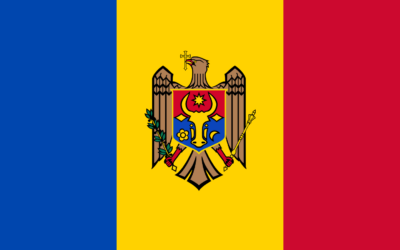
The ICJ called on Moldovan authorities to effectively implement their justice reforms in line with international standards during the discussion of its third Universal Periodic Review before the UN Human Rights Council.
The ICJ today delivered a statement before the UN Human Rights Council during the consideration of the report by Venezuela in the third cycle of the UN Universal Periodic Review.
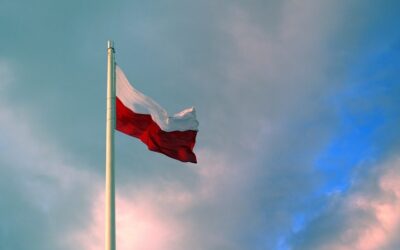
The ICJ submitted today its written contribution to the fourth Universal Periodic Review of the human rights situation of Poland by the UN Human Rights Council and called on the Polish Government to restore the independence of the judiciary.