
Sep 2, 2013 | News
The ICJ today called on the Bangladesh authorities to immediately withdraw the contempt of court notice issued against the international human rights organization Human Rights Watch.
The charges are in response to well documented concerns by Human Rights Watch that the trial of Ghulam Azam (photo), former head of the Islamist group Jamaat-e-Islami Azam’s trial was “deeply flawed” and failed to meet international fair trial standards.
“Silencing voices that highlight the shortcomings of the International Crimes Tribunal impede rather than advance the enormously important task of ensuring that those responsible for committing atrocities during Bangladesh’s war of liberation are brought to justice in a process that complies with international law and standards”, said Alex Conte, Director of the ICJ’s International Law and Protection Programmes.
On 2 September 2013, the International Crimes Tribunal (ICT) in Bangladesh issued a show cause notice asking Human Rights Watch to explain why contempt of court proceedings should not be initiated against it for its allegedly ‘biased’, ‘scandalous’ and ‘inaccurate’ statements about the ICT. Human Rights Watch has to respond within three weeks, or possibly face trial and conviction in absentia.
“Assessing the conduct of administration of justice in judicial proceedings, including where it entails criticism of judicial performance is an important means of ensuring accountability,” said Conte. “Judges and prosecutors should defend the right to freedom of expression, not use their discretionary powers to muzzle criticism”.
Contact:
Alex Conte, Director, International Law & Protection Programmes, t: +41 79 957 2733; email: alex.conte(a)icj.org
Additional information:
The Bangalore Principles on Judicial Conduct clarify that “since judicial independence does not render a judge free from public accountability, and legitimate public criticism of judicial performance is a means of ensuring accountability subject to law, a judge should generally avoid the use of the criminal law and contempt proceedings to restrict such criticism of the courts”.
The Commonwealth (Latimer House) Principles on the Accountability of and the Relationship Between the Three Branches of Government also stress that “criminal law and contempt proceedings should not be used to restrict legitimate criticism of the performance of judicial functions”.
The UN Declaration on Human Rights Defenders underscores that “everyone has the right, individually and in association with others, to promote and to strive for the protection and realization of human rights and fundamental freedoms at the national and international levels”.
The Declaration also highlights that human rights defenders have the right to “freely to publish, impart or disseminate to others views, information and knowledge on all human rights and fundamental freedoms” and to hold opinions and draw public attention to the observance of human rights.
Aug 15, 2013 | News
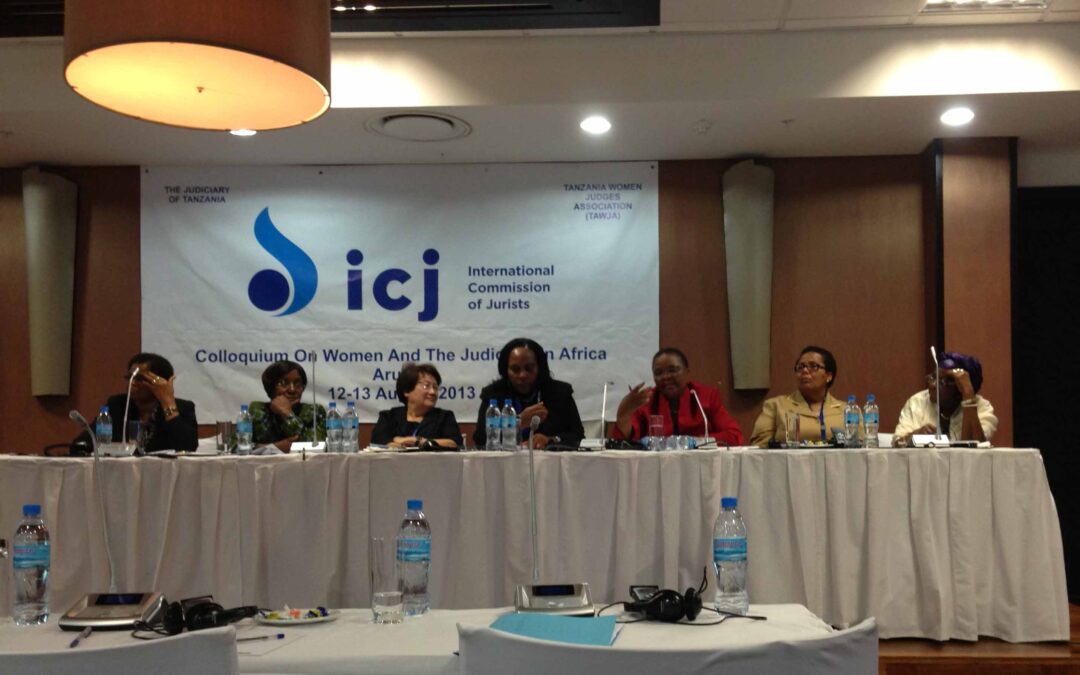
Women judges from across Africa participated in the first ICJ Colloquium on Women and the Judiciary on 12 and 13 August in Arusha, Tanzania.
The Arusha Colloquium, was opened by the Chief Justice of Tanzania and was hosted in collaboration and partnership with the Tanzania Women Judges Association and the Judiciary of Tanzania.
It enabled thirty five senior women judges from over fifteen African jurisdictions to come together to share their stories and reflect on and discuss their personal and professional experiences and challenges as women within the judiciary.
They were joined by over 15 women human rights defenders and lawyers.
Colloquium themes included the importance and role of women within the judiciary, independence and impartiality issues effecting women judges, appointment and promotion procedures, education and training needs and the role of women judges associations.
Discussions also addressed the role of the judiciary in advancing gender equality, women’s access to justice and protection of women human rights defenders.
The Colloquium marks the beginning of an ICJ multi-year initiative on women judges, lawyers and human rights defenders as agents of change.

May 31, 2013 | Agendas, Events
Some 30 judges from the highest national courts from 16 countries in Asia and the Pacific will meet in Bangkok, Thailand on 2-4 June to discuss the role of the judiciary in the AIDS response.
The meeting is convened by the Joint United Nations Programme on HIV/AIDS (UNAIDS), the United Nations Development Programme (UNDP) and the ICJ as part of efforts to address concerns that legal environments, including laws and policies, law enforcement practices and access to justice across the Asia and the Pacific do not consistently protect people most at risk of HIV infection and those living with HIV from violations of their human rights including health, privacy, non-discrimination and freedom from violence.
The judges’ discussions will be supported by experts and resource people from communities living with HIV, representatives of sex workers and men who have sex with men, people who use drugs and transgender people and United Nations entities.
The ICJ has always believed that an independent judiciary is essential in delivering justice to vulnerable populations, including those living/infected with HIV.
As Mr. Sam Zarifi, Regional Director for Asia and the Pacific, said: “The judiciary has a crucial role to play in establishing a legal environment that assists the struggle against the spread of HIV. In Asia and the Pacific, those most at risk of contracting HIV are often among those with the least access to justice. An independent judiciary can help protect at-risk populations from discriminatory laws, negative stereotypes, and misguided policies.”
May 21, 2013 | News
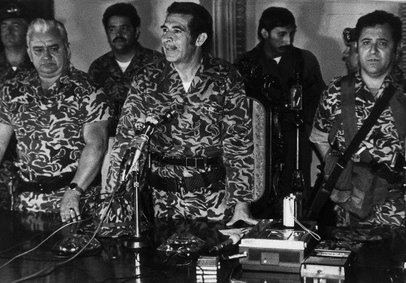
El fallo emitido por la Corte de Constitucionalidad constituye un retroceso en la búsqueda de Justicia en Guatemala por las graves violaciones a los derechos humanos cometidas durante el conflicto armado interno, dijó la CIJ.
Es importante recordar que ya en diciembre de 2007, dos de los actuales magistrados de la Corte de Constitucionalidad también otorgaron un amparo al militar retirado General Ríos Montt, evitando su extradición a España. El día de ayer, la CC vuelve a amparar al militar retirado, esta vez para afectar gravemente el derecho de acceso a la justicia de las víctimas del Pueblo Ixil y provocar más impunidad en Guatemala.
Con este fallo, la Corte de Constitucionalidad envía un mensaje equivocado a la población guatemalteca y le da más poder a los victimarios. Sin embargo, la CIJ reconoce que tanto el Magistrado Chacón como la Magistrada Porras, emitieron un voto disidente, apartándose así de la decisión mayoritaria de los magistrados Molina Barreto, Maldonado Aguirre y Pérez Aguilera.
El amparo que la Corte de Constitucionalidad otorgó el día de ayer, lejos de respaldar la justicia, avala las acciones del abogado defensor Francisco García Gudiel, quien faltó a la ética profesional al aceptar la defensa de Ríos Montt, aún sabiendo que la Ley del Organismo Judicial en su artículo 201 literal a) le prohibía “actuar en los juicios en que el juez tuviere que excusarse o pudiera ser recusado a causa de la intervención del profesional.”
Ramón Cadena, Director de la Comisión Internacional de Juristas para Centroamérica expresó: «Nuevamente la Corte de Constitucionalidad está provocando el incumplimiento de la obligación internacional del Estado de Guatemala de juzgar y castigar a los responsables de crímenes gravísimos como el genocidio, crímenes de guerra y crímenes de lesa humanidad. Con dicho fallo, las víctimas del Pueblo Ixil han sido burladas y su derecho de acceso a la justicia ha sido nuevamente negado.»
Otros artículos:
La CIJ expresa su preocupación ante la posibilidad de que juicio por Genocidio y Delito contra los Deberes de Humanidad sea anulado
La CIJ celebra triunfo de la justicia sobre la impunidad
NOTE:
You can find a comprehensive background on the Rios Montt trial in English here

May 7, 2013 | Advocacy, Legal submissions
The ICJ today submitted to the United Nations a written statement concerning corporate complicity in human rights abuses and access to justice for victims of such abuses.
The statement is made ahead of the UN Human Rights Council’s 23rd session (27 May to 14 June 2013) and comments on a report of the Council’s Working Group on human rights and transnational corporations and other business enterprises.
Setting out issues concerning obstacles to justice for victims of human rights abuses by business enterprises, the ICJ calls on the Working Group to take various steps to address such issues, including by:
- Exploring the further development of international standards;
- Raising specific allegations of corporate abuse with relevant State authorities and business enterprises; and
- Addressing more clearly the issue of access to justice in cases of corporate complicity.
HRC23-Item3-WGBHR-WrittenStatement-LegalSubmission-2013 (download statement in PDF)