Nov 25, 2018 | News
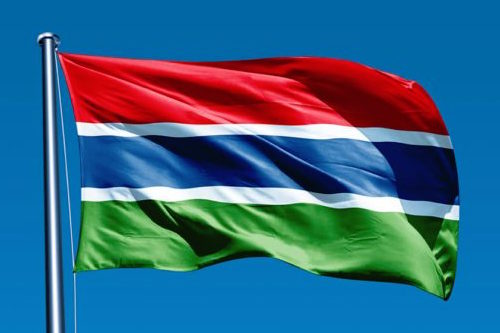
The International Commission of Jurists (ICJ) welcomes the formal declaration of the Gambia to allow individuals and certain non-governmental organizations with observer status access to complain of human rights violations against the Gambian State at the African Court on Human and Peoples Rights.
Gambia became the ninth African State to make the declaration to allow individual access the African Court on Human and Peoples Rights. The ICJ called on other States to follow suit rapidly.
“The Gambian government should be applauded, but more African States need to step up to reinforce their international human rights obligations by allowing victims of violations direct access to the Court and to empower the African Human Rights Court to do the work for which it was set up.” said Arnold Tsunga, Director of the ICJ African Regional Progamme. “It is only through extensive depositing of article 34(6) by the majority of African states that the court can be truly an African Court”.
In addition to granting access to individuals, the Declaration made under article 34(6) of the Protocol to the African Charter on Human and Peoples’ Rights triggers the courts jurisdictional competency under article 5(3) to allow for a limited number of NGOS access.
“The promise of human rights protection under the African human rights system can only be realized when political leaders match rhetoric with such action as allowing individuals to seek an effective remedy by direct access to regional human rights mechanisms like the African Court,” added Arnold Tsunga.
The ICJ emphasized that despite the significant human and material resources invested in the Court since its establishment in 2006, the African Court has been unavailable to great majority of Africans, since very few States had so far entered the declaration recognizing its competency.
Other States that have previously made declarations include Benin, Burkina Faso, Côte d´Ivoire, Ghana, Malawi, Mali, Tanzania and Tunisia.
Although, complaints of human rights violation can only be brought directly before the Court against the nine States that have made the declaration, victims of human rights violation of almost all African States can already bring claims against other states through the non-judicial communication procedure available at the African Commission on Human and Peoples´ Rights.
The ICJ stressed while access to the Commission’s procedures is important, it was not an adequate substitute for the kind of binding legal remedy that can be only ordered by a Court. The ICJ noted poor rate of compliance with decisions of the African Commission.
Contacts:
Arnold Tsunga, Director of the Africa Regional Programme, International Commission of Jurists C: +263 77 728 3248, E: arnold.tsunga(a)icj.org
Solomon Ebobrah, Senior Legal Advisor, Africa Regional Programme, International Commission of Jurists.C: +234 803492 7549, E: solomon.ebobrah(a)icj.org
Nov 16, 2018 | News
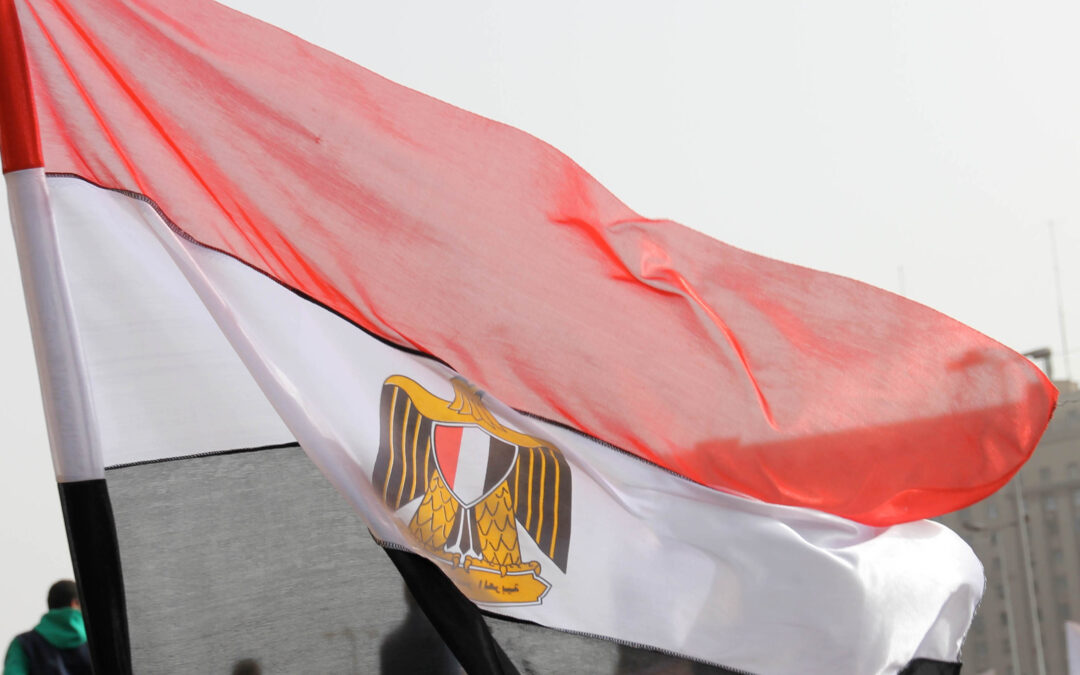
The South Cairo Criminal Court’s conviction and sentencing on 11 November 2018 of Assistant Detective Mohamed Sayed Abdel Halim and Police Officer Mohamed Ahmed Salem to three years and six months’ imprisonment respectively for conduct involving the torture and killing of 22-year-old Mohamed Abdel-Hakim Mahmoud does not amount to justice for the crimes against him, the ICJ said today.
The ICJ called on prosecutors to consider options for appeal or new charges that could hold the perpetrators properly to account for serious crimes, with sanctions appropriate to the gravity of their conduct and in line with international law.
The two officers apparently unlawfully arrested Mohamed Abdel-Hakim Mahmoud, otherwise known as “Afroto,” on 5 January 2018 and subjected him to severe beatings and other torture, as a result of which he died.
The Court convicted Abdel Halim of “beating that led to death,” a crime that carries a sentence of three to seven years’ imprisonment under Article 236 of the Egyptian Penal Code, and Salem of “light beating.”
“The low sentences imposed by the Court are completely disproportionate to the conduct of the perpetrators, who beat Afroto, threw him into a cell and then beat him again when he complained he was unable to breath. The perpetrators should have been held accountable for their true criminal conduct, which included torture and murder in police custody,” said Kate Vigneswaran, Senior Legal Adviser of the ICJ MENA Programme.
“The Egyptian authorities’ consistent efforts to immunize public officials from real accountability denies the victims and their families their right to redress and reinforces the Egyptian people’s increasing lack of trust in the Egyptian government and judicial system,” she added.
The definition of torture under Article 126 of the Egyptian Penal Code only establishes liability for torture for the purpose of obtaining a “confession” against a suspect, falling far short of the standard required by the Egyptian Constitution and the Convention Against Torture (CAT), which contemplate torture being undertaken for any number of purposes. The Penal Code also imposes penalties—hard labour and the death penalty—inconsistent with human rights, including for torture and murder.
“Egypt should amend the Penal Code to prohibit all forms of torture and abolish the death penalty and hard labour,” said Kate Vigneswaran.
“The authorities are obligated under international law to ensure effective justice for crimes committed by public officials by charging them with crimes and imposing sentences reflecting their criminal conduct. Legislative reform is needed to both ensure accountability for victims and uphold the rights of perpetrators,” she added.
Contact:
Kate Vigneswaran, Senior Legal Adviser, ICJ Middle East and North Africa Programme, m: +31 624894664, e: kate.vigneswaran@icj.org
Egypt-Afroto Verdict-News-2018-ENG (full story with additional information, in PDF)
Nov 15, 2018 | News
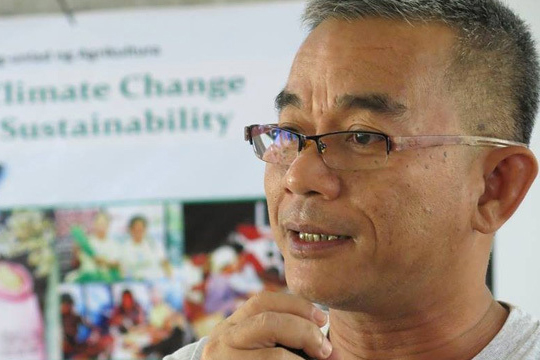
The ICJ and the Alternative Law Groups (ALG) today called on the Government of the Philippines to take immediate and effective action to addressing the apparently unlawful killing of Benjamin ‘Ben’ Ramos, a prominent lawyer and a founder of the National Union of People’s Lawyers (NUPL).
Benjamin Ramos was shot by two unidentified men in the public plaza of Barangay 5, Kabankalan City on 6 November 2018.
The ICJ and ALG call on the Government of the Philippines to conduct a thorough, prompt, impartial, and independent investigation into the killing of Benjamin Ramos.
Benjamin Ramos, in his work with the NUPL, had previously provided legal assistance to the families of the victims of the ‘Sagay 9 massacre’, which involved the killing of nine sugarcane farmers from the National Federation of Sugar Workers by unidentified armed men on 20 October 2018 in Negros Occidental, a province in the central part of the Philippines.
Given the sensitive nature of the work of Benjamin Ramos, which involved confronting powerful interests, it is important that any investigation consider the suspected links between that work and his killing.
“It is essential for the proper and effective functioning of the administration of justice that lawyers are kept safe as they fulfill their duties to protect the rights of their clients and promote the cause of justice,” said Emerlynne Gil, ICJ’s Senior International Legal Adviser.
As affirmed by the UN Basic Principles on the Role of Lawyers, governments must ensure that lawyers are able to perform all their professional functions without “intimidation, hindrance, harassment or improper interference.” In addition,“[w]here the security of lawyers is threatened as a result of discharging their functions, they shall be adequately safeguarded by the authorities”.
The organizations note that there have been at least thirty-four (34) lawyers killed since 2016, under the administration of President Rodrigo Duterte.
“The rising number of killings of lawyers is very concerning and alarming; it is an attack not only on individual lawyers but on the justice system as whole. The Philippine government must take immediate and proactive measures to ensure the safety of lawyers as they conduct their professional duties,” said Maria Generosa Mislang, National Coordinator of ALG.
Contact:
Emerlynne Gil, ICJ Senior International Legal Adviser, t: +662 619 8477 (ext. 206) ; e: emerlynne.gil(a)icj.org
Oct 30, 2018 | News
The ICJ today called upon the Government of Sri Lanka to abide by the Constitution and its international obligations in peacefully resolving the current political crisis, and for all political leaders to commit to respect for human rights and the rule of law.
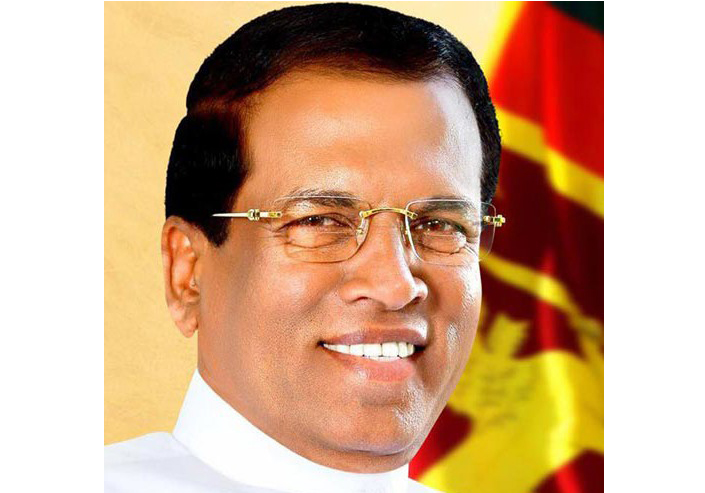
To this end, President Maithripala Sirisena (photo) should reconvene Parliament to end the constitutional crisis in line with the rule of law and democratic norms.
The ICJ urged the Government to deliver on its commitment to the transitional justice process, including by holding those responsible for human rights violations and abuses accountable, and complying with the obligations set out in United Nations Human Rights Council Resolutions 30/1 and 34/1.
It is with grave concern that the ICJ has observed the unfolding of events in Sri Lanka since the evening of October 26, 2018.
Following the withdrawal of the United People’s Freedom Alliance from the National Unity Government, President Maithripala Sirisena, in an unexpected move, appointed Former President and Member of Parliament Mahinda Rajapaksa as the Prime Minister of Sri Lanka.
These actions have transpired in disregard of safeguards set out in the 19th Amendment to the Constitution, which limit the power of the President to remove the Prime Minister at will.
The Amendment spells out specific instances during which the Prime Minister of Sri Lanka ceases to hold office under the law.
The ICJ is concerned at the President’s move to prorogue Parliament until 16 November in what appears to be an effort to avoid parliamentary scrutiny of his actions. The move has exacerbated political tensions.
“The ICJ is alarmed that Mahinda Rajapaksa, who has yet to be held accountable for the well-documented human rights violations committed during his previous tenure, has been appointed Prime Minister – in apparent violation of the Constitution,” said Frederick Rawski, Asia Pacific Director for the ICJ.
Incidents of violence and the takeover of government-controlled media by supporters of Mahinda Rajapaksa raise fears of an imminent return to the human rights violations and abusive practices which were widespread during his term.
ICJ also noted with concern ongoing crackdowns on the media and other attacks on human rights and fundamental freedoms.
The ICJ stressed that the removal of the Prime Minister in violation of the law or constitutional provisions would constitute a violation of Sri Lanka’s commitments to the international community, set out in UN Human Rights Council resolutions in 2015 and 2017, to strengthen good governance and protect democratic institutions.
The ICJ also expressed concern that political instability, or the return of an unrepentant and unaccountable Mahinda Rajakpaksa to political power, would endanger progress made on fulfilling Sri Lanka’s commitments to press forward with transitional justice processes, and its legal obligations to ensure accountability for past human rights violations and abuses, as set out in both resolutions.
“The failure to address past abuses, and to fully implement UN Human Rights Council Resolutions 30/1 and 34/1, has helped set the stage for the current political turmoil, and the possible return of an authoritarian figure who has proven his disrespect for human rights and the rule of law over and over,” said Frederick Rawski.
“The Human Rights Council will be watching closely to assess whether Sri Lanka is in breach of its commitments. Any serious threat to progress on human rights accountability will compel the establishment of an independent accountability mechanism,” he added.
Contact
Frederick Rawski, ICJ’s Asia Pacific Regional Director, t: +66 2 619 84 77 ; e: frederick.rawski(a)icj.org
Oct 26, 2018 | News
At a media event in Bangkok, Thailand, today, the ICJ reiterated its call for Turkey to work with the United Nations to establish a special independent mechanism to carry out an investigation into the killing of Khashoggi with a view to identifying the perpetrators.
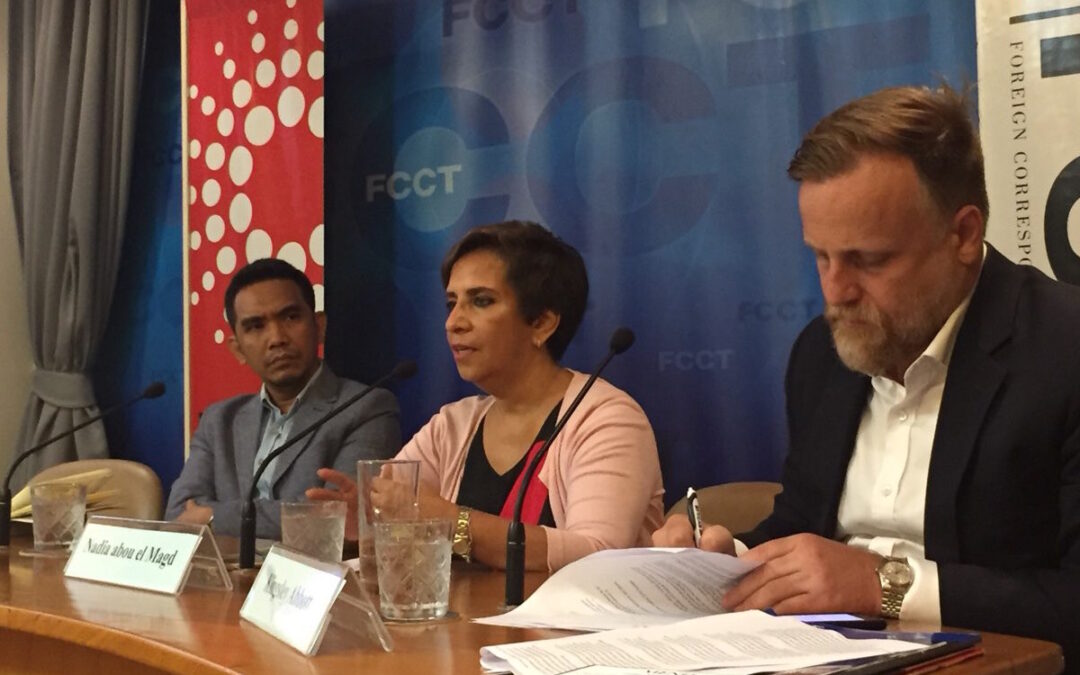
The Foreign Correspondents Club of Thailand (FFCT) in Bangkok hosted a special panel discussion entitled Death of a journalist – Fallout from the killing of Jamal Khashoggi, which was attended by approximately eighty journalists, diplomats and club members.
On the panel, Kingsley Abbott, ICJ Senior Legal Advisor for Global Accountability, began by making two positive observations, namely that there exists a clear international legal framework which applies to cases of suspected unlawful deaths including extra-judicial executions and enforced disappearance; and that a considerable amount of information about Khashoggi’s fate appears to be available.
He set out the international legal framework that applies to violations of the right to life noting the state duty to conduct a prompt independent, impartial, effective and transparent investigation consistent with the UN Principles on the Effective Prevention and Investigation of Extra-legal, Arbitrary and Summary Executions and the revised 2016 Minnesota Protocol on the Investigation of Potentially Unlawful Death.
Kingsley Abbott noted that in nearly all cases where there is reasonable suspicion of unlawful death, an autopsy should be performed and called for Khashoggi’s body or remains to be produced.
Kate Vigneswaran, ICJ Senior Legal Adviser, Middle East and North Africa (MENA) Programme, discussed options for accountability in the MENA region, in particular in Saudi Arabia, Turkey, Egypt and the United Arab Emirates.
She noted that Saudi Arabia provided little to no opportunity for meaningful justice given executive and Royal Court control over the judiciary and prosecutors. She further highlighted Saudi Arabia’s targeting of critics exercising their right to freedom of expression through criminal prosecutions, abductions and enforced disappearances, and egregious fair trial rights violations in the criminal justice system. She went on to state that similar human rights violations in Egypt and the United Arab Emirates make them unlikely credible options for accountability.
She also noted some concerns about aspects of the justice system in Turkey and in that regard said it was too early to determine whether the conduct of investigation and prosecution of the perpetrators in that country would meet international standards.
Other speakers included Nadia abou el Magd, who has 30 years’ experience as a journalist and commentator covering the Middle East, working mainly for the Associated Press, and Dr. Muhammad Ilyas Yahprung from the Faculty of Political Science, Ramkhamheang University, who focuses on Muslim World Issues.
The panel was moderated by Anneliese Mcauliffe who has worked as a journalist across Asia and the Middle East for over two decades.
Contact:
Kingsley Abbott
Kate Vigneswaran
Senior Legal Adviser
Middle East and North Africa Programme
Phone: +31624894664
Email: kate.vigneswaran(a)icj.org
Twitter: @KateVigneswaran