Oct 30, 2018 | News
The ICJ today called upon the Government of Sri Lanka to abide by the Constitution and its international obligations in peacefully resolving the current political crisis, and for all political leaders to commit to respect for human rights and the rule of law.
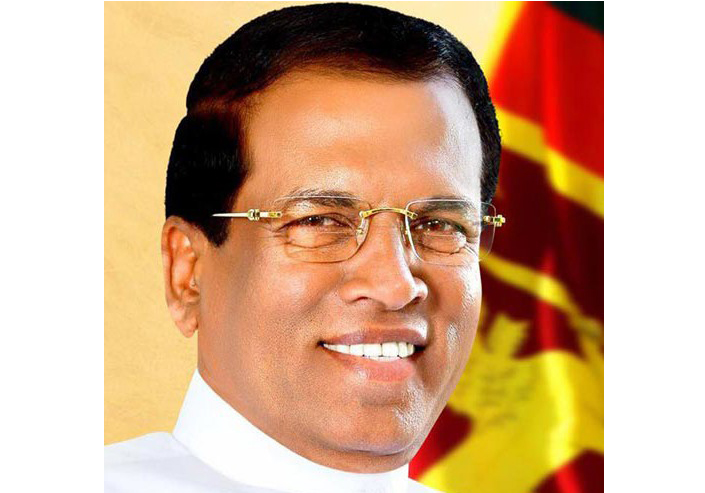
To this end, President Maithripala Sirisena (photo) should reconvene Parliament to end the constitutional crisis in line with the rule of law and democratic norms.
The ICJ urged the Government to deliver on its commitment to the transitional justice process, including by holding those responsible for human rights violations and abuses accountable, and complying with the obligations set out in United Nations Human Rights Council Resolutions 30/1 and 34/1.
It is with grave concern that the ICJ has observed the unfolding of events in Sri Lanka since the evening of October 26, 2018.
Following the withdrawal of the United People’s Freedom Alliance from the National Unity Government, President Maithripala Sirisena, in an unexpected move, appointed Former President and Member of Parliament Mahinda Rajapaksa as the Prime Minister of Sri Lanka.
These actions have transpired in disregard of safeguards set out in the 19th Amendment to the Constitution, which limit the power of the President to remove the Prime Minister at will.
The Amendment spells out specific instances during which the Prime Minister of Sri Lanka ceases to hold office under the law.
The ICJ is concerned at the President’s move to prorogue Parliament until 16 November in what appears to be an effort to avoid parliamentary scrutiny of his actions. The move has exacerbated political tensions.
“The ICJ is alarmed that Mahinda Rajapaksa, who has yet to be held accountable for the well-documented human rights violations committed during his previous tenure, has been appointed Prime Minister – in apparent violation of the Constitution,” said Frederick Rawski, Asia Pacific Director for the ICJ.
Incidents of violence and the takeover of government-controlled media by supporters of Mahinda Rajapaksa raise fears of an imminent return to the human rights violations and abusive practices which were widespread during his term.
ICJ also noted with concern ongoing crackdowns on the media and other attacks on human rights and fundamental freedoms.
The ICJ stressed that the removal of the Prime Minister in violation of the law or constitutional provisions would constitute a violation of Sri Lanka’s commitments to the international community, set out in UN Human Rights Council resolutions in 2015 and 2017, to strengthen good governance and protect democratic institutions.
The ICJ also expressed concern that political instability, or the return of an unrepentant and unaccountable Mahinda Rajakpaksa to political power, would endanger progress made on fulfilling Sri Lanka’s commitments to press forward with transitional justice processes, and its legal obligations to ensure accountability for past human rights violations and abuses, as set out in both resolutions.
“The failure to address past abuses, and to fully implement UN Human Rights Council Resolutions 30/1 and 34/1, has helped set the stage for the current political turmoil, and the possible return of an authoritarian figure who has proven his disrespect for human rights and the rule of law over and over,” said Frederick Rawski.
“The Human Rights Council will be watching closely to assess whether Sri Lanka is in breach of its commitments. Any serious threat to progress on human rights accountability will compel the establishment of an independent accountability mechanism,” he added.
Contact
Frederick Rawski, ICJ’s Asia Pacific Regional Director, t: +66 2 619 84 77 ; e: frederick.rawski(a)icj.org
Oct 26, 2018 | News
At a media event in Bangkok, Thailand, today, the ICJ reiterated its call for Turkey to work with the United Nations to establish a special independent mechanism to carry out an investigation into the killing of Khashoggi with a view to identifying the perpetrators.
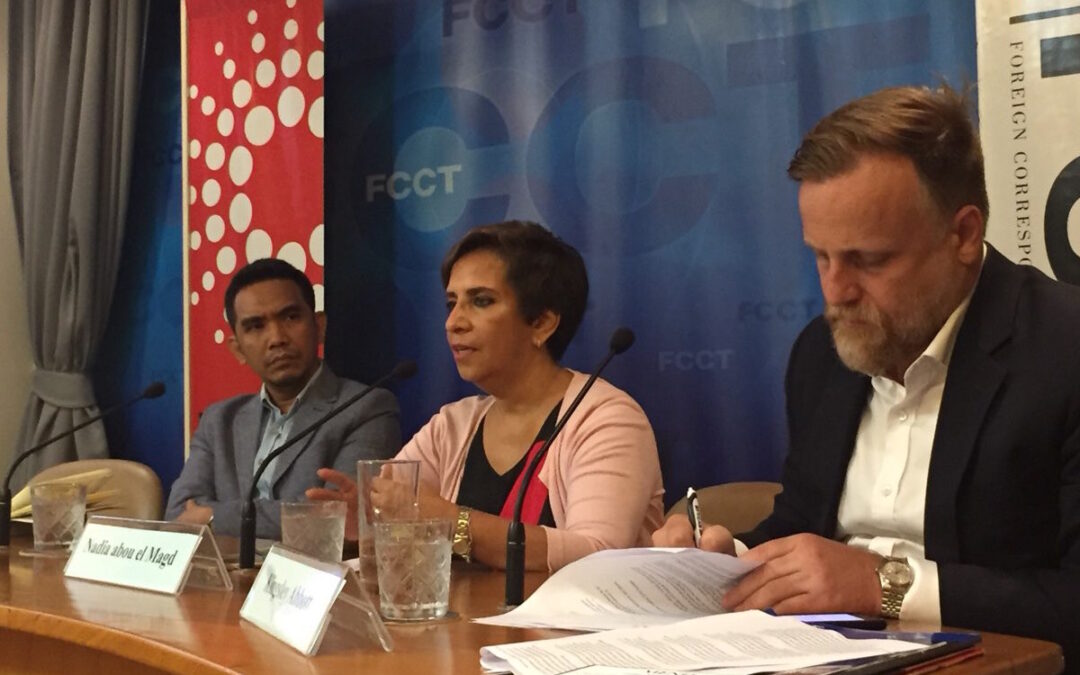
The Foreign Correspondents Club of Thailand (FFCT) in Bangkok hosted a special panel discussion entitled Death of a journalist – Fallout from the killing of Jamal Khashoggi, which was attended by approximately eighty journalists, diplomats and club members.
On the panel, Kingsley Abbott, ICJ Senior Legal Advisor for Global Accountability, began by making two positive observations, namely that there exists a clear international legal framework which applies to cases of suspected unlawful deaths including extra-judicial executions and enforced disappearance; and that a considerable amount of information about Khashoggi’s fate appears to be available.
He set out the international legal framework that applies to violations of the right to life noting the state duty to conduct a prompt independent, impartial, effective and transparent investigation consistent with the UN Principles on the Effective Prevention and Investigation of Extra-legal, Arbitrary and Summary Executions and the revised 2016 Minnesota Protocol on the Investigation of Potentially Unlawful Death.
Kingsley Abbott noted that in nearly all cases where there is reasonable suspicion of unlawful death, an autopsy should be performed and called for Khashoggi’s body or remains to be produced.
Kate Vigneswaran, ICJ Senior Legal Adviser, Middle East and North Africa (MENA) Programme, discussed options for accountability in the MENA region, in particular in Saudi Arabia, Turkey, Egypt and the United Arab Emirates.
She noted that Saudi Arabia provided little to no opportunity for meaningful justice given executive and Royal Court control over the judiciary and prosecutors. She further highlighted Saudi Arabia’s targeting of critics exercising their right to freedom of expression through criminal prosecutions, abductions and enforced disappearances, and egregious fair trial rights violations in the criminal justice system. She went on to state that similar human rights violations in Egypt and the United Arab Emirates make them unlikely credible options for accountability.
She also noted some concerns about aspects of the justice system in Turkey and in that regard said it was too early to determine whether the conduct of investigation and prosecution of the perpetrators in that country would meet international standards.
Other speakers included Nadia abou el Magd, who has 30 years’ experience as a journalist and commentator covering the Middle East, working mainly for the Associated Press, and Dr. Muhammad Ilyas Yahprung from the Faculty of Political Science, Ramkhamheang University, who focuses on Muslim World Issues.
The panel was moderated by Anneliese Mcauliffe who has worked as a journalist across Asia and the Middle East for over two decades.
Contact:
Kingsley Abbott
Kate Vigneswaran
Senior Legal Adviser
Middle East and North Africa Programme
Phone: +31624894664
Email: kate.vigneswaran(a)icj.org
Twitter: @KateVigneswaran
Oct 21, 2018 | News
On 21 October, the ICJ, together with Cross Cultural Foundation (CrCF), organized a lawyers’ meeting in Bangkok on the admissibility of evidence in the context of application of special security laws in Thailand.
Attendees included 30 human rights lawyers, paralegal officers, documentation officers, human rights defenders and journalists from Bangkok and other regions in Thailand.
The objectives of the meeting were:
- To discuss about the challenges that lawyers currently face regarding the admissibility of evidence in criminal proceedings, both in law and in practice, in the context of existing special security laws. These laws include the Martial Law, Emergency Decree, and the Internal Security Act that are applied in the southern border provinces, and certain repressive National Council for Peace and Order (NCPO) Orders that are applied nationwide;
- To discuss how to address the adverse effects on human rights and the administration of justice as a consequence of the implementation of these laws and how lawyers, members of civil society, and other stakeholders, at national and international levels, may work together to address such challenges; and
- To gather recommendations from participants and discuss future advocacy strategies to tackle identified challenges.
The ICJ’s Legal Memorandum on Hearsay Evidence and International Fair Trial Standards was used as one of the main reference materials during the meeting.
A main recommendation of the Workshop, echoed the ICJ’s assessment in the Legal Memorandum, namely that Thailand should review existing standards in all special security laws and relevant articles in the Criminal Procedure Code regarding the admissibility of evidence that are not compatible with international fair trial standards to ensure safeguards required to protect individuals from unfair trials.
Read also
Thailand : legal memorandum – hearsay evidence and international fair trial standards
Oct 14, 2018 | News
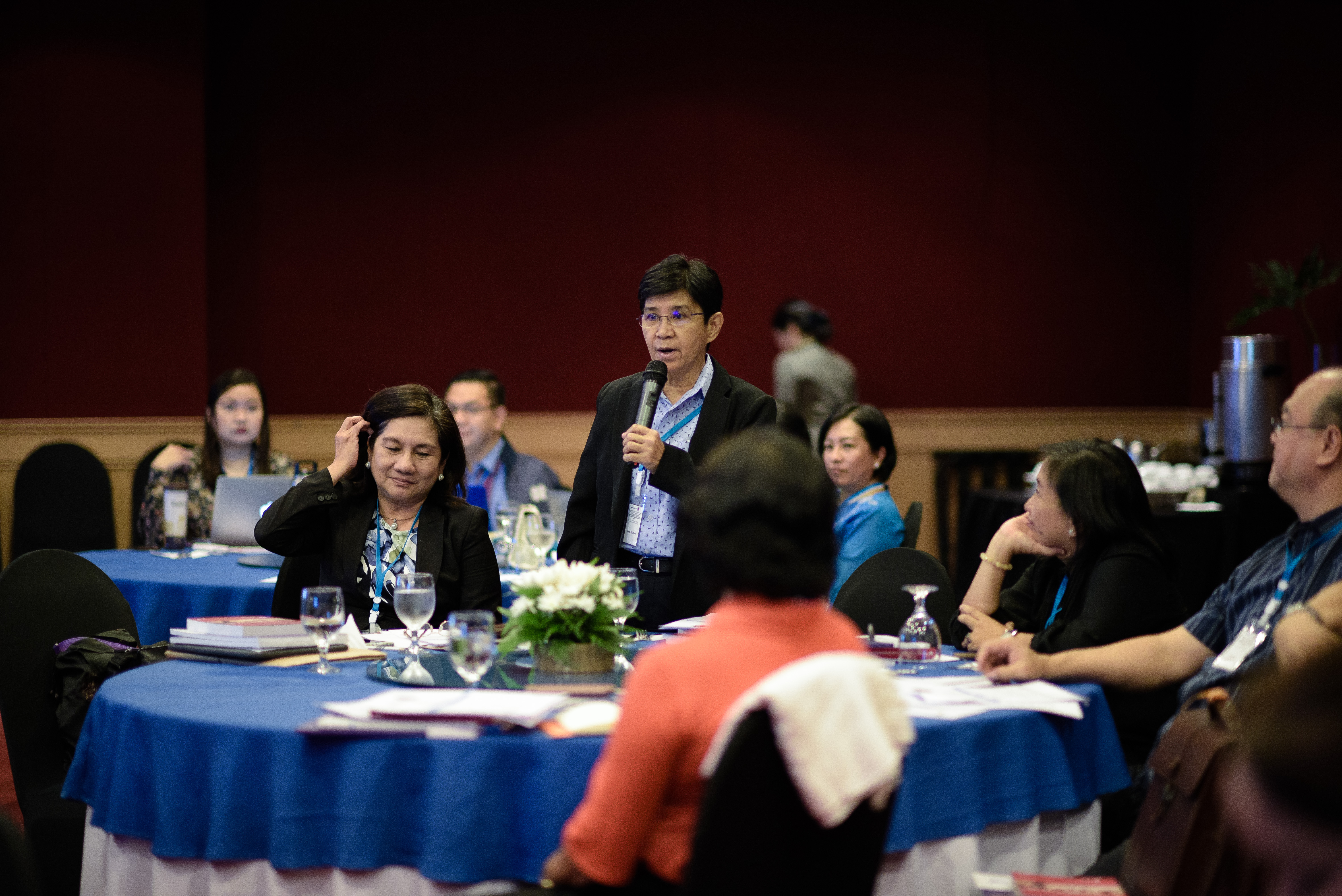
From 12 to 13 October 2018, the ICJ and the Integrated Bar of the Philippines (IBP) held its second national workshop on eliminating gender discriminatory attitudes and behaviours towards women.
Participants at the workshop were members of IBP’s Board of Governors and Committee on Bar Discipline. The workshop was held in Cebu City, Philippines.
Emerlynne Gil, ICJ’s Senior International Legal Adviser opened the workshop by emphasizing that it is crucial for lawyers of all areas of expertise to engage in dialogues such as this in order to further enhance women’s access to justice.
Gil pointed out that gender stereotypes incorporated in laws and perpetuated in the administration of justice impair the capacity of women to exercise their right to access to justice.
She emphasized that lawyers, as frontline formal justice actors, play a key role in eliminating these stereotypes.
Marienne Ibadlit, IBP’s Governor for Western Visayas, spoke about the establishment of the Gender and Development (GAD) Committee as a standing committee of the IBP.
The establishment of the GAD Committee is expected to advance gender and women’s human rights within the IBP.
It is also expected to institutionalize within the IBP efforts to build the capacity of lawyers in the Philippines to assist women in accessing justice.
The participants recognized during the opening session that recourse to gender stereotypes in the practice of law and administration of justice is widespread in the Philippines and that gender stereotypes directly impact women’s access to justice.
A range of stereotypes were identified, including the idea of women being the ‘weaker sex’ and the perception that female lawyers are not suited for litigation of controversial political or criminal cases.
During the workshop, participants discussed how they could maximize their role as lawyers in facilitating women’s access to justice, specifically in the areas of domestic violence, sexual violence, family law, and employment law.
Some of the participants noted that they themselves had been influenced by gender stereotypes and committed to be more consciously gender sensitive in their work and personal life.
While acknowledging that much more must be done to bring about systematic change, it was agreed that incremental measures could be impactful.
Abdiel Dan Fajardo, National President of the IBP, expressed support for more action by lawyers in the Philippines on women’s human rights.
Both the ICJ and IBP reinforced their commitment to joint collaboration in furthering the advancements in women’s access to justice in the country.
Contact
Emerlynne Gil, Senior International Legal Adviser for Southeast Asia, t: +662 619 8477 (ext. 206) ; e: emerlynne.gil(a)icj.org
Oct 1, 2018 | News
The Inter-American Commission of Human Rights (IACHR) held a special hearing on the role of the International Commission against Impunity in Guatemala (CICIG) in Boulder, Colarado.
Ramón Cadena, the ICJ Director stated “We regret that the Government of Guatemala requested the IACHR to hold the hearing behind closed doors since all the points discussed were of public interest. The discussions should have been open to the press and the general public. We urge the authorities to ensure there will be no retaliations against the work carried out by human rights organizations and human rights defenders.”
The ICJ welcomed the participation of many NGOs at the event and the frank dialogue that took place on this crucial issue for human rights in that country. The Guatemalan government delegation claimed that the Inter-American System of Human Rights was not competent to consider the matter. However, the IACHR maintained it was competent, according to the American Convention of Human Rights and other regional human rights legislation. As an “external observer”, the IACHR stated it was “surprised” by the latest decisions taken by government authorities at the highest level not to extend the CICIG mandate nor allow the entry of Commissioner Iván Velásquez into the country. It considered these decisions were “excessive” and in no way strengthened the rule of law in Guatemala.
The government delegation further argued that the CICIG acted as a “parallel prosecutor” which affects the internal order of the country. The NGO delegation stated that on the contrary the CICIG acted as a “complementary prosecutor”. The delegation further noted that before the CICIG mandate was approved, the Constitutional Court, in an opinion published in the official gazette on 8 May 2007 (document no 791-2007), considered that the CICIG did not violate the constitutional order nor the rule of law in Guatemala.
The Constitutional Court referred to the CICIG as having “the function of supporting, assisting and strengthening the state institutions responsible for investigating crimes committed by illegal and clandestine security forces .. and does not exclude the possibility of receiving support from other institutions in the collection of evidence, provided that the participation has been established in a legal manner, as in the present case.”
The IACHR considered that the essential question was whether the State of Guatemala already had the judicial independence and strong institutions necessary to fight against corruption in Guatemala without the support of the CICIG. The NGO delegation considered, based on different arguments, that the presence of the CICIG in Guatemala was still necessary.
The IACHR also informed the government delegation that it was in their interest to invite an in-situ visit of the IACHR as soon as possible so as to better understand the human rights situation.
The ICJ Director for Central America Ramón Cadena participated in the hearing at the request of the Central American Institute for Social Democracy Studies (DEMOS), the Committee for Peasant Development (CODECA) and the Network of Community Defenders. The Indigenous Peoples Law Firm had been requested to attend by these organizations but was unable to do so at the last moment.