Mar 6, 2018 | News
The ICJ today welcomed the first referral of allegations of gross human rights violations to the recently constituted Specialized Criminal Chambers (SCC) at the Tribunal of First Instance of Gabés.
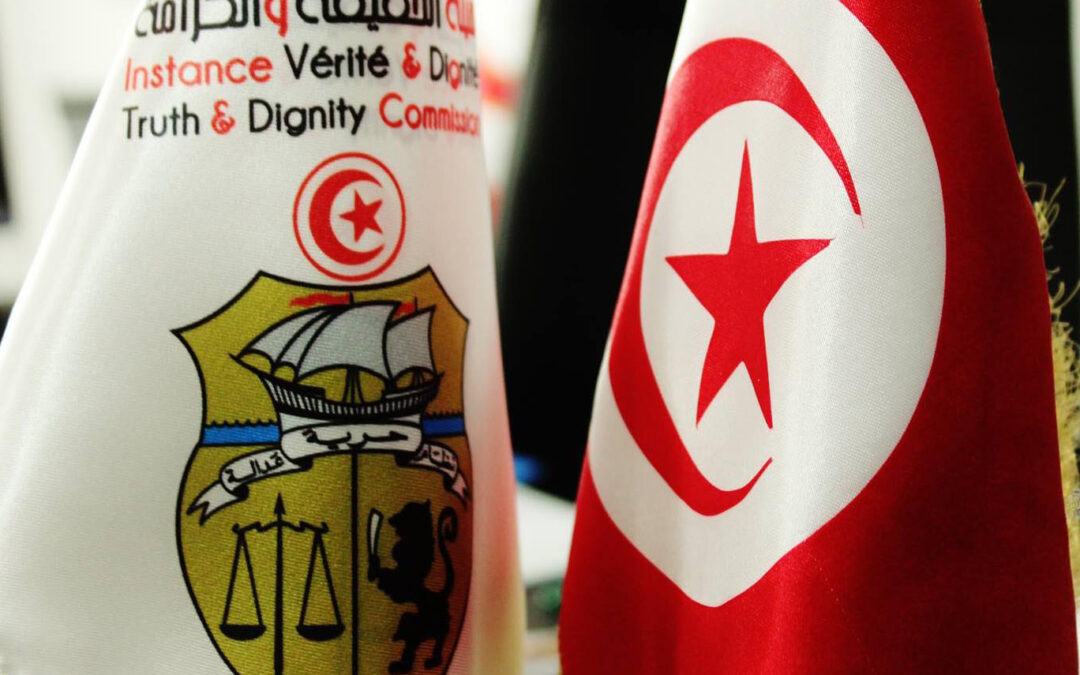
On 2 March 2018, the Truth and Dignity Commission (“Instance Vérité et Dignité”, IVD) transferred a case concerning 14 suspects and the crime of enforced disappearance to the SCC, established to bring justice and accountability for the legacy of serious human violations allegedly committed in Tunisia from 1 July 1955 to 31 December 2013.
“The IVD’s decision is an important first step in the process of ensuring accountability and dismantling the structural impunity that has prevailed over cases of gross violations of human rights in Tunisia,” said Said Benarbia, Director of the ICJ Middle East and North Africa Programme.
“We call on the responsible Tunisian authorities to fully support this process and remove the obstacles that continue to impede the IVD’s work, including by ensuring its full, rapid and unimpeded access to archives and to information related to the conduct of police and security forces under the former regime,” he added.
The ICJ also reiterated its previous call on the Tunisian authorities to remove the legal and practical obstacles that may hinder the SCC’s capacity to deliver justice effectively.
In two memos addressing the jurisdiction and the procedures to be applied by the SCC, the ICJ identified such obstacles and formulated recommendations for amendments and reform.
“The Government must reform the legal framework and procedures to be applied by the SCC so that they can effectively exercise their jurisdiction, establish the truth about past violations, hold those responsible to account, and deliver meaningful justice and reparation for victims,” Benarbia said.
Contact
Said Benarbia, Director of the ICJ Middle East and North Africa Programme, t: +41 798783546, e: said.benarbia(a)icj.org
Background
The SCC were formally established by Decree No. 2014-2887 of 8 August 2014 and have been set up within the Tribunals of First Instance of thirteen Courts of Appeal.
Under article 8 of the 2013 Transitional Justice Law, the SCC have jurisdiction over cases related to gross violations of human rights, as defined in international treaties applicable to Tunisia and in the provisions of the 2013 Law, involving “murder, rape and other forms of sexual violence, torture, enforced disappearances, and death penalty without fair trial guarantees”.
The 2013 Law attributes a leading role to the IVD with respect to how cases are brought before the SCC. According to article 42 of the 2013 Law, the IVD refers to the Office of the Public Prosecutor (OPP) “cases where gross human rights violations are proven”. As of 15 June 2016, the deadline for victims to submit files, the IVD has received over 60000 cases.
Tunisia-SSC disappearances-News-2018-ARA (full story in Arabic, PDF)
Mar 5, 2018 | News
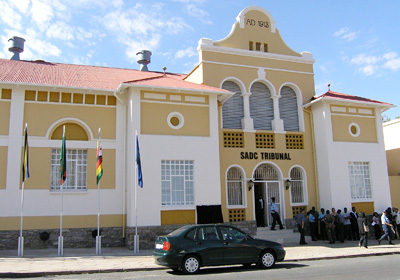
The ICJ has welcomed last Thursday’s judgment of the Pretoria High Court which declares the South Africa’s involvement in shutting down the South African Development Community Tribunal “unlawful, irrational, arbitrary and therefore unconstitutional”.
ICJ’s Africa Director, Arnold Tsunga described the judgment as a “triumph for the rule of law in Southern Africa and an opportunity for governments in the SADC region to commit to immediate restoration of the Tribunal”.
The SADC Tribunal has been inactive since 2012, when SADC Member States suspended its operations and removed individual access to the Tribunal, including in cases involving human rights violations.
The action was widely seen as a backlash for several judgments against Zimbabwe in relation to land programmes implemented during the administration of former President Robert Mugabe.
In a unanimous judgment delivered by High Court Judge President D Mlambo, the Court held that “any act which detracted from the SADC Tribunal’s exercise of its human rights jurisdiction at the instance of individuals, was inconsistent with the SADC Treaty itself and violated the rule of law”.
Describing former President Zuma’s decision to sign the replacement 2014 Protocol of the SADC Tribunal as one such act, the Court held that the rule of law in South Africa’s constitutional dispensation required prior Parliamentary approval for the Executive to lawfully participate in a decision to curb the powers of the Tribunal or withdraw South Africa from its obligations under the SADC Treaty and the Protocol establishing the Tribunal.
“A restoration of the SADC Tribunal to its original character will facilitate individual access to a much needed accountability mechanism and greatly enhance regional confidence in human rights and the rule of law”, said Arnold Tsunga.
In line with articles 14 and 15 of its 2000 Protocol, the SADC Tribunal had exercised supervisory jurisdiction over the human rights commitments of SADC Member State under the SADC Treaty.
The ICJ called on the governments of Southern Africa’s other 14 SADC Member States to take immediate and concrete steps to restore the SADC Tribunal and recommit to rebuilding, staffing and funding it to ensure its effectiveness.
Contact
Arnold Tsunga, ICJ Africa Director; t: +27716405926, or +254 746 608 859 ; e: arnold.tsunga(a)icj.org
Solomon Ebobrah, Senior Legal Adviser, ICJ Africa Regional Programme, t: +234 8034927549; e: solomon.ebobrah(a)icj.org

Feb 26, 2018 | Events
On 28 February 2018, the ICJ is holding a workshop on combatting sexual and gender-based violence (SGBV) in Swaziland, in cooperation with Women and Law in Southern African – Swaziland (WLSA Swaziland) and the Swaziland Action Group Against Abuse (SWAGAA).
The workshop, held as part of the ICJ’s Global Redress and Accountability Initiative, will consider the prevalence of SGBV in Swaziland, and contributing factors, and will focus on the extent to which perpetrators of such violence are, and can be, held accountable in law and in practice and the means by which victims of SGBV may better access effective remedies and reparation.
Participants will also discuss opportunities for engagement with UN mechanisms on addressing SGBV in the Kingdom of Swaziland.
The workshop is set against the backdrop of urgent recommendations adopted by the UN Human Rights Committee in 2017 on the combatting of violence against women, in respect of which Swaziland must report to the Committee by July 2018.
It comes ahead of Swaziland’s anticipated report, also due in July 2018, to the UN Committee on the Elimination of All Forms of Discrimination Against Women which in 2014 also adopted several recommendations on the combatting of violence against women.
The workshop also comes as national debates continue on the enactment of the Sexual Offences and Domestic Violence Bill, which Swaziland had committed to enact without delay at its 2016 Universal Periodic Review.
Workshop Agenda
Feb 20, 2018 | News
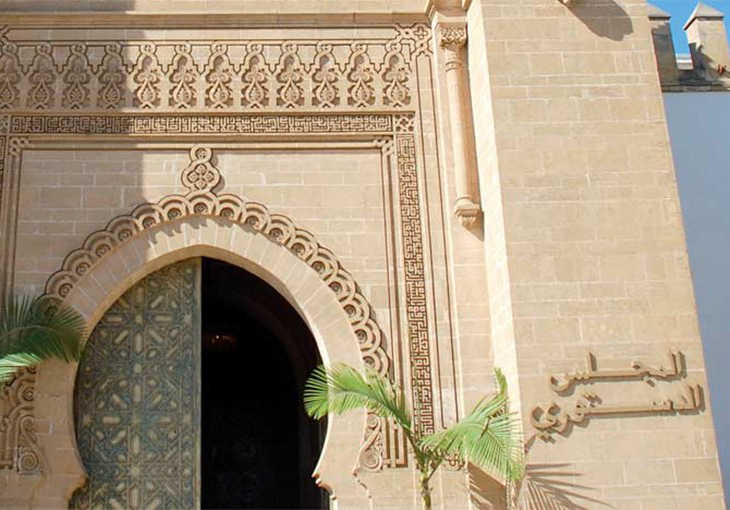
In a memo published today, the ICJ called on the Moroccan authorities to refrain from signing into Law Draft Organic Law No. 86.15 on access to the Constitutional Court with a view to amending it and ensuring its full compliance with international standards.
On 8 August 2017, the House of Representatives approved the Draft Law.
The Second Chamber of the Parliament, the House of Counselors, approved the Draft Law on 16 January 2018.
Before its promulgation, the Draft Law is due to be reviewed by the Constitutional Court to assess its compliance with the Constitution.
“The Draft Law is a missed opportunity to facilitate individuals’ access to the Constitutional Court and to remedy Morocco’s history of inadequate procedures of constitutional review,” said Said Benarbia, ICJ MENA Director.
“By providing for a two-layered admissibility system that includes vague and subjective criteria, and by omitting to extend free and competent legal assistance to those unable to pay when challenging the constitutionality of laws, the Draft Law puts undue burden on the litigants and curtails their access to the Court,” he added.
Under the Draft Law, a request to challenge the constitutionality of a law can only be introduced in the context of a litigation.
Lower courts are to refer the request to the Cassation Court after reviewing it and confirming that the formal and legal requirements set out in the Draft Law are met.
The Cassation Court shall then assess the challenge and refer it to the Constitutional Court if deemed “serious.”
The ICJ is concerned that this proposed procedure increases the likelihood that some laws and provisions may never be subjected to constitutional review, and that litigants may be blocked in their efforts to ensure the review of the constitutionality of the laws.
Moroccan authorities should provide for lower courts to immediately refer constitutionality challenges to the Constitutional Court, as well for other avenues of access, including for individuals and NGOs to be enabled to join proceedings as interested parties or to submit information as amicus curiae or through expert opinions, the ICJ says.
Under international law, anyone who alleges they have been the victim of a human rights violation has the right to access to an effective remedy, including a judicial remedy.
In Morocco, ensuring that alleged victims have access to constitutional review is of key importance to fulfilling this right within the national legal system.
Morocco-Access Const Ct-News-web story-2018-ARA (full story in Arabic, PDF)
Morocco-Access Const Ct-Advocacy-Position paper-2018-ENG (Memo in English, PDF)
Morocco-Access Const Ct-Advocacy-Position paper-2018-ARA (Memo in Arabic, PDF)
Feb 13, 2018 | News
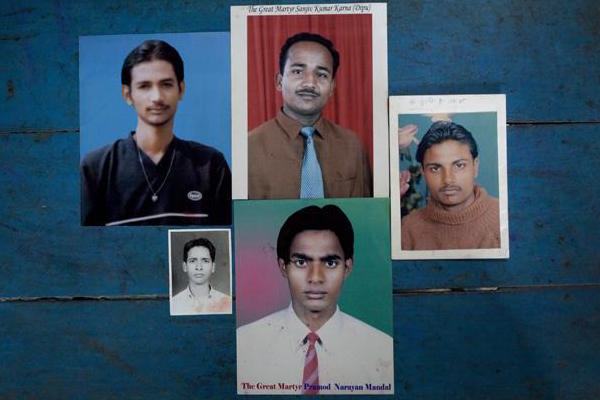
The one-year extensions of Nepal’s two transitional justice mechanisms without necessary legal and institutional reforms ordered by the Supreme Court and the UN are insufficient to comply with international standards, the ICJ, Amnesty International and Human Rights Watch said today.
The three organizations warned that the mere extension of the terms of the Truth and Reconciliation Commission (TRC) and the Commission on the Investigation of Enforced Disappeared Persons (CIEDP) is likely to prolong the justice process without meaningfully improving the chances that victims will have their demands for justice, truth, and accountability met.
“The net worth of these two bodies has now been tested by the victims in Nepal who are deeply dismayed and disappointed at not having been served truth and justice—even after years of delay,” said Biraj Patnaik, Amnesty International’s South Asia Director.
On February 5, 2018, the Government of Nepal extended, for the second time, the mandates of the TRC and CIEDP by one year without taking any measures to ensure their credibility and human rights compliance, and to increase the capacity of the Commissions as demanded by victims, civil society groups, and the National Human Rights Commission of Nepal (NHRC).
On the same day, the NHRC called on the government to amend the Enforced Disappearances Enquiry, Truth and Reconciliation Commission Act, 2014, in line with international standards and the judgements of the Supreme Court of Nepal.
The TRC and CIEDP have fallen short of international standards, both in constitution and operation, despite repeated orders by the Supreme Court of Nepal.
Among other flaws, the current legal framework allows for the possibility of amnesties and effective impunity for gross human rights violations amounting to grave crimes under international law, and the broad authority to facilitate reconciliation, including without the informed consent of the victims and their families.
In addition, a non-consultative, uncoordinated and opaque approach to their work has also created distrust with all major stakeholders, including conflict victims and members of civil society.
Where the Commissions have made efforts to work effectively, they face problems due to a lack of sufficient human and financial resources.
“Families and victims of Nepal’s decade-long civil war have waited far too long for answers, and cynical government attempts such as extending the mandate without broader reform as directed by the highest court is a further slap in the face,” said Meenakshi Ganguly, South Asia director at Human Rights Watch.
“The two commissions have gathered a lot of documentation, but the authorities seem more committed to protecting perpetrators than ensuring justice in the process.”
Despite flaws in the law, and questions of legitimacy and capacity, victims and their families have given the benefit of the doubt to these bodies, and submitted thousands of complaints.
As of February 2018, the TRC has received 60,298 complaints of human rights violations, and the CIEDP has received 3,093 complaints of enforced disappearance.
Though the Commissions have stated that they have initiated investigations into some of these cases, there are serious concerns about the quality of these investigations, and to date, not a single case has been recommended for prosecution.
“Now a member of the UN Human Rights Council, the international community has high expectations of the government of Nepal,” said Frederick Rawski, Asia Director of the International Commission of Jurists.
“It needs to commit to ensure that these institutions function independently and free from political interference, and in accordance with international standards that prohibit impunity for gross human rights violations. Merely extending their mandates without addressing the underlying problems is not adequate.”
Contacts
Frederick Rawski, ICJ Asia Pacific Regional Director, t: +66 64 478 1121, e: frederick.rawski@icj.org
Meenakshi, Ganguly, South Asia Director, Human Rights Watch, e: gangulm@hrw.org
Omar Waraich, Deputy Director, Amnesty International South Asia, t: +94 72 737 5467; e: omar.waraich@amnesty.org
Background
The TRC and CIEDP were established on 10 February 2015 through the Enforced Disappearances Enquiry, Truth and Reconciliation Commission Act, 2014.
The two-year mandates of the TRC and CIEDP expired on February 9, 2017.
The government extended the mandates for one year.
On 20 January 2018, the President approved an Ordinance extending the mandate of the two Commissions.
On the basis of the Ordinance, the Council of Ministers, on 5 February 2018, extended the mandates of these bodies for an additional year.