Mar 28, 2018 | Advocacy, Non-legal submissions
The ICJ today submitted a report to the UN Committee against Torture, calling for recommendations to be made on prevention of and accountability for continued recourse to torture and ill-treatment in Tajikistan.
The ICJ’s submission is made ahead of consideration by the Committee against Torture in April to May 2018 of Tajikistan’s third periodic report on the implementation of its obligations under the Convention against Torture and Other Forms of Cruel, Inhuman or Degrading Treatment or Punishment.
The ICJ’s report draws from an earlier study on Achieving Justice for Gross Human Rights Violations in Tajikistan and calls on the Committee against Torture to make recommendations concerning:
- The obligation to adequately sanction torture;
- The obligation to prevent torture and other forms of ill-treatment, including in places of detention;
- The obligation to investigate allegations of torture and ill-treatment;
- The use of amnesties and pardons for torture;
- The prohibition against the use of evidence obtained by torture;
- The right to complain about torture and ill-treatment; and
- The right of victims to effective remedies and reparation.
Tajikistan-CAT-Advocacy-AlternativeReport-2018ENG (download the ICJ’s submission, in PDF)
Mar 12, 2018 | Advocacy, Non-legal submissions
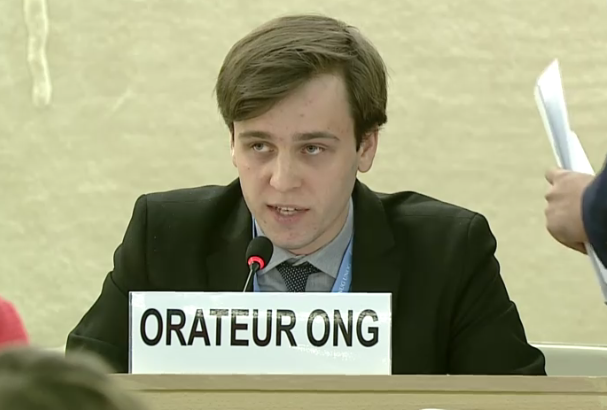
The ICJ today delivered a statement at the UN Human Rights Council calling on Myanmar to cooperate with UN mechanisms and for all UN agencies in the country to make human rights central to their approach.
The statement, made in the interactive dialogue with the international Fact Finding Mission on Myanmar, and the Special Rapporteur, read as follows:
“The International Commission of Jurists (ICJ) welcomes the update of the Independent International Fact Finding Mission. In relation to crimes under international law, the ICJ encourages the experts to continue to develop further specific recommendations for securing criminal accountability and providing redress.
The ICJ also welcomes the report of the Special Rapporteur, and strongly supports the renewal of her mandate and tenure.
As a UN Member State, the Government of Myanmar should fully cooperate with all the organs and mechanisms of the UN, in accordance with its obligations under the UN Charter.
At this session, the government asked for ‘concrete evidence’ of alleged human rights violations, and committed to taking action against perpetrators, but permission to enter the country is still refused to the Fact Finding Mission, to the Special Rapporteur and to the Office of the High Commissioner for Human Rights.
To demonstrate a genuine commitment to truth and accountability, the Government must allow them full access to areas of concern, particularly to Rakhine State and to conflict areas in Kachin State and Shan State.
Humanitarian actors and independent media must also be immediately allowed full and unimpeded access, particularly to Rakhine State, as recommended by the government’s own Advisory Commission.
The current situation in Rakhine State is incongruous to voluntary returns of Rohingya refugees. At the same time, the UN High Commissioner for Human Rights must be included in repatriation planning with a full mandate to protect refugees. This is contemplated in current repatriation arrangements with the Government of Bangladesh, and the Government of Myanmar must now formalize this relationship with UNHCR.
Experts, what can be done to ensure all UN agencies present in Myanmar actually put ‘human rights up front’ in the line with the mandate of every UN organ under the UN Charter?”
Mar 6, 2018 | News
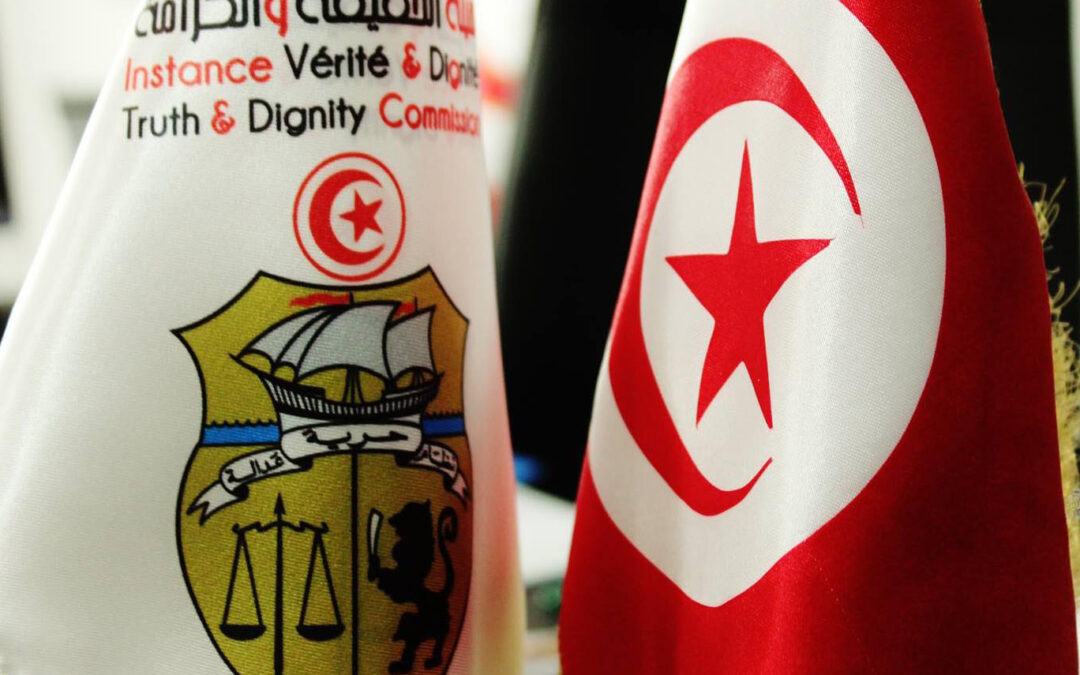
The ICJ today welcomed the first referral of allegations of gross human rights violations to the recently constituted Specialized Criminal Chambers (SCC) at the Tribunal of First Instance of Gabés.
On 2 March 2018, the Truth and Dignity Commission (“Instance Vérité et Dignité”, IVD) transferred a case concerning 14 suspects and the crime of enforced disappearance to the SCC, established to bring justice and accountability for the legacy of serious human violations allegedly committed in Tunisia from 1 July 1955 to 31 December 2013.
“The IVD’s decision is an important first step in the process of ensuring accountability and dismantling the structural impunity that has prevailed over cases of gross violations of human rights in Tunisia,” said Said Benarbia, Director of the ICJ Middle East and North Africa Programme.
“We call on the responsible Tunisian authorities to fully support this process and remove the obstacles that continue to impede the IVD’s work, including by ensuring its full, rapid and unimpeded access to archives and to information related to the conduct of police and security forces under the former regime,” he added.
The ICJ also reiterated its previous call on the Tunisian authorities to remove the legal and practical obstacles that may hinder the SCC’s capacity to deliver justice effectively.
In two memos addressing the jurisdiction and the procedures to be applied by the SCC, the ICJ identified such obstacles and formulated recommendations for amendments and reform.
“The Government must reform the legal framework and procedures to be applied by the SCC so that they can effectively exercise their jurisdiction, establish the truth about past violations, hold those responsible to account, and deliver meaningful justice and reparation for victims,” Benarbia said.
Contact
Said Benarbia, Director of the ICJ Middle East and North Africa Programme, t: +41 798783546, e: said.benarbia(a)icj.org
Background
The SCC were formally established by Decree No. 2014-2887 of 8 August 2014 and have been set up within the Tribunals of First Instance of thirteen Courts of Appeal.
Under article 8 of the 2013 Transitional Justice Law, the SCC have jurisdiction over cases related to gross violations of human rights, as defined in international treaties applicable to Tunisia and in the provisions of the 2013 Law, involving “murder, rape and other forms of sexual violence, torture, enforced disappearances, and death penalty without fair trial guarantees”.
The 2013 Law attributes a leading role to the IVD with respect to how cases are brought before the SCC. According to article 42 of the 2013 Law, the IVD refers to the Office of the Public Prosecutor (OPP) “cases where gross human rights violations are proven”. As of 15 June 2016, the deadline for victims to submit files, the IVD has received over 60000 cases.
Tunisia-SSC disappearances-News-2018-ARA (full story in Arabic, PDF)
Mar 5, 2018 | News
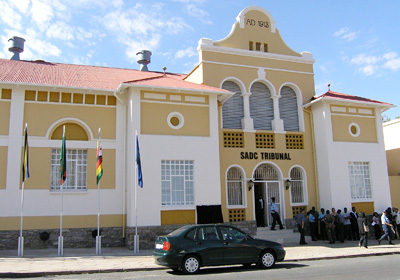
The ICJ has welcomed last Thursday’s judgment of the Pretoria High Court which declares the South Africa’s involvement in shutting down the South African Development Community Tribunal “unlawful, irrational, arbitrary and therefore unconstitutional”.
ICJ’s Africa Director, Arnold Tsunga described the judgment as a “triumph for the rule of law in Southern Africa and an opportunity for governments in the SADC region to commit to immediate restoration of the Tribunal”.
The SADC Tribunal has been inactive since 2012, when SADC Member States suspended its operations and removed individual access to the Tribunal, including in cases involving human rights violations.
The action was widely seen as a backlash for several judgments against Zimbabwe in relation to land programmes implemented during the administration of former President Robert Mugabe.
In a unanimous judgment delivered by High Court Judge President D Mlambo, the Court held that “any act which detracted from the SADC Tribunal’s exercise of its human rights jurisdiction at the instance of individuals, was inconsistent with the SADC Treaty itself and violated the rule of law”.
Describing former President Zuma’s decision to sign the replacement 2014 Protocol of the SADC Tribunal as one such act, the Court held that the rule of law in South Africa’s constitutional dispensation required prior Parliamentary approval for the Executive to lawfully participate in a decision to curb the powers of the Tribunal or withdraw South Africa from its obligations under the SADC Treaty and the Protocol establishing the Tribunal.
“A restoration of the SADC Tribunal to its original character will facilitate individual access to a much needed accountability mechanism and greatly enhance regional confidence in human rights and the rule of law”, said Arnold Tsunga.
In line with articles 14 and 15 of its 2000 Protocol, the SADC Tribunal had exercised supervisory jurisdiction over the human rights commitments of SADC Member State under the SADC Treaty.
The ICJ called on the governments of Southern Africa’s other 14 SADC Member States to take immediate and concrete steps to restore the SADC Tribunal and recommit to rebuilding, staffing and funding it to ensure its effectiveness.
Contact
Arnold Tsunga, ICJ Africa Director; t: +27716405926, or +254 746 608 859 ; e: arnold.tsunga(a)icj.org
Solomon Ebobrah, Senior Legal Adviser, ICJ Africa Regional Programme, t: +234 8034927549; e: solomon.ebobrah(a)icj.org

Feb 26, 2018 | Events
On 28 February 2018, the ICJ is holding a workshop on combatting sexual and gender-based violence (SGBV) in Swaziland, in cooperation with Women and Law in Southern African – Swaziland (WLSA Swaziland) and the Swaziland Action Group Against Abuse (SWAGAA).
The workshop, held as part of the ICJ’s Global Redress and Accountability Initiative, will consider the prevalence of SGBV in Swaziland, and contributing factors, and will focus on the extent to which perpetrators of such violence are, and can be, held accountable in law and in practice and the means by which victims of SGBV may better access effective remedies and reparation.
Participants will also discuss opportunities for engagement with UN mechanisms on addressing SGBV in the Kingdom of Swaziland.
The workshop is set against the backdrop of urgent recommendations adopted by the UN Human Rights Committee in 2017 on the combatting of violence against women, in respect of which Swaziland must report to the Committee by July 2018.
It comes ahead of Swaziland’s anticipated report, also due in July 2018, to the UN Committee on the Elimination of All Forms of Discrimination Against Women which in 2014 also adopted several recommendations on the combatting of violence against women.
The workshop also comes as national debates continue on the enactment of the Sexual Offences and Domestic Violence Bill, which Swaziland had committed to enact without delay at its 2016 Universal Periodic Review.
Workshop Agenda