Jun 28, 2018 | News
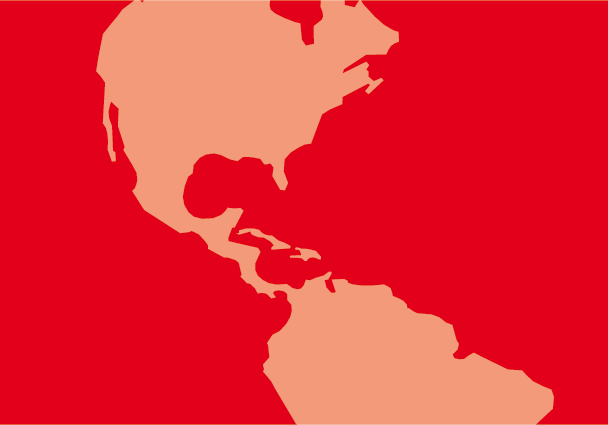
On 24-25 June, ICJ Commissioners from the Latin America region came together in Bogotá, Colombia, to consider and enhance ICJ strategies to combat past and resurging trends in extrajudicial executions and enforced disappearances in the region.
The meeting was the first of its kind to bring together ICJ Commissioners on a regional basis: Carlos Ayala (Venezuela); Miguel Carbonell (Mexico); Gustavo Gallón (Colombia); Roberto Garretón (Chile); Juan Mendez (Argentina); Victor Rodriguez Rescia (Costa Rica); Alejandro Salinas Rivera (Chile); Mónica Pinto (Argentina); Belisário dos Santos Júnior (Brazil); and Wilder Tayler (Uruguay).
The meeting was followed by a preparatory mission (involving two Commissioners and the ICJ’s legal representative in Colombia) on the transitional justice mechanisms envisaged under the Havana Agreement, with a particular emphasis on the jurisdiction and operation of the ‘Special Jurisdiction for Peace’. A full high-level mission will follow in September, at which time the ICJ intends to identify minimum benchmarks for the effective operation and sustainable impact of those mechanisms.
In all regions of the world, recourse to enforced disappearances and extrajudicial killings continues; victims and their families (the overwhelming majority of whom are women, children and indigenous peoples from rural areas dominated by poverty and social and political exclusion, as well as trade unionists and human rights defenders) struggle to obtain prompt and effective remedies and reparation; and perpetrators enjoy impunity through inadequate or improper laws, ineffective institutional frameworks, selective recourse to accountability mechanisms and/or political interference in the functioning of those mechanisms.
The meeting confirmed that these challenges are particularly evident in Latin America, where there has been a resurgence in recourse to enforced disappearances and extrajudicial killings in countries throughout the region and where violations of the past have in very many cases been inadequately addressed. By way of example:
- In Brazil, official statistics from 2016 attest to the occurrence of 62,000 violent deaths and potentially up to 22,000 enforced disappearances each year.
- 45 years after the coup d’état in Chile, about 800 people have been convicted and sentenced to imprisonment, but those figures belie the extensive occurrence and levels of responsibility for gross violations of human rights that occurred.
- In Colombia, more than 70,000 cases of enforced disappearance were documented by the Attorney General for the period 1970-2015 and there is general consensus that the number of missing persons likely exceeds 100,000. The wide and persistent extent of extrajudicial killings has been noted by UN and Inter-American experts and bodies as well as the Office of the Prosecutor of the International Criminal Court.
- In Guatemala, only 34 convictions for conduct involving conflict-era violations have been secured, despite the fact that the internal armed conflict of 1960-1996 involved massive and systematic human rights violations. Impunity has undermined redress and accountability and severely weakened the prevention of violations, with the National Civil Police having recorded more than 25,000 people ‘disappeared’ in 2003-2014, more than half of which were women.
- Peru’s internal armed conflict of 1980-2000 resulted in more than 69,000 people killed and ‘disappeared’, but less than 100 convictions have been secured under the judicial subsystem established in 2004 that specializes in accountability for gross human rights violations.
- In Venezuela, civil society reports at least 12,000 real or perceived political opponents having been arbitrarily detained between January 2014 and April 2018; and almost 6,000 alleged extrajudicial killings between 2012 and 2016.
In all the countries from which the Commissioners originate, several common factors were identified:
- The intrinsic risks to continuation of and lack of redress and accountability for gross human rights violations posed by executive action that undermines the rule of law;
- Also inherent to the rule of law, the critical need for independent and impartial judicial mechanisms and individual judges and lawyers to allow for transitional justice, in particular for victims and their families to access effective remedies and reparation and for the holding to account of perpetrators;
- A high level of correspondence between impunity for gross human rights violations and the corruption of public officials;
- The increased, and in some cases extensive, recourse to arbitrary and detention, which in many cases precede and allow for the occurrence of extrajudicial executions and enforced disappearances;
- A similar inter-relationship between enforced disappearances and the occurrence of torture and other forms of ill-treatment;
- The detrimental impact to ensuring accountability for violations of the past when omitting non-State and paramilitary actors from transitional justice processes; and
- The increase in highly conservative (political and popular) sentiments and movements within the region and the corresponding need to tailor responses depending on the democratic versus autocratic nature of government and its institutions.
Noting that the ICJ has long sought to combat extrajudicial executions and enforced disappearances, including through the development of UN and regional instruments and standards and through its action in Latin America and the globe, the ICJ’s Commissioners urged the ICJ to continue and expand its engagement. Noting also the increasing call by local civil society actors for support and intervention by the ICJ, the meeting considered the organization’s role in seeking redress and accountability for, and prevention of, gross violations of human rights.
Commissioners reinforced, and commented on the effective parameters of, the ICJ’s strategic and victim-centred approach to address and prevent gross human rights violations, including extrajudicial executions and enforced disappearances. Having regard to the ICJ’s mandate and worldwide network of judges and lawyers, Commissioners emphasized the unique role that the organization has by grounding its work on the transformative role of the law, justice institutions and justice actors.
The particular means by which this role can be achieved by the ICJ were discussed against the background of recent and planned activities in the region and beyond. Commissioners overwhelmingly supported these plans and the Secretariat is now poised to continue implementation of its strategies in its current programmes of work and in the development of future projects.
May 25, 2018 | News
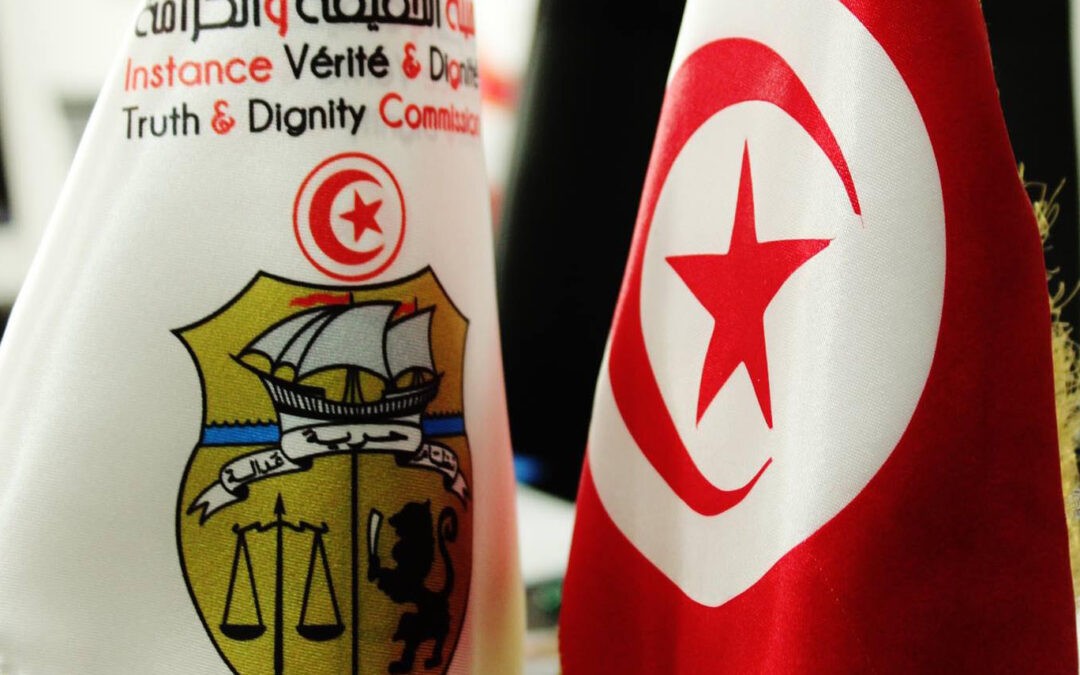
The ICJ today called on the Tunisian Parliament to reverse its decision of 26 March 2018 and allow the Truth and Dignity Commission (IVD) to carry out its mandate for at least another year.
The IVD should be in the position to finalize its investigations of past serious human rights violations in the country and, when appropriate, refer cases to the Specialized Criminal Chambers (SCC), the ICJ added.
Since its decision, the Parliament has not considered or adopted any measures to address the legal and practical consequences, including how incomplete investigations by the IVD will be handled, how other investigations will be transferred to the SCC and by whom, how evidence will be preserved and protected, how the documents and the material gathered by the IVD will properly be archived, and what would happen if the IVD were unable to complete the drafting of the final report.
The initial four-year term of the IVD ends on 31 May 2018.
“It’s absolutely irresponsible for the Tunisian Parliament to thwart the whole transitional justice process and curtail the work of the IVD without providing any path forward,” said Said Benarbia, ICJ MENA Director.
“As one of the three branches of government, the Parliament must abide by Tunisia’s obligations under international law to establish the truth about past human rights violations, bring the perpetrators to account, and provide victims with effective remedies and reparation,” he added.
The March decision runs counter to all these obligations.
It denies the rights of victims, and broader society, to know the truth, including about the circumstances and reasons that led to decades of serious human rights violations in the country.
The IVD has not been able to finalize its investigations or produce its final report.
It also shields those responsible from criminal accountability. Only eight cases have so far been referred by the IVD to the SCC.
The fate of cases that have been investigated but are not referred before 31 May 2018 remains unclear. The IVD reportedly received some 62’712 complaints.
“The Parliament is abdicating its responsibility to respect and protect victims’ rights,” Benarbia said.
“Instead of playing cynical political games that can only foster impunity, the Parliament should reverse its decision and remove all the obstacles that might impede the IVD’s work in ensuring accountability for past abuses, ” he added.
Contact
Said Benarbia, Director of the ICJ Middle East and North Africa Programme, t: +41798783546, e: said.benarbia(a)icj.org
Background
Under the 2013 law on transitional justice, the IVD initially had a four-year term, with the possibility of renewal for a single additional year, on the basis of a reasoned decision by the IVD.
The 2013 law provided that the IVD’s decision on renewal should be submitted to the Parliament.
The law is however silent as to whether the submission of the IVD decision was simply a matter of notification, or required approval of Parliament to be effective.
In any event, 68 members of the Parliament voted on 26 March against extending the term of the IVD for another year.
Under its bylaws, for decisions of Parliament to be valid they must be adopted by at least 72 of its members.
The apparent lack of quorum for the Parliament’s 26 March decision has only introduced more uncertainty and confusion, further complicating the position for the IVD and others, including most notably the victims themselves.
On 24 May 2018, the IVD and the Minister in charge of relations with constitutional bodies, civil society and human rights issued a joint statement reiterating Tunisia’s commitments to the transitional justice process as provided by the Constitution.
In the statement, the IVD was requested to transfer all cases concerning serious human rights violations to the SCC, to establish criteria on the basis of which reparation for victims will be provided, to establish compensation criteria for the Victims Fund, and to send the final report to the President of the Republic, the President of the Parliament and the President of the Government.
Tunisia-IVD Parliament-News-2018-ARA (full story in Arabic, PDF)
May 24, 2018 | News, Publications, Reports, Thematic reports
The widespread occurrence of sexual and gender-based violence (SGBV) in Swaziland requires prompt action to enact the Sexual Offences and Domestic Violence Bill, says the ICJ in a report released today.
The ICJ’s report found that discriminatory practices based on customary laws and traditional beliefs undermine equality between men and women and contribute to an environment in which SGBV is at crisis point in the country.
“As the Senate of Swaziland deliberates over the Sexual Offences and Domestic Violence Bill, it must recall that enactment of the Bill is an essential step in complying with recommendations of the UN Human Rights Committee and CEDAW Committee and as a means of discharging the commitments made by His Majesty’s Government during the 2016 Universal Periodic Review,” said Arnold Tsunga, Director of the ICJ Africa Regional Programme.
In earlier submissions to the Senate of Swaziland, the ICJ noted that enactment of the Bill is a matter required of the Kingdom of Swaziland pursuant to its international human rights law obligations, including those arising from the Africa region, to criminalize and sanction the perpetrators of SGBV.
His Majesty’s Vision 2022, the aims and targets of the Deputy Prime Minister’s Office and Swaziland’s consensus in the adoption of the 2030 Agenda for Sustainable Development reinforce compliance with those obligations.
The Sexual Offences and Domestic Violence Bill 2015, first drafted over ten years ago, has still not been passed into law, including because there is a perception that some of its provisions will infringe Swazi law and custom.
“Legislative and policy reform is needed as is the enhanced technical capacity and commitment of justice actors and policy makers to combat domestic and sexual violence,” Tsunga added.
Contact
Arnold Tsunga, Director, ICJ Africa Regional Programme, t: +27.73.131.8411; e: arnold.tsunga(a)icj.org
Alex Conte, ICJ Global Redress and Accountability Initiative, t: +41.79.957.2733; e: alex.conte(a)icj.org
Download
Swaziland-GRABaselineStudy-Publications-Reports-Thematic reports-2018-ENG (full report in PDF)

May 9, 2018 | News
The ICJ said today that Gina Haspel, nominated by Donald Trump to be Director of the CIA, should be subject to a full criminal investigation for her alleged involvement torture and other serious crimes, rather than elevated to serve as the country’s highest intelligence office.
The ICJ statement came as the United States Senate Intelligence was poised to beginning hearings on her confirmation to the position.
“If Gina Haspel becomes CIA Director, the United States will be sending a signal to the world that it has dropped the pretence of caring about even the most serious human rights violations,” said Sam Zarifi, ICJ Secretary General.
“It will show that torturing and disappearing people by US officials will not only be met with impunity, but will be no bar to career advancement.”
Following the terror attacks against the United States of 11 September 2001 until 2007, the CIA held at least 119 terror suspects or persons it suspected to have intelligence value in places of secret detention outside of US territory.
The black sites were situated in several countries, including Afghanistan, Lithuania, Poland Romania, and Thailand.
The detainees, who had no contact with the outside world, were placed beyond the protection of the law and subjected to torture and cruel, inhuman and degrading treatment.
The torture included near drowning (“waterboarding”), prolonged sleep deprivation, placement in painful stress positions for extended periods, forced rectal feedings, and slamming against walls.
Gina Hapel oversaw at least one “black site” detention centre in Thailand in 2002, while detainee Abd al-Rahim al Nashiri was being tortured there.
She is credibly alleged to have played a significant role in destroying video evidence of interrogations that were carried out under torture.
“The European Court of Human Rights has already condemned Poland for violating the rights of Abd al-Rahim al Nashiri, after he was transferred to secret CIA detention facility in Poland, yet nobody directly responsible CIA has ever been held accountable for these serious crimes,” said Sam Zarifi.
Contact
Ian Seiderman, ICJ Legal and Policy Director, t +41 22 979 3837 ; e: ian.seiderman(a)icj.org
Apr 17, 2018 | Events, Multimedia items, News, Video clips
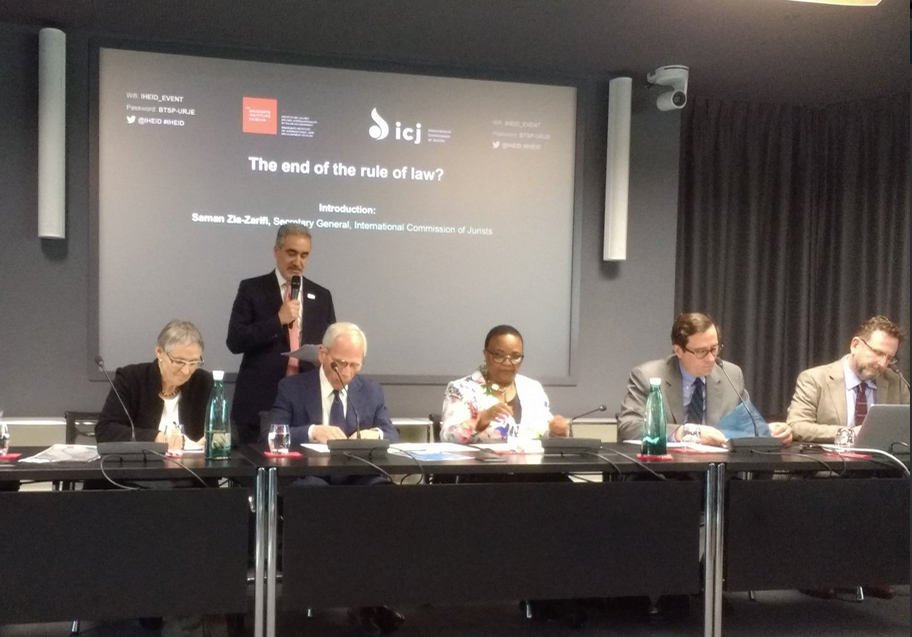
International commitment to the rule of law is under assault around the world, said a global panel of eminent academics, diplomats, and jurists.
The panelists, speaking at a public event by the ICJ and the Geneva Graduate Institute, commented that this assault is threatening to reverse the progress made over the last 70 years since the Universal Declaration of Human Rights(UDHR) came into force.
The panelists addressed progress in asserting the rule of law since the UDHR, for instance through the development of the International Criminal Court and greater awareness and commitment to rights, but also highlighted current challenges at the national level, such as in Venezuela, and at the global level, with ongoing discrimination and violence against women.
“The rule of law is a principle that helps the world and also helps individuals,” said ICJ Secretary General Saman Zia-Zarifi, in his introductory remarks.
“It is a principle that elevates democracy from mob rule and is necessary to harness the energy of democracy and give it a direction and progression towards the protection and promotion of human rights and sustainable development for the betterment of the lives of people around the world,” he added.
Professor Carlos Ayala, ICJ Vice-President and former President of the Inter-American Commission on Human Rights, spoke about the importance of having regional rights frameworks that were accessible to individuals when the rule of law has been eradicated at a national level.
Speaking in relation to Venezuela, Professor Ayala explained that the rule of law cannot be simply overturned by a political party, even with a majority, as the erosion of the rule of law puts all human rights at risk and these rights must be safeguarded regionally and internationally.
Next Patricia Schulz, member of the UN Committee on the Elimination of Discrimination against Women, pointed out that in many countries, the rule of law has been weak or never even properly existed.
She addressed failings where access to justice is undermined by systems that are gender discriminatory and explained that in almost all countries, even where the rule of law seems strong, there is a lack of will and/or means to fight gender-based violence.
Professor Andrew Clapham, Professor of Public International Law at the Graduate Institute and member of the UN Commission on Human Rights in South Sudan, evaluated issues of accountability and the rule of law in the context of international criminal law.
He noted the important role international criminal law and its operational mechanisms have in holding individuals to account, but warned that focusing on prosecution and focusing on issues such as genocide and the use of chemical weapons ran the risk of undermining the universality of ideas enshrined in the UDHR.
His Excellency Luis Gallegos, the Permanent Representative of Ecuador to the United Nations, raised concerns about the politicization of human rights and the capacity of UN mechanisms to address transnational rights issues such as migration.
He said that addressing the rule of law was not a simple question but that states had to come together to consistently and systematically address the rights violations that arose from a break-down in the rule of law.
Final panelist, Sanji Monageng, ICJ Commissioner and Justice of the International Criminal Court, spoke about the need for international organizations to rethink their approach to the rule of law and the way they apply this to cases, to avoid focusing narrowly on singular issues when rights violations need to be addressed homogenously.
Justice Monageng explained that for victims, sexual violence, for instance, is rarely a singular incident but part of broader array of rights violations that have far-reaching impacts.
In his concluding remarks, Professor Robert Goldman, who moderated the event, said that “the rule of law deals with a central tenet of any just society, not only equal protection and equal access but it is something that protects the vulnerable.”
He explained that the treat to the rule of law today is endemic and it is global, but the ICJ is uniquely placed to robustly address these difficult questions and to continue to use the rule of law to defend and advance rights protections.
The event, which took place at the Graduate Institute at the Maison de la Paix, promoted by the Permanent Mission of Germany, was attended by 150 persons including academics, diplomats, lawyers and representatives of civil society and international rights mechanisms. The event was also streamed online by RIDH Global.
You can watch the full event here.
https://www.facebook.com/ridhglobal/videos/10158134493084616/UzpfSTQ3MTQ2NzA4NjIyMTM3MzoxOTk5MjM0NDc2Nzc3OTUy/
https://www.youtube.com/watch?v=ije_iAegxFs&feature=youtu.be