Sep 16, 2016 | Advocacy, Non-legal submissions
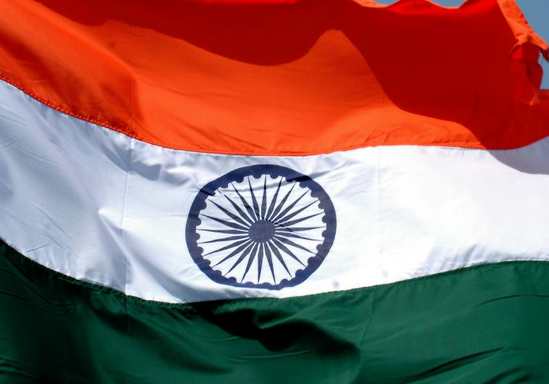
On 16 September 2016, the ICJ made a submission to the Universal Periodic Review of India.
The submission brings to the attention of the members of the Human Rights Council’s Working Group on the UPR issues concerning:
- discrimination and violence based on sexual orientation and gender identity;
- death penalty;
- impunity and accountability;
- freedom of speech, expression and association;
- ratification and implementation of international human rights instruments.
india-icj-upr-submission-advocay-non-legal-submission-2016-eng (full text in PDF)

Sep 14, 2016 | Events
This panel discussion features two Iraqi torture survivors, Salah Hassan Nsaif and Ali Shallal Abbas, who will share their first-hand accounts serious abuse suffered at Iraq’s notorious Abu Ghraib prison, and the role of U.S. contractors in that torture and abuse.
The event organised by the International Commission of Jurists, the International Federation of Human Rights (FIDH), and the Center for Constitutional Rights, takes place 15 September 2016, 11:00-12:00, at the Palais des Nations Room XXVII in Geneva, Switzerland.
CCR Senior Staff Attorney Katherine Gallagher will discuss legal cases, Saleh v Titan and Al Shimari v CACI, brought in the United States on behalf of victims as they seek justice. The cases will be placed in context of broader corporate accountability efforts, including those of the UN Working Group on Mercenaries and the Open-Ended Working Group on a legally binding instrument on transnational corporations and other business enterprises.
Speakers:
Salah Hassan, journalist and photographer for Al Jazeera network and Abu Ghraib torture survivor
Ali Shallal Abbas, Founder and President of the Association of victims of the American and Iranian prisons in Iraq, and Abu Ghraib torture survivor
Katherine Gallagher, Senior Staff Attorney, Center for Constitutional Rights
Carlos Lopez, Senior Legal Adviser, Business and Human Rights, International Commission of Jurists (moderator)
Remarks will also be made by Patricia Arias, Chair of the UN Working Group on Mercenaries.
Following the event, there will be the opening of an art exhibit organized by the UN Working Group on the use of mercenaries. Ms. Arias, Mr. Nsaif, and Mr. Abbas will make remarks, and guests are invited to engage with the photographs, multimedia display, and virtual reality film. The exhibit is open to delegates, NGOs, and the public. “Private Actors in Warfare: Stories from victims of private military and security companies and foreign fighters” will take place at 13:00 – 15:00 in Palais des Nations Room XXIII.
A flyer for the event may be downloaded, in PDF format, here: side-event-pmsc-abu-graib-sept2016
Aug 31, 2016 | News
ASEAN meeting should highlight disappeared Lao leader Sombath Somphone, denial of liberties, said human rights and advocacy groups at a press conference held today in Bangkok.
On the eve of the annual ASEAN leaders summit in Vientiane, the groups (Human Right Watch, ASEAN Parliamentarians for Human Rights, Civil Rights Defenders, Focus on the Global South, Mekong Watch and the ICJ) called upon the Lao PDR Government to commit to address its widespread violations of human rights, including instances of enforced disappearances and arbitrary detention.
Visiting world leaders have a unique opportunity to publicly raise human rights concerns during the ASEAN summit in Vientiane from September 6-8. They should press the Lao government to cease the abuses that have consistently placed Laos at the bottom of rights and development indexes measuring rights, press freedom, democracy, religious freedom, and economic transparency, the groups added.
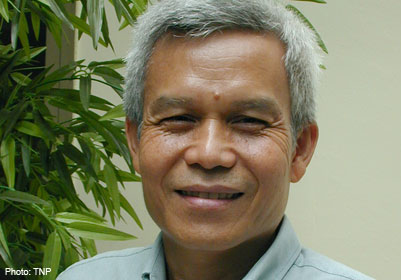
At the event organized by The Sombath Initiative at the Foreign Correspondents Club of Thailand in Bangkok, the groups also released a set of briefing papers on forcibly disappeared civil society leader Sombath Somphone (photo), Laos’ restrictions on democracy and human rights, lack freedom of expression, failure to meet human rights obligations, and impacts of foreign aid and investment.
“More than three and half years after he disappeared, the Lao government still has provided no clear answers to what happened to my husband, Sombath Somphone, who was taken away in truck at a police checkpoint in Vientiane,” said Shui Meng Ng, wife of Sombath and board member of The Sombath Initiative.
“President Obama, the United Nations, and ASEAN and its dialogue partners should urge the Lao Government to urgently resolve the case of Sombath’s enforced disappearance and return him safely to me and my family. They should also demand the Lao Government end enforced disappearances, so that the ordinary people of the country can respect their government rather than fear it.”
“The fact that the Lao PDR government’s last detailed report on the progress of the investigation was released over three years ago suggests the Lao authorities are not carrying out an effective investigation into this case as they are required to do under international law,” said Kingsley Abbott, a Senior International Legal Adviser with the International Commission of Jurists (ICJ).
“It is not enough for the Lao government to simply keep asserting on the international stage that it is investigating this case. International law obliges Lao PDR authorities to conduct an investigation that is credible and effective, and provide regular updates on its progress including to Sombath’s wife, Shui Meng,” he added.
Basic civil and political rights are systematically denied in Laos, and government authorities move quickly to arbitrarily arrest those expressing critical views of the government, either in day to day life or more recently on-line.
In March 2016, police arrested three Lao migrant workers who had posted critical comments about the Lao government while they were working in Thailand, and continues to detain them arbitrarily. A Lao court also sentenced activist Bounthanh Khammavong in September 2015 to 4 years and 9 months in prison for posting critical comments on Facebook.
Laos also imposes onerous restrictions on the right to freedom of association that are incompatible with its human rights obligations.
The government strictly controls the registrations of organizations such as non-profit associations (NPAs), and closely monitors the work plans and budgets of NPAs that it does approve to operate.
Any person who dares to organize and operate an unsanctioned organization faces arrest and prosecution.
Workers are compelled to belong to the Lao Federation of Trade Unions and organizing unions outside that framework is illegal. At the village level, mass organizations controlled by the ruling Lao People’s Revolutionary Party are often the only organizations operating.
Public protests or assemblies are strictly forbidden without government permission, and any efforts organize such events face immediate suppression by the police and security forces.
“Civil society in Laos remains under a hostile spotlight from the government, and UN rights officials have noted that there are few places in the world where they have encountered greater fear and intimidation among community organizations and NGOs,” said Walden Bello, former member of the Philippines Congress and Vice Chair of ASEAN Parliamentarians for Human Rights (APHR).
“Laos has now become one of the most rights repressing countries in ASEAN: leaders in the region and from around the world must stop looking the other way, and demand Vientiane end its asphyxiation of independent civil society,” he added.
Read the full text and quotes here: Laos-End to Human Rights Abuses-News-Press Releases-2016-ENG (in PDF)
Contact
Kingsley Abbott, ICJ Senior International Legal Adviser, t: +66 9 4470 1345, e: kingsley.abbott(a)icj.org
Jul 27, 2016 | News
Thailand’s government should immediately stop allowing criminal defamation laws to be used to harass victims and human rights defenders who seek justice for alleged incidents of torture, the ICJ said today.
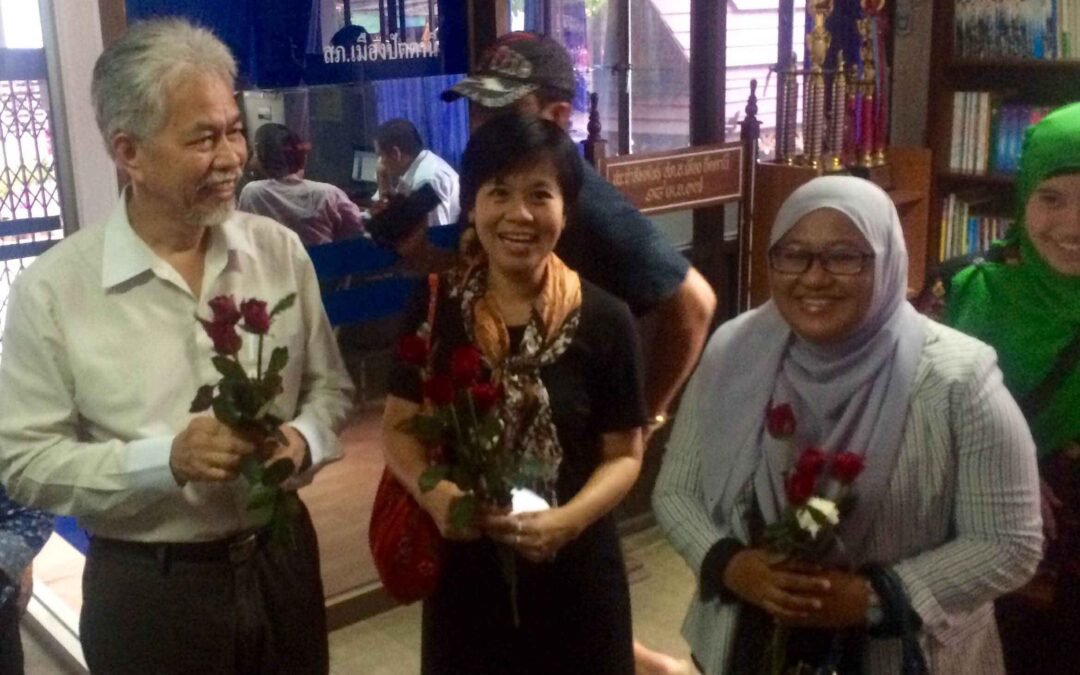
Yesterday, the government charged three human rights defenders (Pornpen Khongkachonkiet, Somchai Homloar and Anchana Heemina, photo) under the criminal defamation provisions of the Penal Code and the Computer Crime Act, for publication of a report that documented 54 cases of alleged torture and other ill-treatment by the Thai authorities in the country’s restive deep South since 2004.
“Thailand must repeal or revise its vague and broad criminal defamation laws to prevent them from being used to silence human rights defenders and journalists working on important public interest issues,” said Wilder Tayler, the ICJ’s Secretary General.
“The imposition of harsh penalties such as imprisonment or large fines under these laws has a chilling effect on the exercise of freedom of expression – a right which is enshrined in treaties to which Thailand is a party and bound to uphold,” he added.
Also yesterday, the government used the same provisions to charge Naritsarawan Kaewnopparat, the niece of an army conscript who was killed after being severely punished by soldiers on a military base.
Although the Thai government has formally acknowledged that the death was caused by torture and compensated the family, none of the perpetrators have been held accountable for the death of Private Wichian Puaksom and have only faced military disciplinary sanctions of 30 days of detention or less, the ICJ reminds.
The case against Ms Kaewnopparat was brought by a military officer who alleges she accused him of being involved in her uncle’s death in the context of the family’s efforts to seek justice.
Last month, Thailand informed the Human Rights Council during its Universal Periodic Review that the Cabinet was considering a draft Act on Prevention and Suppression of Torture and Enforced Disappearance.
It was reported that the Cabinet approved the draft law on 24 May 2016 and would forward it for approval to the National Legislative Assembly.
At the conclusion of the review, Thailand also adopted several recommendations to protect human rights defenders and investigate reported cases of intimidation, harassment and attacks against them.
“Prosecuting people who seek justice for alleged torture goes against the spirit of the proposed legislation,” Tayler said.
“Thai authorities have an obligation to investigate and ensure justice for incidents of torture, but instead they are harassing and intimidating those responsible for exposing these horrendous acts.”
On 17 December 2015, Thailand joined 127 other states at the UN General Assembly in adopting a UN Resolution on human rights defenders.
The Resolution calls upon states to refrain from intimidation or reprisals against human rights defenders.
Contact:
Sam Zarifi, ICJ Asia Pacific Regional Director (Bangkok), t: +66 807819002; e: sam.zarifi(a)icj.org
Thailand-HRDs defamation charges-News-Press releases-2016-ENG (full text of press release in English, PDF)
Thailand-HRDs defamation charges-News-Press releases-2016-THA (full text of press release in Thai, PDF)
Jul 18, 2016 | News
Indian authorities must immediately, independently and thoroughly investigate all incidents of excessive, particularly lethal, use of force in Kashmir over the past week, the ICJ said today.
Indian security forces have an obligation to comply with Government commitments to avoid using excessive force to quell protests, and must be held to account for any violations.
Violent clashes between protesters and security forces broke out in Kashmir after a popular Kashmiri militant leader, Burhan Wani, was killed, along with his two associates, by security forces on 8 July.
More than 35 people have been killed, including one security officer, and over 2000 injured. In some areas, protestors threw stones and attacked police stations. Security forces used tear gas, pellet guns and firearms.
“Security forces must respect the right to life at all times, and only use force when strictly necessary and in a manner proportionate to the legitimate performance of their duties,” said Sam Zarifi, ICJ Asia Director.
“The number of persons injured over the past week, as well as the nature of their injuries, indicates the urgent need for investigations. If security forces use any kind of weapon, they are governed by international standards that require force to be used as a last resort in self-defence or defence of others against an imminent threat of death or serious bodily injury, and in a manner to minimize injuries,” he added.
Indian security forces began using pellet guns routinely after 2010 following heavy criticism of their misuse of firearms against protesters.
But during the recent protests, the use of pellet guns, considered non-lethal weapons by security forces, has resulted in serious and potentially permanent health consequences for persons affected, including eye injuries and organ damage, which have required urgent treatment.
A recent report has suggested that at least a 100 people have sustained eye injuries. Pellet guns have also injured non-protestors, including children.
“Indian authorities should stop the use of pellet guns until they can assess whether these weapons can be used in a manner that is consistent with human rights standards on the use of force, including whether they are inherently inaccurate, indiscriminate and arbitrary; and ensure that the use of all non-lethal weapons is strictly regulated, because they have the capacity to cause serious and permanent injury,” Zarifi said.
Hospitals in Kashmir are struggling to cope with the high number of patients. There have also been reports that security forces have stopped ambulances carrying injured people, and disrupted the functioning of hospitals.
“All allegations of excessive use of force and other unlawful behaviour by the security forces must be investigated immediately. At the same time, protesters who resort to violence or injure other people must also be properly investigated and brought to justice by proper trials,” he added.
“Security forces absolutely must not interfere with access to health care. In addition to prompt, independent and effective investigations on this, the Government must proactively ensure that all injured persons are able to safely access necessary and quality health care,” he added.
Indian Prime Minister Narendra Modi has called on security forces in Kashmir to exercise “absolute restraint”.
The Chief Minister, Mehbooba Mufti, has committed to ensuring accountability in all cases where excessive force was used by security forces.
It is crucial that the Government follows through on this promise, and conducts thorough, independent and prompt investigations.
In the past, violations by security forces have largely enjoyed impunity in Kashmir for several reasons, including laws like the Armed Forces Special Powers Act that shield security forces from legal accountability for human rights violations.
For example, in 2010, clashes between protestors and security forces in Kashmir resulted in over 100 deaths. Very few, if any, of these have been credibly investigated to date.
Current events also cast doubt over whether the reforms introduced since have improved policing practices and made security forces more accountable.
The ICJ is therefore calling on Indian authorities to:
- Order that security forces desist from using excessive and unlawful force, comply with international human rights law, and only use force when strictly necessary and in a manner proportionate to the legitimate performance of their duty;
- Promptly, independently and effectively investigate all allegations of excessive and lethal uses of force by security forces, make the results of these investigations public, initiate prosecutions where appropriate, and ensure that all victims are provided with effective redress;
- Provide necessary and quality health care to injured persons, ensure they are able to access it, that hospitals are stocked and equipped to deal with the increased patient load, and that all allegations of security forces attacking ambulances and hospitals are immediately investigated.
Contact:
Sam Zarifi, ICJ Regional Director for Asia and the Pacific, t: +66807819002; e: sam.zarifi(a)icj.org
India-Kashmir statement-News-Press release-2016-ENG (full text in PDF)