May 31, 2016 | News
Myanmar’s Supreme Court engages in 2nd High Level Dialogue with the ICJ on Drafting and Implementing a New Judicial Code of Ethics and Accountability.
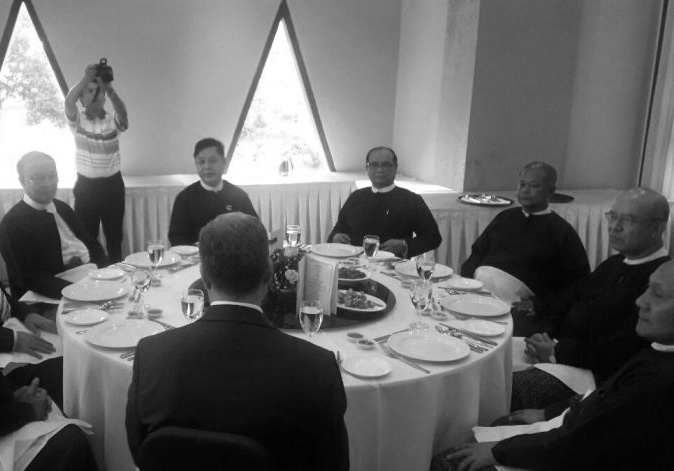
The ICJ, the United Nations Development Program and the Office of the Supreme Court of the Union (OSCU) held a High Level Dialogue on “Implementing a Code of Judicial Ethics” in Nay Pyi Taw on 30-31 May 2016.
This dialogue followed a commitment by the OSCU to draft a code and to ensure it is informed by and implemented in accordance with international best practice. The OSCU’s Judicial Ethics Review Committee, Supreme Court and High Court Judges and other senior court administrators participated in the dialogue.
Building on the previous dialogue’s focus on the contents of a code of ethics, the participants and their international counterparts from the ICJ and UNDP discussed international standards for accountability and implementation mechanisms to accompany a code of ethics.
In opening the dialogue, the Honourable Supreme Court Justice of the Union, U Mya Thien explained that the new code reflected international standards and would enhance public trust and promote accountability in the Judiciary.
In his opening remarks, ICJ Commissioner and Justice of the Supreme Court of South Africa, Azhar Cachalia, explained the importance of the code as a basis for legitimacy and independence.
He stressed that the judiciary must become accountable to the public.
“Myanmar has an historic opportunity to make decisions that will shape the judiciary for generations to come,” he said.
During the dialogue, the UNDP’s Elodie Beth outlined research on regional judicial accountability and its lessons for Myanmar.
Sam Zarifi, the ICJ’s Regional Director shared experience and international standards on implementing a code of ethics Zarifi explained that “in order for it to be effective, the Supreme Court must establish mechanisms and institutions to hold judges accountable to the code of ethics.”
All participants agreed that implementing a proper code of ethics would strengthen the accountability and independence of Myanmar’s judiciary.
Both the UNDP and the ICJ congratulated the OSCU for following its Strategic Plan for 2015-2018 and engaging in a dialogue designed to further this process.
Both expressed willingness to continue working with Myanmar’s judiciary on the issues of judicial independence, the rule of law and human rights.
May 30, 2016 | News
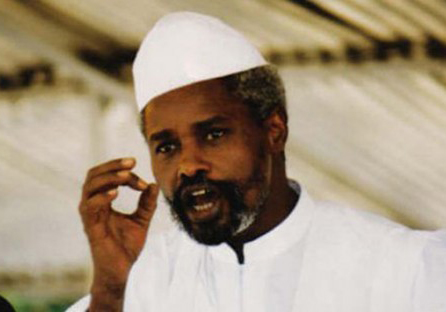
The ICJ commends the victims of the former Chadian president Hissene Habre for their relentless pursuit of justice that resulted in Habre’s conviction of crimes against humanity.
Today Hissene Habre (photo) was convicted for the murders, summary executions and torture of over 40,000 people, which were committed during his rule from 1982-1990 until he was deposed by the current president Idriss Deby Itno.
For over two decades victims and survivors groups have been campaigning with human rights organizations for an end to the lack of accountability and impunity that enabled Habre to spend years in exile before prosecution.
Speaking after the handing down of the judgement by the Extraordinary African Chambers, Wilder Tayler, ICJ’s Secretary General, reminded the African Union of the “need to enhance effectiveness of the African Court on Human and Peoples’ Rights to ensure that crimes against humanity can be addressed in a timely way that ensures the provision of remedies to victims of human rights violations.”
Further, Tayler urged other countries that have housed war criminals to reconsider their attitude towards international human rights and criminal law, and to ensure that international jurisdiction and prosecution requirements to end impunity are met.
In conclusion, the Secretary General, expressed his hope that “this event mark the beginning of the end of the African continent being perceived as an epicentre of impunity.”
Contact
Arnold Tsunga, ICJ Regional Director for Africa, t: +27 73 131 8411, e: arnold.tsunga(a)icj.org
May 30, 2016 | News
The ongoing criminal trial in the Loei Provincial Court, where a verdict is awaited tomorrow, is an important test of Thailand’s commitment to hold those responsible for criminal offences against human rights defenders to account, the ICJ and Protection International said today.
On 31 May, the Loei Provincial Court will render its verdict following the trial of retired Royal Thai Army officer, Lt Gen Poramet Pomnak, and his son, Royal Thai Army officer, Lt Col Poramin Pomnak, on criminal charges related to their alleged participation in a violent attack by a group of over 100 armed men against members of the Khon Rak Ban Kerd Group (KRBKG) in Nanonbong village in Loei and other villagers.
The victims were assaulted and held captive for over seven hours during the attack in the evening of 15 May 2014.
More than 20 people were injured, with seven requiring hospitalization for serious injuries.
KRBKG is a community-based group protesting what they allege is the damaging impact of mining operations on their health and their environment.
Most of KRBKG’s activities have focused on stopping the operations of the Phuthapfa gold mine operated by Thai company, Tungkum Ltd., situated in Loei Province.
“This case has become emblematic of the human rights abuses faced by human rights defenders trying to protect their communities in Thailand,” said Sam Zarifi, ICJ’s Asia Director. “Many people are looking at this case to see whether the Thai government will follow through on its commitment to protect human rights defenders.”
The attack on Nanonbong village occurred after KRBKG and local residents barricaded the road to the gold mine, which passes through the village.
During the attack, the barricade was destroyed and at least 13 trucks were reportedly seen transporting materials from the mine site.
Partly based on the villagers’ testimony that Lt Col Poramet Pomnak and Lt Col Poramin Pomnak were involved in the 15 May violence, the two were indicted on several charges, including offences of ‘injury to the person causing bodily harm’ and ‘false imprisonment’ (or illegal deprivation of liberty), under articles 295 and 309 of the Thai Criminal Code.
“Given credible reports that a group of over 100 armed men were involved, the ICJ is concerned that only two people have been indicted for the attack, and we are therefore calling on the Thai authorities to re-open investigations and ensure all those responsible are held to account and redress is provided for the victims concerned,” Zarifi added.
The case against Lt Col Poramet Pomnak and Lt Col Poramin Pomnak comes against a background of disputes between KRBKG and Tungkum Ltd.
The company filed at least 19 criminal and civil lawsuits against 33 members of KRBKG and other villagers in the past seven years.
One of those cases includes claims of criminal defamation against a 15-year old girl who allegedly made negative statements about the company’s activities on a television program.
Members of KRBKG have joined as plaintiffs in the criminal case and are demanding compensation from the two defendants.
Background
Lt Col Poramet Pomnak and Lt Col Poramin Pomnak were formally indicted on the following charges of the Thai Penal Code: articles 295 (‘injury to the person causing bodily harm’) and 296 (sentencing for bodily harm), 309 (‘false imprisonment’ or ‘illegal confinement’) and 310 (sentencing for false imprisonment), 358 (‘offence of mischief’ or ‘damage to property’) 371 (‘offence of bearing arms’), 376 (‘offence of discharging a firearm’), 391 (sentencing for acts of violence not amounting to bodily harm) taken together with articles 32, 33, (‘forfeiture of property used in the commission of an offence’) 83, 84, (principals and accomplices, accessories or conspirators) 91, (articles 90 and 91 set out provisions for sentencing when an act constitutes multiple offences. Sentences can be awarded for each offence consecutively, but with a maximum time as prescribed by article 91); and articles 4, 7, 8bis, 72, 72bis of the Firearms, Ammunition, Explosives, Fireworks, and the Equivalent of Firearms Act B.E.2490 (1947); article 3 of the Firearms, Ammunition, Explosives, Fireworks, and the Equivalent of Firearms Act (No.3) B.E.2501 (1958); No. 3, 6, 7 of the Order of the Announcement of the National Administrative Reform Council no.44 dated 21 October 1976.
Thailand has a legal obligation to protect all human rights defenders from retaliation for the legitimate and lawful exercise of their rights. On 17 December 2015, Thailand joined 126 other States at the UN General Assembly in adopting one of the latest UN resolutions on human rights defenders. General Assembly resolution 70/161 recognizes the importance of States’ protection of human rights defenders, in particular from being prosecuted for peaceful activities and against other threats, harassment and intimidation; and encourages States to investigate allegations of intimidation and reprisals, and to bring perpetrators to justice.
Thailand-Loei case-News-2016-THA (full text in Thai, PDF)
May 13, 2016 | News
Nepal’s leading political parties should not bargain away justice for victims of serious human rights abuses as part of an agreement to form a new coalition government, the ICJ, Human Rights Watch, and Amnesty International said today.
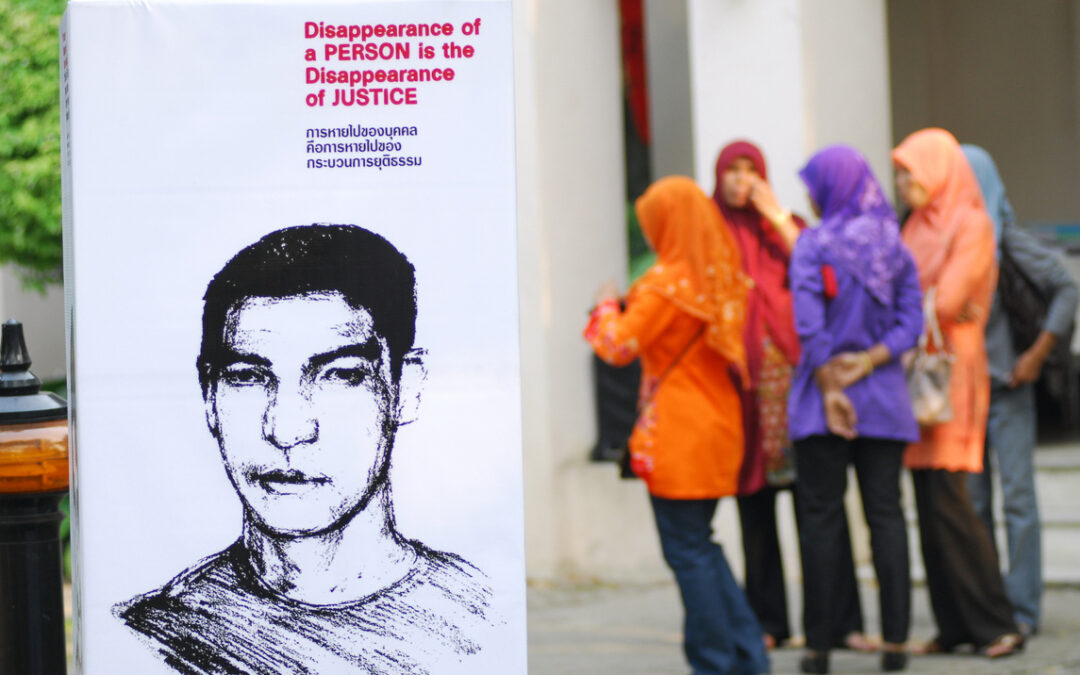
A new agreement between the ruling parties threatens to entrench impunity for those who planned and carried out killings, enforced disappearances, torture, and other crimes in Nepal’s civil war, just as the country’s long delayed transitional justice process is finally about to get under way.
On May 5, 2016, presumably in a bid to retain the support of the United Communist Party of Nepal (Maoist) (UCPN-M) for the Communist Party of Nepal-Unified Marxist Leninist (CPN-UML) coalition government of Prime Minister K.P. Sharma Oli, the two ruling coalition partners agreed to a nine-point deal containing provisions that aim to shield perpetrators of abuses in Nepal’s decade-long civil war.
Provision 7, which directs the authorities to withdraw all wartime cases before the courts and to provide amnesty to alleged perpetrators, is particularly problematic.
“This political deal between the ruling parties is extremely damaging to the credibility of an already deeply politicized and flawed transitional justice process in the eyes of Nepal’s victims,” said Sam Zarifi, ICJ Asia-Pacific Director.
“Moreover, it flies in the face of Nepal’s international human rights obligations and the rulings of its own Supreme Court by trying to wash away the crimes of the conflict by attempting to coopt pending criminal cases and provide blanket amnesty to alleged perpetrators,” he added.
The Supreme Court of Nepal has in several instances reaffirmed the principle under international law that amnesties are impermissible for serious international crimes.
However, Nepal authorities have consistently ignored the orders from the country’s highest court.
Nepal has an obligation under international law to investigate and, where sufficient evidence exists, prosecute crimes under international law, including torture and other ill-treatment, enforced disappearance, extrajudicial executions, war crimes, and crimes against humanity.
Article 2 of the International Covenant on Civil and Political Rights (ICCPR) and Article 14 of the Convention against Torture and Other Cruel, Inhuman and Degrading Treatment or Punishment (CAT) – both treaties to which Nepal is a party – require states to ensure the right to an effective remedy and reparation for victims of human rights violations.
“The political deal by the ruling parties to grant amnesty to those responsible for conflict-era human rights abuses is a callous attempt to disregard Nepal’s international treaty obligations by violating victims’ right to an effective remedy,” said Brad Adams, Asia Director at Human Rights Watch. “Nepal’s political deal jeopardizes the war victims’ last best hope for justice and accountability.”
The applicability of this international obligation under Nepali law was reaffirmed by the Nepal Supreme Court in its 2015 decision in the Suman Adhikari case, striking down provisions of the Investigation of Disappeared Persons, Truth and Reconciliation Commission Act, 2014 (TRC Act) that it ruled were inconsistent with international law and ordering the government to amend the TRC Act, the May 2014 legislation creating the two transitional justice mechanisms, the Commission on Investigation of Disappeared Persons (COID) and the Truth and Reconciliation Commission (TRC).
The Supreme Court ruled in the same decision that criminal cases already before the judiciary could not be transferred to the two commissions, confirming that the judiciary and not the commissions had the authority to determine the criminality of conflict-era human rights violations.
“Nepal’s ruling parties cannot bargain away victims’ rights to truth, justice, and reparation by using the commissions as a substitute for their legal obligations to investigate and prosecute human rights abuses through the criminal justice system,” said Champa Patel, South Asia Regional Office Director at Amnesty International.
The ICJ, Human Rights Watch, and Amnesty International, along with Nepali civil society, victims’ groups, the United Nations, and the international diplomatic community, have consistently called for the Nepal government to amend the TRC Act in line with Nepal’s international obligations as well as the Supreme Court’s jurisprudence, in order to ensure a credible transitional justice process that safeguards victims’ rights and conforms to rule of law principles.
In a flagrant display of deliberate disregard for the rule of law, however, the ruling parties’ deal to amend the TRC Act by attempting to reinforce the same amnesty provision that has been repeatedly struck down by the Supreme Court ignores both the country’s international legal obligations and the binding judgments of its own apex court, and further threatens the prospects for post-war justice and accountability in Nepal.
The ICJ, Human Rights Watch, and Amnesty International therefore call upon the Nepal government to take immediate and effective steps to safeguard victims’ rights to truth, justice, and reparation through a credible transitional justice process that is free of any political interference or any forms of pressure or intimidation.
Contact
Sam Zarifi, ICJ Asia-Pacific Director, t: +66-807-819-002; e: sam.zarifi(a)icj.org
Nikhil Narayan, ICJ Senior Legal Adviser, t: +977-981-318-7821 (mobile); e: nikhil.narayan(a)icj.org

Apr 7, 2016 | News
The Malaysian government should reject a proposal to make the Attorney General automatically the chair of the Bar Council of Malaysia, the ICJ said today.
The Malaysian Bar must remain independent and the government should not entertain this or any other measure that would compromise this independence, the ICJ says.
Yesterday, during the debate session at the Dewan Rakyat (Lower House of the Malaysian Parliament), parliamentarian Datuk Datu Nasrun Datu Mansur suggested that the Attorney General should be automatically appointed as the chairman of the Bar Council of Malaysia.
Datuk Datu Nasrun Datu Mansur made the suggestion while criticizing the Bar Council for its role in demanding greater government accountability.
“This latest proposal is just the most recent attempt by the government to silence all opposition and to weaken the rule of law,” said Emerlynne Gil, ICJ’s Senior Legal Adviser for Southeast Asia.
“First the government weakened the independence of the judiciary, and now it is going after the lawyers who are standing up for justice and accountability,” she added.
Responding to the suggestion, Law Minister Nancy Shukri said that the government will look into this, noting that amendments need to be made to the Legal Profession Act 1976 for this measure to be adopted.
“International standards on the independence of lawyers state very clearly that governments should not interfere with the work of professional associations of lawyers like the Malaysia Bar,” said Gil.
The United Nations Basic Principles on the Role of Lawyers stipulate that lawyers have the right “to form and join self-governing professional associations to represent their interests, promote their continuing education and training, and protect their professional integrity,” the ICJ reminds.
Furthermore, the Basic Principles distinctly state that “the executive body of the professional associations shall be elected by its members and shall exercise its functions without external interference.”
“An independent and self-regulated bar association is important to safeguard the professional interests and integrity of lawyers in Malaysia,” Gil said.
“It acquires specific importance especially now in Malaysia where there have been questions regarding the way justice is being administered in the country,” she added.
The Malaysia Bar is an essential agent in the administration of justice and hence, the lawyers belonging to it play a key role in supporting and calling for law and justice sector reform in the country, the ICJ further says.
Contact:
Emerlynne Gil, Senior International Legal Adviser for Southeast Asia, t: +66 840923575 ; e: emerlynne.gil(a)icj.org
Background:
The Malaysia Bar passed a motion last month during its 70th Annual General Assembly calling for the resignation of Attorney-General Tan Sri Mohamed Apandi Ali because he summarily ended the investigation of alleged corruption by Prime Minister Najib Razak.
The Prime Minister appointed Attorney-General Apandi on 27 July 2015, in the midst of the corruption investigation.
Attorney General Apandi subsequently cleared Prime Minister Najib Razak of any criminal wrongdoing and instructed the Malaysian Anti-Corruption Commission to close the investigations.
According to the ICJ, the motion passed by the Malaysia Bar calling for the resignation of the Attorney General was within its mandate as an independent professional association of lawyers, seeking as it did to draw attention to how administration of justice is being jeopardized right now.
The UN Basic Principles specifically recognize the right of lawyers to take part in public discussion of matters concerning the law, the administration of justice and the promotion and protection of human rights.
The UN Human Rights Council has unanimously affirmed that “an independent legal profession” is among the “essential prerequisites for the protection of human rights, the rule of law, good governance and democracy, and for ensuring that there is no discrimination in the administration of justice”. Such independence should be respected in all circumstances.