May 21, 2015 | News
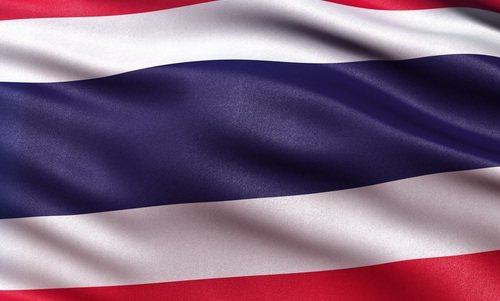
On the one-year anniversary of the military coup of 22 May 2014, the ICJ urges Thailand to restore democracy and the rule of law, revoke the repressive laws passed since the coup, and ensure that any revised Constitution meets international human rights and rule of law standards.
May 15, 2015 | News
Concluding a five-day mission today, an International Fact-Finding team of the ICJ observed that there are serious structural deficiencies in Swaziland’s justice system that need to be addressed systematically and in a structured way to ensure the country meet core rule of law principles.
The mission was conducted in collaboration with the Africa Judges and Jurists Forum, Judges for Judges (the Netherlands) and the Commonwealth Magistrates’ and Judges’ Association, with the aim to assess the state of independence of the judiciary and administration of justice in the country.
“Current developments are merely the symptoms of a systemic crisis,” said Mission leader retired Judge Chinhengo of Zimbabwe.
“There is a need for officials from all branches of government to adhere to the rule of law. The effect of denied justice and in Swaziland has made many victims. Its effect on the community has been devastating, as it has served to undermine respect for human rights and trust in the judiciary to act as a check on the other branches of the State,” he added.
The decision to convene the International Fact-Finding Mission coincided with highly troubling recent events, including the arrest of Judges Simelane and Annandale, Registrar Nhlabatsi and former Minister of Justice Shongwe, and the continuing stand-off between suspended Chief Justice Ramodibedi and governmental authorities.
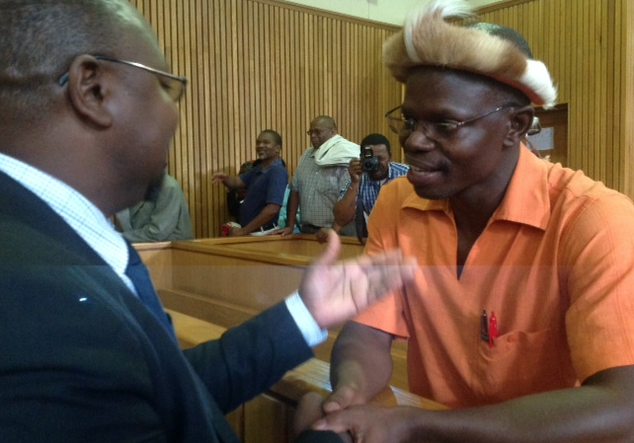
The Mission was also deeply concerned by the emblematic cases of the unfair dismissal of Judge Thomas Masuku in 2011 as well as the unfair trial and subsequent arbitrary detention of journalist Bheki Makhubu and lawyer Thulani Maseko (photo, on the right) in 2014.
The mission noted these developments were the culmination of a longstanding and deep-rooted systemic challenge that has to be adressed.
During its visit, from 11 to 15 May, the Mission met with key stakeholders in the administration of justice in Swaziland, including the Prime Minister and the acting Attorney General, the acting Chief Justice, the suspended Chief Justice and other members of the judiciary, and representatives of the Law Society and leading civil society actors.
The International Fact-Finding Mission will release a report with its observations and recommendations to the Swaziland authorities and the international community, providing concrete advice on strengthening the rule of law in the Kingdom.
Contact:
Arnold Tsunga, Director, ICJ Africa Regional Programme, t: +27 11 024 8268 or +27 73 131 8411: e: arnold.tsunga(a)icj.org,
Mar 31, 2015 | News
Thailand must lift martial law and return the country to civilian rule, instead of invoking arbitrary powers under Article 44 of the country’s interim constitution, said the ICJ today.
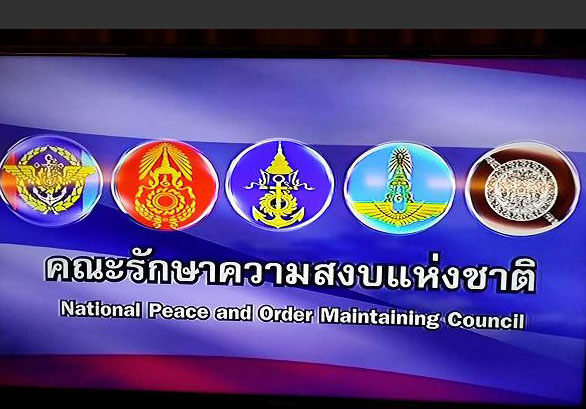
Today, Prime Minister and head of the ruling National Council for Peace and Order (NCPO), General Prayut Chan-o-cha, announced that he had submitted a revocation of the Martial Law, imposed nationwide on 20 May 2014, to King Bhumibol Adulyadej.
Gen. Prayut stated that in place of Martial Law, he would invoke Article 44 of the Interim Constitution, which effectively gives him the authority to rule without any legal restrictions or accountability.
“Ending Martial Law is a necessary step, but replacing it with Article 44 does not address the serious violations of Thailand’s obligations under international human rights law. Article 44 of the Interim Constitution is drafted so broadly that it could give the head of the junta even greater powers than Martial law,” said Wilder Tayler, Secretary General of the ICJ. “Article 44 would allow the head of the NCPO to issue any orders he wishes under the pretext of strengthening public unity and national security, and also deems any such order to be legal and constitutional, removing any possibility of judicial oversight.”
Article 44 of the interim Constitution gives the NCPO power to give any order deemed necessary for “…the benefit of reform in any field and to strengthen public unity and harmony, or for the prevention, disruption or suppression of any act which undermines public peace and order or national security, the Monarchy, national economics or administration of State affairs …,” and provides that any such order “…is deemed to be legal, constitutional and conclusive…”
“Article 44 violates the fundamental pillars of the rule of law and human rights, including equality, accountability, and predictability. Article 44 could potentially allow for arbitrary rule by the head of the NCPO, so using it would not be a real improvement over the Martial Law, which at least has been in existence since 1914, and has a degree of clarity to its scope and application,” said Tayler.
“The NCPO should revoke Martial Law and also explicitly commit itself to observing Thailand’s international obligations, which means avoiding any use of Article 44,” he added.
International law strictly regulates attempts by governments to suspend or restrict protection for human rights on grounds of emergency.
Such “derogations” are permissible under Article 4 of the International Covenant on Civil and Political Rights (ICCPR), to which Thailand is a State Party, only “in time of public emergency which threatens the life of the nation”.
“The situation in Thailand does not meet the extremely high threshold required for derogating from international human rights law,” said Tayler. “Thai authorities have repeatedly promised a rapid return to the rule of law and respect for human rights in the country, but replacing Martial Law with rule by Article 44 doesn’t suggest an improvement for the rule of law or respect for human rights.”
Thailand-Martial Law-Article 44-News-Press release-2015-THA (Thai version, full text in PDF)
Mar 20, 2015 | Advocacy
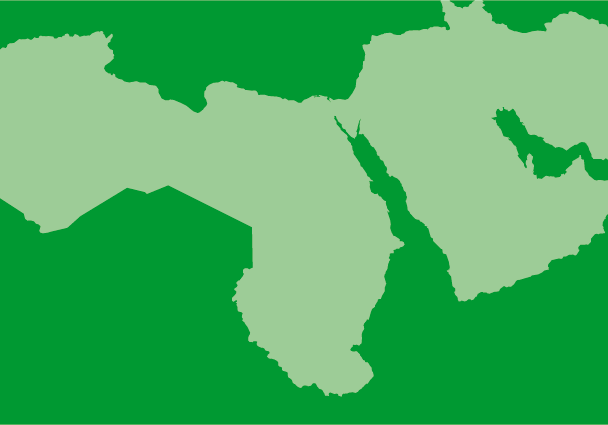
The ICJ today joined a call with Libyan, regional and other international NGOs for the Human Rights Council to create an independent inquiry mechanism into serious human rights and humanitarian law violations in Libya.
The escalating armed conflict and significantly deteriorating human rights situation in Libya requires a strong and urgent response from the Human Rights Council.
The statement calls for the creation of an independent inquiry mechanism with the mandate to investigate and ensure accountability for gross human rights and humanitarian law violations occurring throughout the country including attacks on civilians, the widespread use of torture, arbitrary detention, enforced disappearances and unlawful killings.
The statement outlines the ongoing impunity for those responsible for violations, the inability of the Libyan criminal justice system to deal with such crimes and it calls on the Human Rights Council to encourage Libya’s cooperation with the ICC.
Libya-HRC joint Statement-Advocacy-2015-ENG (full text in PDF)
Libya-HRC joint Statement-Advocacy-2015-ARA (full text in PDF)
Mar 4, 2015 | Events
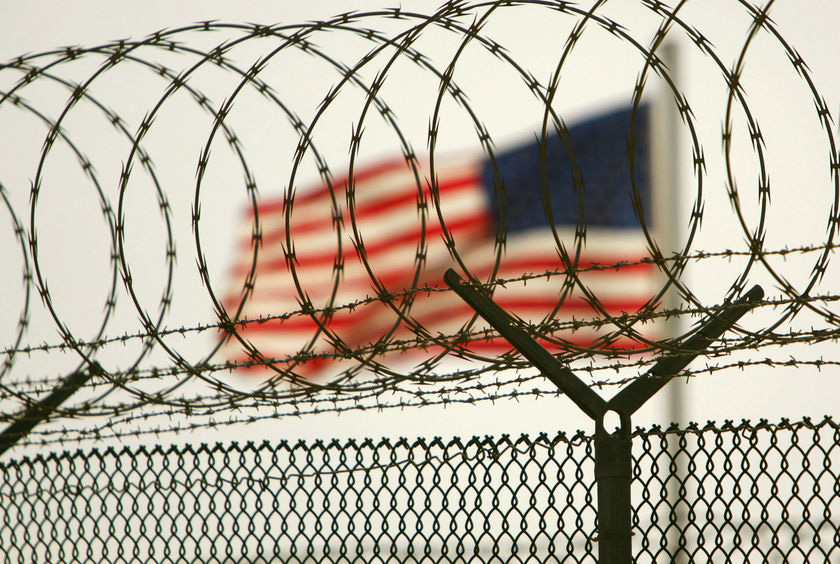
A panel discussion on Guantánamo and accountability for torture, featuring UN Special Rapporteur on Torture Juan E. Méndez and other experts, will take place in Geneva on 9 March 2015 in connection with the UN Human Rights Council session.The panel features:
- Juan E. Méndez, UN Special Rapporteur on Torture
- Jamil Dakwar, Director, Human Rights Program, American Civil Liberties Union
- Peter Jan Honigsbert, U of San Francisco Law School, Founder & Director of Witness to Guantánamo
- Julia Hall, Expert on Counter-Terrorism and Human Rights, Amnesty International
moderator: Connie de la Vega, University of San Francisco Law School & Human Rights Advocates.
The ICJ joins the ACLU, Amnesty International, Human Rights Advocates, Conectas, Human Rights Watch, CELS, and OMCT in supporting this event.
The event takes place 9 march 2015, at 15:00-17:00, Room XXIII, Palais des Nations, in Geneva.
The event flyer may be downloaded in PDF format here: SideEventTorture