Mar 31, 2015 | News
Thailand must lift martial law and return the country to civilian rule, instead of invoking arbitrary powers under Article 44 of the country’s interim constitution, said the ICJ today.
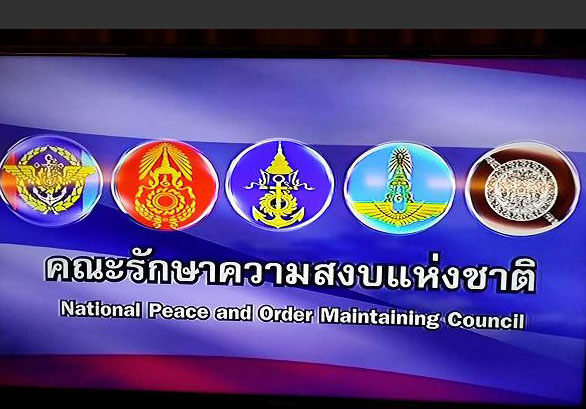
Today, Prime Minister and head of the ruling National Council for Peace and Order (NCPO), General Prayut Chan-o-cha, announced that he had submitted a revocation of the Martial Law, imposed nationwide on 20 May 2014, to King Bhumibol Adulyadej.
Gen. Prayut stated that in place of Martial Law, he would invoke Article 44 of the Interim Constitution, which effectively gives him the authority to rule without any legal restrictions or accountability.
“Ending Martial Law is a necessary step, but replacing it with Article 44 does not address the serious violations of Thailand’s obligations under international human rights law. Article 44 of the Interim Constitution is drafted so broadly that it could give the head of the junta even greater powers than Martial law,” said Wilder Tayler, Secretary General of the ICJ. “Article 44 would allow the head of the NCPO to issue any orders he wishes under the pretext of strengthening public unity and national security, and also deems any such order to be legal and constitutional, removing any possibility of judicial oversight.”
Article 44 of the interim Constitution gives the NCPO power to give any order deemed necessary for “…the benefit of reform in any field and to strengthen public unity and harmony, or for the prevention, disruption or suppression of any act which undermines public peace and order or national security, the Monarchy, national economics or administration of State affairs …,” and provides that any such order “…is deemed to be legal, constitutional and conclusive…”
“Article 44 violates the fundamental pillars of the rule of law and human rights, including equality, accountability, and predictability. Article 44 could potentially allow for arbitrary rule by the head of the NCPO, so using it would not be a real improvement over the Martial Law, which at least has been in existence since 1914, and has a degree of clarity to its scope and application,” said Tayler.
“The NCPO should revoke Martial Law and also explicitly commit itself to observing Thailand’s international obligations, which means avoiding any use of Article 44,” he added.
International law strictly regulates attempts by governments to suspend or restrict protection for human rights on grounds of emergency.
Such “derogations” are permissible under Article 4 of the International Covenant on Civil and Political Rights (ICCPR), to which Thailand is a State Party, only “in time of public emergency which threatens the life of the nation”.
“The situation in Thailand does not meet the extremely high threshold required for derogating from international human rights law,” said Tayler. “Thai authorities have repeatedly promised a rapid return to the rule of law and respect for human rights in the country, but replacing Martial Law with rule by Article 44 doesn’t suggest an improvement for the rule of law or respect for human rights.”
Thailand-Martial Law-Article 44-News-Press release-2015-THA (Thai version, full text in PDF)
Mar 20, 2015 | Advocacy
The ICJ today joined a call with Libyan, regional and other international NGOs for the Human Rights Council to create an independent inquiry mechanism into serious human rights and humanitarian law violations in Libya.
The escalating armed conflict and significantly deteriorating human rights situation in Libya requires a strong and urgent response from the Human Rights Council.
The statement calls for the creation of an independent inquiry mechanism with the mandate to investigate and ensure accountability for gross human rights and humanitarian law violations occurring throughout the country including attacks on civilians, the widespread use of torture, arbitrary detention, enforced disappearances and unlawful killings.
The statement outlines the ongoing impunity for those responsible for violations, the inability of the Libyan criminal justice system to deal with such crimes and it calls on the Human Rights Council to encourage Libya’s cooperation with the ICC.
Libya-HRC joint Statement-Advocacy-2015-ENG (full text in PDF)
Libya-HRC joint Statement-Advocacy-2015-ARA (full text in PDF)
Mar 4, 2015 | Events
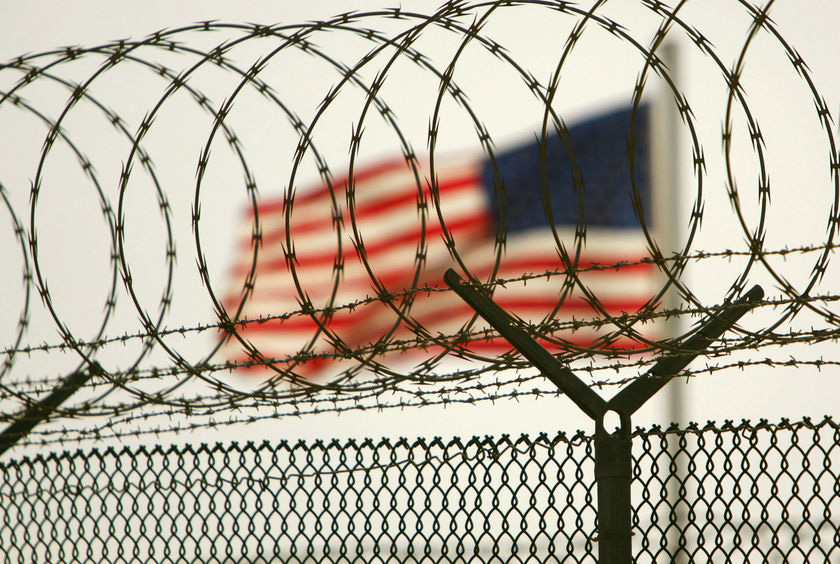
A panel discussion on Guantánamo and accountability for torture, featuring UN Special Rapporteur on Torture Juan E. Méndez and other experts, will take place in Geneva on 9 March 2015 in connection with the UN Human Rights Council session.The panel features:
- Juan E. Méndez, UN Special Rapporteur on Torture
- Jamil Dakwar, Director, Human Rights Program, American Civil Liberties Union
- Peter Jan Honigsbert, U of San Francisco Law School, Founder & Director of Witness to Guantánamo
- Julia Hall, Expert on Counter-Terrorism and Human Rights, Amnesty International
moderator: Connie de la Vega, University of San Francisco Law School & Human Rights Advocates.
The ICJ joins the ACLU, Amnesty International, Human Rights Advocates, Conectas, Human Rights Watch, CELS, and OMCT in supporting this event.
The event takes place 9 march 2015, at 15:00-17:00, Room XXIII, Palais des Nations, in Geneva.
The event flyer may be downloaded in PDF format here: SideEventTorture
Feb 27, 2015 | News
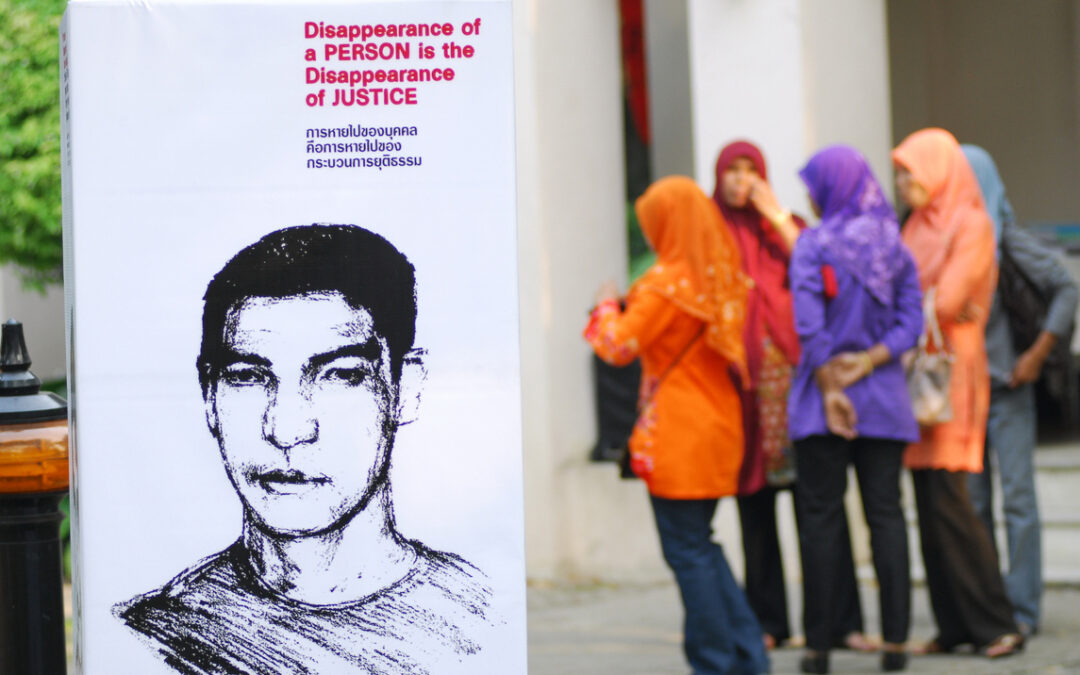
The Nepali government must fully implement yesterday’s decision of the Supreme Court rejecting the possibility of amnesties for perpetrators of serious human rights abuses during the country’s civil war, said today the ICJ.
The decision, by a three-person special constitutional bench, composed of Justice Kalyan Shrestha, Justice Baidhya Nath Upadhyay and Justice Cholendra Shumsher JB Rana, struck down the amnesty provision of the Commission on Investigation of Disappeared Persons, Truth and Reconciliation Act 2014 (TRC Act) promulgated last May 2014.
The Court also ruled that only the judiciary, and not the Commissions established by the TRC Act, can determine the criminality of any violations committed in the context of the country’s decade-long conflict.
“Nepal’s Supreme Court has once again firmly reasserted the right of the victims of human rights violations to seek justice,” said Sam Zarifi, ICJ’s Asia Director. “This bold and principled decision should finally end the cynical attempts by politicians from all Nepal’s major parties, as well as the military, to legislate impunity and shield themselves from accountability.”
The decision distinguished between the jurisdiction of the courts and the criminal justice system, and the non-judicial reconciliation and truth-seeking mechanisms established by the TRC Act.
In the months before the decision, the government had essentially frozen the prosecution of claims already before various courts, and had blocked the filing of First Information Reports (FIRs) by victims trying to lodge new complaints.
“Now, the government must not only remove obstacles to these cases, it must commit itself to prosecuting such claims,” Zarifi added. “The Government must immediately take all necessary steps to implement the court ruling including to ensure criminal investigation of FIRs, and address the concerns raised by the victims on the formation of the Truth and Reconciliation Commission and Commission of Inquiry on Enforced Disappearance.”
This is the second time that the Nepali Supreme Court has rejected the amnesty scheme introduced by the Nepali government.
On 2 January 2014, the Supreme Court had declared unconstitutional the Ordinance on the Truth and Reconciliation Commission (TRC Ordinance).
However, the Government effectively ignored the Court order and introduced a slightly modified version of the 2013 Ordinance replicating almost all of the provisions of the TRC Ordinance, including many of its problematic aspects, such as the ‘amnesty’ provision.
“The Government, with the help of the international community, must now dedicate itself to meeting the promise of the political parties to provide justice, truth and reparations to the victims and survivors of the conflict,” said Zarifi. “Only doing so will help end the country’s cycle of impunity.”
Contact:
Sam Zarifi, ICJ Asia Pacific Regional Director (Bangkok), t: +66 807819002; email: sam.zarifi(a)icj.org
Feb 5, 2015 | News
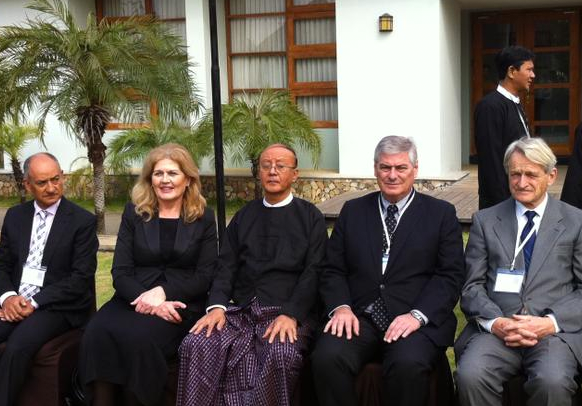
Myanmar must follow through on promising efforts to improve the independence and accountability of its legal system, and particularly its judiciary, said the ICJ today at the launch of one of its landmark book in Yangon.
The ICJ launched today the Myanmar language version of its Practitioners’ Guide to the Independence and Accountability of Judges, Lawyers and Prosecutors.
“The judiciary in Myanmar has taken important steps towards asserting its independence from the other branches of government, but we heard repeatedly from the judiciary that they still face significant obstacles in this regard,” said Wilder Tayler, ICJ’s Secretary-General.
The book launch wrapped a series of discussions regarding judicial ethics and the rule of law with the Supreme Court of the Union of Myanmar, as well as with the parliamentary Committee on Rule of Law and Tranquility.
The ICJ’s Practitioners’ Guide n°1 is the first of its kind to be published in the Myanmar language providing detailed references to international and comparative standards on the independence and accountability of judges and lawyers.
“The Supreme Court emphasized its belief that an independent judiciary plays a key role in ensuring access to justice and the protection of human rights, but with independence must come accountability,” Tayler added. “The Myanmar judiciary must be accountable not just in deciding cases according to the law and facts, but also as a separate and equal branch of the government, and ultimately, to the people of Myanmar.”
In the course of its discussions at an earlier workshop in Naypyidaw, the ICJ was repeatedly told that the judiciary is trying to address challenges to its institutional independence, as well as the independence of individual judges.
Corruption, which remains a serious problem throughout all social sectors, including the judiciary, interferes with the judiciary’s ability to provide a remedy for human rights violations and bringing perpetrators to justice.
Undue influence by powerful political and economic actors continues to hamper the push for greater trust and credibility for the judiciary among the general public.
“As we heard at the workshop, at all levels of the system, from the Supreme Court to the Townships, a lack of resources, poor working conditions and low remunerations contribute to an environment where the temptations of corruption, or outside pressure, undermine judicial independence and impartiality,” said Tayler.
“We also heard strong support from all levels of the judiciary for establishing a judicial code of conduct that incorporates international standards and best practices in response to the demands of the people of Myanmar for more rule of law. Producing such a code, and implementing it, would go a long way toward increasing the judiciary’s independence and accountability,” he added.
Wilder Tayler was joined by a senior panel of international legal experts on judicial integrity, including three ICJ Commissioners: Justice Azhar Cachalia of the Supreme Court of Appeals of South Africa, Justice Radmila Dicic of the Supreme Court of Serbia, and retired Justice Ketil Lund of the Supreme Court of Norway.