Dec 19, 2014 | News
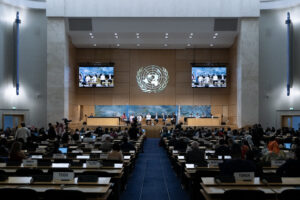
The Nepal government should ensure more victim participation and improve transparency when selecting candidates for two independent commissions on the country’s decade-long conflict, the ICJ and other groups said today.
The ICJ, Amnesty International, Human Rights Watch and five local human rights and conflict-era victims groups sent an open letter to Prime Minister Sushil Koirala.
The groups, reiterating concerns about the act, said Koirala should narrow the scope of the amnesty powers vested in the commissions and bring them in line with international standards.
The Truth and Reconciliation Commission and the Commission on Enforced Disappearances are being established under a 2014 law, the Commission on Investigation of Disappeared Persons, Truth and Reconciliation Act, 2071 (TRC Act).
“A consultative and transparent process for selecting commissioners is critical if the commissions are going to win the trust of conflict-era survivors as well as local and international observers,” the rights groups said in their letter. “The TRC Act is fundamentally flawed, and the government should take these steps to ensure that this important exercise in transitional justice remedies the flaws.”
Contact:
Sam Zarifi, ICJ Asia Pacific Regional Director (Bangkok), t: +66 807819002; email: sam.zarifi(a)icj.org
Nepal-TRCCommission-Advocay-Open Letter-2014-ENG (full text in PDF)
Dec 10, 2014 | News
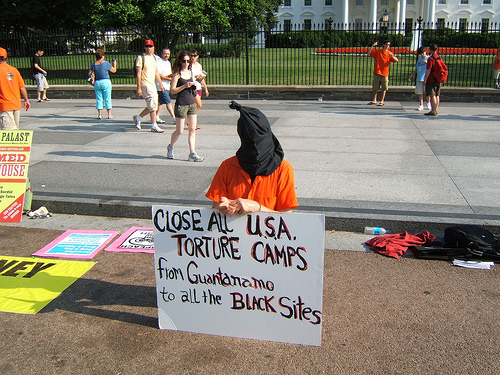
The ICJ repeated its call for the United States to take immediate measures to hold accountable officials for acts of torture, enforced disappearance and other gross human rights violations committed in the course the CIA’s rendition and secret detention programs between 2001 and 2006.
The call follows the release yesterday of a redacted summary of the United States Senate Intelligence Committee’s report on the programs, which highlights appalling abuses committed against at least 119 persons.
The ICJ has also called for the United States to provide access to effective remedies and reparation for the victims of the violations, some of whose identities or whereabouts remain unknown.
The report exposed numerous acts of torture and cruel, inhuman or degrading treatment, including, among others: forced rectal feeding; extreme sleep deprivation for up to a week; sensory disorientation; near drowning through “waterboarding”; confinement in boxes; dousing with cold water; prolonged subjection to painful stress positions; and threats of extreme violence against family members. Some detainees were held in secret detention for years, without any contact with the outside world.
“With the partial release of the Intelligence Committee’s report, the US has finally begun to take the first steps towards acknowledging the truth of the lawless and criminal conduct in which it engaged systematically over the course of years”, said Ian Seiderman, the ICJ’s Legal and Policy Director. “It is now time for the United States to fulfill its international legal obligations and hold the responsible officials criminally accountable and ensure full reparation for the victims.”
To date, no officials have been subject to prosecution for participation in the abuses and all attempts by victims to access justice through judicial and administrative channels have been thwarted by claims of state secrecy.
The report draws attention to the complicity of a number of other States in the rendition and secret detention programs, possibly up to 54 countries according to a study by the Open Society Foundation.
The European Court of Human Rights has already found the former Yugoslav Republic of Macedonia and Poland responsible for violations in this connection, with further cases pending against Lithuania and Romania.
The ICJ also called for the United States to release the entire Senate Committee report, said to number 6700 pages, with only those very minimal redactions of personal data strictly necessary to protect serious threats, such as to children and the privacy interests of victims and their families if they so request.
“Responsibility for these criminal abuses extends not only to the CIA agents who directly carried them out, but also to officials at the highest levels of the executive, who approved and facilitated the practices, and Justice Department lawyers who provided spurious legal cover for them,” said Ian Seiderman.
Torture and enforced disappearance are crimes under international law.
United States treaty obligations, including under the UN Convention against Torture and the International Covenant on Civil and Political Rights require the prosecution of officials responsible for such acts and provision of effective remedies and reparation the victims.
Nov 15, 2014 | News
La Comisión Internacional de Juristas, a través de su representante para Suramérica, Federico Andreu-Guzmán, intervino como perito en el procedimiento interamericano, a solicitud de los representantes de las víctimas.
Sep 26, 2014 | News
The government of Nepal has failed for over a decade to deliver justice for the killing of Krishna Prasad Adhikari. In protest his father, Nanda Prasad Adhikari, died on September 22, 2014, after over 300 days on hunger strike, the ICJ and Human Rights Watch said today.
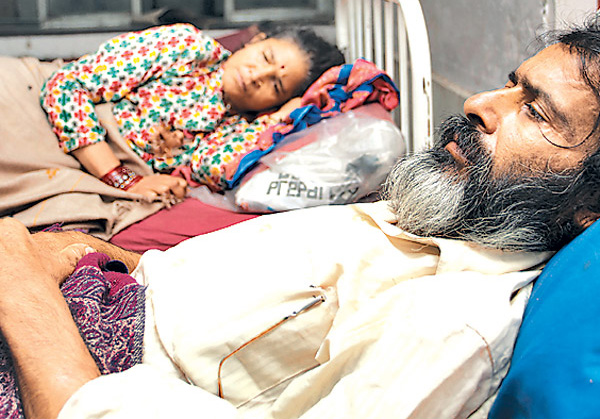
Nanda Prasad Adhikari and his wife, Ganga Maya Adhikari (photo), began their hunger strike on October 23, 2013, to protest the failure of successive Nepali governments to ensure a credible investigation of the killing in 2004 of their son, allegedly by members of the United Communist Party of Nepal–Maoists (UCPN-M).
The ICJ and Human Rights Watch call on the Nepali government to protect the human rights of Ganga Maya Adhikari, who is reported to be in critical but stable condition in Kathmandu’s Bir Hospital. She continues to refuse food even after her husband’s death.
“Nanda Prasad Adhikari made the ultimate sacrifice in the pursuit of justice for his son, but it should never have come to this sad moment,” said Sam Zarifi, ICJ’s Regional Director for Asia and the Pacific. “The Adhikari couple symbolize the thousands of people in Nepal who demand justice for the violations and abuses they suffered at the hands of the government’s armed forces as well as the Maoists.”
Despite several promises by the government, there has been little movement towards accountability for Krishna Adhikari’s death.
In September 2013, after initial protests by the Adhikari couple, Nepali authorities announced that they would follow the Supreme Court’s directive to investigate the killing.
One year later, in April 2014, the Chitwan District Attorney filed charges against 13 people allegedly involved in the killing of Krishna Prasad Adhikari.
But when two men were arrested and produced in court, UCPN-M leaders protested, with leader Babu Ram Bhattarai saying publicly that if Parsuram Poudel, one of the accused, could be arrested, the government should arrest Bhattarai as well.
After three days of protests and threats by the UCPN-M, the Chitwan District Court granted bail to the two suspects. The case is still pending in court.
Throughout this period, the Adhikaris continued their hunger strike, pointing out serious flaws and shortcomings in the investigation carried out by Nepali authorities.
“Nepali politicians should stop making empty promises and investigate all allegations of human rights abuses and violations during the conflict,” said Brad Adams, Asia director for Human Rights Watch. “Nanda Prasad Adhikari’s death highlights Nepal’s flawed attempts at reconciliation and redress for conflict-era crimes, and looks like a desire to sweep all wartime injustice under the rug.”
The Comprehensive Peace Accord (CPA) that ended the conflict in 2006 explicitly recognizes Nepal’s obligations under international human rights law without reservation.
The CPA is unequivocal about the need to investigate and prosecute human rights violations in line with Nepal’s laws.
A promised Truth and Reconciliation Commission remains stalled, and the draft legislation to promulgate it is deeply flawed.
The ICJ and Human Rights Watch call on Nepali authorities to continue investigations and prosecutions for Krishna Adhikari’s death, as well as hundreds of unresolved cases of enforced disappearances and extrajudicial executions.
Contact:
Sam Zarifi, ICJ’s Regional Director for Asia and the Pacific, t +66-807-819-002 (mobile); e: sam.zarifi(a)icj.org
Sep 12, 2014 | Advocacy, Non-legal submissions
The Colombian Commission of Jurists, an ICJ affiliate, delivered an oral statement during the Interactive Dialogue with the UN Special Rapporteur on Truth, Justice, Reparations and Guarantees of Non-recurrence, and the Working Group on Arbitrary Detention, at the Human Rights Council.