Oct 29, 2013 | News
The ICJ welcomes the report of the UN Special Rapporteur on the independence of judges and lawyers presented to the UN General Assembly today.
The report calls for the adoption by the Human Rights Council of the draft principles governing the administration of justice through military tribunals, known as the ‘Decaux Principles’.
“This is a major step forward towards the establishment of universally applicable minimum standards to regulate the use and operation of military courts and tribunals”, said Alex Conte, Director of the ICJ’s International Law and Protection Programmes.
“The investigation and prosecution of alleged offences involving serious human rights violations is in many countries undertaken by military courts for the purpose of avoiding the accountability of perpetrators of such acts. It is therefore significant that the UN Special Rapporteur has reaffirmed that the jurisdiction of ordinary courts should prevail in such cases,” he added.
“It is also important that the Special Rapporteur has reiterated the recommendation of many human rights experts that the trial of civilians in military courts should in principle not occur and should be limited to strictly exceptional cases,” Conte further said.
The ICJ closely followed and contributed to the development of the Decaux Principles and has repeatedly called for their adoption and implementation by all States.
These principles were elaborated in 2006 in consultation with human rights experts, jurists and military personnel from throughout the world, and include specific provisions relating to the establishment and functioning of military tribunals.
They are based on the principle that military justice should be an integral part of the normal judicial system and should operate in a way that guarantees full compliance with human rights, including the need to ensure accountability for perpetrators of human rights violations.
Contact:
Alex Conte, ICJ International Law and Protection Programmes Director (Geneva), t: +41 79 957 2733; email: alex.conte(a)icj.org
Oct 3, 2013 | News
Following Pakistan’s reinstation of its moratorium on the death penalty, the ICJ calls on the Government to make the moratorium permanent and to move to abolish the death penalty in national law.
“This is a step forward for human rights in Pakistan,” said Sam Zarifi, ICJ’s Asia-Pacific Director. “It brings Pakistan closer to the regional and worldwide trend towards abolishment of the death penalty.”
Pakistan has had a moratorium on the death penalty in place since June 2008, with only the exception of Muhammad Hussain’s execution in November 2012 following a court martial.
The newly elected Pakistan Muslim League (Nawaz) Government decided not to renew the moratorium when it expired in June 2013.
The ICJ and other human rights groups denounced the move and urged Pakistan to immediately adopt a moratorium on the death penalty, prompting the Government to reconsider its decision.
According to the Interior Ministry spokesperson, today’s decision was taken to meet Pakistan’s international human rights obligations.
Pakistani Taliban also warned the Government that they would launch retaliatory attacks if any of their members were executed.
“This brave move by the government should be the first step toward reestablishing the rule of law and providing accountability in Pakistan,” Zarifi added. “The Government should now ensure that members of armed groups like the Taliban who have carried out serious human rights abuses like extrajudicial executions and attacks on civilians are held to account.”
The ICJ considers the death penalty in all cases to constitute a violation of the right to life and the right not to be subjected to cruel, inhuman or degrading punishment.
Contact:
Sam Zarifi, ICJ Asia-Pacific Regional Director, (Bangkok), t:+66 807819002; email: sam.zarifi(a)icj.org
Sep 12, 2013 | News
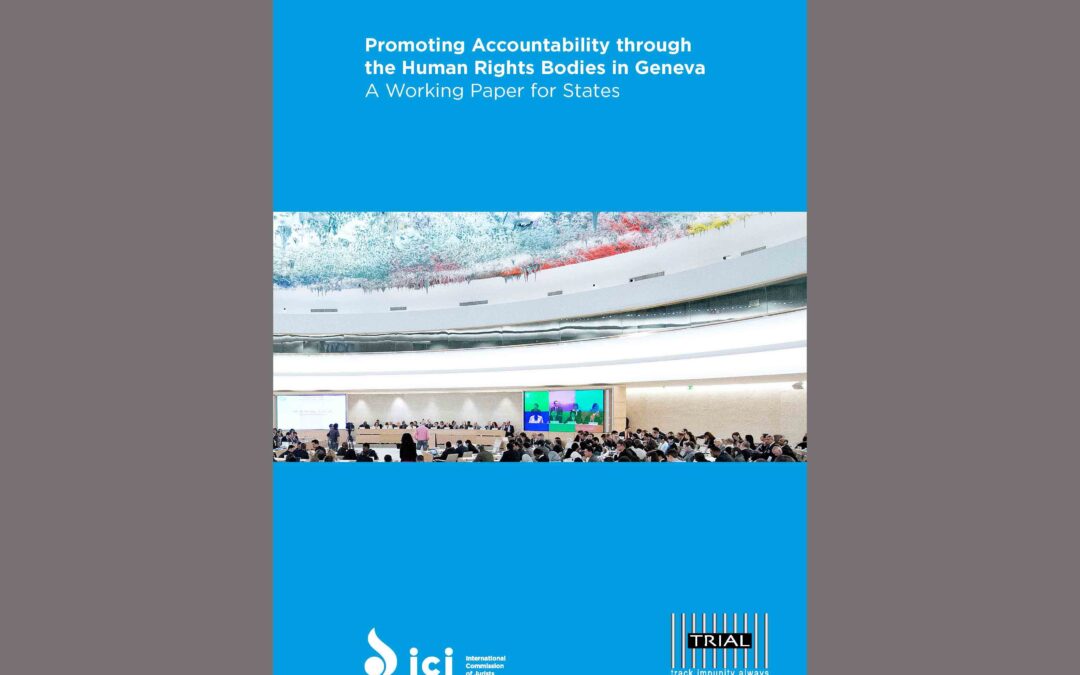
Yesterday, during the 24th session of the UN Human Rights Council, the ICJ and TRIAL (Swiss Association against Impunity) jointly held a parallel event on promoting accountability through human rights mechanisms in Geneva.
The event was co-sponsored by the Permanent Missions of Switzerland, Estonia and Costa Rica to the United Nations Office at Geneva.
A corresponding report produced by ICJ and TRIAL was also launched at this event in two versions, one aimed at civil society and another aimed at States.
Panellists at this event included Ian Seiderman of the ICJ, Gabriella Citroni of TRIAL and Theo van Boven, former Special Rapporteur on torture and other cruel, inhuman or degrading treatment or punishment and ICJ Honorary Commissioner.
Mona Rishmawi of the Office of the High Commissioner for Human Rights (OHCHR) chaired the event.
The main topic of this event was the ICJ-TRIAL report, which reviews the legal framework for promoting accountability and suggests possible action by civil society and States to engage with the human rights mechanisms in Geneva to better promote and achieve accountability for human rights violations.
The role of national mechanisms, such as national human rights institutions, working in cooperation with the UN mechanisms was also highlighted.
The report focuses specifically on the Human Rights Council and its subsidiary bodies, such as the Universal Periodic Review and the special procedures mechanisms.
OHCHR’s role was further emphasised in regards to sharing best practices as well as ensuring follow-up to issues of accountability as they come to the attention to the UN.
Sep 2, 2013 | News
The ICJ today called on the Bangladesh authorities to immediately withdraw the contempt of court notice issued against the international human rights organization Human Rights Watch.
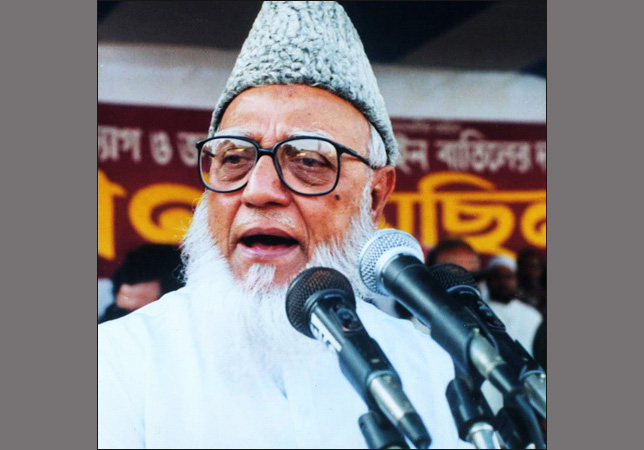
The charges are in response to well documented concerns by Human Rights Watch that the trial of Ghulam Azam (photo), former head of the Islamist group Jamaat-e-Islami Azam’s trial was “deeply flawed” and failed to meet international fair trial standards.
“Silencing voices that highlight the shortcomings of the International Crimes Tribunal impede rather than advance the enormously important task of ensuring that those responsible for committing atrocities during Bangladesh’s war of liberation are brought to justice in a process that complies with international law and standards”, said Alex Conte, Director of the ICJ’s International Law and Protection Programmes.
On 2 September 2013, the International Crimes Tribunal (ICT) in Bangladesh issued a show cause notice asking Human Rights Watch to explain why contempt of court proceedings should not be initiated against it for its allegedly ‘biased’, ‘scandalous’ and ‘inaccurate’ statements about the ICT. Human Rights Watch has to respond within three weeks, or possibly face trial and conviction in absentia.
“Assessing the conduct of administration of justice in judicial proceedings, including where it entails criticism of judicial performance is an important means of ensuring accountability,” said Conte. “Judges and prosecutors should defend the right to freedom of expression, not use their discretionary powers to muzzle criticism”.
Contact:
Alex Conte, Director, International Law & Protection Programmes, t: +41 79 957 2733; email: alex.conte(a)icj.org
Additional information:
The Bangalore Principles on Judicial Conduct clarify that “since judicial independence does not render a judge free from public accountability, and legitimate public criticism of judicial performance is a means of ensuring accountability subject to law, a judge should generally avoid the use of the criminal law and contempt proceedings to restrict such criticism of the courts”.
The Commonwealth (Latimer House) Principles on the Accountability of and the Relationship Between the Three Branches of Government also stress that “criminal law and contempt proceedings should not be used to restrict legitimate criticism of the performance of judicial functions”.
The UN Declaration on Human Rights Defenders underscores that “everyone has the right, individually and in association with others, to promote and to strive for the protection and realization of human rights and fundamental freedoms at the national and international levels”.
The Declaration also highlights that human rights defenders have the right to “freely to publish, impart or disseminate to others views, information and knowledge on all human rights and fundamental freedoms” and to hold opinions and draw public attention to the observance of human rights.

May 29, 2013 | Agendas, Events
On Tuesday 28 May 2013, the ICJ co-sponsored a parallel event with TRIAL and the Missions of Botswana, Costa Rica, Estonia and Switzerland during the Human Rights Council’s 23rd regular session held in Geneva.
The event, held in Room XXV of the Palais des Nations, addressed key issues concerning accountability and human rights. The event was chaired by Professor Paola Gaeta from the Geneva Academy of International Humanitarian Law and Human Rights. Panelists were Tiina Intelmann, President of the Assembly of the States Parties to the ICC Statute; Mothusi Bruce Rabasha Palai, Ambassador of Botswana; Ian Seiderman, Director of the ICJ’s Law and Policy Office; and Gabriella Citroni, Senior Legal Adviser at TRIAL (Swiss association against impunity).
Panelists agreed that accountability is intimately linked to the enjoyment of human rights. It was stated that – under State responsibility – States are, or should be, held responsible for acts involving any violation of international law, including international human rights law and international humanitarian law. Accountability is thus not only about criminal justice, but also about ensuring reparations and guarantees of non-recurrence.
Recommendations made under the Universal Periodic Review (UPR) mechanism were seen as having been partly successful in bridging gaps, although there remains a lack of proper follow-up on the progress of implementation between UPR cycles. Panellists observed that States often fail to refer to standards enunciated by the High Commissioner for Human Rights and by the Special Procedures. Regarding the accountability of non-State actors for conduct involving human rights abuses and violations, the ‘Ruggie Principles’ were referred to as a representing good progress but still failing to be as comprehensive as they should be.
Concerning future steps by Human Rights Council mechanisms, panellists proposed that resolutions, statements and Special Procedures should more directly and frequently refer to accountability. The need for greater political pressure on the International Criminal Court was expressed, with the aim of supporting the domestic capacity of States parties to the Rome Statute. Concerning domestic capacity to strengthen accountability more generally, panellists and participants agreed on the need to improve linkages between the work of persons dealing with development and those working on accountability.
HR Council-Strengthening accountability-event-2013 (event flyer in pdf)