May 26, 2021 | News
Prosecutors must perform an active role in proceedings before Tunisia’s Specialized Criminal Chambers (SCC), including by prosecuting the cases referred by the Truth and Dignity Commission (IVD) without indictment, and by ensuring the effective and timely execution of court decisions, such as judicial summons and other orders to compel the presence of the accused in court, the ICJ said today.
هذا البيان الصحفي متوفر باللغة العربية أيضاً
To date, prosecutors have automatically transferred around 200 cases, to the SCC pursuant to the Law on Transitional Justice. Beyond this, however, they have played little or no part in the conduct of trials thus far.
“Prosecutors are abdicating their primary responsibility to uphold the rule of law and the rights of victims, and, in so doing, they are contributing to perpetuate decades of impunity in Tunisia,” said Said Benarbia, ICJ MENA Director.
Accused are absent in most of the SCC trials. Measures ordered by the courts to compel their presence have remained mere ink on paper.
“The systematic absence of the accused defeats the very purpose of setting up the SCC as transitional justice mechanisms, including their role in establishing the truth about past abuses, and in granting victims their long overdue day in court,” added Benarbia.
Tunisian prosecutors and law enforcement officers acting under their authority must ensure that court summons and related orders be implemented in a timely manner.
Prosecutors should also ensure that effective investigations be conducted, evidence collected, and prosecutions instituted, when warranted, in those cases that the IVD referred to the SCC without indictment.
“The automatic transfer of cases to the SCC does not absolve prosecutors from their obligations under Tunisian and international law, including in respect of their duties as public interest representatives,” Benarbia added. “It’s high time for the prosecutorial authorities to live up to these obligations and uphold the rights of victims to truth, justice and effective remedies.”
Background information
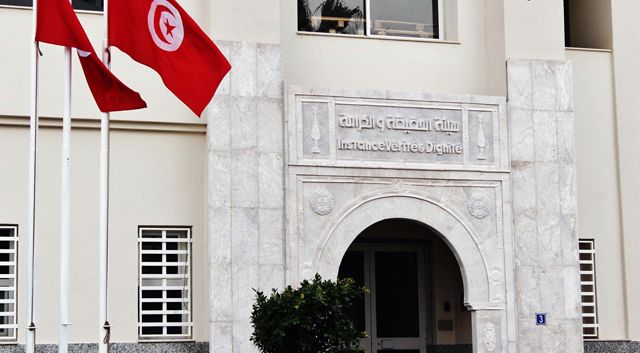
The Specialized Criminal Chambers were established in 2014 to adjudicate cases involving alleged “gross human rights violations” perpetrated between 1955 and 2013 and referred by the Truth and Dignity Commission (Instance Verité et Dignité, IVD) to the SCC.
The 2013 Transitional Justice Law empowered the IVD to investigate crimes, collect evidence and refer cases to the SCC for prosecution.
At the end of its mandate in December 2018, the IVD’s referred to the SCC 200 cases of arbitrary deprivations of life, arbitrary deprivations of liberty, torture and other ill-treatment, enforced disappearance, rape and sexual assault and crimes against humanity committed by the past regime.
For more information see the ICJ Practical Guide Series on Accountability Through the Specialized Criminal Chambersand findings on the role of international law and standards in proceedings before the SCC (Practical Guide 1), the investigation and prosecution of gross human rights violations under Tunisian and international law (Practical Guide 2), and the application of principles and best practices on evidence in the administration of justice before the SCC (Practical Guide 3).
Download this press release in PDF form here.
Contact:
Said Benarbia, Director, ICJ Middle East and North Africa Programme, t: +41-22-979-3817; e: said.benarbia(a)icj.org
Valentina Cadelo, Legal Adviser, ICJ Middle East and North Africa Programme, e: valentina.cadelo(a)icj.org
Asser Khattab, Research and Communications’ Officer, ICJ Middle East and North Africa Programme, e: asser.khattab(a)icj.org
May 25, 2021 | News
As the third anniversary of the opening of trials before Tunisia’s Specialized Criminal Chambers (SCC) is approaching, the ICJ denounces the Tunisian authorities’ failure to adopt reforms necessary to advance accountability and justice for victims of gross human rights violations.
هذا البيان الصحفي متوفر باللغة العربية أيضاً
Trials before the SCC started on 29 May 2018. Since that first hearing, evident gaps and shortcomings in the Tunisian Criminal Code, the Code of Criminal Procedure and the Transitional Justice law have undermined efforts to hold perpetrators to account, bring justice to victims and prevent recurrence of gross human rights violations in the future.
“The Tunisian authorities have abdicated their responsibility to ensure the effective functioning of the SCC, depriving judges of basic tools to ensure that trials are conducted without undue delay and consistent with international fair trial standards,” said Said Benarbia, the ICJ’s MENA Programme Director.
Many offences referred by the Truth and Dignity Commission to the SCC are not adequately defined in the Tunisian law. Judicial rotation occurs mid-way through SCC trials, impacting the continuity of trials. Prosecutors are not effectively engaged in the conduct of trials. Accused are absent in most of the SCC trials, and the transitional justice framework does not provide for appeal chambers.
“By failing to address these obstacles, the Tunisian authorities are undermining the right of victims to truth and to effective remedies, and betraying the very promise of the transitional justice process to end impunity,” added Benarbia.” It’s high time for them to reverse course and live up to that promise.”
Background information
The ICJ has recommended reform to ensure the compliance of SCC proceedings with international law and standards, including through:
- Ensuring the adequate criminalization of gross human rights violations amounting to crimes under international law;
- Fully ensuring the rights of the accused to a fair trial;
- Ensuring the rights of victims, including their families, to an effective remedy and reparation;
- Ensuring the protection of victims and witnesses;
- Ensuring that the collection, admissibility and assessment of evidence guarantee the right of the accused to a fair trial and the victims’ right to an effective remedy.
In addition to the above reforms, the Tunisian authorities should remove all obstacles preventing the SCC and other judicial authorities from exercising their function in a manner that complies with international standards. To this end, the authorities should:
- Ensure that the Office of the Public Prosecutor and other investigative authorities carry out their mandate in an independent and impartial manner, as defined under the Code of Criminal Procedure;
- Ensure that the annual judicial rotation, as regulated by Organic Law No. 34 on the High Judicial Council, be consistent with the right of the accused to a fair trial
- Ensure that newly appointed SCC judges and prosecutors receive timely and adequate training in transitional justice as provided for by Organic Law No. 53 on Establishing and Organizing Transitional Justice;
- Ensure that, if the annual judicial rotation occurs mid-way through trials, safeguards be implemented with the view to ensuring that newly appointed judges hearing the case have the appropriate understanding of the evidence and arguments.
These recommendations are informed by the ICJ Practical Guide Series on Accountability Through the Specialized Criminal Chambers and findings on the role of international law and standards in proceedings before the SCC (Practical Guide 1), the investigation and prosecution of gross human rights violations under Tunisian and international law (Practical Guide 2), and the application of principles and best practices on evidence in the administration of justice before the SCC (Practical Guide 3).
The SCC were established in 2014 to adjudicate cases involving alleged “gross human rights violations” perpetrated between 1955 and 2013 and referred by the Truth and Dignity Commission (Instance Verité et Dignité, IVD) to the SCC.
At the end of its mandate in December 2018, the IVD’s referred to the SCC 200 cases of arbitrary deprivations of life, arbitrary deprivations of liberty, torture and other ill-treatment, enforced disappearance, rape and sexual assault and crimes against humanity committed by the former government.
In a briefing paper published in October 2020, the ICJ called on the Tunisian authorities to undertake substantial legal and policy reforms with a view to strengthening accountability and removing all obstacles preventing the SCC from functioning effectively.
Download this press release in PDF form here.
Contact:
Said Benarbia, Director, ICJ Middle East and North Africa Programme, t: +41-22-979-3817; e: said.benarbia(a)icj.org
Valentina Cadelo, Legal Adviser, ICJ Middle East and North Africa Programme, e: valentina.cadelo(a)icj.org
Asser Khattab, Research and Communications’ Officer, ICJ Middle East and North Africa Programme, e: asser.khattab(a)icj.org
May 4, 2021 | News
The removal of Lebanese public prosecutor Ghada Aoun from financial cases she had been overseeing constitutes a further attack on the independence of an already enfeebled judiciary, the International Commission of Jurists said today.
On 15 April 2021, Lebanon’s General Prosecutor removed Ghada Aoun, Mount Lebanon Public Prosecutor, from the financial cases she had been overseeing, including high-profile corruption and illegitimate gains cases. Aoun had charged Riad Salameh, the Governor of Lebanon’s Central Bank, with dereliction of duty and breach of trust, and had charged former Prime Minister Najib Mikati with illegitimate gains. She had also been overseeing and issuing arrest warrants in other high-profile cases.
“The Lebanese judiciary has a long history of utter subordination to the ruling political class in Lebanon,” said Said Benarbia, the Director of the ICJ MENA Programme.
“Removing prosecutors and investigating judges from cases solely because they carry out their legitimate functions flies in the face of the independence of the judiciary and sends a chilling message to others who might dare challenging the authorities.”
Aoun’s ouster followed the removal of investigative judge Fadi Sawan from the 2020 Beirut port blast case. Sawan was removed on 18 February 2021 by the Court of Cassation after bringing criminal negligence charges against the acting President of the Cabinet and former ministers in relation to the devastating explosion on 4 August 2020, in which nearly 200 people died and thousands more were injured. His removal by the Court of Cassation came after two former Ministers who were facing criminal charges filed a complaint against Fadi Sawan before the General Prosecutor, requesting his removal from the case.
The Lebanese authorities, including judicial authorities, should comply with their obligations under international law and ensure that judges and prosecutors be able to exercise their functions independently, free of any influences, pressures, threats or interference from any quarter or for any reason.
In August 2020, the ICJ urged the Lebanese authorities to work with the United Nations to establish a special, independent mechanism to probe the Beirut blast in line with international law and standards with a view to establishing the facts and making recommendations for appropriate accountability measures, including criminal prosecutions.
The call was informed by the ICJ publications and findings on the independence and functioning of the judiciary in Lebanon, including recommendations to ensure that the judiciary is not subject to any form of undue influence by political actors and confessional communities, and that it is able to fulfill its responsibility to uphold the rule of law and human rights.
This press release is also available in Arabic.
Contact:
Said Benarbia, Director, ICJ Middle East and North Africa Programme, t: +41-22-979-3817; e: said.benarbia(a)icj.org
Asser Khattab, Research and Communications Officer, ICJ Middle East and North Africa Programme, e: asser.khattab(a)icj.org
Sep 1, 2020 | News
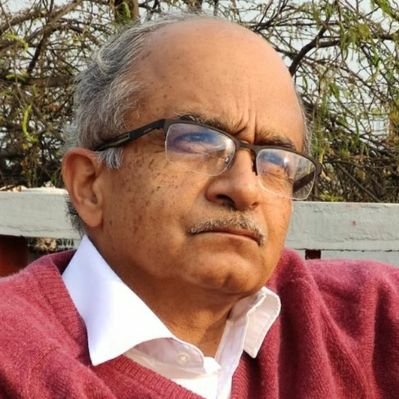
The ICJ today expressed its concern regarding the 31 August 2020 and 14 August 2020 decisions of the Indian Supreme Court to convict prominent human rights lawyer Prashant Bhushan for criminal contempt of court, on the basis of two twitter posts in which the lawyer criticized the performance of the Indian judiciary.
While the Court only imposed a symbolic fine of one rupee, rather than imprisonment, the ICJ considers that the conviction appears to be inconsistent with international standards on freedom of expression and the role of lawyers.
The ICJ stressed that the ruling risks having a chilling effect on the exercise of protected freedom of expression in India and urged a review of the laws and standards on criminal contempt as applied by the Indian courts.
The two tweets published by Prashant Bhushan referred to the Chief Justice of India riding an expensive motorbike belonging to a BJP leader “when he keeps the SC in Lockdown mode denying citizens their fundamental right to access justice” and asserted that the Supreme Court and the last four Chief Justices of India had contributed to how, in his view, “democracy has been destroyed in India even without a formal Emergency”
The Court in its 31 August judgment held that the tweets were a serious attempt to “denigrate the reputation of the institution of administration of justice” which, it said, is “capable of shaking the very edifice of the judicial administration and also shaking the faith of common man in the administration of justice.”
The Court considered that its ruling was consistent with freedom of speech and expression under Article 19 of the Indian Constitution, saying that it will have to balance its exercise of power to punish for contempt for itself (Article 129) with freedom of speech and expression.
The ICJ is concerned, however, that the conviction appears inconsistent with international law on freedom of expression as guaranteed by the International Covenant on Civil and Political Rights (Article 19, ICCPR) to which India is a party.
While some restrictions of freedom of expression are permitted by international standards, a particularly wide scope must be preserved for debate and discussion about such matters as the role of the judiciary, access to justice, and democracy, by members of the public, including through public commentary on the courts.
Any restrictions must be strictly necessary and proportionate to meet a legitimate purpose, such as protecting public order or the rights and reputations of others.
“There is a general concern that the protection of freedom of expression is rapidly eroding in India,” said Ian Seiderman, ICJ Legal and Policy Director.
“We have seen this recently around the COVID 19 crisis in relation to the imprisonment of human rights defenders, on draconian charges of sedition, rioting and unlawful assembly for protesting against the Citizenship (Amendment) Act.”
“While the Indian Supreme Court has over the years generally been an institution that has served to advance human rights in India and globally, we fear it now may be perceived as silencing criticism and freedom of expression by invoking outdated criminal contempt laws,” Seiderman added.
The ICJ joins the 1800 Indian lawyers in calling for the Supreme Court “to review the standards of criminal contempt”, emphasizing that the law is overbroad and should be aligned with international law and standards on the limited scope for restrictions on freedom of expression and criminal contempt.
“Prashant Bhushan is a lawyer and lawyers being part of the legal system have a ring-side view and understanding of the state of the court. Convicting a leading lawyer for contempt for expressing his views in this manner may have a chilling effect on lawyers, in particular considering his involvement in many public interest litigation cases,” said Mandira Sharma, ICJ South Asia Senior Legal Adviser.
Contact
Ian Seiderman – ICJ Legal and Policy Director; e: ian.seiderman(a)icj.org , t: +41 22 979 38 00
Matt Pollard – ICJ Senior Legal Adviser, Director, ICJ Centre for the Independence of Judges and Lawyers; e: matt.pollard(a)icj.org, t: +41 79 246 54 75
Download
India-Criminal-Contempt-of-Court-Press-Release-2020-ENG (PDF, with additional background information)
Jul 30, 2020 | Advocacy
The ICJ is concerned that in Kazakhstan, Kyrgyz Republic, Tajikistan and Uzbekistan the COVID-19 pandemic, and measures taken purportedly to contain it, have significantly curtailed access to justice. Restrictions have affected the operation of the courts and impeded lawyers’ ability to provide effective legal assistance to their clients.
In the context of the COVID-19 pandemic — whether under a state of emergency or not — States’ obligations under international human rights law to uphold the fundamental guarantees of a fair trial, and to ensure access to effective remedies for violations of human rights endure.
The right to a fair trial entails the right to adequate time and facilities to prepare a defense, which, in turn, requires the opportunity to communicate with one’s lawyer effectively and in confidence.
In light of this, the ICJ calls on Central Asian States to ensure that, while COVID-19 restrictions are in place, access to a lawyer continues to be ensured, and that measures be put in place so that lawyers are able to communicate with their clients safely, effectively and confidentially, including in places of detention or during online hearings.
In addition, wherever and whenever the authorities put in place restrictions on physical meetings or travel with the stated purpose of containing the COVID-19 pandemic, the ICJ calls on Central Asian States to ensure that access to court is guaranteed through specific legal, administrative and practical measures.
ICJ research and discussions with lawyers have shown that across Central Asia, regulations adopted during COVID-19 relating to the administration of justice have suffered from vague language, inconsistencies and unclear guidance.
In practice, this had serious implications for the right to fair trial of defendants: in some cases defence lawyers were not allowed to meet their clients who were charged with serious crimes; in other instances lawyer-client meetings were very short, undermining the ability of lawyers to take proper instructions from their clients and to advise them accordingly; in other cases defence lawyers met their clients in circumstances where the confidentiality of their communication was compromised as a result of the virtual communication platforms they were forced to use.
The restriction measures relating to the administration of justice that the authorities have imposed have also had negative consequences for access to justice and effective remedies for victims of human rights violations; notably, access to legal assistance in domestic violence cases was impeded across the region.
In many court buildings social distancing requirements were not adjusted in such a way as to uphold the right to a public hearing. There has been a lack of sufficient guidance on how the right to a public hearing may be ensured online, including as to how the right to equality of arms and the right to legal representation would be protected.
Download
Central Asia-Statement COVID-19-Advocacy 2020-ENG (full article with additional information, in PDF)