Mar 16, 2015 | News
The ICJ today condemned the arrest and detention of Malaysian Member of Parliament and daughter of imprisoned opposition leader Anwar Ibrahim, Nurul Izzah Anwar, under section 4(1) of the colonial-era 1948 Sedition Act.
The arrest, which took place around 3.30pm at Dang Wangi police station in Kuala Lumpur, appears to be linked to a speech she gave in Parliament on 10 March 2015 that reportedly criticized the judges in her father’s sodomy II case.
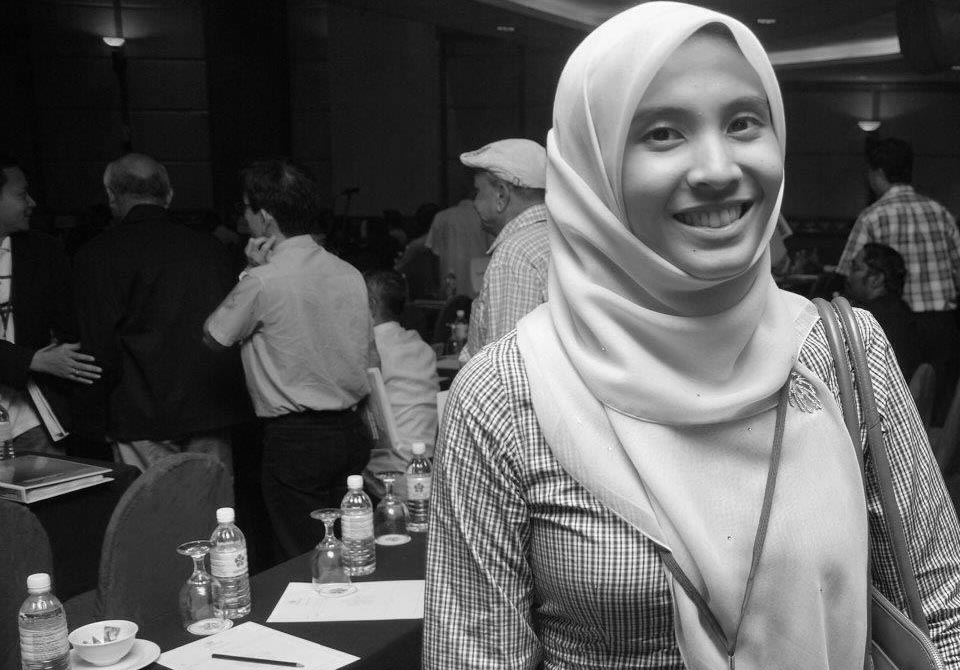
It was reported that Nurul Izzah (photo) was at the police station today to provide statements for her involvement in a demonstration on 14 February, as well as her parliamentary speech.
She managed to complete part of her statement, but was arrested before she could provide a statement on the alleged seditious speech.
Nurul Izzah has yet to be formally charged and it is unclear as to whether the detention is in relation to a specific section of her speech or to the entire speech.
“The Malaysian authorities must stop the continued use of the offence of sedition to arbitrarily detain and stifle freedom of expression,” said Sam Zarifi, ICJ’s Regional Director for Asia and the Pacific.
On 10 February 2015, the Federal Court of Malaysia upheld the Court of Appeal’s decision to convict and sentence Anwar Ibrahim for sodomy under section 377B of the Penal Code.
Since then, a cartoonist has been charged under the Sedition Act, while several opposition politicians and lawmakers have been investigated for allegedly making seditious comments on the Federal Court’s decision.
The ICJ has previously denounced the use of the Sedition Act and repeatedly called for its abolition of the Act as its vague and overbroad provisions are incompatible with international human rights standards.
Nurul Izzah will reportedly remain in prison for the night and will have her remand hearing first thing in the morning on 17 March 2015.
The ICJ will continue to monitor her case.
The ICJ also calls on the Government of Malaysia to immediately release of Nurul Izzah and reiterates its call for the repeal of the Sedition Act.
Background
The 1948 Sedition Act, originally enacted by the British colonial government and amended several times over the years, criminalizes speech and publications considered to have “seditious tendencies”.
The term “seditious tendencies” is ambiguously defined to mean any kind of speech or publication that causes “hatred or contempt, or excite disaffection” against any ruler or the government or promotes “ill will and hostility between the different races or classes”.
The law also considers “seditious” any speech or publication that questions the special privileges of the Malay people, as provided in the Constitution.
Furthermore, sedition is a strict liability offence in Malaysia, which means that the intention of a person allegedly making seditious statements is irrelevant.
For instance, a person making a statement may not have the intent to cause “hatred or contempt” towards the government, but may nonetheless be held liable for sedition if authorities believe that the person in fact incited such feelings.
The ICJ considers that the Act, by its very terms, contemplates restrictions on the exercise of freedom of expression that are grossly overbroad and inconsistent with basic rule of law and human rights principles.
Contact:
Sam Zarifi, ICJ Regional Director of Asia and the Pacific, mobile: +668 07819002 or email: email: sam.zarifi(a)icj.org

Mar 16, 2015 | Advocacy, Legal submissions
The ICJ has made further submissions to the UN Working Group on Arbitrary Detention on its elaboration of Draft Principles and Guidelines on habeas corpus.
In February 2015, the Working Group released for public input a revised set of ‘Draft Principles and Guidelines on remedies and procedures on the right of anyone deprived of his or her liberty by arrest or detention to bring proceedings before a court without delay, in order that the court may decide without delay on the lawfulness of his or her detention and order his or her release if the detention is not lawful’.
The ICJ’s submission welcomes the elaboration by the Working Group of the revised Draft Principles and Guidelines as a means of assisting States to enhance, in law and in practice, respect for the right to habeas corpus and especially welcomes certain aspects of the document. It suggests means of further improving the revised Draft Principles and Guidelines, concerning:
- The temporary nature of any derogating measures impacting upon the application of some procedural elements of the right to habeas corpus;
- The competence of courts to make orders for immediate release;
- The implementation of court orders for release;
- The public nature of judicial decisions following adjudication of habeas corpus petitions;
- Guarantees applicable to specialized tribunals;
- The right to legal aid and legal assistance;
- Confirming that the procedure must be available at all times and to all detained persons, including prisoners or war, as a remedy to protect non-derogable rights such as the prohibition against torture and ill-treatment; and
- The inadmissibility of evidence obtained by torture.
The Working Group will present its final draft to the Human Rights Council’s 30th regular session in September 2015.
Attachments
ICJ-WGAD-RevisedDraftPrinciplesAndGuidelines-3rdLegalSubmission-2015-EN (The ICJ’s latest submission in PDF)
WGAD-Habeas-RevisedDraftPrinciplesAndGuidelines-2015-EN (PDF)
Additional links for reference
The ICJ’s first written submissions to the Working Group in November 2013
The ICJ’s second written submissions to the Working Group in April 2014
Panel presentations at the September 2014 Global Consultation by ICJ staff Matt Pollard and Alex Conte
Feb 17, 2015 | News
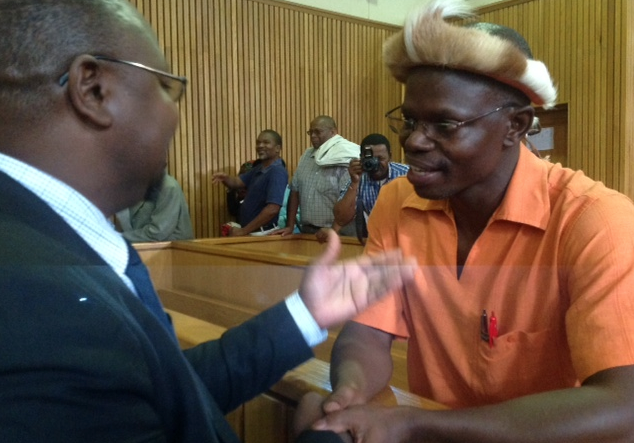
Alleging a range of human rights violations by Swaziland in the cases of Thulani Maseko and Bheki Makhubu, leading legal advocates today filed a petition with the UN Working Group on Arbitrary Detention (UNWGAD) in Geneva.
The American Bar Association’s Center for Human Rights, the global law firm Hogan Lovells and the ICJ jointly produced a petition calling for the UNWGAD to issue an opinion regarding the lawfulness of the continued incarceration of Thulani Maseko, an internationally recognized human rights lawyer and feature writer for The Nation magazine.
“The consequences of this arbitrary action against Thulani Maseko have not only violated his rights and exacted a heavy personal toll, but have also highlighted the rule of law deficit in Swaziland,” said Wilder Tayler, ICJ’s Secretary General. “Thulani Maseko has been denied his right to express an opinion on public affairs and the administration of justice, guaranteed under international law and affirmed in the UN Basic principles on the Role of lawyers.”
Thulani Maseko and journalist Bheki Makhubu were charged with two counts of contempt of court emanating from articles published in February and March 2014, in which they questioned circumstances surrounding the arrest of a government vehicle inspector.
They were sentenced to two years of imprisonment, without the alternative option of a fine at the end of a trial largely condemned by leading international rights groups as unfair and not complying with international standards on the right to a fair trial.
Some of the fair trial guarantees that have been breached, according to the legal petition filed with the UNGWAD, include the right to be tried by an independent and impartial tribunal; right to a public hearing; right to a legal counsel; right to the presumption of innocence; right to bail; and right to protection of the law.
“The use of contempt of court proceedings to suppress the right to freedom of expression is a violation of international human rights law,” said Marc Gottridge, partner at Hogan Lovells. “The right to freedom of expression is guaranteed in the Swazi constitution and international law, including treaties to which Swaziland is a party.”
“The general failings of the Swazi judiciary with respect to independence and impartiality makes it reasonable to conclude that there cannot be an effective domestic remedy for Thulani Maseko,” he added.
Contact:
Arnold Tsunga, Director, ICJ Africa Regional Programme, t +27 716 405 926 or +41 762 399 032, e arnold.tsunga(a)icj.org,
Matt Pollard, Senior Legal Adviser, ICJ, Centre for Independence of Judges and lawyers, t +41 22 979 38 12, e matt.pollard(a)icj.org
Marc Gottridge, Partner Hogan Lovells, t +1 212 918 3000, e marc.gottridge(a)hoganlovells.com
Ginna Anderson, Senior Counsel, Center for Human Rights, American Bar Association, t +1 202 442 3438, e ginna.anderson(a)americanbar.org
Background:
Thulani Maseko was arrested on 17th March 2014 following a warrant of arrest that was issued by the Chief Justice Michael Ramodibedi on his own motion.
This was after he had written an article titled “Where the Law Has No Place” criticising the courts for the way that a fellow Swazi citizen Mr Gwebu Bhantshana had been arrested and detained and the wider implications of that case on the rule of law in Swaziland.
Save for 3 days in April 2014 when he was released following Judge Mumcy Dlamini’s judgment declaring his arrest and detention wrongful and illegal, Thulani has been in custody since his initial arrest. Mr. Maseko was initially held at Sidwashini Correctional facility before he was taken to Big Bend Correctional facility, where he is currently lodged.
Further background material can be found here:
http://www.americanbar.org/news/abanews/aba-news-archives/2014/04/statement_of_jamesr.html
https://www.icj.org/swaziland-icj-condemns-the-harsh-prison-term-imposed-on-thulani-maseko-and-bheki-makhubu/
https://www.icj.org/swaziland-icj-condemns-the-conviction-of-celebrated-human-rights-lawyer-and-prominent-journalist-on-charges-of-contempt-of-court/
https://www.icj.org/swaziland-icj-concerned-at-detention-of-human-rights-lawyer-and-journalist/
Download the petition:
Swaziland-Maseko WGAD Petition-Advocacy-2015-Eng (full text in PDF)
The lawyers at Hogan Lovells US LLP who worked on this petition are Marc Gottridge, Dianne Milner, Allison Holt and Hans H. Hertell.
Dec 19, 2014 | News
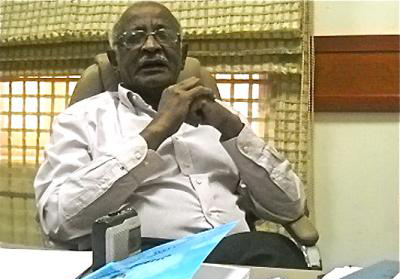
Prominent human rights lawyer Dr Amin Mekki Medani, and lawyer and political opposition leader Farouk Abu Issa, remain in detention at an unknown location. The two men were arbitrarily arrested by the Sudanese authorities in early December.
Nov 15, 2014 | News
La Comisión Internacional de Juristas, a través de su representante para Suramérica, Federico Andreu-Guzmán, intervino como perito en el procedimiento interamericano, a solicitud de los representantes de las víctimas.