Sep 24, 2015 | Advocacy, Non-legal submissions
The ICJ made an oral statement to the UN Human Rights Council in Geneva today, calling on the Maldives to accept and implement recommendations on human rights and the rule of law, including the independence of the judiciary, received as part of the UN Universal Periodic Review process.
The statement, which was also supported by the NGO South Asians for Human Rights (SAHR), may be downloaded in PDF format here: Maldives-UN-HRC30OralStatement-Advocacy-non legal statement-2015-ENG
The report of a joint ICJ-SAHR fact-finding mission to the Maldives, conducted earlier this year, is available here.

Sep 15, 2015 | Advocacy, Non-legal submissions
The ICJ today made an oral statement at the UN Human Rights Council, welcoming the presentation of UN Basic Principles and Guidelines on the right to challenge detention, and a report on forced labour and slavery in supply chains.
The statement was made during an Interactive Dialogue with the Working Group on Arbitrary Detention and the Special Rapporteur on contemporary forms of slavery.
The ICJ said that the implementation of the Basic Principles and Guidelines would help prevent governments from depriving people of liberty solely for exercising freedoms of opinion and expression; peaceful assembly and association; thought, conscience and religion; or on the basis of discrimination. Such violations are often achieved by circumventing or suspending essential legal procedural protections such as habeas corpus.
The ICJ noted that the right to challenge detention is also a key safeguard against incommunicado or secret detention, enforced disappearance, and torture and other cruel, inhuman or degrading treatment.
The ICJ welcomed the attention the Working Group has given to the challenging contexts of counter-terrorism and armed conflicts, where such concerns are particularly acute.
The ICJ also welcomed the report of the Special Rapporteur on contemporary forms of slavery, addressing the issue of modern slavery and forced labour in supply chains, and the Rapporteur’s emphasis on the right to an effective remedy. In addition to the international legal and policy frameworks and continuing efforts by States and businesses outlined in the report, the ICJ noted that UN treaty-bodies have produced useful guidance and recommendations, such as the General Comment adopted by the Committee on the Rights of the Child in 2013, on State obligations regarding the impact of the business sector on children’s rights.
The full statement may be downloaded in PDF format here: UN-Advocacy-Oral statementWGADandSRslavery-2015
Earlier in the week, the ICJ published a legal commentary on certain aspects of the Principles and Guidelines, related to situations of armed conflict. The commentary is available here.
Jun 10, 2015 | News
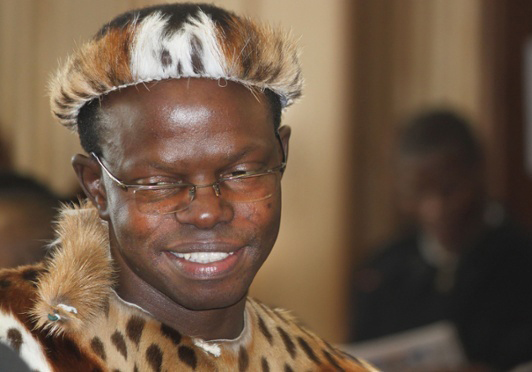
The ICJ today welcomed the opinion by The United Nations Working Group on Arbitrary Detention (UNWGAD) condemning as arbitrary the detention of prominent human rights lawyer Thulani Maseko and calling on the Government of Swaziland to ensure his immediate release.

May 24, 2015 | News
The ICJ signed a joint statement together with 35 other national and international NGOs calling for the immediate release of Vietnamese blogger Tran Huynh Duy Thuc.
Tran Huynh Duy Thuc was arrested on 24 May 2009 for “promoting anti-government propaganda” after posting a blog calling for political reform and respect for human rights.
On 20 January 2010, following a one day trial with three co-defendants, he was sentenced to 16 years imprisonment followed by five years house arrest.
On 29 August 2012, the United Nations Working Group on Arbitrary Detention found that Tran Huynh Duy Thuc and his three co-defendants’ detention violated the right to freedom of opinion and expression guaranteed by Article 19 of the International Covenant on Civil and Political Rights (ICCPR), to which Vietnam is a State Party, as well as the right to liberty and security of person (Article 9) and the right to freedom of association (Article 21).
The Working Group concluded by requesting Vietnam to release Tran Huynh Duy Thuc and provide him with compensation in accordance with Article 9(5) of the ICCPR.
Vietnam-Statement on blogger Duy Thuc-News-webstory-2015-ENG (full text of statement in PDF)

Apr 30, 2015 | News
The ICJ welcomes yesterday’s adoption, by the UN Working Group on Arbitrary Detention, of the Working Group’s “Basic Principles and Guidelines on Remedies and Procedures on the Right of Anyone Deprived of His or Her Liberty by Arrest or Detention to Bring Proceedings Before Court”.
Under its resolution 20/16 (2012), the UN Human Rights Council requested the Working Group to prepare draft basic principles and guidelines on habeas corpus. The Working Group set out a first draft set of principles and guidelines ahead of its global consultation on the subject in September 2014. From 2 to 5 February 2015, the Working Group met to continue its elaboration of the Basic Principles and Guidelines, resulting in the adoption of a second draft. The Working Group adopted its final iteration of the document at the conclusion of its session on 29 April 2015. The Basic Principles and Guidelines will be presented to the Human Rights Council during the Council’s 30th regular session, to be held from 14 September to 2 October 2015.
The ICJ welcomes the Basic Principles and Guidelines as a means of assisting States to enhance, in law and in practice, respect for the right to habeas corpus. It especially welcomes certain aspects of the document, including:
- Paragraph 68, in which applicable qualifications are set out to any derogating measures to accommodate constraints on the application of some procedural elements of the right to habeas corpus;
- Principle 6 and Guideline 4 which reaffirm that habeas corpus petitions must be heard by courts that bear all characteristics of competence, independence and impartiality (paras 27, 70 and 72(a)), that competence includes the power to order immediate release if detention is fund to be arbitrary or unlawful (para 27), that immediate implementation of such orders is required (para 71(c)) and that courts must give reasoned and particularized decisions (para 71(d));
- Guideline 7, in which it is provided that individuals are entitled to take proceedings multiple times (paras 81 and 82), that expediency is required, including in cases of subsequent challenges, and especially in cases alleging, among other things, torture or ill-treatment (para 83) and that authorities remain obliged to ensure regular review of the continuing need for detention (para 84);
- Principle 9 and Guideline 8 concerning legal representation and legal aid;
- The clarifications in Principle 10 and Guideline that persons able to bring proceedings include counsel, family members or other interested parties, whether or not they have proof of the consent of the detainee (paras 34 and 92) and that no restrictions may be imposed on a detainee’s ability to contact such persons (para 35);
- The express recognition in Guideline 12 that information obtained by torture or other forms of ill-treatment may not be used in evidence;
- Guideline 13 concerning disclosure and limitations applicable to any non-disclosure of information on security or other grounds;
- Guideline 14, reflecting authorities’ obligation to justify the need and proportionality of detention;
- Principle 15 and Guideline 16 (on remedies), reflecting the overarching right to remedies and reparation (paras 43), the need for authorities to give immediate effect to an order for release (para 44) and the right to compensation, restitution, rehabilitation, satisfaction and guarantees of non-repetition (paras 109-112); and
- Principle 16 concerning the application of Article 9(4) of the International Covenant on Civil and Political Rights (ICCPR) alongside international humanitarian law (paras 45 and 47), the application of Article 9(4) to civilians in an international armed conflict (para 47), the application of habeas principles to prisoners of war (para 48), and the question of administrative detention or internment in the context of a non-international armed conflict (para 49).
The ICJ has engaged in all stages of the Working Group’s elaboration and consultations. It made written submissions in November 2013, April 2014 and March 2015. Its staff, Matt Pollard and Alex Conte, gave panel presentations at the September 2014 global consultation.