Mar 12, 2019 | News
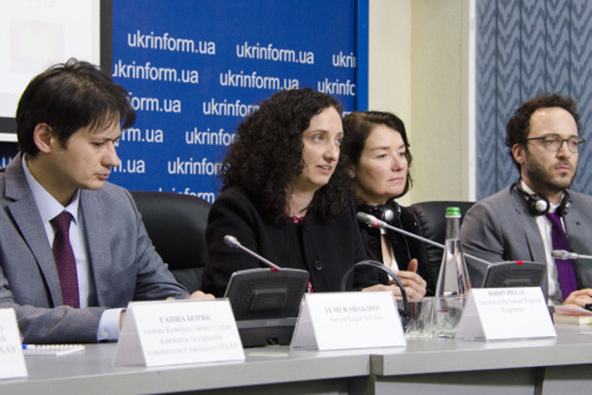
Following its mission to Ukraine on 4-8 March, the ICJ has called on the Ukrainian authorities to take urgent steps to ensure the physical safety of lawyers and to bring to justice those responsible for a series of violent attacks against them.
During its visit, the ICJ delegation heard consistent testimony of attacks on lawyers by private persons, ranging from acts of intimidation to use of firearms against them.
Several lawyers have been attacked physically and verbally by individuals or organized groups, including in court. At least six lawyers have recently been killed in relation to the exercise of their professional duties.
These attacks take place in an environment where legislative reforms directed at governance of the legal profession, which would have grave consequences for freedom of association and the functioning of the bar association and civil society, have been proposed by the Presidential Administration without consultation with lawyers.
Without urgent and significant efforts to prevent attacks and combat impunity, the independence of the legal profession, and the ability of lawyers to protect human rights, will be increasingly jeopardized, the ICJ concluded at the end of its mission to the country.
It is of concern that violent attacks against lawyers, many of which have been credibly attributed to extreme right-wing groups, often result in impunity of the perpetrators, despite evidence and despite specific provisions in the criminal law which protect lawyers against attacks.
The ICJ heard that the law enforcement bodies often fail to investigate these cases in a prompt and impartial manner even where the identity of perpetrators is known.
The ICJ stresses that these attacks on lawyers, which are often related to the defence of clients in politically sensitive criminal cases, undermine the ability of lawyers to exercise their duties and protect the human rights of their clients, free from intimidation, hindrance, harassment or improper interference.
Furthermore, the ICJ recalls that under international human rights law, the State must take steps to protect the security of persons who the authorities know or ought to know are under threat, and they must ensure an independent, prompt, and thorough investigation of any attacks on the life or physical integrity of individuals.
In this regard, the ICJ stresses that a well-functioning, independent legal profession is essential to any justice system that upholds the rule of law. International standards recognize the importance of lawyers in protecting human rights and the contribution they make to maintaining the rule of law and the fair administration of justice.
The UN Basic Principles on the Role of Lawyers emphasize the importance of the independence of bar associations in ensuring the fair and effective administration of justice. Such associations must be institutionally independent, both in law and in practice, from all external actors, including the government, other executive agencies, parliaments and outside private interests.
In light of these standards, the ICJ is concerned about the process of adoption of draft law No 9055 “On the Bar Association and Lawyers’ Activity”, which was drafted without the necessary level of consultation and participation of a main stakeholder, the National Bar Association of Ukraine, which strongly opposes it.
It is unacceptable that in this context the draft law had been submitted to the Parliament through an urgent procedure, the need for which appears to be dubious, the ICJ says.
If adopted without the necessary consultation and endorsement by the Bar Association, this law may pose a threat to the independence of the legal profession in Ukraine and the capacity of civil society, including human rights defenders, to carry out their critical work, the Geneva-based organization adds.
The ICJ is particularly concerned that according to the draft law, lawyers would not be able to be employed by NGOs while being members of the Bar Association.
While international practice may differ, in the context of Ukraine specifically, this may undermine the ability of human rights NGOs to provide qualified legal representation or assistance to those whose human rights have been violated.
The ICJ further noted consistent allegations of corruption and lack of integrity of lawyers including in the context of legal aid system.
It also appears that the examination process for qualification as a lawyer, especially in some regions, is not free from corruption. Until now, the Bar Association has not been able to effectively resolve this problem which must be addressed as a matter of urgency.
The mission to Ukraine included members of the ICJ Secretariat as well as representatives of the Amsterdam and Geneva Bar Associations. It met with leading human rights NGOs, IGOs, the members of the Ukrainian National Bar Association as well as representatives of the Ministry of Justice of Ukraine.
The ICJ wishes to thank all those whom its representatives met in Kyiv. A final report based on the key findings of the mission will be published later this year.
Oct 1, 2018 | Advocacy, Cases, Legal submissions
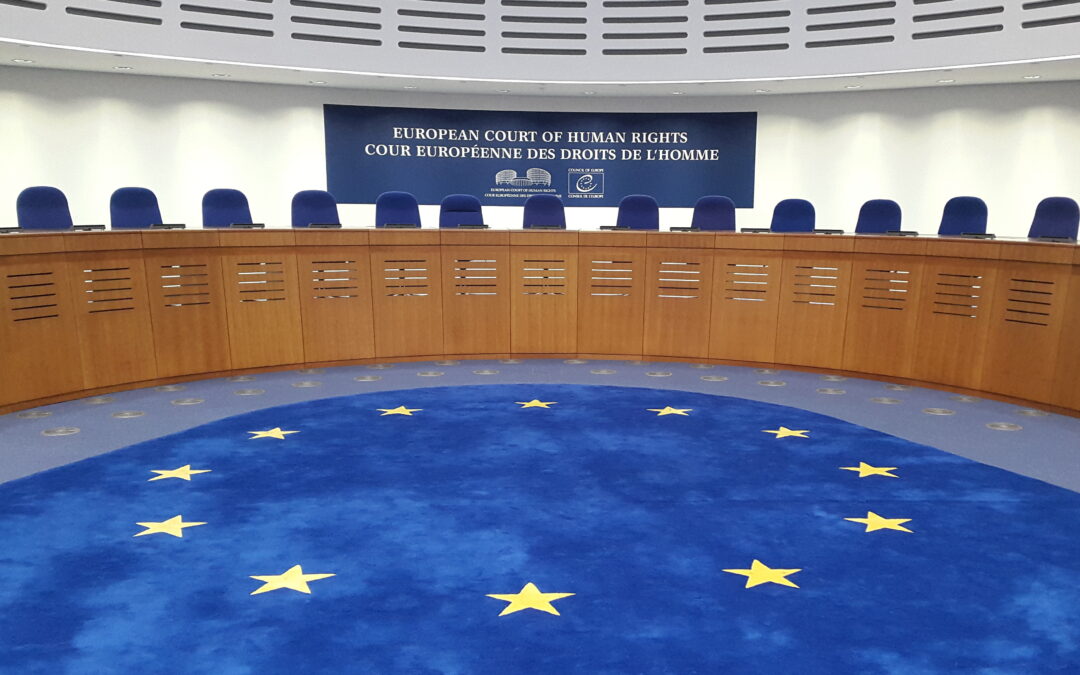
The ICJ made submissions today to the European Court of Human Rights in support of the right of association of Azerbaijan’s lawyers representing applicants before the Court and highlighting the situation of harassment of the legal profession in the country.
The ICJ intervened today in the cases of Democracy and Human Rights Resource Centre v. Azerbaijan and Mustafayev and Democracy and Human Rights Resource Centre v. Azerbaijan.
In these cases, lawyer Asabali Mustafayev and its NGO challenged the compliance of the freezing of their assets and criminal proceedings for financial offences as arbitrary interferences with their work as human rights defenders and in representation of clients before the European Court of Human Rights itself.
The ICJ has intervened to highlight the case-law regarding the right to individual application before the Court under article 34 ECHR and its application to the work of lawyers and legal NGOs.
It further examined the systemic practice in Azerbaijan of harassment of lawyers and of NGOs established by lawyers for the purpose of providing legal advice or representation, including representation of applicants before the European Court of Human Rights.
Finally, the ICJ analyzed the implications of such practices with regard to the State’s obligations under article 18 ECHR read together with article 11 ECHR.
Azerbaijan-icj-DHRRC&other-Advocacy-legal submission-2018-ENG (download the submission)
“Defenseless Defenders: Systemic Problems in the Legal Profession of Azerbaijan” – ICJ report in Azeri, Russian and English.
Question to the parties: http://hudoc.echr.coe.int/eng?i=001-184179
Jun 22, 2018 | Events, News
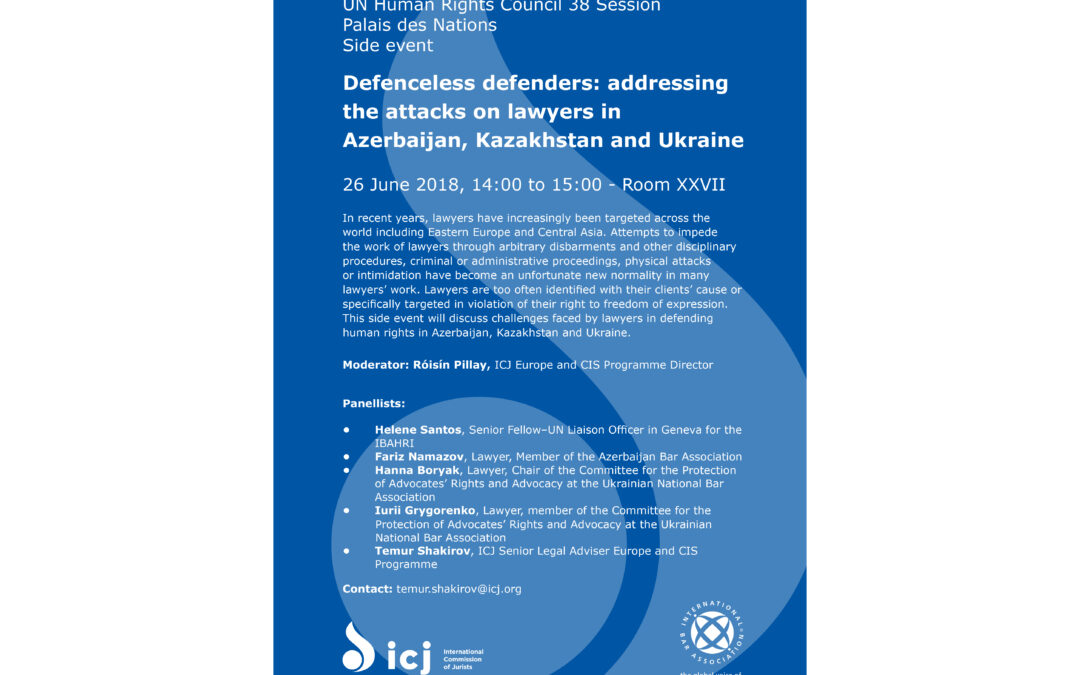
This side event at the Human Rights Council takes place on Tuesday, 26 June, 14:00-15:00, room XXVII of the Palais des Nations. It is organized by the ICJ and the International Bar Association’s Human Rights Institute (IBAHRI).
In recent years, lawyers have increasingly been targeted across the world including Eastern Europe and Central Asia. Attempts to impede the work of lawyers through arbitrary disbarments and other disciplinary procedures, criminal or administrative proceedings, physical attacks or intimidation have become an unfortunate new normality in many lawyers’ work.
Lawyers are too often identified with their clients’ cause or specifically targeted in violation of their right to freedom of expression. This side event will discuss challenges faced by lawyers in defending human rights in Azerbaijan, Kazakhstan and Ukraine.
Moderator: Róisín Pillay, ICJ Europe and CIS Programme Director
Speakers:
- Helene Santos, Senior Fellow–UN Liaison Officer in Geneva for the IBAHRI
- Fariz Namazov, Lawyer, Member of the Azerbaijan Bar Association
- Hanna Boryak, Lawyer, Chair of the Committee for the Protection of Advocates’ Rights and advocacy at the Ukrainian National Bar Association
- Iurii Grygorenko, Lawyer, member of the Committee for the Protection of Advocates’ Rights and Advocacy at the Ukrainian National Bar Association
- Temur Shakirov, ICJ Senior Legal Adviser Europe and CIS Programme
Jun 21, 2018 | Events, News
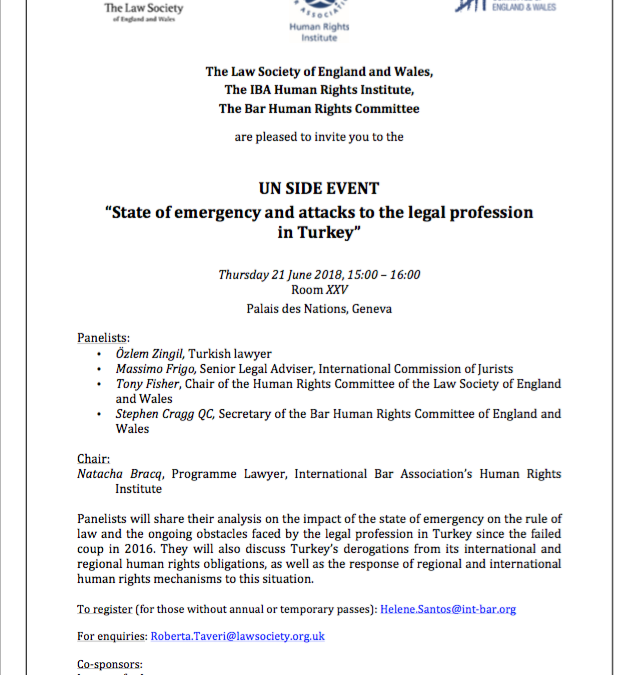
The ICJ will participate today in the side event “State of emergency and attacks on the legal profession in Turkey” organized by IBAHRI, the Law Society, and the Bar Human Rights Committee of England and Wales.
This side event at the Human Rights Council takes place on Thursday, 21 June, 15:00-16:00, room XXV of the Palais des Nations.
It is co-sponsored by Lawyers for Lawyers, Union Internationale des Avocats, Lawyers’ Rights Watch Canada.
In this side event, panelists will share their analysis on the impact of the state of emergency on the rule of law and the ongoing obstacles faced by the legal profession in Turkey since the failed coup in 2016.
They will also discuss Turkey’s derogations from its international and regional human rights obligations, as well as the response of regional and international human rights mechanisms to this situation.
Panelists:
- Özlem Zingil, Turkish lawyer;
- Massimo Frigo, International Commission of Jurists;
- Tony Fisher, Chair of the Human Rights Committee of the Law Society of England and Wales;
- Stephen Cragg QC, Secretary of the Bar Human Rights Committee of England and Wales;
- Natacha Bracq, Programme Lawyer, International Bar Association’s Human Rights Institute.
Geneva-SideEvent-StateofEmergencyLawyersTurkey-IBAHRI&others-June2018-ENG (download the flyer)
May 30, 2018 | Advocacy, Non-legal submissions
The ICJ today made a submission for an upcoming report by the UN Secretary General on recent developments concerning human rights in the administration of justice.
In 2016, the UN General Assembly requested the Secretary General “to submit to the General Assembly at its seventy-third session a report on the latest developments, challenges and good practices in human rights in the administration of justice, including on efforts to ensure equal access to justice for all through the independent, impartial and effective administration of justice, and on the activities undertaken by the United Nations system as a whole”.
The UN is in the process of preparing the report, which will cover developments during the last two years since the previous report of the Secretary General.
The ICJ’s submission can be downloaded in PDF format here: UN-GA-AdminJustice-2018