Dec 14, 2018 | News
The Egyptian authorities should immediately and unconditionally release human rights lawyer Mohamed Ramadan and drop the charges against him or otherwise charge him with a recognizable crime consistent with international law, said the ICJ today.
Mohamed Ramadan was arrested, by plainclothes security officers on 10 December 2018, after attending proceedings concerning the renewal of a detention order against one of his clients. The client, Ayman Mahmoud, himself had been evidently detained for political reasons, and charged with joining and promoting an “illegal group” and “spreading false news on Facebook and Twitter to harm State interests.”
Following his arrest, Mohamed Ramadan was detained overnight in the National Security Agency Office. Ramadan’s family and lawyers did not know of his whereabouts until he was brought before the Alexandria Prosecutor on 11 December 2018.
According to information available to the ICJ, the Prosecutor charged Ramadan with joining a terrorist group, promoting its ideology including through social media and possession of publications supporting the group’s purpose (Case No. 16576/2018 Montaza), and ordered that he be detained for 15 days.
The charges appear to be to intended to prevent Ramadan’s exercise of freedom of expression and work as a lawyer. One of the lawyers who attended Ramadan’s interrogation on 11 December 2018 informed the ICJ that Ramadan had been informed by the Prosecutor to stop representing political detainees.
“The Egyptian authorities have engaged in a pattern of arresting, detaining and charging lawyers, human rights defenders and others perceived as opponents on unsubstantiated or illegitimate charges and in violation of their rights, typically under the pretext of fighting its ‘war on terrorism’,” said Saïd Benarbia, ICJ MENA Director. “The authorities should stop using laws that are purportedly designed to counter terrorism to silence persons exercising their human rights and lawyers carrying out their proper professional functions.”
According to lawyers who attended Mohamed Ramadan’s interrogation on 11 December, the Prosecutor alleged Ramadan possessed flyers opposing Egyptian President Sisi and multiple yellow vests. A credible news source reported that, prior to his arrest, Ramadan had posted a photograph on Facebook in which he wore a yellow vest to mock the government’s restriction on the sale of them.
According to media reports, earlier this month Egyptian authorities restricted the sale of yellow vests until the end of January 2019, in fear that opponents might be influenced by the French gilet jaunes protests to hold similar protests during the anniversary of the 2011 uprising against Hosni Mubarak next month.
Mohamed Ramadan is one of a number of lawyers who have been targeted in connection with carrying out their professional functions or for being perceived as opposing the Egyptian authorities.
“Imprisoning human rights lawyers, charging them for posting comments online, and deterring them from defending clients hampers the independent role they should play as a lawyer and as a last line of defence against the authorities’ abuses,” said Said Benarbia. “Egypt must protect these lawyers and safeguard their security, not muzzle their voices through abusive criminal proceedings.”
Background
In April 2017, the Alexandria Criminal Court convicted Ramadan in absentia of inciting terrorism, and sentenced him to ten years’ imprisonment followed by five years’ house arrest and a five year ban on using the internet, for posting comments attributed to him on fake Facebook profiles which were critical of the Egyptian President. His retrial is suspended until the Supreme Constitutional Court decides on the constitutionality of the Counter-Terrorism Law.
Any person arrested has the right to inform, or have the authorities notify, someone that they have been arrested and where they are being held. Detainees must be given access to a lawyer, a doctor and their family, from the time they are taken into custody, including police custody.” Restrictions on communicating with a laywer during detention also undermines the rights to liberty and to a fair trial, including under articles 9 and 14 of the International Convention on Civil and Political Rights (ICCPR), to which Egypt is a party.
Articles 19, 22 and 25 of the ICCPR protect the rights to freedom of expression, to freedom of association and to participate in public affairs. The United Nations Declaration on Human Rights Defenders commits States to generally protecting such rights exercised by HRDs and requires states to protect HRDs from violence, threats, retaliation, de facto or de jure adverse discrimination, pressure or any other arbitrary action for the lawful exercise of such rights.
Paragraphs 16 and 18 of the UN Basic Principles on the role of Lawyers require states to ensure lawyers are able to perform of their professional functions without intimidation, hindrance, harassment or improper interference, are not prosecuted or threatened with prosecution for any action taken in accordance with recognized professional duties, standards and ethics, and can exercise freedom of expression.
The ICJ has previously expressed concern over the arbitrary arrests and enforced disappearance of human rights defenders, lawyers, and political activists and persons otherwise providing support to political detainees.
In June 2018, the ICJ also expressed its concerns about Egypt’s repeated renewals of the State of Emergency since April 2017, and the use of the state of emergency to suppress the activities of and persecute students, human rights defenders, political activists, union members and those suspected of opposing the government.
Egypt-MohRamadan-News-web stories-2018-ARA (full story in Arabic, PDF)
Dec 13, 2018 | Advocacy, News, Non-legal submissions
The ICJ and Thai Lawyers for Human Rights (TLHR) welcome the decision of Prime Minister Gen. Prayut Chan-o-cha, acting as the Head of the National Council for Peace and Order (NCPO), to lift certain restrictions on political activities.
The organizations highlight, however, that much more is needed to fully reinstate protection of human rights and fundamental freedoms in Thailand ahead of elections scheduled to be held on 24 February 2019.
This order repealed Article 12 of HNCPO Order No. 3/2558, which prohibited the gathering of five or more persons for a “political purpose”, lifting a ban which had carried a punishment of imprisonment not exceeding six months and/or a fine not exceeding 10,000 Baht.
“The lifting of the ban on political gatherings is welcome – however, the new order only lifts one specific restriction imposed by HNCPO Order 3. Restrictions on fundamental freedoms imposed by other articles of HNCPO Order 3, such as the granting of broad, unchecked powers to military officers to investigate, arrest and detain persons for up to seven days, remain in force,” said Kingsley Abbott, ICJ’s Senior International Legal Adviser.
“We reiterate our call for the Thai government to immediately amend and repeal all laws, HNCPO Orders, NCPO orders and announcements inconsistent with Thailand’s international human rights obligations.”
ICJ and TLHR also express serious concern that even as nine orders and announcements have been repealed by HNCPO Order No. 22/2561, Article 2 of the order clarifies that “prosecutions, actions or operations” already in effect by virtue of those orders will not be affected by the coming into force of the Order.
Cases brought before 11 December 2018 under HNCPO Order No. 3/2558 to penalize persons exercising their rights to free expression, assembly and association can therefore legally continue to be prosecuted in courts.
“Cases brought under the now-repealed section of HNCPO Order 3 should be dropped or withdrawn. They should have never been brought before the courts in the first place,” said Abbott.
“In the lead up to elections next year, the Thai government must take further steps to expand space for free expression, assembly and association. This new order is welcome, but it is certainly not enough.”
Further information is available in the full statement below
Thailand-Lifting political ban-Advocacy-Joint Statement-2018-ENG (full statement in English, PDF)
Thailand-Lifting Political Ban-Advocacy-Joint Statement-2018-THA (full statement in Thai, PDF)
See also
ICJ, ‘Thailand: Lift ban on political gatherings and fully reinstate all fundamental freedoms in Thailand’, 1 October 2018
Further reading
ICJ, TLHR and Cross-Cultural Foundation (CrCF), Joint Follow-up Submission to UN Human Rights Committee, 27 March 2018
ICJ and TLHR, Joint submission to the UN Human Rights Committee, 13 February 2017
Contact
Kingsley Abbott, ICJ Senior Legal Adviser, email: kingsley.abbott(a)icj.org
Nov 5, 2018 | News
The ICJ convened a two-day workshop from 3rd to 4th November 2018 in Yangon, to enhance understanding of legal protections of the right to freedom of thought, conscience, religion or belief in Myanmar.
Freedom of thought, conscience and belief, often referred to as the right to freedom of religion of belief (FoRB) is considered by many to be one of the foundations of a democratic society.
The workshop was aimed at discussing State regulation of religion or belief in Myanmar and included some 40 human rights defenders, lawyers and members of religious groups, from across the country.
ICJ legal adviser Sean Bain introduced the right to FoRB under international law and standards – particularly Article 18 of the Universal Declaration of Human Rights, and Article 18 of the International Covenant on Civil and Political Rights. Mr Bain also discussed the complementarity of these articles with other rights, such as the right to freedom of expression, and highlighted the limitation clauses in the international treaties which provide a framework for resolving some of the tensions that can arise in specific cases.
Michelle Yesudas, a Malaysian human rights lawyer, shared good practices and lesson learned from application of strategic litigation in FoRB related cases in Malaysian context and spoke about potential approaches and strategies that could be adapted in Myanmar context to push the legislative reform and enforcement of the law.
The ICJ’s legal researcher Dr. Ja Seng Ing and national legal Adviser Advocate Daw Hnin Win Aung jointly facilitated two panel discussions on challenges in free practice of religion or belief specifically focusing on the worship places and Freedom of Expression.
Based on their own independent research, senior legal scholars and human rights defenders from Myanmar also provided their perspectives on national challenges, particularly the absence of the State fulfilling its responsibilities to protect FoRB in Myanmar. Advocate Daw Zar Li Aye discussed available legal remedies and encouraged legal advocacy strategies to ensure protections under the law in Myanmar.
The participants raised a number of notable issues on addressing identified obstacles to the free practice of religion or belief included the need for annulling discriminatory notifications restricting the rights to practice religion freely, the need for safe space to continue the dialogue between FoRB activists, other human rights defenders and lawyers on strategic litigation.
Participants at the conference also recognized the opportunity presented before them in advancing freedom of religion or belief in Myanmar and committed to working collectively to enhance this right.
This event is part of the ICJ’s ongoing effort to convene civil society actors including lawyers to discuss critical human rights issues in Myanmar with a view to advancing the protection of human rights in the country.
Mar 27, 2018 | Advocacy, Non-legal submissions
On 27 March 2018, the ICJ, Thai Lawyers for Human Rights (TLHR) and Cross Cultural Foundation (CrCF) made a joint follow-up submission to the UN Human Rights Committee on Thailand’s implementation of the Committee’s prioritized recommendations.
On 23 March 2017, during its 119th Session, the Human Rights Committee adopted its concluding observations on the second periodic report of Thailand under article 40 of the International Covenant of Civil and Political Rights (ICCPR).
Pursuant to its rules of procedure, the Committee requested Thailand to provide a follow up report on its implementation of the Committee’s recommendations made in paragraphs 8 (constitution and legal framework) 22 (extrajudicial killings, enforced disappearances and torture) and 34 (conditions of detention) of its concluding observations by 23 March 2018. To date, the Thai authorities are yet to file their follow-up report with the Committee.
In their joint submission to the Human Rights Committee, the ICJ, TLHR and CrCF detailed their concerns in relation to Thailand’s failure to implement the Committee’s recommendations in paragraphs 8 and 22 of its concluding observations. The three organizations’ submission focuses on their concerns arising from the following:
Constitution and legal framework
- Orders by the Head of the National Council for Peace and Order (‘HNCPO’); and
- Escalation in use of HNCPO Order No. 3/2558 to restrict fundamental freedoms.
Extrajudicial killings, enforced disappearances and torture
- Allegations of widespread use of torture and other ill-treatment;
- Incommunicado detention;
- Southern Border Provinces; and
- Threats and reprisals against persons working to bring to light cases of alleged torture, ill–treatment and enforced disappearance.
Read also
ICJ and Thai Lawyers for Human Rights, Joint submission to the UN Human Rights Committee, 13 February 2017
Contact
Kingsley Abbott, ICJ Senior International Legal Adviser for Southeast Asia, e: kingsley.abbott(a)icj.org
Thailand_Joint-Follow-up-Human-Rights-Committee-Submission-march-2018 (Full submission in ENG, PDF)
Thailand-Follow up HRC-Advocacy-Non legal submission-2018-THA (Thai version, in PDF)
Nov 16, 2017 | News
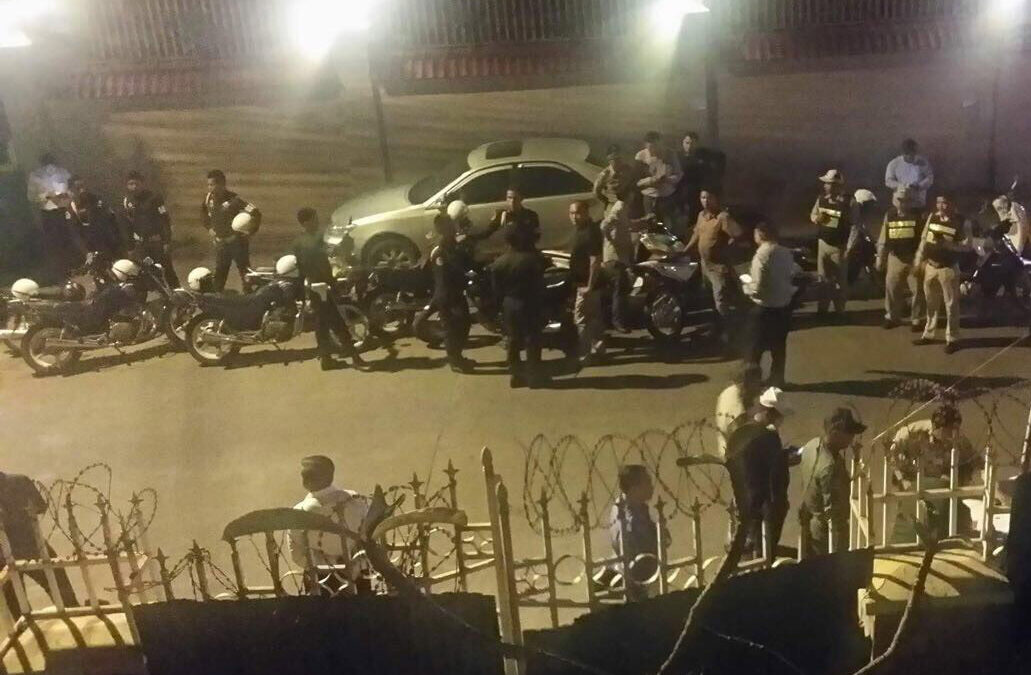
Today’s decision of the Supreme Court to dissolve the main opposition political party, the Cambodia National Rescue Party (CNRP), has significantly heightened the human rights and rule of law crisis within the country, the ICJ said.
The Supreme Court has also banned 118 of CNRP politicians from political activity for five years.
“By dissolving the main opposition party and banning 118 CNRP politicians from political activity for five years, the Supreme Court is irreparably interfering with the rights of potentially millions of Cambodians to freely choose their political representatives and vote for them in the upcoming elections,” said Kingsley Abbott, the ICJ’s Senior International Legal Adviser for Southeast Asia.
“The fact that the Law on Political Parties was amended to enable the Supreme Court to dissolve political parties shortly before it dissolved the CNRP strongly suggests the entire ‘legal process’ was nothing more than political theatre, inconsistent with human rights and the rule of law.”
A full bench of nine judges of the Supreme Court, including the President, unanimously decided to dissolve the CNRP pursuant to powers contained within Article 44 (new) of the Law on Political Parties (LPP), which was controversially amended twice this year, in February and July 2017.
The lawyers representing the CNRP were not present at Court after electing to boycott the proceedings in protest at their legitimacy.
Furthermore, the President of the Supreme Court, Justice Dith Munty, who read out the decision, is reportedly a member of the ruling Cambodian People’s Party (CPP) and sits on both its Standing and Permanent Committees, raising serious doubts about the independence and impartiality of the Court.
“It makes a mockery of fair justice to have someone in a leadership position within one political party sit in judgment on the conduct of that party’s main opposition. There can be no starker example of an inherent conflict of interest,” Abbott said.
“At an absolute minimum, the President should have recused himself from any role in relation to the case, as should have any other judge sitting on the bench if they hold a similar position within the CPP,” he added.
These concerns are consistent with the ICJ’s findings in a report it released last month, in which it found that the “single largest problem facing the Cambodian justice system is the lack of independent and impartial judges and prosecutors.”
“The problem is two-fold: an endemic system of political interference in high-profile cases and an equally entrenched system of corruption in all others.”
On 23 October 2017, the 26th anniversary of the 1991 Paris Peace Conference on Cambodia, the ICJ and 54 other organizations wrote an open letter to the Secretary-General of the United Nations and the Conference’s co-chairs calling on them to reconvene the members of the Conference, along with other concerned stakeholders, for an emergency summit to discuss the human rights crisis within the country.
“The dissolution of the CNRP sends a strong signal to the international community and all Cambodians that a red-line has been crossed, which makes reconvening the Paris Peace Conference to address the human rights and rule of law crisis within the country all the more urgent,” said Kingsley Abbott.
Contact
Kingsley Abbott, Senior International Legal Adviser for Southeast Asia, ICJ, t: +66 94 470 1345 ; e: kingsley.abbott@icj.org
Background
It has been reported that, on 4 and 5 October 2017, the Cambodia Youth Party and the Funcinpec Party, respectively, filed complaints with the Ministry of Interior (MOI) alleging that the CNRP had violated Articles 6 (new) and 7 (new) of the Law on Political Parties, and asked the MOI to file a complaint with the Supreme Court to dissolve the CNRP.
On 6 October 2017, the MOI filed a complaint with the Supreme Court pursuant to Article 38 (new) of the LPP to dissolve the CNRP.
Article 25 of the International Covenant on Civil and Political Rights (ICCPR), to which Cambodia is a State Party, guarantees the rights of all persons, without any unreasonable restrictions, “to take part in the conduct of public affairs, directly or through freely chosen representatives; and to vote and to be elected at genuine periodic elections which shall be by universal and equal suffrage and shall be held by secret ballot, guaranteeing the free expression of the will of the electors.”
Article 14 of the ICCPR affirms the principle that tribunals judging rights and obligations in legal proceedings be independent and impartial.
Detailed international standards on requirements for a court to be independent have been set out in the UN Basic Principles on the Independence of the Judiciary (1985), and requirements for judicial impartiality have been set out in the Bangalore Principles of Judicial Conduct and Commentary (2002/2007), which includes the standard that “All partisan political activity and association should cease upon the assumption of judicial office” (para 75 of the Commentary).