Sep 16, 2016 | News
Indian authorities have detained a Kashmiri human rights activist after stopping him from traveling to the United Nations Human Rights Council in Geneva, Human Rights Watch and the ICJ said today.
Khurram Parvez was arrested in his home on 15 September 2016, a day after being prevented from leaving the country with a group of rights activists who were traveling to Geneva to raise concerns about the security force crackdown in Jammu and Kashmir.
Human Rights Watch and the ICJ call on authorities to immediately release Parvez and allow him to attend the Human Rights Council session.
“Indian authorities seem to have missed the irony of blocking a rights activist on his way to the UN Human Rights Council,” said Sam Zarifi, Asia Director at the International Commission of Jurists.
“Monitoring and engage
ment by civil society is necessary to prevent human rights violations and ensure accountability. The Government should immediately release Khurram Parvez and begin working with him and other activists to address the difficult issues facing Jammu and Kashmir,” he added.
Parvez, 39 years of age, is chair of the Asian Federation Against Involuntary Disappearances (AFAD) and program coordinator of the Jammu Kashmir Coalition of Civil Society (JKCCS).
He has documented cases of enforced disappearances and investigated unmarked graves in Kashmir.
According to his lawyer, Parvez has been detained by Kashmir police under “preventive detention” provisions of the Code of Criminal Procedure, including section 151 (arrest to prevent the commission of cognizable offense).
The Government’s actions against Parvez violate his right to freedom of movement.
Under international human rights law, any restrictions on freedom of movement for security reasons must have a clear legal basis, be limited to what is necessary and be proportionate to the threat.
This is further supported by article 5 of the UN Declaration on Human Rights Defenders, which states that “[f]or the purpose of promoting and protecting human rights and fundamental freedoms, everyone has the right, individually or in association with others, at the national and international levels… to communicate with nongovernmental or intergovernmental organizations.”
“Instead of trying to silence human rights activists, India should be addressing the serious human rights problems in Jammu and Kashmir and holding perpetrators of abuses to account,” said Meenakshi Ganguly, South Asia Director at Human Rights Watch.
“Preventing open discussion of these issues, whether in India or in Geneva, sends a message to Kashmiris that the government has no interest in addressing their concerns,” she added.
Background
Violent protests broke out in Jammu and Kashmir state after the killing of Hizb-ul-Mujahedin militant Burhan Wani in an armed encounter on 8 July.
Since then, the authorities have placed large parts of the state under curfew restrictions to try to stop protesters who hurl stones at security forces and attack police posts.
Security forces have used unnecessary lethal force to contain the violence, which has resulted in the death of 80 protesters and 2 police officers, and thousands injured.
Some protesters, including children, lost their vision from pellets fired from riot-control guns.
While police have a duty to protect lives and property, under the UN Basic Principles on the Use of Force and Firearms by Law Enforcement Officials, they should use non-violent means as far as possible, only use force when unavoidable and in a proportionate manner, and use lethal force only when absolutely necessary to save lives, Human Rights Watch and International Commission of Jurists said.
The authorities have also attempted to censor news and restrict access to information.
The Government shut down local newspapers for three days, blocked mobile internet services temporarily, and ordered local cable operators to block the transmission of five news channels on television.
India has failed to address longstanding grievances in Jammu and Kashmir.
Numerous expert committees in India have recommended steps to address past human rights violations, including a repeal of the draconian Armed Forces Special Powers Act, but the Indian Government has ignored these recommendations.
Contact:
Sam Zarifi, ICJ Asia-Pacific Regional Director, (Bangkok); t:+66(0) 807819002; e: sam.zarifi@icj.org
May 10, 2016 | News
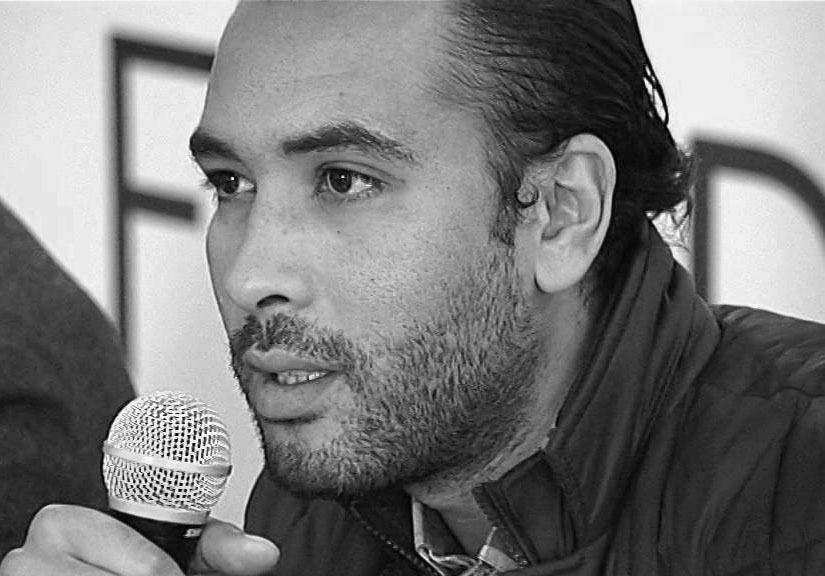
The ICJ today called on the Egyptian authorities to immediately release human rights lawyer Malek Adly and to drop all charges against him. He was arrested on Thursday 5 May 2016, pursuant to an arrest warrant.
Malek Adly has been charged with a number of offences, including “attempting to overthrow the regime,” “spreading false rumors,” and “using force against a public servant.”
The Prosecuting authorities have not provided information on specific behaviour that would constitute criminal conduct.
The ICJ is concerned that the charges may be in retaliation for Malek Adly’s work as a lawyer and human rights defender, and are aimed to chill him and others from engaging in work perceived as threatening to or disfavoured by Egyptian authorities.
They came at the backdrop of his work as a human rights lawyer, his critical views on the rule of law situation in Egypt, and his legitimate and peaceful exercise of freedom of expression and assembly in opposing transferring the sovereignty of Tiran and Sanafir islands from Egypt to Saudi Arabia, the ICJ says.
“Malek Adly’s arrest, detention and prosecution for carrying out his work as a lawyer and human rights defender and for peacefully expressing his views is yet another attempt by the Egyptian regime to muzzle lawyers, the last line of defence for victims of human rights violations in Egypt,” said Said Benarbia, Director of the ICJ Middle East and North Africa Programme.
“The regime’s crackdown on fundamental rights and freedoms has been worryingly extended to the very lawyers whose role is to challenge and protect against such crackdown,” he added.
Over the last three years, the ICJ has documented numerous cases of lawyers who have been subjected to human rights violations and reprisals in relation to the representation of their clients.
These include the cases lawyers Imam Afifi and Karim Hamdi who were allegedly subjected to torture and subsequently died while in police custody.
International standards aiming to safeguard the role of lawyers provide that States have a duty to ensure that lawyers are able to perform their functions “without intimidation, hindrance, harassment or improper interference” and that lawyers must not be subject to prosecution or other sanction for carrying out their professional responsibilities, the Geneva-based organization reminds.
International standards on human rights defenders require States protect human rights defenders from attacks, threats, retaliation and arbitrary action.
The Egypt 2014 Constitution guarantees the “independence of the lawyer’s profession and the protection of its interests as a guarantee to protecting the right to defence”. In addition, it prohibits the arrest of a lawyer while he or she is exercising the right to defence, except in flagrante delicto crimes.
“The Egyptian authorities must live up to their obligations under the Constitution and international law and put an immediate end to their attacks against lawyers,” concluded Benarbia.
Contact
Nader Diab, Associate Legal Adviser of the ICJ Middle East and North Africa Programme, t: +216 51727023; e: nader.diab(a)icj.org
Egypt-HR Lawyer MalekAdly-News-Press Releases-2016-ARA (full text in Arabic, PDF)
Mar 28, 2016 | News
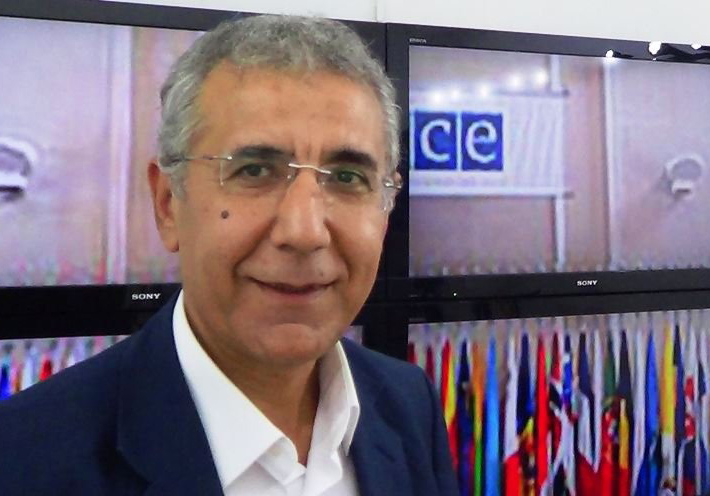
The ICJ welcomes the release of human rights lawyer Intigam Aliyev today after the Supreme Court reduced and suspended his sentence and ordered his immediate release.
Intigam Aliyev, a prominent human rights lawyer and the head of the NGO Legal Education Society, had been convicted on 22 April 2015 of tax avoidance, illegal entrepreneurship and abuse of power and sentenced to seven and a half years of imprisonment by a Baku Court.
A number of credible human rights organizations and international observers who have closely followed the case have stated that they consider the charges he was tried on to have been politically motivated, and that the real reason for his prosecution and conviction was repression by the Government of critical voices in civil society.
In a closed hearing, the Supreme Court reduced his sentence to five years of imprisonment and suspended its execution, after a request to this effect was made by Azerbaijan’s Prosecutor General, Zakir Garalov.
This unusual initiative follows the rejection, on 24 February, by the same Supreme Court of Intigam Aliyev’s complaint against his sentence.
“While the release of Intigam Aliyev is a positive step, the ICJ remains concerned that this decision appears to leave the underlying conviction in place despite credible reports that the charges were politically motivated,” said Massimo Frigo, ICJ Legal Adviser.
“If, as these allegations would suggest, Intigam Aliyev was targeted for his work as a lawyer, this would clearly violate international standards on the independence of lawyers”, said Temur Shakirov, another ICJ Legal Adviser.
Contact
Temur Shakirov, Legal Adviser, Europe Programme, temur.shakirov(a)icj.org
Massimo Frigo, Legal Adviser, Europe Programme, masimo.frigo(a)icj.org

Feb 19, 2016 | News
The ongoing incommunicado detention of human rights defenders Nguyễn Văn Đài and Lê Thu Hà must end, said today seven human rights groups, including the ICJ. It violates their right to freedom from torture and other cruel, inhuman or degrading treatment or punishment.
All charges against Nguyễn Văn Đài and Lê Thu Hà, should be withdrawn and they should be immediately and unconditionally released, the organizations added.
An incommunicado detention is one in which a detainee is held without access to the outside world, particularly to family, lawyers, courts and independent doctors. The practice of incommunicado detention violates key rights of persons deprived of liberty and facilitates torture and other ill-treatment. Prolonged periods of incommunicado detention can themselves constitute a violation of the prohibition on torture and other ill-treatment.
Nguyễn Văn Đài and Lê Thu Hà were arrested on 16 December 2015 and charged under Article 88 of the Penal Code, ‘Conducting propaganda against the state’. All efforts by family and legal counsel to visit the pair since their arrests have been denied.
Vietnam-Release prisoners-News-webstory-2016-ENG (full story, in PDF)

Nov 11, 2015 | News
While welcoming the Maldives government’s revocation of the emergency yesterday, the arbitrary manner in which the emergency was first imposed and then suddenly revoked within the span of a week reflects a deeper erosion of the rule of law in the country, the ICJ said today.
On 10 November, a week after declaring a 30-day state of emergency, the Maldives lifted the emergency reportedly because authorities had arrested several people in connection with an alleged plot to “use dangerous weapons and explosives”, thereby neutralizing the purported national security threat cited as the grounds for the emergency.
Maldivian authorities have not provided any information as to who or how many individuals were arrested or the nature of the charges.
“The imposition of a state of emergency is not a political tool to be used willy-nilly as a matter of convenience to suspend human rights protections and suppress political opposition,” said Nikhil Narayan, ICJ’s South Asia Senior Legal Adviser.
“A state of emergency that suspends constitutional rights is not to be declared lightly,” he added. “It has serious implications for human rights and the rule of law in the country, and must only be invoked in the most extreme situations and in accordance with international law.”
International law expressly permits derogations of certain human rights only in times of public emergency which threatens ‘the life of the nation’.
“Declaring a 30-day emergency and then suddenly lifting it a week later only reinforces the serious concerns previously raised as to the legitimacy of the emergency in the first place, and speaks to the larger rule of law crisis in the country,” Narayan said.
The emergency decree issued by the Maldives government last week suspended several constitutional rights, including the right to freedom of peaceful assembly, and reduced the constitutionally mandated period for the vice president to respond to impeachment charges from 14 to 7 days.
The opposition Maldivian Democratic Party (MDP) had planned a public anti-government demonstration for 6 November, two days prior to which the emergency was declared.
Meanwhile, the vice president was removed from his post the day after the emergency decree, 5 November, in a swift and seemingly arbitrary impeachment hearing.
“The circumstances surrounding events in the Maldives this past week clearly suggest that the government was using the emergency as a ploy to prevent the planned opposition rally and to eliminate the vice president as a political threat,” said Narayan.
The emergency also granted sweeping powers of search, arrest and detention without warrant to the police, who reportedly raided several buildings and arrested an unknown number of individuals under its emergency powers over the past week.
“The Maldives government cannot flout international law by invoking emergency powers as a means to deny the due process rights of the vice president and others arrested or detained for alleged crimes,” added Narayan. “The government must ensure that the individuals arrested during the emergency are afforded their full fair trial and due process rights in accordance with international law.”
Additional Information:
The ICJ previously raised concerns that the alleged grounds for the emergency did not appear to establish a threat to the life of the as required by the high threshold set by international law, and could not in any event justify the complete suspension of constitutional rights.
In August 2015, following a joint fact-finding mission to the Maldives, the ICJ and South Asians for Human Rights (SAHR) documented the breakdown of the rule of law and human rights in the Maldives in a 35-page report, Justice Adrift: Rule of Law and the Political Crisis in the Maldives.
Contact:
Nikhil Narayan, ICJ Senior Legal Adviser for South Asia, t: +977 9813187821 ; e: nikhil.narayan(a)icj.org