Sep 25, 2019 | News
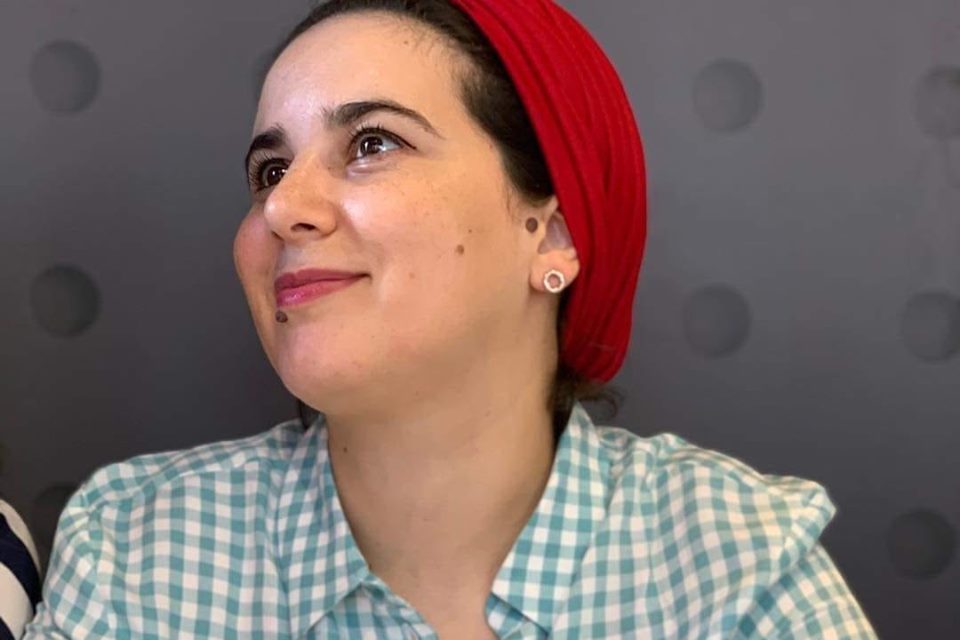
The Moroccan authorities should immediately and unconditionally release Moroccan journalist Hajar Raissouni and drop all charges against her, says the ICJ.
She was arrested on 31 August 2019, and has been detained since then on charges relating to “extra-marital sexual relations” and, purportedly, having consented to an “illegal abortion”.
Alongside Raissouni, the Moroccan authorities arrested and detained a medical doctor and two medical staff of the clinic where she had undergone medical treatment, and her fiancé. They too should be immediately and unconditionally released and have all charges against them dropped.
Raissouni is a journalist working for the independent daily newspaper Akhbar al-Yaoum. On 31 August, Raissouni and her fiancé were stopped in Rabat as they left the clinic where, according to her lawyers, she had been undergoing treatment for internal bleeding.
Plainclothes police officers questioned the couple about the medical treatment she had been receiving, and accused the journalist of having had an abortion.
After her arrest, Raissouni was forcibly subjected to a vaginal examination. She was then charged with “having an extramarital relationship” and with “consenting to have an illegal abortion”.
“Ms Raissouni’s rights to privacy, to bodily integrity and to be free from torture and other ill-treatment, as well as her rights to liberty and security of person, including her freedom from arbitrary detention, and her right to sexual and reproductive health, have been violated by the very same authorities that are supposed to respect and protect them,” said Said Benarbia, Director of the Middle East and North Africa Programme at the International Commission of Jurists (ICJ).
“She and others detained in connection with this case must be immediately and unconditionally released, the charges against them must be dropped, and their right to an effective remedy, including reparation must be ensured,” he added.
Raissouni, who was questioned after her arrest about her work as a journalist, recently covered mass demonstrations in the Rif region in the North of Morocco, where the protests by the local population were met with police repression.
This raises legitimate concerns over the political nature of the charges and prosecution against her.
On 5 September, the Rabat prosecutor’s office issued a public statement revealing that the results of the so-called medical examination to which Raissouni had been subjected purportedly indicated that she had undergone an abortion. The prosecutor also rejected all accusation that the charges against her were motivated by Raissouni’s work as a journalist.
On 23 September, Raissouni and the other accused, who remain in custody after their request for provisional release was rejected, appeared before the First Instance Tribunal of Rabat where they denied all charges.
Background
In Morocco, abortion is only allowed “if necessary to protect the mother’s health” (article 453 of the Penal Code) and is otherwise publishable with up to two years’ imprisonment and a fine (article 454). Consensual sex out of wedlock is also a criminal offence under article 490 of the Penal Code, punishable with up to one year’s imprisonment. These provisions are not consistent with Morocco’s obligations under international human rights law obligations, including the International Covenant on Civil and Political Rights to which Morocco is a State party.
In its 2019 report Obstacles to Women’s and Girls’ Access to Justice for Gender-based Violence in Morocco, the ICJ urged the Moroccan authorities to amend these provisions in order to recognize one’s right to sexual autonomy, among others, and to facilitate access to safe and legal abortion.
Download
Morocco-Abortion-News-web stories-2019-ARA (full story in Arabic, PDF)
Sep 24, 2019 | News
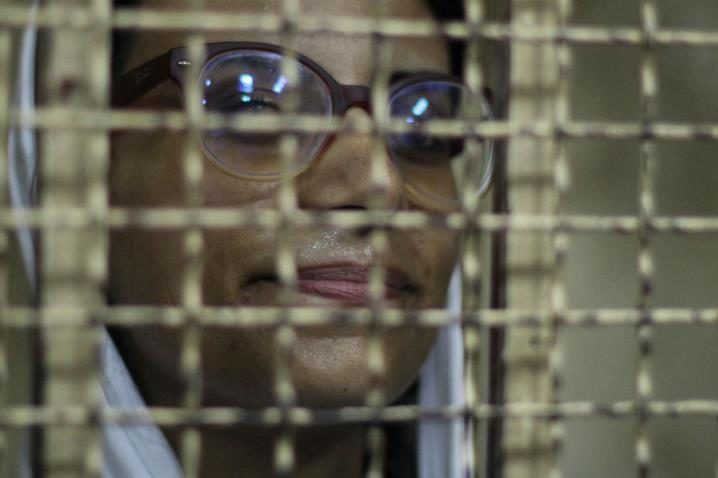
The ICJ today called for the immediate release of lawyer Mahienour al-Massry and hundreds of peaceful protestors who have been arbitrarily arrested by the Egyptian authorities in the context of recent protests against government corruption and President Abdel Fattah al-Sisi.
On 22 September 2019, Mahienour al-Massry was arrested by plain-clothes police officers outside the Supreme State Security Prosecution headquarters in Cairo, after representing five detainees in judicial investigations.
The next day she was brought before the same Supreme State Security Prosecution on unknown charges.
The detainees represented by Al-Massry had been arrested during the recent protests against President Sisi, which commenced on 20 September 2019 when hundreds of Egyptians took the streets in Cairo, Alexandria, Damietta, Mahalla al-Kubra and Suez, among other cities.
Police responded by firing tear gas and arresting hundreds.
Media accounts indicate that nearly 500 people have been arrested, most or all arbitrarily, since the protests commenced. However, documentation by local NGOs indicates that as many as 800 people may have been arrested, apparently for “participating in a ‘terrorist group’ operation” and “distributing fake news to disturb the public opinion.”
“The Egyptian authorities must drop the charges against Mahienour al-Massry, promptly release her and immediately stop persecuting, intimidating and interfering with the work of lawyers protecting the rights of others,” said Said Benarbia, Director of ICJ’s Middle East and North Africa Programme.
Mahienour al-Massry was charged in 2013 and again in 2015 for taking part in peaceful protests, for each of which she received one year-long terms of imprisonment.
Mahienour al-Massry’s recent arrest constitutes an effective sanction that violates her right to liberty under article 9 of the International Covenant on Civil and Political Rights and UN Basic Principles on the Role of Lawyers.
It also impedes the right of her clients to legal representation under article 14 of the ICCPR.
The ICJ previously filed a submission to the Universal Periodic Review regarding arbitrary arrests and detentions and systematic use of pre-trial detention in Egypt, and documented the use of the Egyptian justice system as a repressive tool to eradicate political expression and human rights work.
“The systematic use of arbitrary arrest and detention by State authorities is one of the very reasons Egyptians took to the street in protest,” said Benarbia.
“The authorities’ response provides further evidence of the widespread violations of rights Egyptians face under the current regime,” he added.
Contact:
Said Benarbia, Director of the ICJ Middle East and North Africa Programme, t: +41-22-979-3817; e: said.benarbia(a)icj.org
Download:
Egypt-al-Massry-News-web stories-2019-ARA (story in Arabic, PDF)
Aug 19, 2019 | Advocacy, Cases, Legal submissions
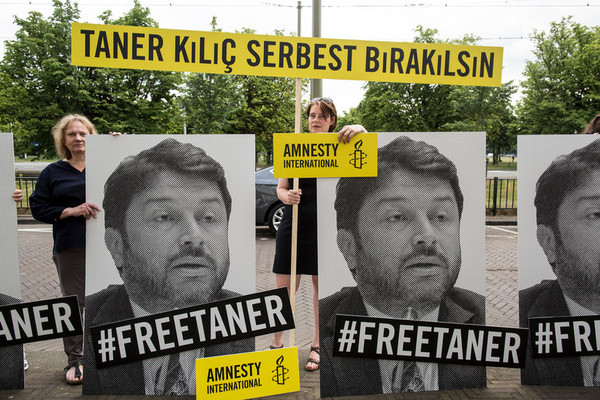
The International Commission of Jurists, the Turkey Human Rights Litigation Support Project and Human Rights Watch have jointly intervened before the European Court of Human Rights in the case of Taner Kiliç, former Chair of the Board of Amnesty International Turkey.
Taner Kiliç is a Turkish human rights defenders. He had been Chair of the Board of Amnesty International Turkey since 2014.
He was arrested on 6 June 2017 on reportedly unsubstantiated charges of “membership of a terrorist organisation” and was released on bail on 15 August 2018 after having spent 14 months in detention.
His case before the European Court of Human Rights challenges the lawfulness of his pre-trial and on remand detention, the violations of his right to judicial review of his detention, and of his freedom of expression and association, considering his arrest linked to his work as leader of a NGO.
As the interveners have written to the Court, this case epitomises some of the most fundamental human rights challenges in Turkey today.
These involve widely documented restrictions on freedom of expression, association, and assembly of human rights defenders (HRDs) and rapidly closing civil society space.
The interveners have submitted observations on:
- the factual context in respect of the situation facing HRDs in Turkey;
- international standards governing obligations towards HRDs of relevance to the Court’s interpretation of the European Convention on Human Rights, including the limits prescribed by Article 18;
- key principles necessary for a rule of law approach to the application of the criminal law, against the legal and practical pattern of excessive resort to criminal law against HRDs in Turkey today.
Turkey-ECtHR-icj&others-Kilic-Advocacy-legal submission-2019-ENG (download the third party intervention)
Photo credit: Amnesty International

Jul 8, 2019 | News
The ICJ welcomes the report issued today by the United Nations Office of the High Commissioner for Human Rights (OHCHR) documenting human rights violations and abuses in Indian administered Kashmir and Pakistan administered Kashmir.
The ICJ called upon both India and Pakistan to take immediate measures to implement the Report’s main recommendations, and to hold security forces as well as non-state actors accountable for human rights violations and abuses.
The Report follows a June 2018 report that documented similar violations, as well as the widespread impunity for human rights violations by Indian security forces and armed groups allegedly supported by Pakistan. The Indian Government has rejected both reports as a violation of its “sovereignty and territorial integrity”. The Pakistan government has welcomed the report and called for the establishment of a United Nations Commission of Inquiry.
“It is unfortunate that India has again refused to acknowledge the facts set out in the OHCHR report, or to pledge action on its recommendations,” said Frederick Rawski, Asia Pacific Director for the ICJ.
“This is an opportunity for India, a member of the Human Rights Council, to lead by example. It can start by repealing the Armed Forces Special Powers Act and launching an investigation into rights abuses in line with international standards and the guidelines set out by the Indian Supreme Court,” he added.
The Report documents human rights violations by Indian security forces including extrajudicial killings, arbitrary detentions, unlawful custodial deaths, enforced disappearances, and ill-treatment and torture, including rape and sexual violence, in Indian-administered Kashmir.
According to the Report, based on data from civil society organization Jammu and Kashmir Coalition of Civil Society (JKCCS), 71 extrajudicial killings were allegedly committed by security forces in 2018 (for a total of 1081 between 2008 and 2018). Between 2016 and 2018, 1253 people have been blinded by pellet guns.
The Report highlights how the extraordinary powers granted to security forces by the Armed Forces (Jammu and Kashmir) Special Powers Act, 1990 has been wielded arbitrarily and led to near total impunity from prosecution. In addition, it documents human rights abuses committed by non-state armed groups in Indian-administered Kashmir including kidnappings, killings and rape.
The Report also documents rights violations in Pakistan-administered Kashmir, including restrictions on freedom of expression and opinion, assembly and association, and the abuse of vague and overbroad anti-terrorism laws in contravention of international human rights law.
The Report documents cases of arbitrary arrest by local authorities and intelligence agencies, including charging 19 activists with treason for organizing a rally in November 2018, and the arbitrary detention of 30 members of the Jammu Kashmir National Students Federation in March 2019 by Pakistani law enforcement. The Report notes the particular vulnerability of journalists to threats, harassment and arbitrary arrest.
“While we commend Pakistan for welcoming the Report, the fact remains that the Government has done little to prevent the continuation of human rights violations by its security forces, or to implement the recommendations of the previous report,” Rawski said.
“Pakistan must take action to hold perpetrators of rights violations accountable, and take action to end threats and violence targeted at human rights defenders and journalists,” he added.
The ICJ called on both Pakistan and India to grant unconditional access to the OHCHR and Special Procedures of the UN Human Rights Council, and to ensure that human rights defenders and journalists can carry out their work without threats or reprisals from security forces and non-State armed groups.
The ICJ also underscores the importance of the OHCHR recommendation that the United Nations set up an independent commission of inquiry into allegations of rights violations by all parties to the conflict.
The ICJ urged both the Indian and Pakistan governments to respect, protect and fulfill their international human rights obligations in Kashmir, to accept the Report’s findings and take immediate and effective action to implement its recommendations.
Jun 13, 2019 | News
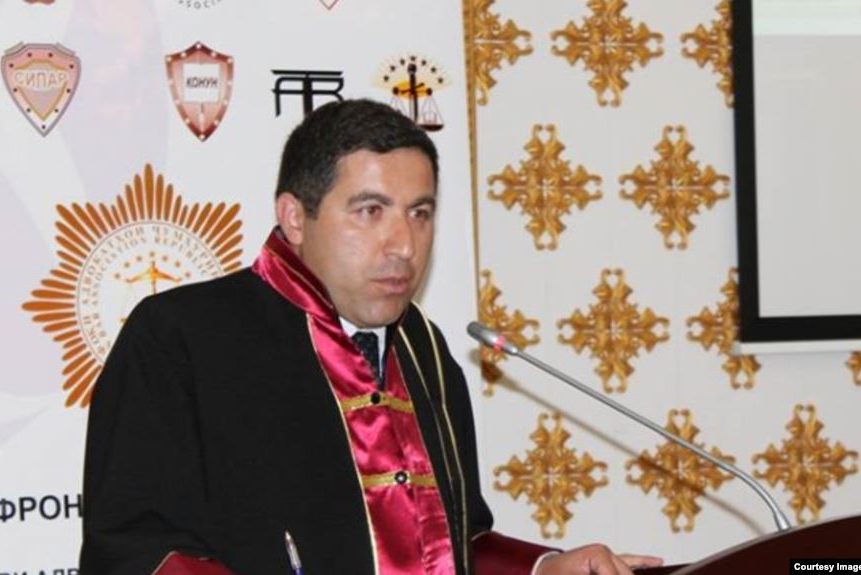
Today, the ICJ called on the authorities in Tajikistan to immediately release a prominent lawyer who is currently serving a sentence of imprisonment of 28 years on dubious charges.
The UN Working Group on Arbitrary Detention (WGAD) published a decision in Mr Yorov’s case on (date), finding that “the trials of Mr. Yorov were carried out in total disregard for the guarantees encapsulated in article 14 of the Covenant, being of such gravity as to give the deprivation of liberty of Mr Yorov an arbitrary character […].”
The Working Group recommended that the government remedy the situation of Yorov without delay and to this end “release Mr. Yorov immediately and accord him an enforceable right to compensation and other reparations, in accordance with international law”.
The ICJ has previously expressed concern that Buzurgmehr Yorov’s conviction may constitute a reprisal for his defense work in high-profile political trials in connection with his representation of thirteen leaders of the Islamic Renaissance Party of Tajikistan (IRPT).
The ICJ earlier expressed concerns at the conviction of the lawyer to a 28 year sentence in prison, which is based on clearly improper charges related to the defense of his clients.
The ICJ welcomes the decision of the WGAD and calls on the Tajikistan authorities to fully implement the decision and to take all necessary measures to protect lawyer Yorov, his family and his lawyers against any threats to their security, or any intimidation, hindrance, harassment or improper interference with their performance of their professional functions as lawyers.
In this regard, the ICJ notes recent protests by dozens of individuals who took part in a rally against Yorov in front of the representative offices of the United Nations and the European Union in Tajikistan, soon after the decision of the WGAD.
Posters of the demonstrators called on the UN High Commissioner of Human Rights to “take her hands off Tajikistan” and named organisations that had defended Mr Yorov or brought the petition on behalf of Yorov to the UN WGAD.
In this context, it is imperative that the Tajikistan government immediately publicly affirm the legitimacy of the decision of the WGAD and make clear its commitment to complying with it, the ICJ underlined.
Background
Buzurgmekhr Yorov was arrested two years ago on 28 September 2015, on charges of “fraud” and “forgery of documents.” Later, he was accused of violating three more articles of the Criminal Code, including in relation to alleged “public calls for extremist activity.”
On 6 October 2016, The Dushanbe City Court sentenced Yorov to 23 years imprisonment in a strict regime prison.
In March 2017, Yorov was sentenced to an additional two years’ deprivation of liberty for “contempt of court and insulting the representative of power.” In August 2017, he received a further three years sentence on charges of “insulting the president.”
The ICJ has, on a number of occasions, expressed its serious concerns over the arrest and conviction of Buzurgmehr Yorov and other lawyers in Tajikistan.
On 24 May 2019, the UN Working Group on Arbitrary Detention, a group of independent experts established in 1991 whose members are appointed by the UN Human Rights Council, published an Opinion finding a number of violations of human rights of Yorov protected under the International Covenant on Civil and Political Rights and recommended as a remedy his immediate release, payment of compensation or other reparation and conducting an investigation into the violation of Yorov’s rights.
The UN Basic Principles on the Role of Lawyers require that the Governments ensure that lawyers “are able to perform all of their professional functions without intimidation, hindrance, harassment or improper interference ”. Under these Principles “where the security of lawyers is threatened as a result of discharging their functions, they shall be adequately safeguarded by the authorities.” The right to “offer and provide professionally qualified legal assistance or other relevant advice and assistance in defending human rights and fundamental freedoms” is guaranteed by the Declaration on the Right and Responsibility of Individuals, Groups and Organs of Society to Promote and Protect Universally Recognized Human Rights and Fundamental Freedoms (Article 9.3(c)).