Dec 10, 2019 | News
Today’s decision from the European Court of Human Rights in the case of Turkish human rights defender Osman Kavala must be immediately complied with by releasing him from detention, the International Bar Association Human Rights Institute (IBAHRI) and the ICJ said today.
In the case of Kavala v Turkey, the European Court of Human Rights held that the detention of Mr Kavala, in connection with his role in the Gezi Park protests of 2013, violated the right to liberty (Article 5.1) and the right to a speedy judicial review of detention (Article 5.4) under the European Convention on Human Rights (ECHR). The Court also found that his detention involves a restriction on rights for an improper purpose (Article 18). As a consequence of these findings, the Court specifically held that ‘the government must take every measure to put an end to the applicant’s detention and to secure his immediate release’.
The Turkish government has a legal obligation to comply with the judgment of the European Court of Human Rights. The IBAHRI and ICJ urge the authorities to abide by their obligations under the ECHR by immediately releasing Mr Kavala.
Mr Kavala has been in detention since 18 October 2017 pending trial on charges connected to the Gezi Park protests. The Gezi Park protests began in May 2013 as an effort by a group of environmentalists to save a park in central Istanbul from being rezoned, but soon grew into nationwide demonstrations. Police quelled the protest in Taksim Square with the use of tear gas and water cannons.
Mr Kavala’s trial, along with 15 other defendants, is ongoing before Istanbul 30th Assize Court. The defendants are charged under Article 312 of the Turkish Criminal Code (an attempt to overthrow the Turkish government or an attempt to prevent it from fulfilling its duties), Article 151 (damage to property), Article 152 (qualified damage to property), Article 174 (possession or exchange of hazardous substances without permission), Article 153 (damaging places of worship and cemeteries), Article 149 (qualified robbery), Article 86 (intentional injury), crimes under the Law on Firearms, Knives and Other Tools no. 6136, and crimes under the Law on Protection of Cultural and Natural Assets no. 2863.
The IBAHRI and the ICJ have jointly sent international observers to attend all hearings of the trial. The organisations will jointly release a trial observation report upon conclusion of the trial.
Contact:
Róisín Pillay, Director, Europe and Central Asia Programme, t: +32 2 734 84 46 ; e: roisin.pillay(a)icj.org
Oct 21, 2019 | News
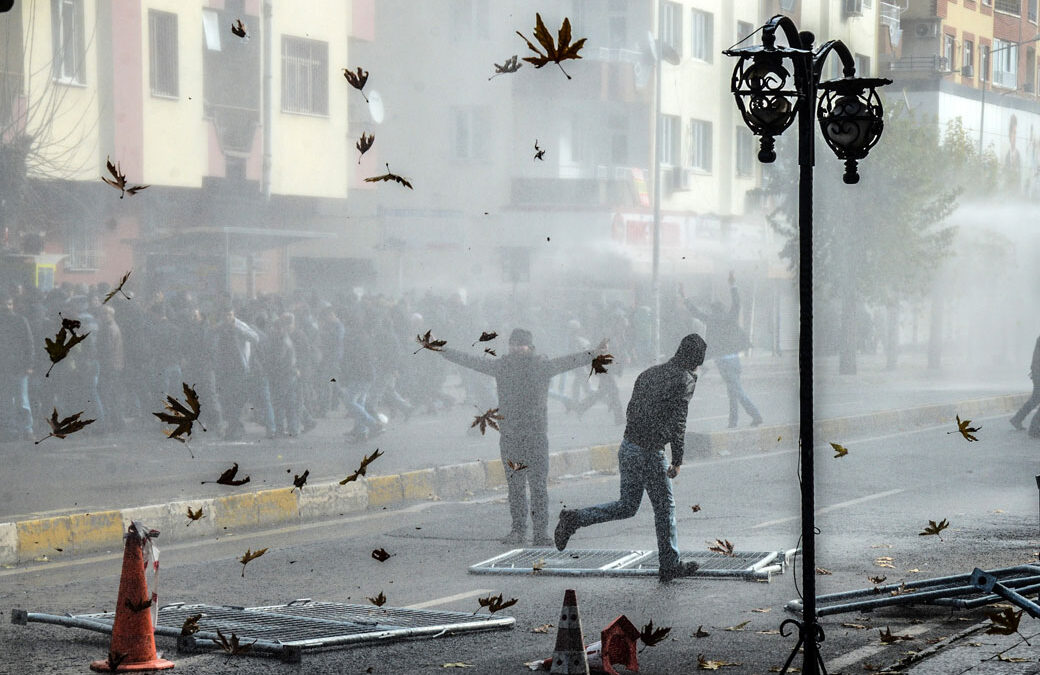
The ICJ has condemned the arbitrary arrest of at least 186 individuals – 24 of whom are still detained solely for their opinions publicly expressed against the Turkish intervention in northern Syria. The ICJ calls for their immediate and unconditional release and for all charges against them to be dropped.
At least 186 individuals had been arrested by Turkish authorities by 16 October after publicly criticizing Turkey’s military intervention in northern Syria.
They are accused of “provoking the public to hatred and animosity”, “carrying out propaganda for a terrorist organization” and “openly degrading the State of the Republic of Turkey” as prohibited by Articles 216, 220, 301 and 314 of the Turkish Penal Code and Article 7/2 of Prevention of Terrorism Law. Further such arrests are reportedly continuing.
Moreover, an investigation was launched against Istanbul MP Sezgin Tanrıkulu, a member of the main opposition Republican People’s Party (CHP), due to his social media messages and statements. HDP co-chairs and MPs were also investigated over “terrorism links” for their statements on the Peace Spring Operation.
“The Turkish Penal Code and Prevention of Terrorism Law in particular with their overly broad definition of terrorism, place excessively restrictive limitations on the exercise of the right to freedom of expression protected under Article 26 of the Turkish Constitution and give law-enforcement bodies sweeping powers to proceed to arbitrary arrests,” said Massimo Frigo, Senior Legal Adviser of the ICJ Europe and Central Asia Programme.
The ICJ is concerned that these arrests have been undertaken in contravention of the right to freedom of expression under article 19 of the International Covenant on Civil and Political Rights (ICCPR) and article 10 of the European Convention on Human Rights (ECHR), treaties to which Turkey is party.
In particular, these restrictions do not appear to be necessary in a democratic society and proportionate, as required by international law.
Detention ordered in breach of these rights is also inherently arbitrary and therefore not in line with Turkey’s obligations to respect the right to liberty under Article 9 ICCPR and Article 5 ECHR.
“These prosecutions violate the Turkish Constitution and international law and should be immediately dropped”, said Massimo Frigo.
“As a priority identified in its Judicial Reform Strategy, Turkey must also quickly abrogate these criminal provisions that cause undue and arbitrary restrictions on freedom of expression,” he added.
The ICJ recalled that the Venice Commission, in its 2016 report, concluded that the provisions of the Turkish Penal Code under which they are charged “provide for excessive sanctions and have been applied too widely, penalizing conduct protected” under international human rights law.
Similar issues were identified last July by Turkey’s Constitutional Court regarding prosecution for terrorism propaganda, of signatories of a petition calling for peace (the “Academics for Peace” petition) in the southeastern part of the country.
The Constitutional Court ruled that the criminal proceedings violated the right to freedom of expression safeguarded by Article 26 of the Turkish Constitution.
Contact:
Róisín Pillay, Director, ICJ Europe Programme, t +32 476 974263; e roisin.pillay(a)icj.org
Oct 4, 2019 | News
The ICJ today called on the Egyptian authorities to immediately release all lawyers arrested for discharging their professional functions, and ensure they and other lawyers in the country are allowed to perform their work without threats or intimidation.
The Egyptian authorities have arrested more than 2400 people over the past two weeks following anti-government protests.
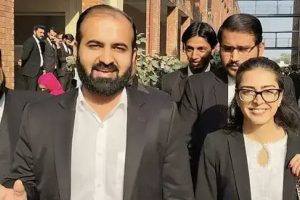
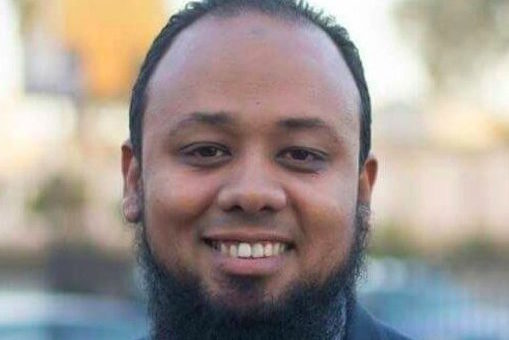
Many of the detainees’ lawyers have themselves been arrested, including Mahienour Al-Massry, Sahar Ali, Mohamed Salah Ajaj, Mohamed Al-Baqer (photo), Mohamed Helmy Hamdoun, Ahmed Sarhan, and Ahmed Abd El-Azim.
On 29 September, while representing prominent human rights defender Alaa Abdelafttah during questioning before the State Security Prosecution, lawyer Mohamed Al-Baqer was arrested and charged with, among other charges, “spreading false information aiming at disturbing the public and peaceful order” and “joining a terrorist organization.”
The ICJ has previously documented how lawyer Mahienour Al-Massry was arrested under similar circumstances, and called for her immediate release.
Mahienour was also charged with “spreading false information” and “joining a terrorist organization.”
“By arresting lawyers and prosecuting them on trumped-charges, the Egyptian military is dismantling the very last line of defense against its ruthless crackdown on human rights and fundamental freedoms, and silencing the very same voices that can still witness, challenge and report on its industrial-scale human rights abuses,” said Said Benarbia, ICJ MENA Director.
Under international standards reflecting core rule of law principles, lawyers must be able to discharge their professional functions without hindrance, harassment or improper interference.
They shall not suffer, or be threatened with prosecutions for any action taken in accordance with their professional duties.
The ICJ emphasized that these standards are there not only for the interests of the lawyers and those they represent or might in the future represent, but also to ensure that the rule of law remains operative for the society as a whole.
The Egyptian authorities must conform to these standards, refrain from its attacks against the legal profession, and immediately release all lawyers and other individuals arbitrarily detained.
Contact:
Said Benarbia, Director of the ICJ Middle East and North Africa Programme, t: +41-22-979-3817; e: said.benarbia(a)icj.org
Egypt-Attacks on Lawyers-News-web stories-2019-ARA (story in Arabic, PDF)
Oct 3, 2019 | Advocacy, Non-legal submissions
Today, the ICJ, jointly with the World Organisation against Torture (OMCT) and REDRESS, made a submission to the UN Universal Periodic Review (UPR) of the United States of America.
The joint submission focusses on the United States’ longstanding failure to:
(1) provide effective remedy and redress, including medical care, and
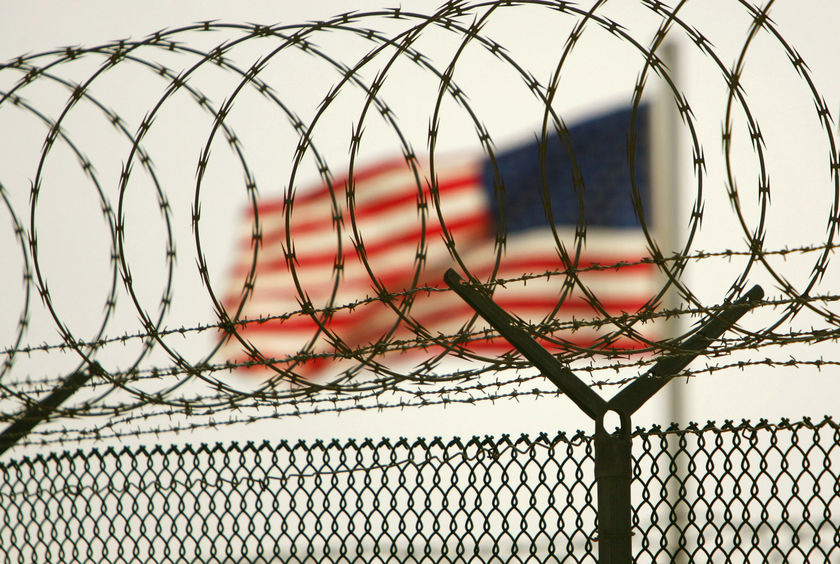
(2) guarantee fair trials to the “High Value Detainees” who are still held in Guantánamo, including Mr. Mustafa al Hawsawi.
Through a system of classifications, isolation, detention and counter-terrorism related policies the United States’ government is preventing a category of victims of torture and other ill-treatment from obtaining redress, fair trials and is securing impunity for perpetrators, contrary to recommendations in the previous UPR cycles.
For 18 years, the United States government has been violating numerous international human rights treaties it has ratified, first and foremost the Convention against Torture and Other Cruel, Inhuman or Degrading Treatment or Punishment and the International Covenant on Civil and Political Rights. Such violations deserve serious attention in the upcoming UPR review.”
USA-UPR Review-Advocacy-non-legal submissions-2019-ENG (submission in PDF)
Sep 27, 2019 | News
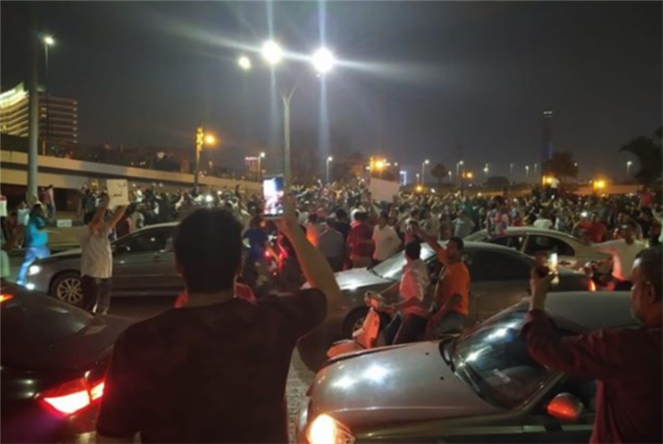
The ICJ today called on the Egyptian authorities to respect and protect the right of Egyptians to the freedom of expression, association and assembly, and ensure that all those arbitrarily detained over the past week in the context of recent protests against President Abdel Fattah Al-Sisi’s rule are immediately and unconditionally released.
On 26 September, the Office of the Public Prosecutor issued a statement confirming the detention of more than 1000 people following their “participation in protests” and “confessions” that their participation is related to “their dissatisfaction with the economic situation in the country,” and “opposition to the regime.”
Documentation by local NGOs indicates that as many as 2000 people may have been arrested, and that most of them were charged with “belonging to a ‘terrorist group’ and “distributing false information through social media aiming at disturbing the public order and opinion.”
“Egyptians taking to the street in protest are defying six years of Sisi’s government rampant corruption, relentless repression, and systematic dismantling of the rule of law and accountability safeguards,” said Said Benarbia, ICJ MENA Director.
Benarbia added, “By filling prisons with those purportedly dissatisfied with the situation in the country, Egypt’s prosecutors and judges are acting, yet again, as a docile tool of repression rather than a shield against the military’s crackdown on human rights and fundamental freedoms.”
As the country braces for new protests today, the ICJ is deeply concerned that Egyptian laws place overly restrictive limitations on the exercise of the right to freedom of assembly and give security forces sweeping powers to disperse protests, including by using lethal force when it is not strictly necessary to protect lives.
Six years after the killing by the armed and security forces of more than 1,000 individuals in the context of the dispersal of the Rabaa’ Al-Adawyia and Al Nahda Square sit-ins, the ICJ notes that not a single person has been brought to justice for the mass killings of protestors.
“Egyptian security and armed forces have a long history of recourse to unlawful and disproportionate use of force, including firing with live ammunition into crowds,” said Benarbia.
“They must comply with Egypt’s obligations under international law and guarantee the rights of protesters to life, to be free from torture and other ill-treatment, and to freedom of assembly, association and expression,” added Benarbia.
Contact:
Said Benarbia, Director of the ICJ Middle East and North Africa Programme, t: +41-22-979-3817; e: said.benarbia(a)icj.org
Download:
Egypt-free detainees-News-Press releases-2019-ARA (press release in Arabic, PDF)