Jan 30, 2017 | News
It is with great sadness that the ICJ has learned of Lawyer U Ko Ni’s death at Yangon International Airport today.
An armed man in the crowded airport reportedly shot him in the head at close range, along with U Nay Win a taxi driver who had tried to intervene.
The suspect was reportedly apprehended at the scene.
The ICJ stresses the need for a prompt, thorough and impartial investigation into the killing.
“It is vital that in the current climate of inter-religious tension that the rule of law is seen to prevail and for those responsible to be held criminally accountable,” said Sam Zarifi, the ICJ’s Asia-Pacific Regional Director.
“We await the results of the ongoing investigation,” he added.
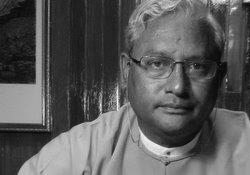
U Ko Ni (photo) was a prominent and well-respected legal figure in Myanmar.
He was a respected veteran of the democracy movement, an adviser to the National League for Democracy and Aung Sang Su Kyi.
He was a rare outspoken voice against discrimination and had recently advocated for laws against hate speech and for inter-communal harmony.
U Ko Ni was returning from an official visit to Indonesia with senior Buddhist and Muslim figures aimed at sharing experiences and overcoming inter-religious tensions when the attack occurred.
U Ko Ni was also a patron of the recently formed Myanmar Muslim Lawyers Association.
He was an outspoken critic of the “race and religion laws”, a legislative package of four bills supported by hardline nationalists, as well as a champion of religious tolerance.
“U Ko Ni was a principled lawyer. He was committed to protecting human rights, preventing hate crimes and the rule of law in Myanmar, and his presence as leading advocate will be deeply missed,” Zarifi added.
Nov 30, 2016 | Advocacy, News, Non-legal submissions
European Union Member States must ensure that a new effort to standardise counterterrorism laws does not undermine fundamental freedoms and the rule of law, a group of international human rights organisations said today.
Amnesty International, the European Network Against Racism (ENAR), European Digital Rights (EDRi), the Fundamental Rights European Experts (FREE) Group, Human Rights Watch (HRW), the International Commission of Jurists (ICJ) and the Open Society Foundations (OSF) are warning that the overly broad language of the new EU Directive on Combating Terrorism could lead to criminalising public protests and other peaceful acts, to the suppression of the exercise of freedom of expression protected under international law, including expression of dissenting political views and to other unjustified limitations on human rights. The directive’s punitive measures also pose the risk of being disproportionately applied and implemented in a manner that discriminates against specific ethnic and religious communities.
The groups call on EU Member States to ensure that implementation of the directive in national law includes additional safeguards to guarantee compliance with regional and international human rights obligations. These safeguards are especially important to ensure that any new laws passed, which will remain in place for years to come, cannot be used abusively by any government, including any that may be tempted to sacrifice human rights and due process in the name of pursuing security.
‘States must effectively address the threat of terrorism. But the EU has rushed to agree a vaguely worded counterterrorism law that endangers fundamental rights and freedoms,’ said Róisín Pillay, Europe Programme Director at the ICJ. ‘Time and again we’ve seen governments adopt abusive counterterrorism laws without assessing their effectiveness, and then implement them in ways that divide and alienate communities. We worry this directive will reinforce this trend and leaves too much leeway for governments to misuse the directive to violate rights.”
The groups also noted that the legislative process for adopting this directive lacked transparency and opportunity for critical debate. There was no impact assessment of the proposal, negotiations moved forward without parliamentary-wide review of the text, and the proposal was rushed through behind closed doors and without any meaningful consultation of civil society.
Despite the inclusion of a general human rights safeguarding clause and repeated caution from our organisations the final text fails to fully protect human rights within the EU:
• The directive repeats the EU’s already overly broad definition of ‘terrorism,’ which permits states to criminalise, as terrorism, public protests or other peaceful acts that they deem ’seriously destabilise the fundamental political, constitutional, economic or social structures of a country or an international organisation.’
• Significantly, the directive requires states to criminalise a series of preparatory acts that may have a minimal or no direct link to a violent act of terrorism, and may never result in one being committed. For example the offences of participating in a terrorist group, travelling or receiving training for terrorist purposed are not adequately defined. Unless these broadly outlined offences are subject to careful drafting and strong safeguards in national law, they are likely to lead to violations of rights, including the right to liberty and freedoms of expression, association, and movement.
• The directive criminalises the public distribution of messages, including messages that ‘glorify’ terrorist acts, if the distribution is intentional and causes a danger that a terrorist offence may be committed. However, such a low threshold likely to lead to abuse if not limited as the UN recommends ‘to incitement that is directly causally responsible for increasing the actual likelihood of an attack’. The directive should have incorporated this language to avoid unjustified interference with freedom of expression.
We welcome the directive’s protection of activities of recognised humanitarian organisations. However we remain concerned that the protection does not expressly extend to all individuals providing medical or other life-saving activities that international humanitarian law (IHL) protects during times of armed conflict.
States should take the directive as an opportunity to reassess their counterterrorism laws, policies and practices and engage with civil society and other stakeholders. We welcome the European Commission’s commitment to formally include civil society organisations in their activities to support transposition of the directive.
Contact:
Roisin Pillay, ICJ Europe Director, at roisin.pillay(a)icj.org or +32 2 734 84 46
eu-press-release-flawed-counterterrorism-directive-2016-eng (download the statement)
Nov 11, 2016 | News
The ICJ today condemned efforts by a group of States led by the African Group of the UN Members States to halt the work of the UN Independent Expert charged with protecting people from discrimination and violence based on sexual orientation and gender identity (SOGI).
The organization said that the move constituted an unwarranted interference with the independence and capacity of the Human Rights Council to discharge its mandate for the promotion and protection of all human rights and fundamental freedoms for all, without discrimination.
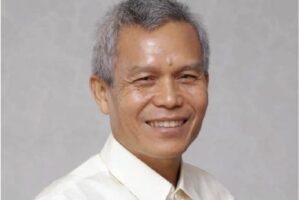
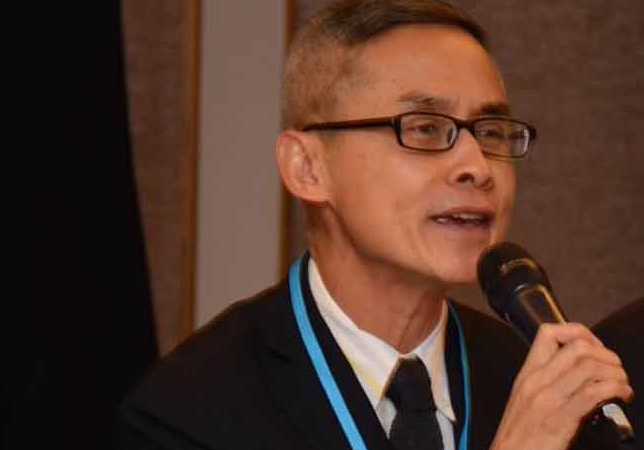
On 3 November 2016 Botswana on behalf of the African Group introduced a draft resolution before the Third Committee of the UN General Assembly in New York questioning the authority for the mandate of the Independent Expert Vitit Muntarbhorn (photo) and deferring action indefinitely on confirming the mandate’s establishment.
The ICJ is calling on the African Group to withdraw its draft resolution.
If a vote on the resolution does go ahead, the ICJ said that States must resoundingly reject it and send a signal to the world that the rights of all persons must be protected on an equal basis and that the UN Human Rights Council is capable of acting to secure such protection.
The ICJ considers that adoption of the resolution would represent a dramatic setback to the Human Rights Council’s efforts to tackle violence and discrimination based on SOGI.
Each year, the Third Committee of the UN General Assembly considers the Human Rights Council’s annual report.
This year, that report contains Human Rights Council resolution 32/2 on Protection against violence and discrimination based on sexual orientation and gender identity.
The Human Rights Council’s adoption of resolution 32/2 on 30 June 2016 made history by establishing the first-ever mandate of an Independent Expert of the Human Rights Council on protection against violence and discrimination based on SOGI.
In September this year the Human Rights Council appointed Prof. Vitit Muntarbhorn of Thailand to discharge this mandate.
Since then, Prof. Muntarbhorn has duly taken up his position and has begun fulfilling this work.
The draft resolution that the African Group has tabled at the Third Committee questions the basis in international law for the establishment of the Independent Expert’s mandate on SOGI and seeks to defer action on Human Rights Council resolution 32/2 indefinitely.
Since the Human Rights Council was set up in 2006, none of its resolutions mandating the establishment of a Special Procedure has ever been challenged by the General Assembly.
The ICJ considers that the adoption of the African Group’s resolution would set an extremely detrimental and regressive precedent by blocking the Human Rights Council from carrying out its own mandate.
It would undermine the UN’s preeminent human rights body’s overall authority by sapping its independence and ability to fulfil its mandate for the promotion and human rights for all without discrimination as it sees fit.
Contact
Livio Zilli, ICJ Senior Legal Adviser and UN Representative, t: +41 22 979 38 23 ; e: livio.zilli(a)icj.org
Read also
What is the Future of the SOGI Mandate and What Does it Mean for the UN Human Rights Council?
Nov 4, 2016 | News
The Myanmar government’s recently announced plan to enlist civilians as a ‘regional police force’ in Myanmar’s troubled northern Rakhine State is likely to aggravate an already dire human rights situation, warned the ICJ today.
“In a country where the regular police and military are notorious for grave human rights violations, it’s difficult to extend the benefit of the doubt to poorly trained civilians,” said Sam Zarifi, ICJ’s Asia Director.
“Establishing an armed, untrained, unaccountable force drawn from only one community in the midst of serious ethnic tensions and violence is a recipe for disaster,” he added.
Over the last month the region has experienced increased tension and violence including attacks on border police and allegations of human rights violations by security forces, including attacks on Rohingya villages and sexual assaults.
Humanitarian assistance and independent monitors, including the media, remain severely restricted in the area.
The Rakhine State police are recruiting civilians for the force along ethnic and religious lines, officially excluding Rakhine state’s Muslims, most of whom belong to the area’s persecuted Rohingya community.
Recruits will reportedly be armed and paid by the border police after undergoing abbreviated training.
The ICJ considers that a civilian regional police force necessarily lacks the adequate training and oversight to perform policing functions in accordance with human rights and professional standards on policing.
Moreover, there does not appear to be an appropriate accountability mechanism in place to deal with instances of misconduct and human rights abuses, the ICJ says.
Such a ‘regional police force’ will be dangerously under qualified and prone to committing human rights violations, especially as they will answer to the military rather than civilian government, the Geneva-based organization adds.
According to the ICJ, if a new security authority is contemplated, it must be a professional police force, whose members are recruited and trained in accordance with principles of non-discrimination and respect for human rights.
Police must also be accountable to the law and subject to administrative and judicial oversight.
The ICJ calls on the governments to establish and enforce effective reporting and review procedures for all incidents involving the use of force.
The government and police must ensure the following accountability measures are in place:
- Police are not deployed without comprehensive training on duties including restrictions on use of force and human rights obligations;
- An effective process to review the use of force, conducted by independent administrative or prosecutorial authorities is available;
- Access to an independent judicial process for persons affected by the use of force (including dependents) or their legal representatives, which is capable of providing for effective remedy and reparation for any abuses;
- Superior officers must be held responsible if they know, or should have known, that law enforcement officials under their command are using force without taking all measures in their power to prevent, suppress or report such use.
Accountability and oversight is essential to protect human rights and prevent escalation of conflict: a new force should not be raised without these guarantees, the ICJ says.
Contact
Sam Zarifi, ICJ’s Regional Director for Asia & Pacific, t: +66807819002
Background
Under international law, any body authorized by the State to perform security functions and use force, including lethal force, must respect human rights in performing their functions.
The United Nations Basic Principles on the Use of Force and Firearms set standards on the qualifications and the training of Law Enforcement Officials.
These Principles also provide standards on the use of force consistent with protecting the right to life.
Under the Principles, all law enforcement officials must receive continuous and thorough professional training, subject to periodic review. They must be screened and selected to ensure they have appropriate moral, psychological and physical qualities for the effective exercise of their functions.
Training must include appropriate guidance on the use of force with special requirements to carry firearms.
It must focus on issues of police ethics and human rights, especially in the investigative process, to alternatives to the use of force and firearms, including the peaceful settlement of conflicts, with a view to limiting the use of force and firearms.
Jun 30, 2016 | News
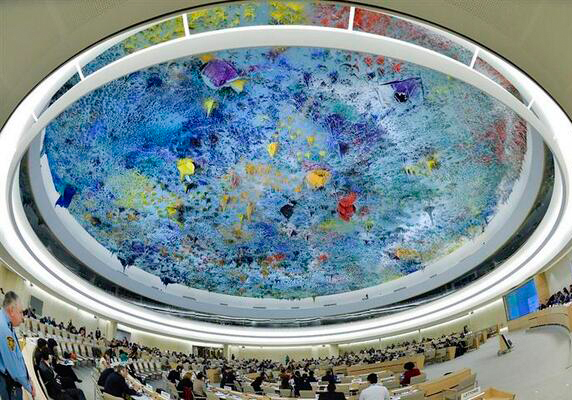
The United Nations Human Rights Council, in a defining vote, adopted a resolution on 30 June 2016, on “Protection against violence and discrimination based on sexual orientation, and gender identity,” to mandate the appointment of an independent expert on the subject.
It is a historic victory for the human rights of anyone at risk of discrimination and violence because of their sexual orientation or gender identity, a coalition of human rights groups said today. This resolution builds upon two previous resolutions, adopted by the Council in 2011 and 2014.
The Core Group of seven Latin American countries – Argentina, Brazil, Chile, Colombia, Costa Rica, Mexico, Uruguay – and 41 additional countries jointly presented the text.
The resolution was adopted by a vote of 23 in favor, 18 against and six abstentions.
“This is truly momentous,” said Micah Grzywnowicz, of the Swedish Federation for LGBTQ Rights (RFSL). “This is our opportunity to bring international attention to specific violations and challenges faced by transgender and gender non-conforming persons in all regions. It’s time for the international community to take responsibility to ensure that persons at risk of violence and discrimination because of gender identity are not left behind.”
“It’s a historic resolution,” said Josefina Valencia, of the International LGBTI Association for Latin America and the Caribbean, ILGA LAC. “Latin America has played a very important role to build a common course for the advancement of our human rights. We are proud of the international solidarity and the commitment shown by States for equality.”
The positive vote responds to a joint campaign of a record 628 nongovernmental organizations from 151 countries calling on the Human Rights Council to adopt the resolution and create the independent expert.
“It is important to note that around 70 percent of the organizations are from the global south,” said Yahia Zaidi of MantiQitna Network. “This is a powerful cross-regional message of strength to the UN to protect the rights of LGBTI persons. The independent expert will be a focal point for all violations based on SOGI and hence help grassroots organizations to better utilize the otherwise complex labyrinth of the UN system.”
The expert will be tasked with assessing implementation of existing international human rights law, identifying best practices and gaps, raising awareness of violence and discrimination based on sexual orientation and gender identity, engaging in dialogue and consultation with states and other stakeholders, and facilitating provision of advisory services, technical assistance, capacity-building, and cooperation to help address violence and discrimination on these grounds.
“To have an independent expert can be a ‘game-changer’ in counteracting violence which fuels the HIV epidemic in key populations and more specifically in LGBT communities,” said Alain Kra of Espace Confiance.
“It will ease the work of all human rights defenders and it is essential for our governments and people to have the knowledge on how to protect LGBT communities from any violence and discrimination they face,” added Joleen Mataele of the Tonga Leiti’s Association.
Although a number of hostile amendments seeking to introduce notions of cultural relativism were adopted into the text by vote, the core of the resolution affirming the universal nature of international human rights law stood firm.
The International Commission of Jurists believes that the UN Human Rights Council made history by creating a mandate empowering a UN Independent Expert specifically to address human rights violations perpetrated against people in all regions of the world because of discrimination against their real or imputed sexual orientation or gender identity.
Results of the vote
Voting in favor of the resolution
Albania, Belgium, Bolivia, Cuba, Ecuador, El Salvador, France, Georgia, Germany, Latvia, Macedonia, Mexico, Mongolia, Netherlands, Panama, Paraguay, Portugal, Republic of Korea, Slovenia, Switzerland, United Kingdom, Venezuela, Vietnam
Voting against the resolution
Algeria, Bangladesh, Burundi, China, Congo, Cote d’Ivoire, Ethiopia, Indonesia, Kenya, Kyrgyzstan, Maldives, Morocco, Nigeria, Qatar, Russia, Saudi Arabia, Togo, United Arab Emirates
Abstaining on the resolution
Botswana, Ghana, India, Namibia, Philippines, South Africa
Organizations supporting this statement:
- Access Chapter
- AIDES France
- Amnesty International
- ARC International
- Clóset de Sor Juana AC
- Egale Canada Human Rights Trust
- Espacio de Mujeres Lesbianas Salvadoreñas por la Diversidad (ESMULES)
- Federatie van Nederlandse Verenigingen tot Integratie van Homoseksualiteit – COC Nederland (Netherlands)
- Foundation for SOGI Rights and Justice (FORSOGI), Thailand
- FRI, the Norwegian Organisation for Sexual and Gender Diversity
- GALANG Philippines
- GATE – Global Action for Trans* Equality
- Human Rights Law Centre
- Human Rights Watch
- Iranti-org (South Africa)
- International Commission of Jurists
- ILGA LAC, Asociación Internacional de Lesbianas, Gays, Bisexuales, Trans e Intersexuales para América Latina y el Caribe
- International Lesbian, Gay, Bisexual, Trans and Intersex Association (ILGA)
- Lesbians, Gays and Bisexuals of Botswana (LEGABIBO)
- LGBT Denmark – the National Organization for Gay Men, Lesbians, Bisexuals and Transgendered People
- MantiQitna Network
- OutRight Action International
- Pacific Sexual Diversity Network
- Pan Africa ILGA
- Proyecto Arcoiris, colectivo anticapitalista e independiente
- Samoa Faafafine Association
- Swedish Federation for LGBTQ Rights (RFSL)
- TLF Share Collective – Philippines
- Tonga Leitis Association