Dec 3, 2018 | Advocacy, News, Non-legal submissions
Today, the ICJ joined fifteen other organizations to call on the Thai authorities and Thammakaset Company Limited to ensure that criminal and civil defamation complaints brought by the company against human rights defenders Nan Win and Sutharee Wannasiri do not proceed.
The charges have been leveled in connection with work by the two defenders to bring attention to labour rights violations at a Thammakaset-owned chicken farm in Thailand.
The organizations further called on the Thai authorities to act to ensure that no person is held criminally liable for defamation, including by decriminalizing defamation in Thai law and protecting individuals from abusive litigation aimed at curtailing the rights to freedom of expression and access to information and other activities of human rights defenders.
Today, the Bangkok Criminal Court will hold preliminary hearings on the criminal defamation complaints filed by Thammakaset Co. Ltd. against the two human rights defenders.
“This is the most recent in a series of spurious legal cases brought by companies in Thailand aimed at intimidating human rights defenders and curtailing their important work in defence of human rights,” said Ian Seiderman, ICJ’s Legal and Policy Director.
“Thai authorities must take all necessary measures in law and in practice to ensure that private business entities do not misuse the law to interfere with human rights such as freedom of expression and access to information.”
On 12 and 26 October 2018, Thammakaset Co. Ltd. filed criminal and civil defamation complaints against Nan Win, a migrant worker from Myanmar, and Sutharee Wannasiri, a woman human rights defender and a former Human Rights Specialist with Fortify Rights.
The complaints related to a 107-second film published by non-governmental organization Fortify Rights on 4 October 2017 that called on Thai authorities to drop criminal defamation charges against 14 migrant workers at a Thammakaset-operated chicken farm and to decriminalize defamation in Thailand.
Nan Win was one of the above-mentioned 14 migrant workers and faces a criminal defamation suit for reportedly testifying about alleged labour rights violations he faced in the Thammakaset-operated farm. Sutharee Wannasiri faces criminal and civil defamation suits for reportedly sharing information about the Fortify Rights film on Twitter.
If convicted of criminal defamation, Nan Win faces up to four years’ imprisonment and/or a fine of up to 400,000 Thai Baht (more than US$12,150) and Sutharee Wannasiri faces up to six years’ imprisonment and/or a fine of up to 600,000 Thai Baht (more than US$18,200). Thammakaset Co. Ltd. is also seeking five million Thai Baht (US$151,400) in compensation for alleged damage to the company’s reputation in its civil defamation suit against Sutharee Wannasiri.
“We urge the Thai government not only to uphold their own legal obligations, but also to remind business enterprises in Thailand that they are also responsible for upholding human rights under international standards and domestic law,” said Seiderman.
Thailand-Drop defamation Nan Win Sutharee Wannasiri-Advocacy-Joint Statement-2018-ENG (Joint Statement, English, PDF)
Thailand-Drop defamation Nan Win Sutharee Wannasiri-Advocacy-Joint Statement-2018-THA (Joint Statement, Thai, PDF)
Background
On 12 October 2018, Thammakaset Co. Ltd. filed a criminal defamation suit under sections 326 and 328 of Thailand’s Criminal Code against Sutharee Wannasiri, a former Thailand Human Rights Specialist with Fortify Rights, for three comments she was alleged to have made on Twitter related to the Fortify Rights film.
On 26 October 2018, Thammakaset Co. Ltd. filed a criminal defamation suit under sections 326 and 328 of Thailand’s Criminal Code against Nan Win, one of the 14 migrant workers from Myanmar, for two interviews he gave in a Fortify Rights film and during a Fortify Rights press conference on 6 October 2017.
On the same day, Thammakaset Co. Ltd. also filed a civil defamation suit against Sutharee Wannasiri citing the above mentioned alleged Twitter comments and demanding five million Thai Baht (more than USD 142,000) in compensation for alleged damage to the company’s reputation.
The UN Human Rights Committee has clarified that defamation laws must ensure they do not serve, in practice, to contravene the rights to freedom of expression and information protected under article 19 of the International Covenant on Civil and Political Rights (ICCPR) and enshrined under articles 34, 35 and 36 of the 2017 Constitution of Thailand. While civil penalties are appropriate to achieve a lawful aim of protection of reputation, the imposition of such penalties must be proportionate and strictly necessary to achieve a legitimate purpose.
Thailand has an obligation under international human rights law, including the ICCPR, to protect persons against the action of businesses that impair the exercise of human rights. The U.N. Guiding Principles on Business and Human Rights also clarify that business entities have a responsibility to uphold human rights. In August 2018, Thailand launched a revised draft National Action Plan on Business and Human Rights in order to implement the U.N. Guiding Principles.
Contact
Ian Seiderman, ICJ Legal and Policy Director, email: ian.seiderman(a)icj.org
Other reading
For recent ICJ advocacy on similar criminal defamation proceedings launched against labour rights defender Andy Hall, see:
ICJ, Lawyers Rights Watch Canada, ‘Thailand: amicus in criminal defamation proceedings against human rights defender Andy Hall’, 26 July 2016
ICJ, ‘Thailand: verdict in Andy Hall case underscores need for defamation to be decriminalized’, 20 September 2016
For recent ICJ advocacy on the misuse of defamation laws in Thailand against human rights defenders, see:
ICJ, ‘Thailand: immediately stop criminal defamation complaint against torture victim’, 15 February 2018
ICJ, ‘Thailand: ICJ welcomes decision to end proceedings against human rights defenders who raised allegations of torture’, 1 November 2017
ICJ, ‘Thailand: stop use of defamation charges against human rights defenders seeking accountability for torture’, 27 July 2016
Oct 1, 2018 | News
The ICJ expressed disappointment regarding Friday’s ruling by Thailand’s Administrative Court dismissing a case filed against the Royal Thai Police (RTP) for unjustified restriction of the freedom of peaceful assembly and freedom of expression, and again called on Thailand to lift its ban on political gatherings and fully reinstate fundamental freedoms in Thailand.
On 28 September 2018, the Administrative Court dismissed a case filed by the organizers of a “We Walk Friendship March” (‘We Walk march’) against the RTP and six policemen for restricting the march on the basis that it was in violation of Head of NCPO Order No. 3/2558 (2015) (‘HNCPO Order 3’).
The Administrative Court referred to the Thai Constitution, the Public Assembly Act B.E. 2558 (2015), the International Covenant on Civil and Political Rights (ICCPR) to which Thailand is a State party, and HNCPO Order 3, in deciding that the march was a public assembly. Its decision clarified that the case had to be dismissed as the RTP’s actions had complied with the Public Assembly Act.
“It is astonishing that more than four years after the coup, HNCPO Order 3 and other repressive laws, orders and announcements which restrict fundamental freedoms remain in place,” said Kingsley Abbott, Senior Legal Adviser at the ICJ.
“The Administrative Court missed a critical opportunity to deliver an opinion that the ban on political gatherings should be lifted and that all laws, orders and announcements that are inconsistent with Thailand’s international human rights obligations should be amended or revoked immediately to reinstate all fundamental freedoms in Thailand,” added Abbott.
The march, which went ahead peacefully, aimed to bring attention to the need in Thailand for universal healthcare services, policies guaranteeing food security, laws that would not violate human rights, and public participation in the development of the Constitution.
Contact
Kingsley Abbott, ICJ Senior Legal Adviser, email: kingsley.abbott(a)icj.org
The ICJ’s full statement in English is available here: Thailand-Ban on Political Gatherings-News-Web Story-2018-ENG
The ICJ’s full statement in Thai is available here: Thailand-Ban on Political Gatherings-News-Web- Story-2018-THA
Sep 26, 2018 | Advocacy, Non-legal submissions
The ICJ today highlighted the steep decline for human rights and the rule of law in Cambodia, at the UN Human Rights Council in Geneva.
The statement, made during an interactive dialogue with the Special Rapporteur on the situation of human rights in Cambodia, read as follows:
“Mr President,
The findings reported by the Special Rapporteur on the situation of human rights in Cambodia (A/HRC/39/73; A/HRC/39/73/Add.1), detailing the steep decline for human rights and rule of law in Cambodia prior to and during the 2018 national elections, demonstrate the utter inadequacy of the Human Rights Council’s current focus on technical assistance and capacity-building in Cambodia.
The elections, neither free nor fair, resulted in the ruling party winning all seats in the National Assembly. Post-election, the Government continues to misuse laws to violate rights and harass journalists, human rights defenders, political opposition members and ordinary individuals, as evidenced by the following updates to cases highlighted by the Special Rapporteur.
Unjustified espionage charges hang over two journalists, who spent eight months in detention before being released pending trial.[1] A filmmaker, sentenced to imprisonment for alleged espionage after flying a drone over an opposition rally, was only released by royal pardon after more than a year in jail.
Days after release from two years in jail for conducting a peaceful protest, a land rights activist was handed a six-month suspended sentence for a politically-motivated charge from 2012.[2] Following his release after 18 months in prison for alleged defamation and incitement offences, a political commentator fled Cambodia when fresh politically-motivated charges were mounted against him.[3]
Treason charges remain active against Kem Sokha, leader of the now-dissolved main opposition party, now under house arrest.[4]
A barber and a school principal remain imprisoned for allegedly sharing information online in breach of a lese-majeste law.[5] A woman remains imprisoned for alleged insult and incitement offences for throwing a shoe at a ruling party billboard.[6]
Today, four senior staff from a prominent civil society organization and a National Election Committee official were convicted under politically-motivated charges and handed five-year suspended imprisonment sentences.[7]
Madam Special Rapporteur, what approach should the Council, governments and civil society take to ensure human rights and the rule of law in Cambodia, given that technical assistance and capacity-building alone seem clearly not to be having the necessary effect?
Thank you.”
[1] A/HRC/39/73/Add.1, para 42.
[2] A/HRC/39/73, para 13.
[3] A/HRC/39/73/Add.1, para 35.
[4] A/HRC/39/73/Add.1, paras 18 and 19.
[5] A/HRC/39/73/Add.1, para 46.
[6] A/HRC/39/73/Add.1, para 30.
[7] A/HRC/39/73, para 13; A/HRC/73/Add.1, para 35
Sep 20, 2018 | Advocacy, Non-legal submissions
The ICJ today put the spotlight the lack of independence of the legal profession in Azerbaijan speaking at the UN Human Rights Council in Geneva.
The statement, made during the consideration of the Universal Periodic Review (UPR) of Azerbaijan, read as follows:
The International Commission of Jurists (ICJ) welcomes the acceptance by Azerbaijan of the recommendations by France (140.70), by Greece (141.12), Austria (141.13), Estonia (141.68), Slovenia (141.71), and Mexico (141.77), to respect the rights of lawyers.
The ICJ regrets, however, that Azerbaijan only noted and did not explicitly support the recommendations by Sweden (141.33), USA (141.39), Czechia (141.67) and Germany (141.76) and rejected the recommendation by the United Kingdom (141.60) to “End all interference in the work of lawyers through disbarment or other disciplinary measures on improper grounds such as expressing critical views.”
These recommendations call for the amendment of the Law on Advocates and Advocates’ Activities to ensure the effective independence of the Bar Association of Azerbaijan. They also call for the setting up of independent and transparent mechanisms for lawyers’ admission to practice, and disciplinary proceedings against lawyers, in conformity with the UN Basic Principles on the Role of Lawyers.
The ICJ notes that Azerbaijan’s support of most recommendations is predicated on the assumption that the situation of the independence of the legal profession in Azerbaijan is in line with international law.
This, however, is not the situation in the country.
The ICJ expresses concern at the persistent lack of independence of the Bar Association of Azerbaijan; indeed, it has actually played a role in undermining the work of lawyers defending human rights. The situation is exacerbated by recent hasty reforms that prohibit lawyers from appearing in any court hearing unless they are members of this non-independent Bar association, furthermore without a sufficient and meaningful transition period. This seriously curtails access to justice for human rights violations in the country.
Sep 10, 2018 | News
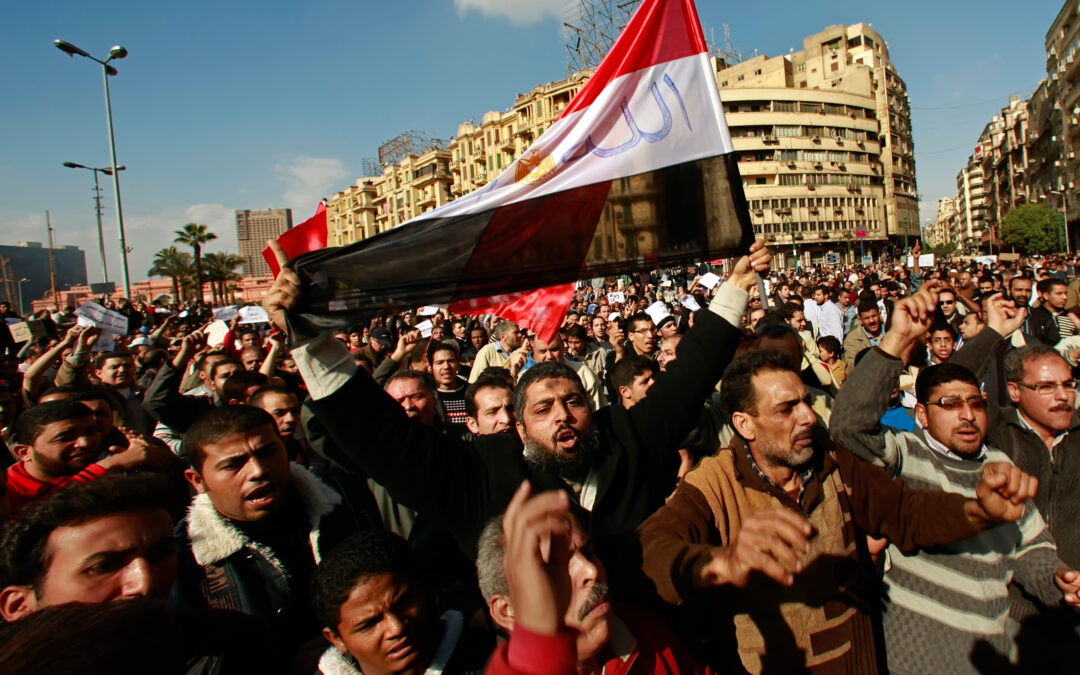
Today, the ICJ condemned the mass convictions of some 739 defendants, 75 of whom were sentenced to death, by the Cairo Criminal Court, in connection with a sit-in protest at Raba’a Al Adaweyya square in August 2013.
The ICJ deplored that the convictions had followed a grossly unfair trial and called on the Egyptian authorities, including the prosecutorial authorities, to take immediate steps to quash them.
The ICJ said that as an immediate matter the death sentences, issued in contravention of Egypt’s international legal obligations, must be vacated.
In addition to the death sentences, another 658 individuals were sentenced either to life imprisonment or to five to 15 years’ imprisonment, including journalists and others monitoring the sit in, many of them in high security facilities.
The accused were convicted of offences including “killing police officers,” “taking part in an illegal assembly,” “joining an illegal group,” and “vandalism and other acts of violence” following dispersal of a sit-in protest at Raba’a square.
The convictions follow a grossly unfair trial in which rights of the accused to a presumption of innocence and to legal counsel, among others, were violated and many accused were arbitrarily detained.
“The trial, with its industrial-scale convictions and blatant disregard of basic fair trial guarantees, is yet another example of how Egypt’s judiciary is being used by the military and the executive to crush freedom of expression, assembly, and association; silence any and all critical voices, and intimidate witnesses of human rights violations,” said Said Benarbia, Director of the ICJ’s Middle East and North Africa Programme.
The trial was marred by a litany of fair trial violations. A presumption in favour of pre-trial detention was routinely applied.
Of the 739 defendants tried, all 320 arrested were held in pre-trial detention for more than five years, protestors and protest monitors alike.
For example, photo journalist Mahmoud Abu Zeid, known as “Shawkan”, was arrested while covering the Raba’a dispersal and was in pre-trial detention throughout the trial.
The Cairo Criminal Court convicted the defendants without making individual findings of guilt or relying on credible evidence, violating the presumption of innocence.
Four hundred and nineteen defendants were tried in absentia—a number of whom may have been sentenced to death—without the opportunity to mount a meaningful defence.
Charges such as “joining an illegal group” were also blatantly unfounded insofar as they targeted journalists and others reporting on the sit in.
“The convictions are unreliable and ought to be quashed. Those convicted solely for the legitimate and peaceful exercise of their rights to freedom of expression, association and assembly must be immediately and unconditionally released,” added Benarbia.
The ICJ opposes the use of the death penalty in all circumstances as a violation of the right to life and a form of cruel, inhuman and degrading punishment.
It has previously called on Egypt to respect repeated Resolutions by the UN General Assembly for all retentionist States to impose an immediate moratorium on the death penalty with a view to abolition.
Under international standards, proceedings in death penalty cases must conform to the highest standards of judicial independence, competence and impartiality, and must strictly comply with all fair trial rights.
The ICJ previously documented how the Egyptian Judiciary has consistently failed to conform to these standards, and has instead been using the administration of justice as a tool of repression.
The ICJ has underscored that International Covenant on Civil and Political Rights, to which Egypt is a party, protects the rights to liberty, to a fair trial, to life, to freedom of expression, to freedom of assembly, and to an effective remedy against violations of human rights.
The ICJ is particularly concerned that impunity continues to prevail over the gross human rights violations committed by armed and security forces in the course of the dispersal.
In this regard, the UN High Commissioner for Human Rights, Michelle Bachelet noted the contrast between Saturday’s decision and Egypt’s adoption of Law 161(2018) in July, which effectively immunized security forces from prosecution for offences committed between 3 July 2013, the date of the military coup, and January 2016.
The High Commissioner further warned that “justice must apply to all” and that immunizing security personnel by such a law only “promotes impunity, and undermines the faith of the Egyptian people in the Government’s capacity to deliver justice for all.”
“It is a measure of the absolute subordination of the judiciary to the will of the military and executive that not a single person has been held accountable for the unlawful killings of hundreds of protesters, and that those arrested and prosecuted in the context of the dispersal are convicted and sentenced to death and cumulatively thousands of years’ of imprisonment,” Benarbia said.
Egypt-Rabaa Ruling-News-webstory-2018-ENG (full text, PDF)