Apr 25, 2018 | News
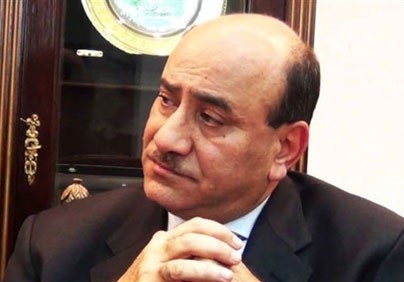
The ICJ today called on the Egyptian authorities to quash the conviction of, and immediately release Hisham Geneina, a former judge and former head of the Central Auditing Authority in Egypt.
A Cairo military court convicted Geneina on Tuesday 24 April and sentenced him to five years in prison for “publishing false information harmful to the national security.”
The charges were related to a media interview in which Geneina criticized the interference of the Egyptian authorities in the election process and referred to the existence of documents that incriminate political and military leaders since 2011, including in cases of human rights violations.
The first hearing of the military trial took place on 18 April.
At the defense request, it was adjourned to 20 April so that the lawyers can have access the case file. The judgement was issued 4 days later.
“Genina’s detention, prosecution and conviction solely for peacefully and legitimately exercising his right to the freedom of expression is a testament to the length to which Egypt’s military and government would go to silence critical voices,” said Saïd Benarbia, ICJ MENA Director.
“After a grossly unfair trial before a military court that he should never have been prosecuted before in the first place, Egyptian authorities must stop the charade and immediately and unconditionally release Hisham Geneina,” he added.
Egypt – Geneina – News – Webstory – 2018 – ARA (Arabic translation in PDF)
Background
Hesham Genena was arrested on 13 February following a media interview in which he claimed, among other things, that the former Chief-of-staff Sami Annan was in possession of documents incriminating the country’s political and military leadership.
One day before his arrest, the military spokesperson said that Genena’s statement casts doubts on the State and its institutions in the time where the armed forces are combating terrorism in Sinai.
He added that the armed forces will use their rights as provided for in the Constitution and the law to protect national security, and that they will refer the matter to the relevant authorities to take legal action.
According to information provided by his lawyer, Geneina is currently in solitary confinement in the Cairo Appeal Prison and his health condition is deteriorating due to injuries related to a physical attack against him on 27 January, for which he needs surgical intervention.
Mar 27, 2018 | News
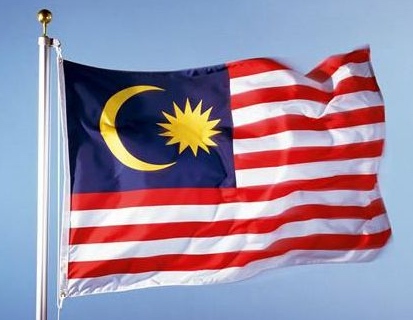
The ICJ and Suara Rakyat Malaysia (SUARAM) today urged Malaysia’s Parliament not to pass the Anti-Fake News Bill 2018.
The two organizations are concerned that the bill will unduly limit freedom of opinion or expression in Malaysia, and could be used to suppress legitimate criticism of the government.
“The bill is flawed in its design and will be open to abuse by the Malaysian government which maintains a poor track record in upholding freedom of expression,” said Sevan Doraisamy, SUARAM’s Executive Director.
“The term ‘fake news’ is in itself problematic. It is defined in an overbroad manner in the draft law, and therefore vulnerable to arbitrary interpretation and enforcement,” said Emerlynne Gil, ICJ’s Senior International Legal Adviser.
“Given past experience in Malaysia, it is highly likely to be used to suppress legitimate criticism of the government on matters of opinion or where the facts are contested,” she added.
The right to freedom of opinion and expression is guaranteed by the Federal Constitution of Malaysia, as well as the Universal Declaration of Human Rights.
The bill makes no provision for exceptions or defences such as honest mistake, parody, artistic merit, or public interest. The bill would allow up to ten years imprisonment.
“The penalties are wildly disproportionate,” said Gil. “Indeed, under international standards, imprisonment is never an appropriate penalty for such offences.”
On 3 March 2017, the UN Special Rapporteur on Freedom of Opinion and Expression, together with his counterparts from the Organization for Security and Cooperation in Europe (OSCE), the Organization of American States (OAS), and the African Commission on Human and People’s Rights (ACHPR), issued a joint declaration on ‘fake news’, disinformation, and propaganda.
The joint declaration emphasized that “the human right to impart information and ideas is not limited to ‘correct’ statements, that the right to also protects information and ideas that may shock, offend and disturb.”
It also said that “general prohibitions on the dissemination of information based on vague and ambiguous ideas, including ‘false news’ or ‘non-objective information’ are incompatible with international standards for restrictions on freedom of expression.”
The ICJ and SUARAM also note that the timing and the lack of transparent consultation on how it was developed raise concerns about the government’s motivation behind the introduction of this bill.
The bill has been introduced during the final days of Parliament sitting and is expected to be voted on within this week, leaving little time for deliberation or consultation.
“Allowing this bill to be passed would only serve as an affront to democratic values. It will be another strike on Malaysia’s already shoddy human rights record,” Doraisamy said.
“Adopting a law that would unduly limit the right to freedom of opinion and expression is not the optimal way to counter disinformation and propaganda,” said Gil.
“The best way is to disseminate accurate information and to make such information accessible to everyone,” she added.
The ICJ and SUARAM strongly urge the Malaysian parliament not to pass the Anti-Fake News Bill 2018 and uphold the right to freedom of opinion and expression in the country.
Contact
Emerlynne Gil, Senior International Legal Adviser for Southeast Asia of ICJ, t: + 662 619 8477 (ext. 206) ; e: emerlynne.gil@icj.org
Background
The Anti-Fake News Bill 2018 has been tabled for first reading at the Malaysian Parliament on 26 March 2018 and may be voted on this week or early next week.
The bill defines ‘fake news’, without any defences or exceptions, as including “any news, information, data and reports” which are “wholly or partly false”.
Furthermore, the bill states that ‘fake news’ may be “in the form of features, visuals or audio recordings or in any other form capable of suggesting words or ideas.”
If passed, any person may be subject to a penalty of up to ten (10) years imprisonment and/or a fine amounting to MYR 500,000 (approximately USD 127,681) if convicted of knowingly creating, offering, publishing, printing, distributing, circulating, or disseminating any ‘fake news’ or publication of ‘fake news’.
The bill also seeks to penalize both Malaysians and foreigners alike, even if they are outside of Malaysia, as long as the fake news concerns Malaysia or a Malaysian citizen.
Mar 19, 2018 | Advocacy, Non-legal submissions
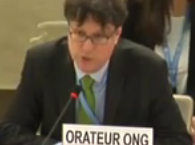
The ICJ today delivered an oral statement at the UN calling on Pakistan to amend or repeal blasphemy laws, end military trials of civilians, and take effective measures against impunity.
The statement was delivered during the adoption of the Universal Period Review Outcome for Pakistan, at the UN Human Rights Council. It read as follows:
“The International Commission of Jurists (ICJ) regrets that Pakistan has not supported recommendations related to amending its blasphemy laws, ensuring its counter-terrorism measures are compatible with human rights, and combatting impunity for serious human rights violations.
Pakistan’s blasphemy laws are frequently misused; blatantly discriminate against minority religions and sects; infringe upon the rights to freedom of expression and religion; and give rise to serious fair trial concerns. The Government has failed to amend them in accordance with its international law obligations.
In January 2015, Pakistan empowered military courts to try people accused of terrorism-related offences. The ICJ has documented serious fair trials violations in the operation of military courts including: denial of the right to counsel of choice; failure to disclose the charges against the accused; denial of a public hearing; and a very high number of convictions based on ‘confessions’ without adequate safeguards against torture and other ill-treatment.
The Government has also failed to take steps to combat impunity for serious human rights violations such as extrajudicial killings, enforced disappearances, and torture and other ill-treatment, which are facilitated by laws such as the Actions (in aid of civil power) Regulation and other national security legislation.
Despite repeated commitments to do so, Pakistan has also not enacted legislation to recognize torture or enforced disappearance as a distinct, autonomous offence in its penal code.
The ICJ therefore urges the Government to reconsider, accept and implement UPR recommendations to:
- Ensure that military courts have no jurisdiction over civilians, including for terrorism-related offences;
- Repeal or amend all blasphemy laws, in line with international standards; and
- Ensure all perpetrators of serious human rights violations – including enforced disappearance and extrajudicial killings –are brought to justice.”
Video of the ICJ statement is available here:
Mar 14, 2018 | Advocacy, Non-legal submissions
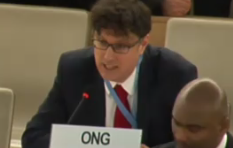
At the UN the ICJ today called on Thailand to stop misusing laws to restrict fundamental freedoms.
The statement was delivered during the general debate on situations requiring the attention of the Human Rights Council (item 4) and read as follows:
“Mr President,
The ICJ remains concerned at continued misuse of the law to restrict fundamental freedoms in Thailand.
By invoking military orders, criminal defamation laws and sedition-like offences, the Computer-Related Crime Act, and the Public Assembly Act, the legal system has been misused to harass human rights defenders, academics, lawyers, journalists, victims of human rights violations and their family members.
For example, this year alone, acting on complaints filed by the military, the police charged more than 50 people with violating a ban on political gatherings of five or more persons, put in place after the military coup of May 2014. Merely for exercising their human rights, people face a potential sentence of imprisonment. In one case, last year, police charged five academics and students after a banner reading “This is an academic forum not a military camp” was displayed at a University.
In February, security forces filed a complaint of defamation against an alleged victim of torture, Isma-ae Tae, simply because he was shown on television describing being tortured and ill-treated in military camps.
The ICJ urges Thailand to revoke or amend all laws, orders and announcements that are contrary to the rule of law and human rights protections, and to prevent the legal system from being misused to harass individuals who merely exercise their human rights.
Thank you Mr President.”
Video of the statement of the ICJ is available here:
Thailand-Misuse of laws restricts fundamental freedoms-Statement-HRC-2018-THA (Full statement in Thai, PDF)
Mar 1, 2018 | Advocacy, Non-legal submissions
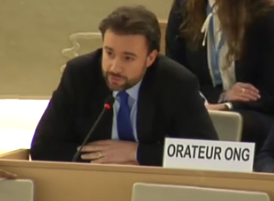
The ICJ today delivered an oral statement to the UN Human Rights Council, on attacks on lawyers and the legal profession in Turkey, Azerbaijan, Kazakhstan and China.
The statement, which was made during an interactive dialogue with the UN Special Rapporteur on human rights defenders and the UN Special Rapporteur on Torture, read as follows:
Our organizations welcome that the main report (A/HRC/37/51, para 13) and communications report (A/HRC/37/51/Add.1, e.g. paras 278-297, 431, 508-510) of the Special Rapporteur on Human Rights Defenders recognizes the role of lawyers as human rights defenders. In this regard, we would highlight the global problem of continued attacks on lawyers and threats to the independence of their profession, including for example as is well known in China (A/HRC/37/51/Add.1, paras 278-297), but also in Azerbaijan, Kazakhstan and Turkey.
In Azerbaijan, lawyers face criminal prosecution, suspension or disbarment for statements clearly constituting protected freedom of expression. The lack of independence of the Bar Association is a serious concern, even more so now that new legislation prohibits lawyers from representing clients before courts unless they become a member.
In Kazakhstan, a proposed new law threatens the independence of lawyers by providing for representatives of the executive to be included on disciplinary bodies of the legal profession, contrary to international standards.
Finally, the situation of lawyers in Turkey under the current state of emergency is of particular concern. In particular, echoing the recent statement of five UN special procedures mandate holders for his release, we expresses concern at the current detention of Taner Kılıç, lawyer and president of Amnesty International Turkey.
These arrests, trial and disbarments as well problematic legislative changes have a chilling effect on the work of lawyers. They undermine access to effective and independent legal assistance to protect human rights, in contravention of the rights of both the lawyers and their clients, including as mentioned in the report of the visit to Turkey by the Special Rapporteur on Torture (A/HRC/37/50/Add.1, paras 24, 26, 41, 63-66, 71, 101(d)(e)(h), 106(c)).
Our organizations urge the Council to address these worrying developments threatening the rule of law.
The following organizations joined the statement, in addition to the ICJ:
- International Bar Association’s Human Rights Institute (IBAHRI)
- Union Internationale des Avocats (UIA)
- Lawyers for Lawyers (L4L)
- the Law Society of England and Wales
- Lawyer’s Rights Watch Canada (LRWC), and
- the Bar Human Rights Committee of England and Wales (BHRC).
The statement can be downloaded in PDF format here: UN-HRC37-JointOralStatement-LawyersHRDsTorture-2018