Sep 20, 2016 | News
The ICJ expresses its disappointment with today’s verdict criminalizing the work of human rights defender, Andy Hall, and calls upon Thailand to decriminalize defamation and amend the Computer Crime Act in line with international standards protecting freedom of expression.
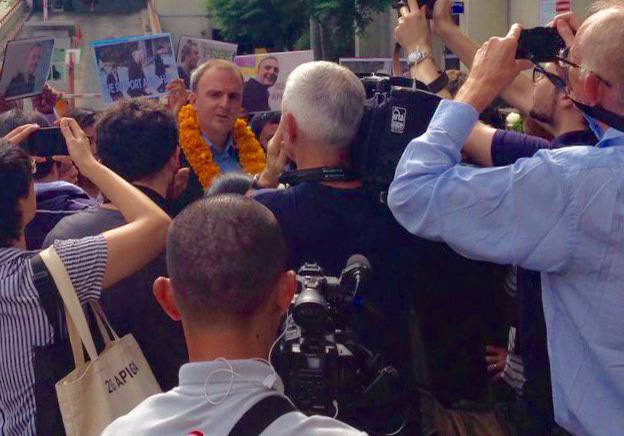
This morning, Thailand’s Southern Bangkok Criminal Court found Andy Hall guilty of defaming a Thai fruit processing company under Article 328 of the Thai Criminal Code and violation of Article 14(1) of the Computer Crime Act, and sentenced him to a fine of THB 200,000 (USD$ 5,700) reduced to THB 150,000 (USD $4,300); and four years imprisonment, reduced to three years and suspended for two years.
Andy Hall has said he will appeal the verdict.
“Human rights defenders such as Andy Hall have the right to exercise freedom of expression in advocating for the protection and realization of human rights – a right that Thailand has a duty to protect,” said Kingsley Abbott, Senior International Legal Adviser at the ICJ.
“Unfortunately, there are numerous examples of criminal defamation and the Computer Crime Act being used against human rights defenders in Thailand, a practice that must end, including through a substantial reform of these laws,” he added.
The ICJ and Lawyers Rights Watch Canada submitted a joint amicus curiae brief in the proceedings, arguing that the imposition of harsh penalties such as imprisonment or large fines on a human rights defender risk having a ‘chilling effect’ on the exercise of freedom of expression, which Thailand is bound to protect pursuant to its international legal obligations.
The ICJ anticipates the arguments contained in the joint amicus will be considered on appeal.
“It is also disappointing that the Court did not appear to take into account the recent decision of the Phuket Provincial Court in the Phuketwan case, which found that the Computer Crime Act was not intended to be used in cases of alleged defamation,” said Abbott.
On 1 September 2015, the Phuket Provincial Court acquitted two journalists of criminal defamation and violations of the Computer Crime Act after the Royal Thai Navy complained the journalists defamed it when, on 17 July 2013, the journalists reproduced a paragraph from a Pulitzer prize-winning Reuters article that alleged “Thai naval forces” were complicit in human trafficking.
The criminal defamation proceedings brought against Andy Hall are among several that have been brought against human rights defenders in Thailand in recent years.
Others examples include the charges laid against activists Pornpen Khongkachonkiet, Somchai Homloar and Anchana Heemina in July 2016 for raising allegations of torture in the deep South; and those brought against activists protesting various development projects in Thailand which are allegedly having an adverse impact on communities.
Background
Today’s case is one of four criminal and civil proceedings (two criminal and two civil) a Thai fruit processing company, Natural Fruit Company Ltd., has brought against Andy Hall in relation to the report of a Finnish NGO, Finnwatch, published in January 2013, called Cheap Has a High Price.
Andy Hall’s research was included in the report which alleged that labour rights violations were taking place at Natural Fruit Company Ltd., whose employees included migrant workers from Myanmar.
In September 2015, a Thai Appeal Court upheld the dismissal of the other criminal defamation proceeding Natural Fruit Company Ltd. brought against Andy Hall. That proceeding is currently before the Supreme Court. Two civil proceedings are also before the Thai courts but have been suspended pending resolution of the two criminal proceedings.
The use of criminal defamation laws, carrying penalties of imprisonment, against human rights defenders reporting on alleged human violations, constitutes a violation of Thailand’s obligations under the International Covenant on Civil and Political Rights (ICCPR), to which it is a state party.
thailand-verdict-andy-hall-case-news-press-release-2016-eng (full text in PDF)
thailand-verdict-andy-hall-case-news-press-release-2016-tha (full text in Thai, PDF)
Contact
Sam Zarifi, ICJ Asia Pacific Regional Director (Bangkok), t: +66 807819002; e: sam.zarifi(a)icj.org
Kingsley Abbott, ICJ Senior International Legal Adviser, t: +66 9 4470 1345, e: kingsley.abbott(a)icj.org
Sep 16, 2016 | Advocacy, Non-legal submissions
On 16 September 2016, the ICJ made a submission to the Universal Periodic Review of India.
The submission brings to the attention of the members of the Human Rights Council’s Working Group on the UPR issues concerning:
- discrimination and violence based on sexual orientation and gender identity;
- death penalty;
- impunity and accountability;
- freedom of speech, expression and association;
- ratification and implementation of international human rights instruments.
india-icj-upr-submission-advocay-non-legal-submission-2016-eng (full text in PDF)
Aug 31, 2016 | News
ASEAN meeting should highlight disappeared Lao leader Sombath Somphone, denial of liberties, said human rights and advocacy groups at a press conference held today in Bangkok.
On the eve of the annual ASEAN leaders summit in Vientiane, the groups (Human Right Watch, ASEAN Parliamentarians for Human Rights, Civil Rights Defenders, Focus on the Global South, Mekong Watch and the ICJ) called upon the Lao PDR Government to commit to address its widespread violations of human rights, including instances of enforced disappearances and arbitrary detention.
Visiting world leaders have a unique opportunity to publicly raise human rights concerns during the ASEAN summit in Vientiane from September 6-8. They should press the Lao government to cease the abuses that have consistently placed Laos at the bottom of rights and development indexes measuring rights, press freedom, democracy, religious freedom, and economic transparency, the groups added.
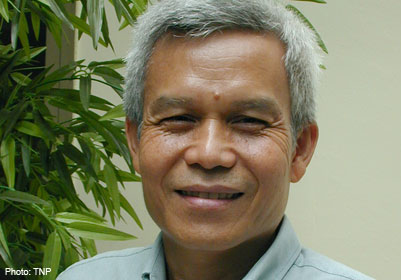
At the event organized by The Sombath Initiative at the Foreign Correspondents Club of Thailand in Bangkok, the groups also released a set of briefing papers on forcibly disappeared civil society leader Sombath Somphone (photo), Laos’ restrictions on democracy and human rights, lack freedom of expression, failure to meet human rights obligations, and impacts of foreign aid and investment.
“More than three and half years after he disappeared, the Lao government still has provided no clear answers to what happened to my husband, Sombath Somphone, who was taken away in truck at a police checkpoint in Vientiane,” said Shui Meng Ng, wife of Sombath and board member of The Sombath Initiative.
“President Obama, the United Nations, and ASEAN and its dialogue partners should urge the Lao Government to urgently resolve the case of Sombath’s enforced disappearance and return him safely to me and my family. They should also demand the Lao Government end enforced disappearances, so that the ordinary people of the country can respect their government rather than fear it.”
“The fact that the Lao PDR government’s last detailed report on the progress of the investigation was released over three years ago suggests the Lao authorities are not carrying out an effective investigation into this case as they are required to do under international law,” said Kingsley Abbott, a Senior International Legal Adviser with the International Commission of Jurists (ICJ).
“It is not enough for the Lao government to simply keep asserting on the international stage that it is investigating this case. International law obliges Lao PDR authorities to conduct an investigation that is credible and effective, and provide regular updates on its progress including to Sombath’s wife, Shui Meng,” he added.
Basic civil and political rights are systematically denied in Laos, and government authorities move quickly to arbitrarily arrest those expressing critical views of the government, either in day to day life or more recently on-line.
In March 2016, police arrested three Lao migrant workers who had posted critical comments about the Lao government while they were working in Thailand, and continues to detain them arbitrarily. A Lao court also sentenced activist Bounthanh Khammavong in September 2015 to 4 years and 9 months in prison for posting critical comments on Facebook.
Laos also imposes onerous restrictions on the right to freedom of association that are incompatible with its human rights obligations.
The government strictly controls the registrations of organizations such as non-profit associations (NPAs), and closely monitors the work plans and budgets of NPAs that it does approve to operate.
Any person who dares to organize and operate an unsanctioned organization faces arrest and prosecution.
Workers are compelled to belong to the Lao Federation of Trade Unions and organizing unions outside that framework is illegal. At the village level, mass organizations controlled by the ruling Lao People’s Revolutionary Party are often the only organizations operating.
Public protests or assemblies are strictly forbidden without government permission, and any efforts organize such events face immediate suppression by the police and security forces.
“Civil society in Laos remains under a hostile spotlight from the government, and UN rights officials have noted that there are few places in the world where they have encountered greater fear and intimidation among community organizations and NGOs,” said Walden Bello, former member of the Philippines Congress and Vice Chair of ASEAN Parliamentarians for Human Rights (APHR).
“Laos has now become one of the most rights repressing countries in ASEAN: leaders in the region and from around the world must stop looking the other way, and demand Vientiane end its asphyxiation of independent civil society,” he added.
Read the full text and quotes here: Laos-End to Human Rights Abuses-News-Press Releases-2016-ENG (in PDF)
Contact
Kingsley Abbott, ICJ Senior International Legal Adviser, t: +66 9 4470 1345, e: kingsley.abbott(a)icj.org
Jul 13, 2016 | News
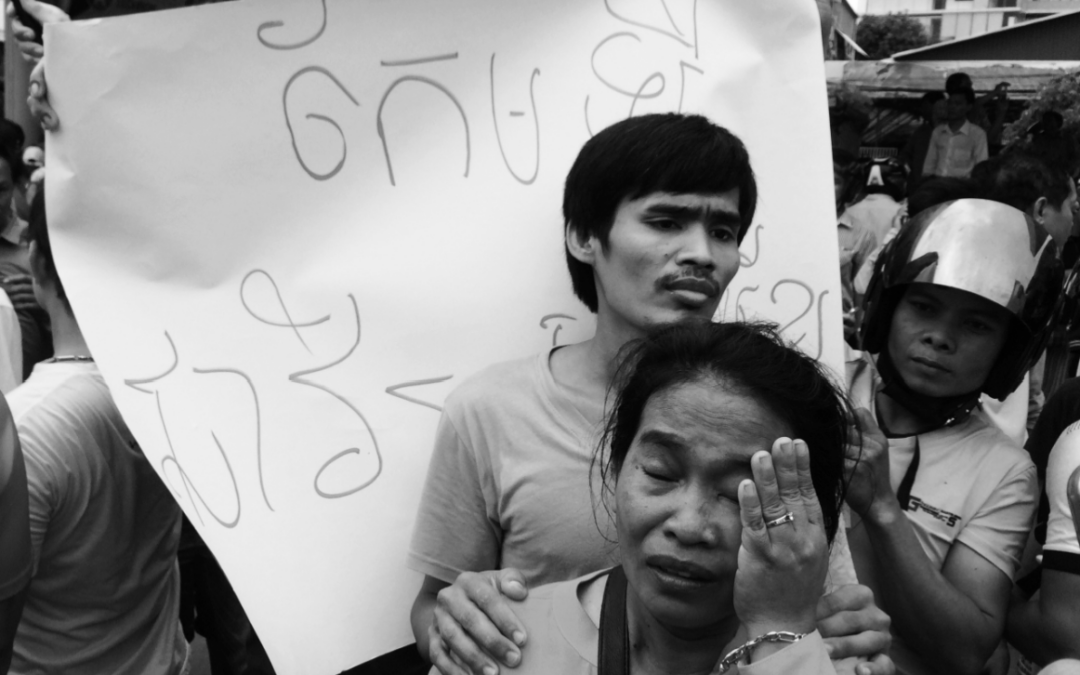
The ICJ deplores the killing of Kem Ley, an outspoken human rights defender, political analyst and organizer of grassroots community activists, and calls on the Government to carry out a prompt, impartial and effective investigation to identify and bring to justice those responsible.
Shortly after the killing, Cambodian police arrested a suspect approximately two kilometers from the crime scene who “confessed” on a leaked video to killing Kem Ley for failing to repay a personal loan.
“Kem Ley, a prominent political commentator and human rights defender, was killed against a backdrop of escalating attacks on civil society and the political opposition,” said Kingsley Abbott, ICJ Senior International Legal Adviser.
“In the context of Cambodia’s long history of impunity in cases of allegedly politically motivated killings, and even though a suspect is already in custody, the authorities must continue the investigation in a transparent and methodical manner until all potential lines of inquiry have been exhausted,” he added.
There are already concerns about certain events that took place immediately after the killing which may have harmed the investigation.
For example, shortly after news spread of Kem Ley’s death, the authorities observed a large crowd gather in and around the courtyard of the petrol station in which he was killed, potentially compromising important sources of evidence from this wider area and the vehicles within it.
The large gathering effectively served to block medical vehicles from removing Kem Ley’s body from the scene, which may have prevented a forensic autopsy from taking place.
Later the same afternoon a large procession accompanied his body from the crime scene through the streets of Phnom Penh to Wat Chas pagoda, where his body remains lying in wake.
“Where it lacks capacity, Cambodia should seek technical assistance from States and international organizations particularly in the specialized areas of Closed Circuit Television (CCTV) and telecommunication data analysis which may assist in establishing the identification and movements of the perpetrator and whether he or she acted alone or with others,” Abbott said.
The ICJ calls on the Cambodian authorities to:
1. Ensure that the investigating judge and investigators are – and are seen to be – impartial and independent of undue influence, and are free to perform their professional functions objectively without intimidation, hindrance, harassment or improper interference.
2. Ensure that the investigation process and its outcome are transparent and open to scrutiny by the victims and the general public.
3. Protect the rights of the victims including by ensuring Kem Ley’s family:
- receive regular information about the progress of the investigation and their rights;
- receive all necessary support and assistance; and
- are protected from any ill-treatment, intimidation, or sanction as a result of their participation in the investigation.
4. Protect anyone who provides information to the authorities from ill-treatment, intimidation or sanction.
5. Actively seek out and accept offers of assistance from States and international organizations including in the areas of:
- the analysis of any CCTV and telecommunication data; and
- the forensic examination of Kem Ley’s body, crime scenes and vehicles.
Background
At approximately 0830 on 10 July 2016, Kem Ley was shot and killed at a petrol station cafe on Phnom Penh’s Monivong Boulevard. Shortly afterwards, the authorities apprehended a man nearby in connection with the killing who identified himself as “Chuob Samlab”.
On a leaked video, the man reportedly “confessed” to the killing claiming he shot Kem Ley over a debt the political commentator allegedly owed him, a fact reportedly disputed by Kem Ley’s widow and the suspect’s wife.
Under Article 12 of the United Nations Declaration on Human Rights Defenders, States are required to take all necessary measures to ensure the protection of human rights defenders against any violence, threats, and retaliation.
Contact:
Kingsley Abbott, ICJ Senior International Legal Adviser for Southeast Asia, t: +66 94 470 1345 ; email: kingsley.abbott(a)icj.org

Jul 12, 2016 | News
The International Commission of Jurists (ICJ) has issued a joint statement condemning increasing acts of harassment and intimidation against journalists in Lesotho.
The joint statement expresses concern about a number of incidents threatening freedom of expression, exemplified by the recent shooting of the editor of the Lesotho Times newspaper, and have called on Lesotho Authorities to ensure the right to freedom of expression is protected.
In addition to the ICJ, the statement has also been signed by: amaBhungane Centre for Investigative Journalism; Amnesty International; Freedom of Expression Institute; Institute for Democracy; Lawyers for Human Rights; Lawyer for Human Rights (Swaziland); Media Institute for Southern Africa – Zimbabwe Chapter; Media Monitoring Africa; Open Society Initiative for Southern Africa; PEN Afrikaans; PEN South Africa; Rights 2 Know Campaign; SOS Coalition; Southern Africa Human Rights Defenders Network; Southern AFrican Litigation Centre; Transformation Resource Centre; Zimbabwe Human Rights NGO Forum; and Zimbabwe Lawyers for Human Rights.
Lesotho-Joint statement-Freedom of expression-Advocacy-2016-ENG (full text in PDF)