Jun 23, 2016 | News
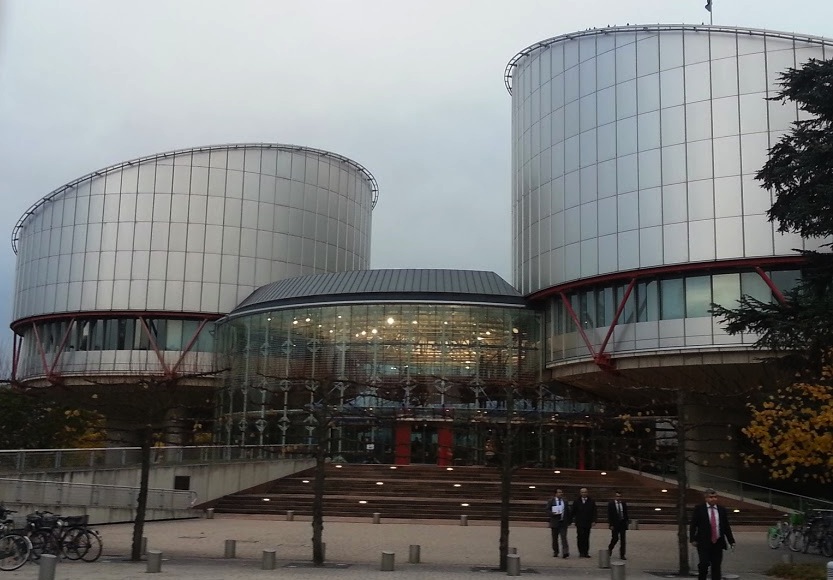
The ICJ welcomes today’s judgment of the European Court of Human Rights that the removal from office of Hungarian Supreme Court President András Baka violated the European Convention on Human Rights (ECHR).
The Court found that the pre-mature termination of his appointment deprived him of a fair process and was based on public statements he made that were critical of certain justice system reforms.
The ICJ intervened as third party in this case. The judgment is expected to be influential around the world in cases involving judicial independence and expression.
“Today’s judgment is a vindication for the security of tenure and freedom of expression of judges not only in Hungary, but around the world,” said Massimo Frigo, ICJ Europe Programme Legal Adviser.
“Judges should never be precluded from exercising their right and duty to speak out in protection of judicial independence,” he added.
In its ruling, the Grand Chamber of the European Court of Human Rights ruled that, by ending his prescribed term in office pre-maturely through a targeted legislative reform because of his public criticism, Hungary had violated his right to freedom of expression, under article 10 of the European Convention on Human Rights.
The Court held that expressing statements on the reform of the judiciary and other legislation was not only Judge Baka’s right, but also his duty.
The Court further ruled that former Supreme Court President András Baka had enjoyed a right to access courts to challenge his dismissal, and that his removal from office by a law that precluded such challenges violated article 6 of the ECHR on the right to a fair hearing.
In its judgment, the European Court cited a wide range of United Nations, European, Inter-American, and other international instruments and standards on judicial independence and freedom of expression.
The International Commission of Jurists anticipates that the Court’s ruling and reasons will have an important influence on cases concerning judicial independence and expression around the world.
Background:
Judge András Baka, former judge of the European Court of Human Rights from 1991 to 2008, had been appointed as President of the Supreme Court of Hungary on 22 June 2009.
His term in office, which was on his appointment guaranteed by law to continue until 22 June 2015, was prematurely terminated on 1 January 2012 following the entry into force of the Transitional Provisions of the new Hungarian Constitution.
This rule modified the eligibility requirements for the position of President of the Supreme Court, effectively excluding judge András Baka from the position.
Judge András Baka was also President of the National Council of Justice, and had publicly expressed criticism concerning various legal reforms brought on by the Hungarian Government that he considered to undermine the independence of the judiciary.
The judgment can be downloaded in PDF format.
Read also:
ICJ third party intervention
The ICJ also recently published a comprehensive analysis of relevant global standards in its Practitioners Guide No. 13 on judicial accountability.
An online compilation of global and regional standards on independence and accountability of judges, lawyers and prosecutors is also available here.
Contact
Massimo Frigo, Legal Adviser, ICJ Europe Programme, t: +41 22 979 38 05 ; e: massimo.frigo(a)icj.org

Jun 22, 2016 | Advocacy, Non-legal submissions
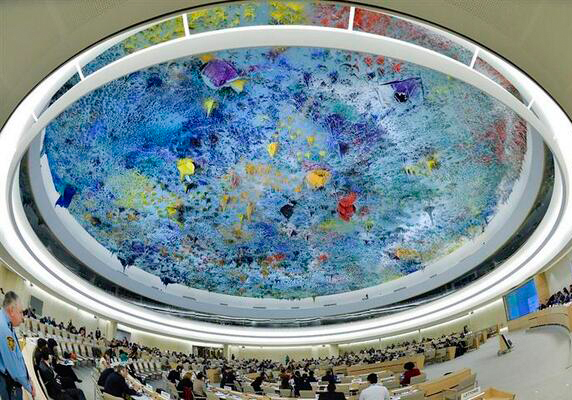
The ICJ today made an oral statement at the United Nations, on threats to the independence of lawyers in Azerbaijan.
In the statement to the Human Rights Council, the ICJ emphasised that lawyers in Azerbaijan face suspension or disbarment for statements clearly constituting protected freedom of expression. In some cases, they are subject to arrest, detention, unfair trial, and arbitrary imprisonment.
The lack of independence of the Bar Association is a serious concern. This body is increasingly initiating apparently groundless disciplinary proceedings, including leading to disbarment, against lawyers who defend the interests of clients in high profile or politically sensitive cases. Disciplinary penalties in such cases are routinely upheld by the judiciary, which does not appear to be fully independent.
This was highlighted in preliminary findings of the Working Group on Arbitrary Detention following its recent visit (Working Group on Arbitrary Detention Statement upon the conclusion of its visit to Azerbaijan (16-25 May 2016)). Representatives of the ICJ are currently visiting Azerbaijan to further assess the situation.
The cases of Khalid Bagirov, Alaif Ghasanov and Intigam Aliyev illustrate these concerns. While welcoming the release of Mr Aliyev, we remain concerned at the maintenance of his underlying conviction despite credible reports that the charges against him were politically motivated.
Lawyer Muzaffar Bakhishov is currently subject to disbarment proceedings for having criticized the lack of independence of the judicial system.
These disbarments have a chilling effect on the work of other lawyers. They undermine access to effective and independent legal assistance to protect human rights.
The ICJ urged the Council to closely monitor this worrying trend for the rule of law.
The statement may be downloaded in PDF format here: HRC32-OralStatement-Azerbaijan-2016-final-ENG

Jun 2, 2016 | News
The ICJ is alarmed by the intimidation and harassment experienced by bloggers in Singapore recently, perpetrated by police authorities.
In the last few days, the homes of four bloggers were raided and their phones and laptops confiscated, without the legal process or justification required by international standards.
The ICJ strongly urges the Government of Singapore to stop this harassment and ensure that bloggers are protected against such unjustified interference with or reprisals for the exercise of their right to freedom of expression.
“By resorting to this kind of harassment and intimidation of bloggers, Singapore is showing complete disregard for human rights and the rule of law,” said Sam Zarifi, ICJ’s Regional Director for Asia and the Pacific.
“The Government of Singapore must stop intimidating citizens who express their political opinions openly. The actions taken by the Singaporean police against the four bloggers do not only constitute an attack on freedom of opinion and expression in the country, but also clearly violates their right to privacy,” he added.
On 27 May 2016, the Election Department of Singapore filed police reports alleging that bloggers Roy Ngerng and Teo Soh Lung, and The Independent Singapore, an independent news website, violated the rules against election advertising ahead of polling day.
Under Singapore’s election rules, campaigning is prohibited 24-hours prior to polling day, which is called the “Cooling-Off Day”.
Roy Ngerng and Teo Soh Lung were alleged to have written posts on their social media accounts expressing support for the opposition candidate, Mr. Chee Soon Juan.
The Independent Singapore, on the other hand, was alleged to have published articles that amount to election advertising.
The ICJ considers that provisions or interpretations of Singapore’s election laws that would impose a sweeping ban on all political expression in relation to particular candidates in a 24-hour period prior to polling day, including the expression of opinions by private individuals without remuneration, cannot constitute a demonstrably justified and proportionate restriction on freedom of opinion and expression under international standards.
Early this year, the delegation representing the Government of Singapore said as it went through the 2nd cycle of the Universal Periodic Review that “no one in Singapore is prosecuted for criticizing the government or its policies.”
The delegation emphasized that Singapore’s Constitution guarantees the right to freedom of expression.
The Government of Singapore also accepted recommendations made by other States at the Universal Periodic Review to “ensure the full enjoyment of the right to freedom of expression”.
It also accepted the recommendation to protect bloggers from persecution and harassment for the exercise of their human rights.
The ICJ urges the Government of Singapore to remain true to the commitments it made during the recent Universal Periodic Review and respect the right to freedom of expression of bloggers.
Contact:
Emerlynne Gil, ICJ’s Senior International Legal Adviser for Southeast Asia, t: +668 4092 3575 ; e: emerlynne.gil(a)icj.org
Additional information
On 6 May 2016, The Independent Singapore published two articles: 5 Highlights of DPM Speech and Workers’ Party and the Bukit Batok by-election – what WP members said.
The first article reported about the speech of the Deputy Prime Minister of Singapore at the rally of the ruling party, the People’s Action Party (PAP), wherein he expressed support for the PAP candidate.
The second article reported statements made by the Workers’ Party (WP) members on key issues relating to the elections.
On 7 May 2016, it published the article Tan Cheng Bock Denies involvement in posting by irrational group of PAP fans, where it reported on how the former Member of Parliament, Dr. Tan, disavowed statements he allegedly made and that were posted on the Facebook group which favor the ruling party.
On 31 May 2016, Roy Ngerng and Teo Soh Lung were interrogated for three hours by police. The two were interrogated separately. Teo Soh Lung was accompanied by her lawyer, while Roy Ngerng was not.
After the interrogation, the police accompanied the bloggers back to their respective homes. The police searched their homes without warrants or their consent, and confiscated their mobile phones, laptops, and hard disks. After the search, Roy Ngerng was taken back to the police station and interrogated for another few hours.
At the police station, law enforcement authorities intimidated Roy Ngerng into logging in and out of his social media accounts and his blog, The Heart Truths, in their full view and presence.
The publisher and editor of The Independent Singapore were likewise interrogated separately by the police, on 31 May 2016 and 1 June 2016. Their mobile phones and laptops were also confiscated by the police after their interrogation.
May 10, 2016 | News
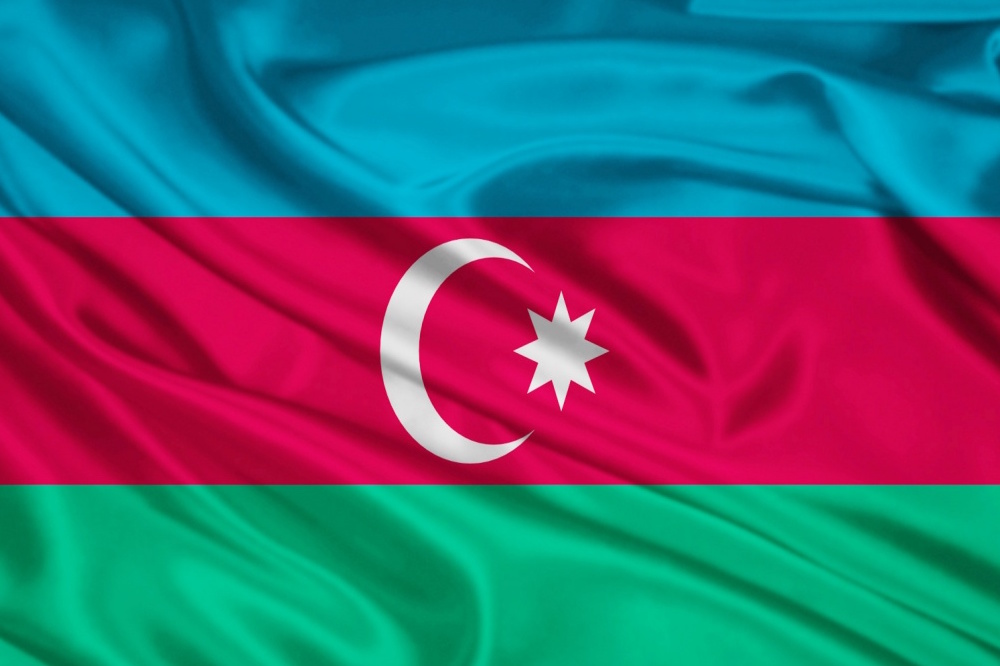
The ICJ today expressed concern at the disbarment proceedings against lawyer Muzaffar Bakhishov that are taking place before the Narimanov district court.
The ICJ calls for the disbarment proceedings to respect international standards on the role of lawyers and to ensure that no sanction is imposed contrary to the right to freedom of expression, as guaranteed under international law.
The ICJ understands that the proceedings against Mr Bakhishov, following a recommendation for disbarment by the Plenum of the Bar Association, are related to critical statements he made in a media interview with the news website moderator.az on the functioning of the Azeri judiciary with regard to judicial review of detention.
In the interview, he criticized the arrests of large number of persons by officers of the Ministry of National Security and the tendency of judges to approve orders of detention without proper scrutiny. He further raised concerns about lack of accountability of judges for failure to protect against arbitrary detention.
Under international law and standards, lawyers, like other individuals, enjoy the right to freedom of expression, including in regard to their professional role. Protection of lawyers’ right to freedom of expression is not only important to the individuals in question. It also serves to safeguard the important public function played by lawyers in a democratic society to comment on matters related to the rule of law and the administration of justice. Lawyers must be able to carry out these and their other professional functions without interference or intimidation.
The right to freedom of expression is protected in international human rights law, including by article 19 of the International Covenant on Civil and Political Rights (ICCPR) and article 10 of the European Convention on Human Rights (ECHR). Azerbaijan is party to both of these treaties.
The UN Basic Principles on the Role of Lawyers specify that lawyers “…shall have the right to take part in public discussion of matters concerning the law, the administration of justice and the promotion and protection of human rights …” The European Court of Human Rights has emphasized that lawyers are entitled to comment in public on the administration of justice, provided that their criticism does not overstep certain bounds, based on principles of dignity, honour, integrity, and respect for the fair administration of justice.
The ICJ considers that disciplinary proceedings against lawyers, solely for expressing criticism of the conduct or functioning of the judiciary, whether in the course of court hearings or elsewhere, constitute an unjustified interference with freedom of expression. As the European Court of Human Rights has noted in Maurice v. France, this is particularly the case where the allegations have been presented in good faith and are substantiated by evidence.
Azerbaijan-BakhishovDisbarment-Statement-2016-AZE (download statement in Azeri)
Contact:
Massimo Frigo, Legal Adviser of the ICJ Europe Programme, t: +41 22 9793805, e-mail: massimo.frigo(a)icj.org