Sep 1, 2015 | News
The Thai government must end proceedings against two journalists who were today acquitted of charges of defaming the Royal Thai Navy and immediately repeal the country’s criminal defamation laws, the ICJ said today.
The two journalists with the Phuketwan online news outlet, Alan Morison and Chutima Sidasathian, were charged with criminal defamation under the Thai Criminal Code and violation of Article 14(1) of the Computer Crimes Act.
“Today’s verdict affirms the right of journalists in Thailand to freely express their views, even if – especially if – they sometimes have to criticize public authorities when it is in the public interest to do so,” said Kingsley Abbott, ICJ International Legal Adviser for Southeast Asia, who observed the proceedings.
“The verdict today is a relief not only for the two brave journalists who could have faced jail sentences for doing their job, but also for other journalists in Thailand who followed this case with anxiety about potentially significant new restrictions on their ability to work,” he added.
The prosecution now has 30 days to appeal the verdict.
“The charges against these two journalists generated severe international criticism for Thailand and harmed the country’s reputation more than any article in Phuketwan,” said Abbott. “The prosecution should take heed of this verdict and drop the case without further appeal.”
The Royal Thai Navy had complained that the journalists defamed it when, on 17 July 2013, the journalists reproduced a paragraph from a Pulitzer prize-winning Reuters article that alleged “Thai naval forces” were complicit in human trafficking.
In a decision read out today at the Phuket Provincial Court, with respect to the charges of criminal defamation, the Judge held that the journalists had reproduced information from a news source, Reuters, that they believed to be reliable.
Regarding the charges under the Computer Crimes Act, the Judge found that the information that was published was not “false computer data” and was not information that could “cause damage” to national security which are elements of Article 14(1).
The Judge also noted that the Computer Crimes Act was not intended to cover allegations of defamation.
“Thailand must repeal its criminal defamation laws in recognition that criminal penalties are a disproportionate means to address reputational damage,” Abbott added.
“Thailand should also reform the Computer Crimes Act to more precisely define that its purpose and scope is not intended to place limitations on freedom of expression.”
Background
Article 19 of the International Covenant on Civil and Political Rights (ICCPR), to which Thailand is a State Party, guarantees the right to freedom of expression, which includes the right to impart information.
The UN Human Rights Committee, which monitors State compliance with the ICCPR, has expressed its concern at the misuse of defamation laws to criminalize freedom of expression and has said that such laws should never be used when expression is made without malice and in the public interest.
It has also clarified that imprisonment is never an appropriate penalty for defamation.
The ICJ, the Human Rights Committee, the UN Special Rapporteur on freedom of opinion and expression and other international human rights bodies and an increasing number of governments believe that criminal defamation laws should be abolished. Such laws are incompatible with the right to freedom of expression.
Criminal penalties are a disproportionate means to protect against reputational harm and pose an impermissibly severe impediment to the exercise of free expression.
Thailand was criticized in May 2014 when the United Nations Committee against Torture expressed its concern “at the numerous and consistent allegations of serious acts of reprisals and threats against human rights defenders, journalists, community leaders and their relatives, including verbal and physical attacks, enforced disappearances and extrajudicial killings, as well as by the lack of information provided on any investigations into such allegations.”
The Committee recommended that Thailand “should take all the necessary measures to: (a) put an immediate halt to harassment and attacks against human rights defenders, journalists and community leaders; and (b) systematically investigate all reported instances of intimidation, harassment and attacks with a view to prosecuting and punishing perpetrators, and guarantee effective remedies to victims and their families.”
Read also:
The Phuketwan trial: an insidious prosecution of free expression
Contact:
Kingsley Abbott, ICJ International Legal Adviser, (Bangkok), t:+66 944701345, e: kingsley.abbott(a)icj.org
Thailand-Phuketwan trial-News-Press releases-2015-THA (full text in PDF, Thai version)

Aug 17, 2015 | News
The ICJ today condemned the promulgation of the Counter-Terrorism Law by the Egyptian President, Abdel Fattah el-Sisi, as a new, repressive move that would erode the rule of law and brush aside fundamental legal and human rights guarantees.
Calls to revise the draft Counter-Terrorism Law by the ICJ and other international and national human rights organizations and stakeholders, including Egypt’s quasi-governmental National Human Rights Council, were disregarded.
“The promulgation of the Counter-Terrorism Law by President el-Sisi expands the list of repressive laws and decrees that aim to stifle dissent and the exercise of fundamental freedoms,” said Said Benarbia, Director of the ICJ’s Middle East and North Africa Programme.
“Egypt’s authorities must ensure the law is not used as a tool of repression and, to this end, comprehensively revise it so that it fully complies with international human rights law and standards,” he added.
In a position paper published on 9 July, the ICJ detailed how the law is inconsistent with, and in numerous ways violates, Egypt’s obligations under international law, including those relating to the right to life, the right to liberty and not to be subjected to arbitrary detention, the right to privacy, and fair trial rights.
Further, the law gives state officials broad immunity from criminal responsibility for the use of force in the course of their duties, including the use of lethal force when it is not strictly necessary to protect lives, grants sweeping surveillance and detention powers to prosecutors, entrenches terrorism circuits within the court system (which have in the past frequently involved fair trial violations), and grants the President far-reaching, discretionary powers to “take the necessary measures” to maintain public security, where there is a “danger of terrorist crimes.”
Contact:
Alice Goodenough, Legal Adviser, ICJ Middle East and North Africa Programme, t: +44 7815 570 834; e: alice.goodenough(a)icj.org
Nader Diab, Associate Legal Adviser, ICJ Middle East and North Africa Programme, t: +41 229 793 804; e: nader.diab(a)icj.org
Egypt-Counter-Terrorism Law Promulgated-News-Press releases-2015-ARA (full text in pdf, ARABIC)
Jul 23, 2015 | News
The ICJ today called on the Tunisian authorities to amend the deeply flawed draft Counter-Terrorism and Money Laundering law with a view to ensuring its full compliance with international standards.
“Tunisian authorities have obligations under international law to protect individuals under their jurisdiction against all acts of terrorism,” said Said Benarbia, Director of the Middle East and North Africa Programme at the ICJ.
“At the same time, all counter-terrorism measures must fully respect human rights guarantees and the rule of law,” he added.
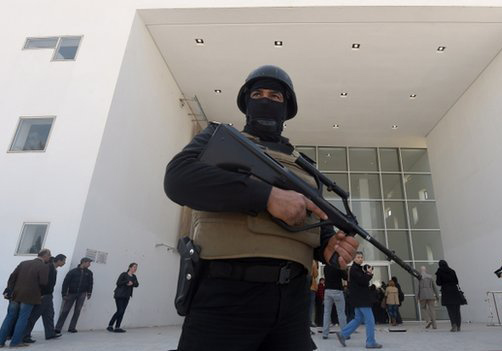
The draft Counter-Terrorism and Money Laundering law, revised since it was first introduced last year, was revived following a series of attacks against members of the security forces and the army and the deadly Bardo Museum (photo) attack on 18 March 2015.
In response to the killing of 38 tourists in Sousse on 26 June and the following declaration of a state of emergency on 4 July 2015 by the Tunisian President, the Tunisian Assembly of the People’s Representatives has accelerated the process of discussing and adopting the Draft Law.
The Draft Law criminalizes a wide range of acts through overbroad and imprecise definitions of terrorism and terrorism-related acts.
Such definitions could potentially have the effect of criminalizing activities not actually related to terrorism, or even the lawful and peaceful exercise of fundamental rights and freedoms, including the right to freedom of expression, the ICJ says.
The ICJ is particularly concerned that the draft law grants, in its article 68, immunity from criminal prosecution for security forces, outside cases of self-defence, when using force in the course of their duties.
This provision requires amendment to ensure that it does not immunize use of force that violates the right to life in violation of international law and standards, including for instance intentional use of lethal force when it is not strictly unavoidable in order to protect life, the Geneva-based organization adds.
“The draft law should not dilute the specificity of terrorist acts by drawing ordinary crimes within the scope of the counterterrorism legislation, nor should it be used as a tool to shield members of security forces from accountability in cases of human rights violations committed in the course of their functions,” Benarbia said.
Furthermore, the bill contains provisions that could potentially result in undue prosecution of whistleblowers and journalists, or otherwise disproportionally limit the freedoms of expression and information in violation of international law, the ICJ notes.
A number of offences under the Draft Law are punishable with the death penalty.
The ICJ opposes the death penalty in all circumstances as a violation of the right to life and the prohibition of torture and other cruel, inhuman or degrading punishment.
The Draft Law also creates an exceptional regime for police custody, allowing the prosecutor to order up to a period of 15 days of detention (articles 37 and 39) without access to a lawyer or a judge, in violation of the right to liberty, fair trial guarantees, and guarantees for the prevention of torture and other abuses in detention.
It further provides for extensive infringements of the right to privacy through various forms of surveillance, and potentially breaches lawyers’ duties of confidentiality in ways that have not been justified.
“In reviewing and approving the Draft Law, members of the Assembly must ensure that it is fully in line with Tunisia’s obligations under international law, including those relating to the right to life, to liberty and to a fair trial,” Benarbia added.
Contact
Theo Boutruche, Legal Adviser of the ICJ Middle East and North Africa Programme, t: +96 170 888 961 ; e: theo.boutruche@icj.org
Tunisia-Counter Terrorism Draft Law-2015-ARA (Full text in Arabic, PDF)
Jul 13, 2015 | News
The ICJ expresses concern at the recent decision of the Nizami District Court of Baku to disbar Khalid Baghirov, a prominent lawyer who litigates before national and international jurisdictions including the European Court of Human Rights.
Khalid Baghirov had been accused of the use of improper expressions and inappropriate behaviour, following statements he made in a hearing before Sheki Appeal Court, alleging that the judge in the case was biased.
On 2 February 2015, the ICJ observed the disciplinary hearing in the case of Khalid Baghirov before the Nizami District Court of Baku.
The Court’s decision, on 10 July 2015, follows the disbarment earlier this month of lawyer Alaif Ghasanov, for making a public statement about the conditions of detention of one of his clients, Leyla Yunus, a prominent human rights defender currently held in detention.
There are grounds to believe that Khalid Baghirov’s disbarment is in retaliation for his representation of clients in high profile cases, including prominent human rights defenders.
“Disbarments such as this have a chilling effect on the work of other lawyers, sending a signal that they may be penalized for discharging their functions independently and in accordance with international standards on the role and duties of the legal profession,” said Róisín Pillay, Director of the ICJ Europe Programme.
“Without independent legal representation, those who come before the courts cannot receive a fair trial and the system’s capacity to fairly administer justice under the rule of law is undermined,” she added.
Access to effective and independent legal assistance is an indispensable element of the right to a fair trial, guaranteed under the European Convention on Human Rights and the International Covenant on Civil and Political rights, to which Azerbaijan is a party.
The ICJ affirms that freedom of expression of lawyers constitutes an essential requirement for the proper functioning of the legal profession.
Article 23 of the UN Basic Principles on the Role of Lawyers states that lawyers: “[…] have the right to take part in public discussion of matters concerning the law, the administration of justice and the promotion and protection of human rights and to join or form local, national or international organizations and attend their meetings, without suffering professional restrictions by reason of their lawful action or their membership in a lawful organization.”
The European Court of Human Rights commented in its recent decision in Moris v France that where a lawyer makes statements regarding the functioning the judiciary, a matter of public interest, little room is left for restrictions on such comments which are protected pursuant to the right to freedom of expression.
In particular, the Court held that “[…] a lawyer should be able to draw the public’s attention to potential shortcomings in the justice system; the judiciary may benefit from constructive criticism”.
The ICJ calls on the public authorities of Azerbaijan as well as the Azerbaijan Collegium of Lawyers to ensure that lawyers, including those representing opposition leaders or human rights defenders, are not identified with their clients’ causes and are able to discharge their functions freely without any fear of persecution, harassment or improper interference.
Background:
Khalid Baghirov, an Azerbaijani lawyer, has represented a number of clients in high-profile cases, including Ilgar Mammadov, Leyla and Arif Yunus and Rasul Djafarov.
He has filed over 40 applications to the European Court of Human Rights, thirteen of which are pending communication.
On 17 March, 2014, Sheki Court convicted Ilgar Mammadov, leader of the “Republican Alternative” movement and former presidential candidate, and sentenced him to seven years of imprisonment.
The case was appealed to Sheki Appeal Court, and a hearing in the appeal was held on 12 August 2014.
On 25 September 2014, judge of Sheki Appeal Court Rashid Huseynov filed a complaint (1 (107)-90/2014) before the Collegium of Advocates requesting disciplinary measures against Khalid Baghirov for a breach of the Law of the Republic of Azerbaijan “On Advocates and Advocates’ Activity”, which included a failure to wear “lawyers’ outfit” in the court room, and use of improper expressions and behaviour incompatible with standards of lawyer’s conduct.
According to the complaint, on 12 August 2014, at the appeal hearing of Mammadov’s case by the Sheki Appeal Court, Khalid Baghivov was alleged to have said: “… like a state, like a court… If there were justice in Azerbaijan, neither the judge Rashid Huseynov would make unjust and biased decision, nor the person like him would be a judge”. He allegedly did not wear a lawyer’s gown during the appeal herrings on 12 and 13 August as well as on 3 and 4 September 2014 hearings.
On 19 November 2014, the Disciplinary Commission of the Advocates’ Collegium issued an opinion, finding that the applicant’s speech aimed to defame the State and was in breach of lawyer’s ethical standards.
On 10 December 2014, the Presidium of the Collegium of Lawyers suspended Khalid Baghirov’s practice, stating inter alia as follows: “The fact that advocate Khalid Baghirov stated the expression ‘like a state, like a court’ in the open court session casts a shadow not only on judiciary branch of Azerbaijan, more importantly, on our state that is considered to be holy for each citizen of Azerbaijan. […] Moreover, by using expression ‘If there were justice in Azerbaijan, neither the judge Rashid Huseynov would make unjust and preconceived decision, nor the person like him would be a judge’ Khalid Baghirov humiliated authority of the whole Justice System of Azerbaijan”.
At the same time, the Presidium applied to the Nizami District Court seeking complete termination of his right to practice law.
Contact:
Róisín Pillay, Director, Europe Programme, roisin.pillay(a)icj.org
Temur Shakirov, Legal Adviser, Europe Programme, temur.shakirov(a)icj.org
Jul 9, 2015 | News
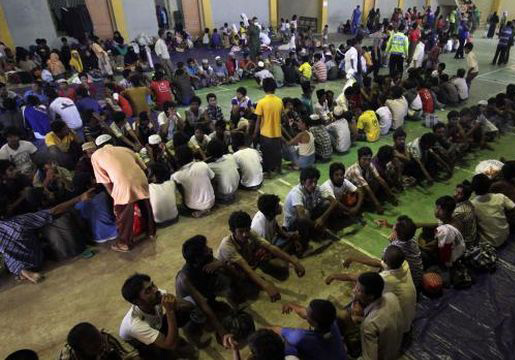
In a letter sent today, the ICJ and seven other human rights organizations urge the Thai Government to drop criminal charges against two journalists from the online news outlet Phuketwan who are about to go on trial for writing about the trafficking of the Rohingya.
The letter was sent to the General Prayuth Chan-ocha, Prime Minister of Thailand.
The trial, which is set to start on 14 July, revolves around criminal charges brought by the Royal Thai Navy against Alan Morison and Chutima Sidasathian for reproducing one paragraph from a Pulitzer Prize-winning article written by Reuters news agency implicating the Navy in the smuggling of the Rohingya off the coast of Thailand.
“Thailand must drop these charges immediately and unconditionally,” said Sam Zarifi, ICJ’s Regional Director for Asia and the Pacific.
“Criminal prosecution of speech is a violation of international law, and the Thai Navy’s relentless pursuit of this case seems even more misguided as it comes at a time when journalists have played a vital role in uncovering mass graves on the Thailand-Malaysia border and thousands of migrants and refugees, including Rohingya, left stranded on boats in the Andaman Sea,” he added.
On 16 December 2013, the Royal Thai Navy lodged complaints of criminal defamation and offences against Thailand’s Computer Crimes Act (CCA) against the journalists.
On 17 April 2014, the journalists were charged with criminal defamation under articles 326 and 328 of the Thai Criminal Code, which carry a maximum penalty of two years imprisonment and a fine of up to 200,000 Baht (USD $6,000); and violation of article 14(1) of the CCA, which carries a maximum penalty of five years imprisonment and a fine of up to 100,000 Baht (USD $3,000).
“The absurdity of these prosecutions was emphasized when the Office of Thailand’s Prime Minister recently asked one of the two journalists, Chutima Sidasathian, who is working towards a Ph.D. on the Rohingya, to suggest a solution to the ‘boat people’ crisis,” Zarifi further said.
“It is not too late to follow that request with an unconditional withdrawal of all charges as an official recognition of the important work by Alan Morison and Chutima Sidasathian in raising these issues and as a concrete gesture of Thailand’s purported commitment to addressing them,” he added.
Contact:
Sam Zarifi, ICJ Asia Pacific Regional Director (Bangkok), t: +66 807819002; e: sam.zarifi(a)icj.org
Background:
Article 19 of the International Covenant on Civil and Political Rights (ICCPR), to which Thailand is a State Party, guarantees the right to freedom of expression, which includes the right to impart information. The UN Human Rights Committee, which monitors State compliance with the ICCPR, has expressed its concern at the misuse of defamation laws to criminalize freedom of expression and has said that such laws should never be used when expression is made without malice and in the public interest.
The ICJ, an increasing number of governments, the Human Rights Committee and other international authorities, believe that criminal defamation laws should be abolished. Such laws are inherently incompatible with the ICCPR and other international laws and standards on freedom of expression. Criminal penalties are always a disproportionate means to protect against reputational harm and pose an impermissibly severe impediment to the exercise of free expression.
Thailand was criticized in May 2014 when the United Nations Committee Against Torture expressed its concern “at the numerous and consistent allegations of serious acts of reprisals and threats against human rights defenders, journalists, community leaders and their relatives, including verbal and physical attacks, enforced disappearances and extrajudicial killings, as well as by the lack of information provided on any investigations into such allegations.”
The Committee recommended that Thailand “should take all the necessary measures to: (a) put an immediate halt to harassment and attacks against human rights defenders, journalists and community leaders; and (b) systematically investigate all reported instances of intimidation, harassment and attacks with a view to prosecuting and punishing perpetrators, and guarantee effective remedies to victims and their families.”
Thailand-Letter to PM Prayuth re Phuket Wan-Advocacy-open letters-2015-ENG (full text of the letter, in PDF)
Thailand-Phuketwan cases-News-Press release-2015-THA (full text of press release in PDF, Thai)
Thailand-Letter to PM Prayuth re Phuket Wan-Advocacy-open letters-2015-THA (full text of the letter, in PDF, Thai)